Climate Science and Climatology; Specialization and Generalization; Forest and Trees
via Current News – Principia Scientific Internationalhttp://principia-scientific.org
Many jumped to the defense of Dr. John Bates, the former NOAA employee who waited until he retired to disclose malfeasance in the science and management at that agency. Bates claimed he told his bosses about the problem but said they effectively ignored him. The problem is everything was already in the public record. I listened to Congressman Lamar Smith tell the general audience at the June…
As Polar Bear Numbers Continue To Increase, GWPF Calls For Re-assessment Of Endangered Species Status
via NOT A LOT OF PEOPLE KNOW THAThttps://notalotofpeopleknowthat.wordpress.com
By Paul Homewood
On the occasion of International Polar Bear Day, the Global Warming Policy Foundation (GWPF) is calling on the U.S. Administration to re-assess the ‘endangered species’ status of polar bears.
On May 15, 2008, the U.S Fish and Wildlife Service listed the polar bear as threatened under the Endangered Species Act. The listing is based on the assumption that loss of sea ice threatens and will likely continue to threaten polar bear habitat.
In a GWPF video released today, Dr Susan Crockford, a Canadian wildlife expert, documents the latest findings about rising polar bear numbers.
In 2005, the official global polar bear estimate was about 22,500.
Since 2005, however, the estimated global polar bear population has risen by more than 30% to about 30,000 bears, far and away the highest estimate in more than 50 years.
A growing number of observational studies have documented that polar bears are thriving, despite shrinking summer sea ice.
By September 2007 sea ice extent was about 43% less than it had been in 1979 – a decline not expected until mid-century, and every year after was almost as low, or lower.
Yet no more drowned polar bears were documented, no more bears than normal starved to death, no unusual spikes in cannibalism occurred, and not a single polar bear population was wiped out.
New scientific evidence suggests that loss of summer sea ice, regardless of the cause, is not a major risk for polar bear survival.
“A thorough external review of the polar bear status issue is now required – not only because it’s the right thing to do but because it may help restore public support for science and conservation,” Dr Crockford said.
E&E Legal Again Forced to Sue State Department for Public Records Department fails to even acknowledge Request for specific correspondence with and about key green lobbyist who boasted of recruitment by China to organize Post-Obama Climate Agenda Washington, DC – Today the Energy & Environment Legal Institute (E&E Legal) and the Free Market Environmental Law […]
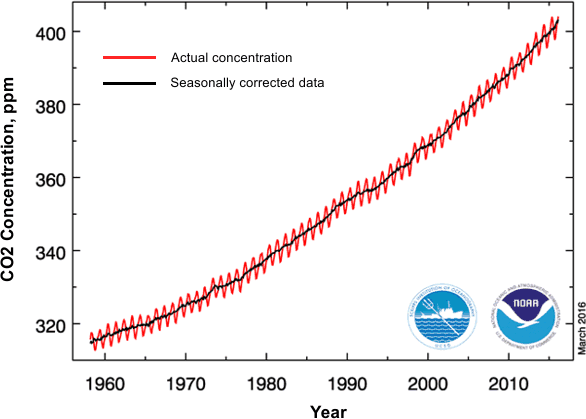
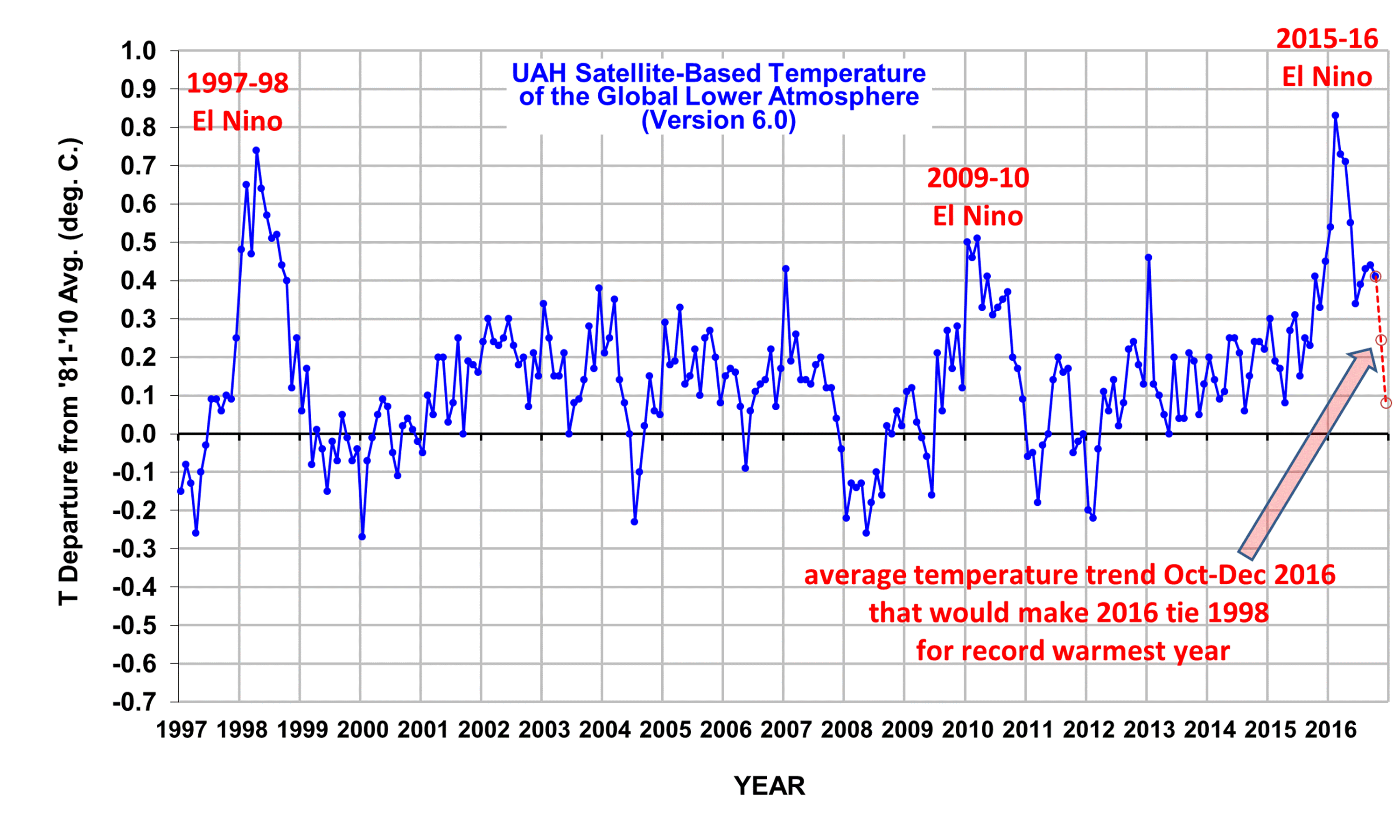
Atmospheric CO2 and Atmospheric Temperatures simply aren’t correlated, and their certainly isn’t the linear relationship that exists in the IPCC Models.
In reality, atmospheric temperatures follow the ocean temperatures, not atmospheric CO2. Ocean temperatures are dependent upon the amount of incoming solar radiation that reaches them combined with ocean cycles such at the Pacific Decadal Oscillation (PDO/El Nino/El Nina) and others. The balance of incoming and outgoing radiation is why the atmospheric temperature form spikes and steps instead of a smooth linear increase.


 Iowa Climate Science Education