Month: June 2018

Why Gravity Data Is Worthless In The Hands Of Climate Scientists

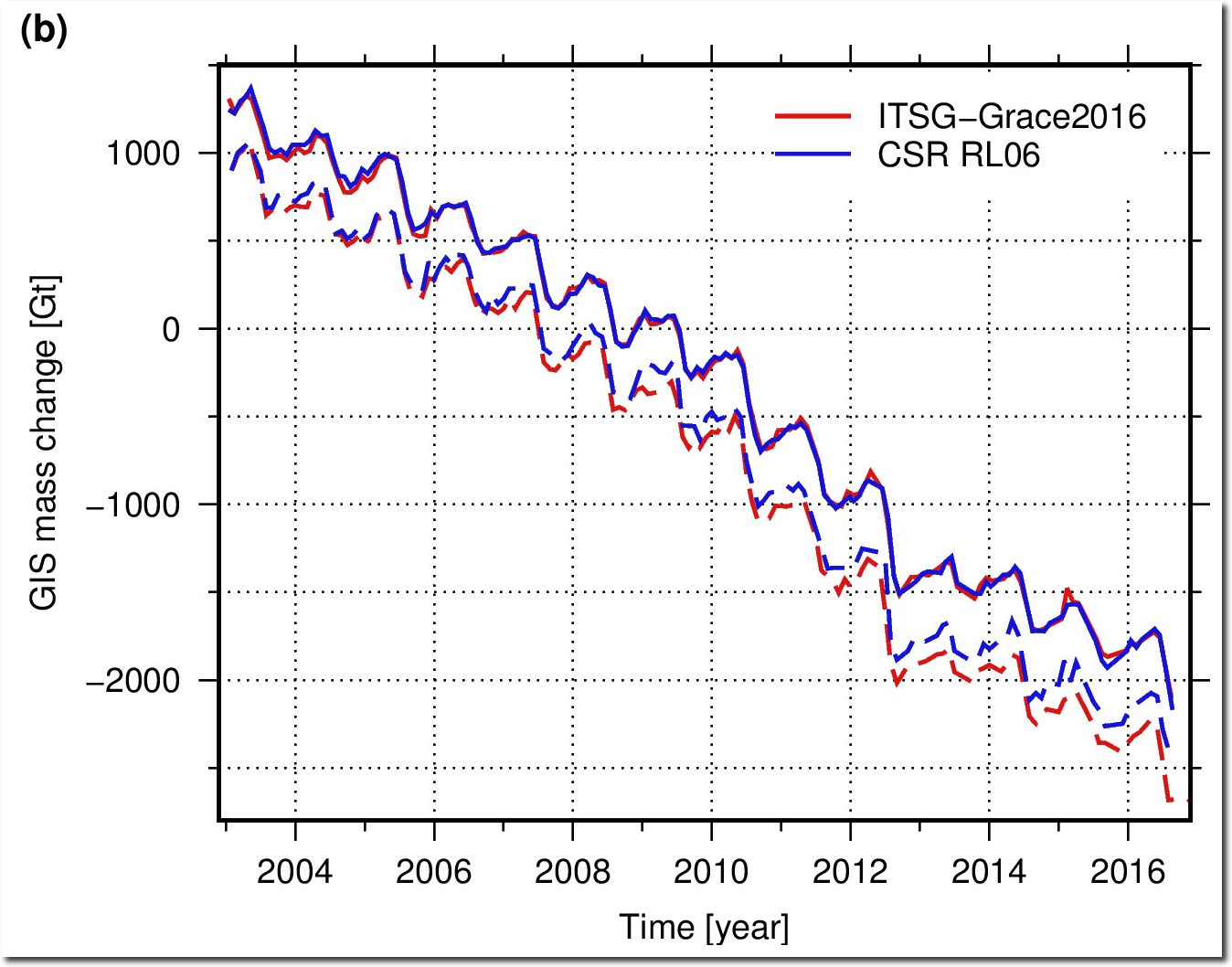
Graphs like the one above purporting to ice loss in Greenland and Antarctica are worthless, for several reasons.

  1. The are generated by people with  a global warming agenda who don’t understand the mathematics and science underlying their calculations.
  2. Gravity data shouldn’t change as the ice grows or melts.

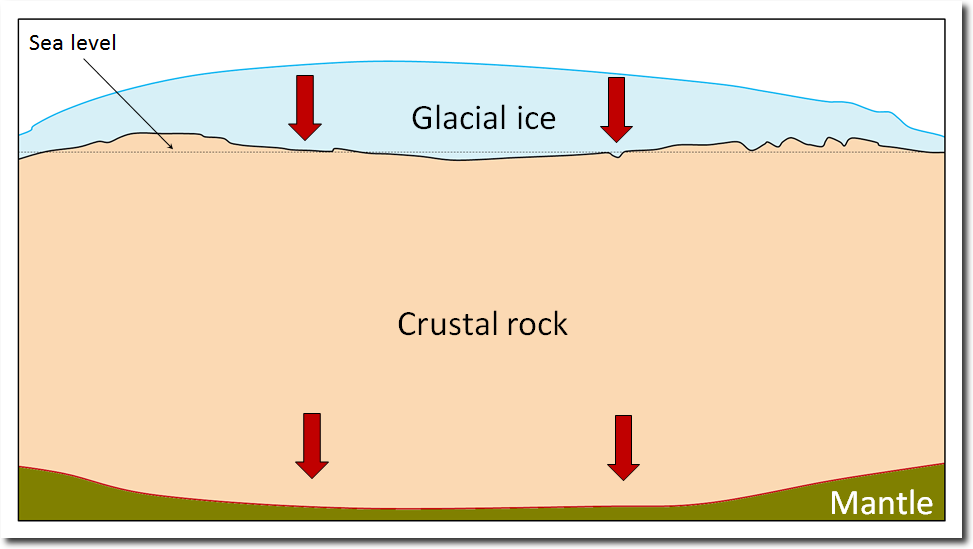
9.4 Isostasy – Physical Geology

The Greenland ice sheet is two miles thick and is is very heavy. It’s weight depresses the crust and causes the mantle to be displaced to the sides.  The mass of displaced mantle is approximately equal to the mass of the ice sheet.  If the ice sheet was growing, it would cause an equal mass of mantle to be displaced to the sides.  If the ice sheet was shrinking, it would cause an equal mass of the mantle to flow back under the ice sheet.  Whether the ice sheet is expanding or shrinking, the gravity data should be relatively constant.

Climate scientists aren’t very bright, and don’t understand the basics of geology and geophysics.

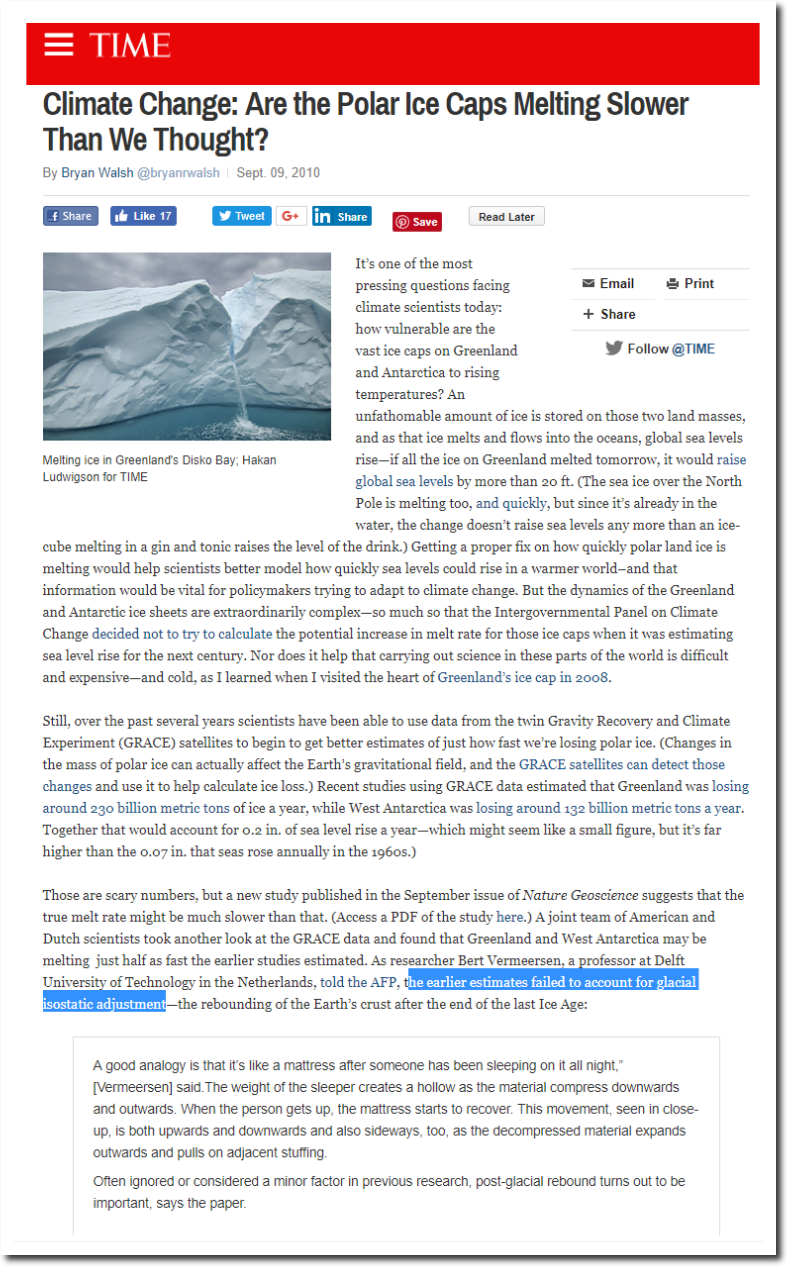
estimates failed to account for glacial isostatic adjustment

Climate Change: New Study Halves the Rate of Ice Cap Melt | TIME.com

Unless you understand what is going on underneath the ice sheet, you can’t use gravity data – and no one really knows what is going on underneath the ice sheet.  Rock is three times as dense as ice, and small changes in geology show up as imaginary large changes in ice.

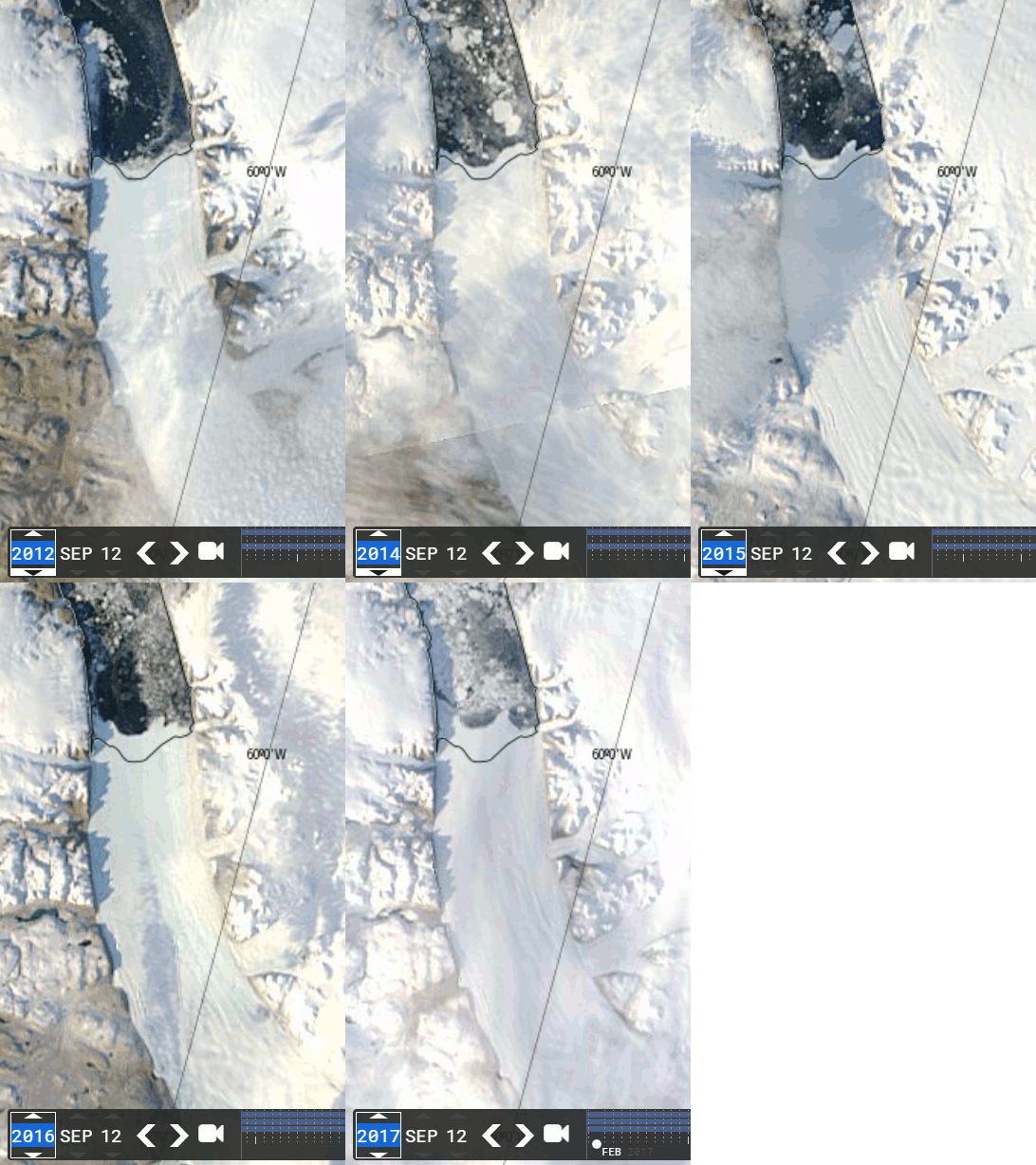
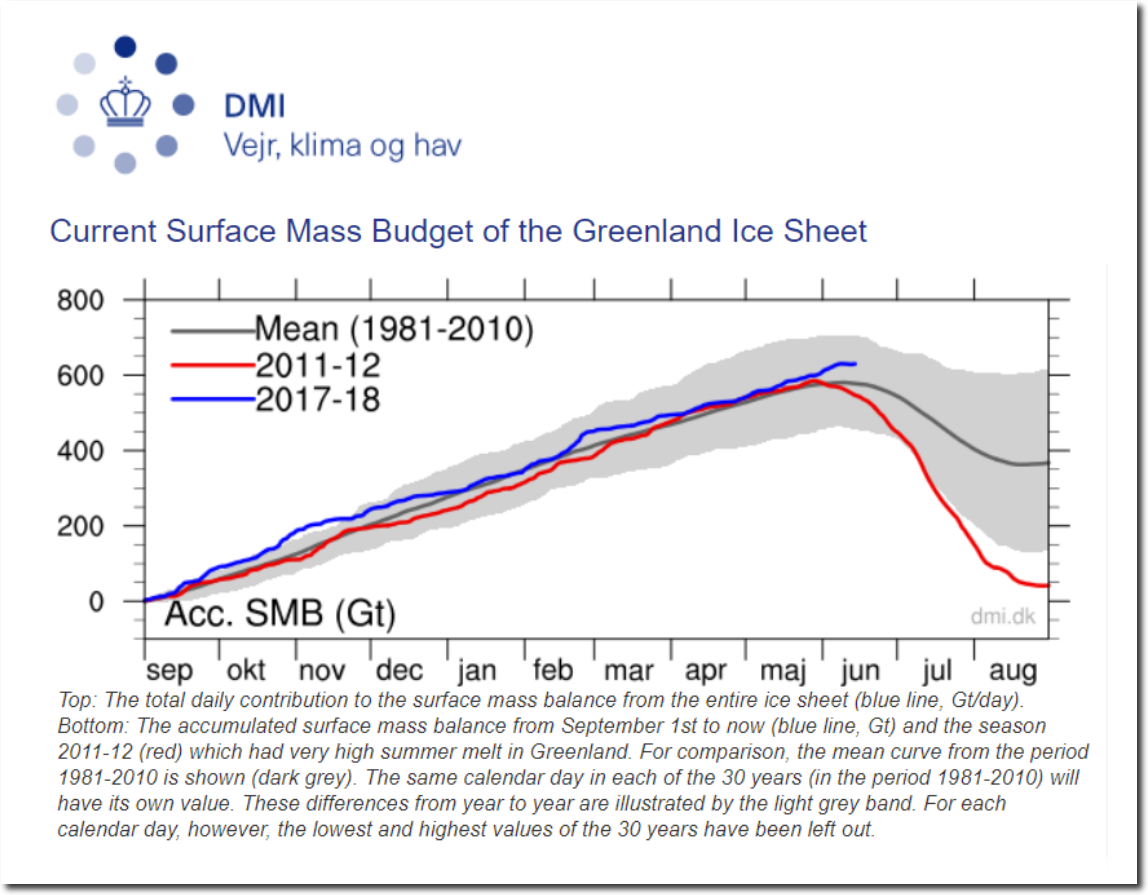
Greenland’s largest glaciers have been expanding over the past six years.

https://go.nasa.gov/2ylEMDl

The surface mass balance is rapidly growing.  But let’s ignore all that and focus on junk science gravity interpretations by climate science hacks.

Greenland Ice Sheet Surface Mass Budget: DMI


via The Deplorable Climate Science Blog

https://ift.tt/2LVoYNd

June 15, 2018 at 10:08AM

Prominent Swiss Meteorologist Says Blaming Weather Events On Climate Change “Unscientific Idiocy”

No one understands the causes of weather better than highly experienced meteorologists. And so when it comes to questions about extreme weather events, there is no one better to ask than prominent Swiss meteorologist Jörg Kachelmann (or Joe Bastardi in the US).

Yesterday at Twitter the veteran, high-profile Swiss meteorologist Kachelmann tweeted about an interview he had given with Austrian online magazine profil.at on the topic of extreme weather in Europe, and how the interview was withdrawn before publication.

Low-blow, dirty media

The main reason behind the withdrawal was Mr. Kachelmann taking issue with what he viewed as low-blow journalism by profil.at, who in the introduction needlessly brought up the phony rape charges lodged against Kachelmann 8 years ago by a scornful ex-girlfriend.

Though the former German flagship ARD television meteorologist was cleared of the charges and got through the legal ordeal, his reputation tragically did not survive the media feeding frenzy and gutter journalism.

To make a long story short, Kachelmann yesterday simply posted a draft of the unpublished profil.at interview at Twitter, before later taking it down.

But I managed to read it and so now report on its content.

Click-hungry sites hyping weather extremes

In the interview, Profil.at questioned Kachelmann about the warmer European springs, weather extremes, serious scientists, and other issues.

On the subject of the recent warmer springs and more severe thunderstorm activity, Kachelmann responded that it has gotten warmer, but that the alleged higher frequency and intensity of extreme weather events has more to do with hype coming from places like Facebook and click-hungry Internet sites.

Not linked to climate change

Kachelmann added it’s normal for large weather patterns “to act up” and that it “has nothing to do with climate change”.

However he does attribute the warmer temperatures and higher humidity to climate change and that it is “statistically significant”, but then reminds that the statistics for weather extremes have yet to be shown as being significant.

“Completely senseless tweets from Greenpeace”

When asked about climate denialism and why people like Donald Trump get votes with climate change denialism, the Swiss meteorologist says: “There’s a lack of scientific knowledge on both sides.”

Next he cited examples from on social media:

Over the last weeks I’ve seen so many completely senseless tweets from Greenpeace and green politicians, who wish to blame without any doubt the daily weather on climate change, often with fake statistics, and so climate deniers are not alone. Serious scientists are working quietly between the embarrassing megaphones on both sides.”

Blame measurement instruments?

As an example of just how absurd the media can be, in the interview profil.at unwittingly displayed a remarkable ignorance of climate (which all-too often prevails among the climate-ambulance-chasing-media) in posing the question: “Are there reliable instruments today that would allow us to determine if a weather event can be attributed to climate change, or indeed to the weather pattern at hand?”

Blaming weather on climate change “idiocy”

Kachelman answers by telling profil.at that weather events unfortunately don’t come with a certificate of origin, and any claim that they do needs to be viewed as “unscientific idiocy”.

via NoTricksZone

https://ift.tt/2HTIeZ9

June 15, 2018 at 09:52AM

Greenland Continues To Gain Ice

For the second year in a row, Greenland’s surface has gained well above average amounts of ice.

Greenland Ice Sheet Surface Mass Budget: DMI

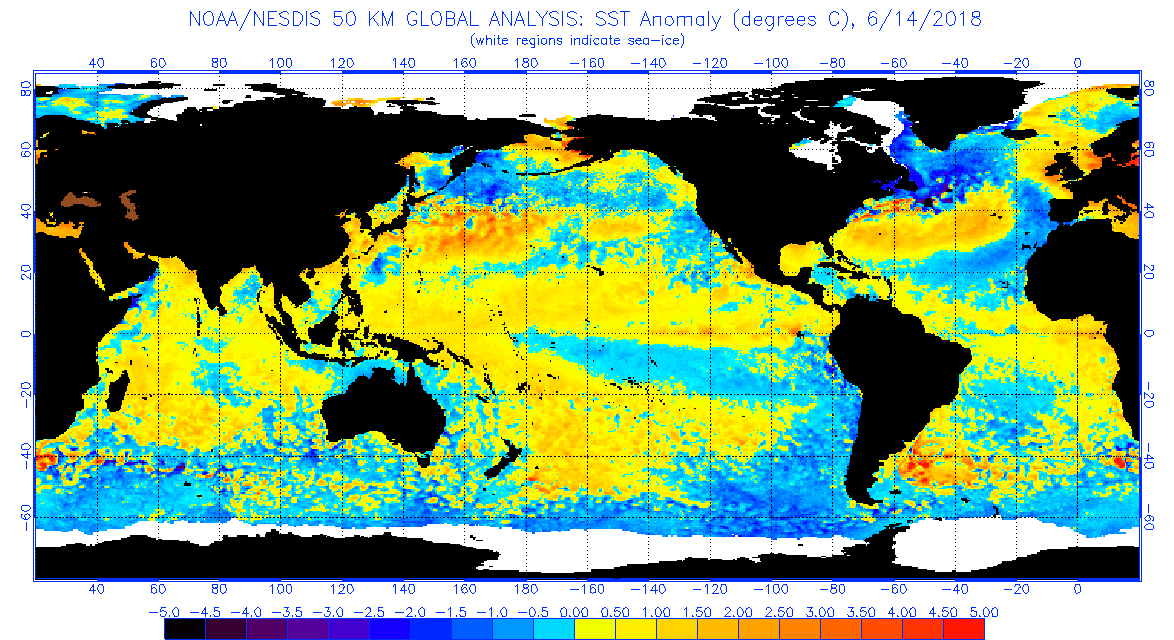
Climate experts have tried to blame this on warm sea surface temperatures, but the water around Greenland is record cold.

anomnight.6.14.2018.gif (1174×640)

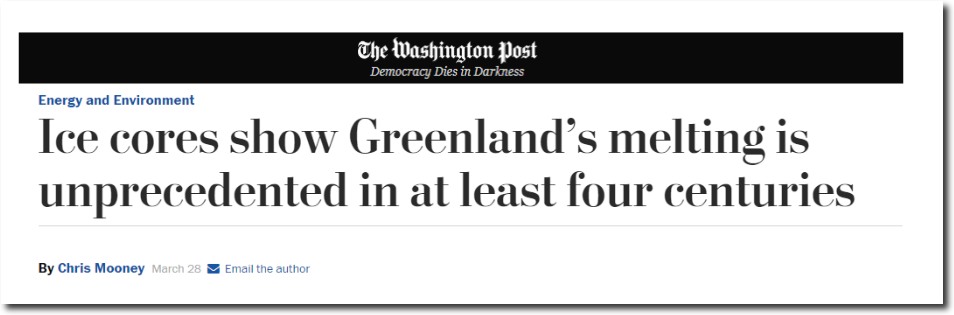
Desperate to keep their scam alive, climate experts have ramped up the BS to the highest level in at least four centuries.

Ice cores show Greenland’s melting is unprecedented in at least four centuries – The Washington Post

via The Deplorable Climate Science Blog

https://ift.tt/2JE5FeN

June 15, 2018 at 08:08AM

Green Loans Dry Up As UK Govt Ends Subsidies For Renewables

A dearth of renewable energy loans has been blamed on over-zealous lenders chasing “low hanging fruit” and an end to a government-backed subsidy programme.

In May, Assetz Capital closed its Green Energy Account (GEA) and in March, defunct P2P platform Trillion Fund paid off its final renewable energy loan. Both platforms have blamed a lack of new loans and an end to government subsidies for the failure of their green initiatives.

However, Bruce Davis, joint managing director of Abundance Investment, told Peer2Peer Finance News that most P2P lenders were disproportionately targeting lower-risk operational loans in the renewable energy space, and ignoring the opportunities in infrastructure and construction.

“In terms of operational assets, there is an abundance of money chasing too few deals at the moment,” said Davis. “The big money tends to go after the low hanging fruit which is operational assets. This means that it is challenging to compete for project tenders in this sector.”

According to Theresa Burton, chief executive of Trillion Fund, the end to government subsidies meant that Britain’s emerging wind and solar farms were unable to scale up to meet demand, and this is what caused deal flow to dry up.

Full story

via The Global Warming Policy Forum (GWPF)

https://ift.tt/2Mul8vO

June 15, 2018 at 07:39AM