Month: June 2018

Global warming news from Argentina, homeland of Pope Francis

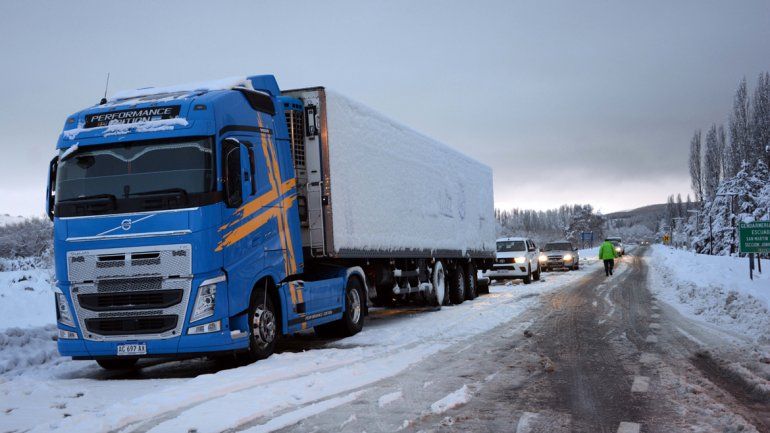
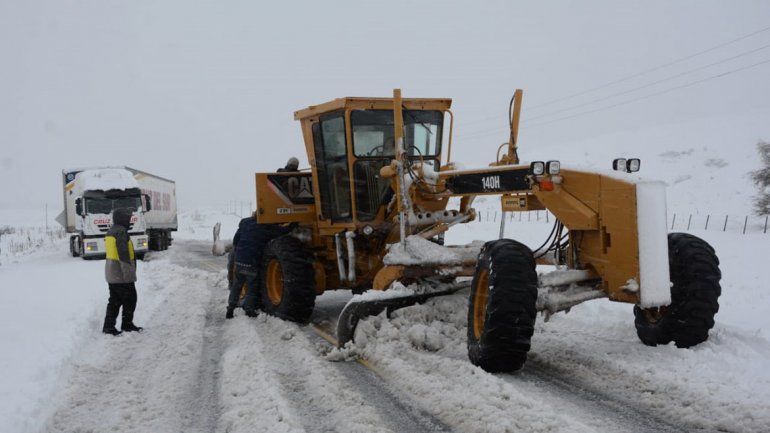
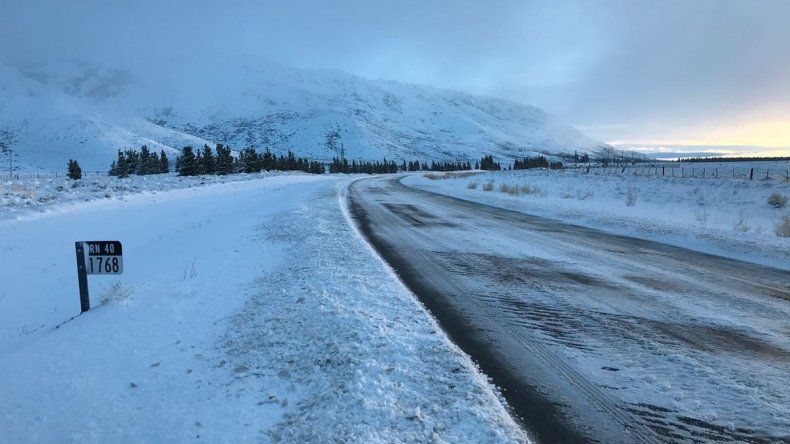
Snow isolates cities and affects basic services. Temperatures 5 to 18 degrees C below zero.
June 11, 2018: Because of the strong snowstorm in the south of the country four provinces are on alert: Mendoza, Neuquén, Río Negro and the mountain range of San Juan.

During the weekend several routes were impassable. Routes 22 and 237 remained cut during the night and in the day only 4 x 4 vehicles or with chains could transit the roads with 20 to 30 cm (8 to 12 inches) of snow in some sections.

Extreme frosts are expected in different parts of the province, with temperatures between 5 and 18 degrees below zero.

-18 ° C It is the minimum temperature in the Neuquén mountain range

https://www.lmneuquen.com/la-nieve-aislo-ciudades-y-afecto-servicios-basicos-n594859
https://media.lmneuquen.com/adjuntos/195/imagenes/003/119/0003119122.jpg?0000-00-00-00-00-00
https://media.lmneuquen.com/adjuntos/195/imagenes/003/119/0003119100.jpg?0000-00-00-00-00-00
https://media.lmneuquen.com/adjuntos/195/imagenes/003/117/0003117905.jpg?0000-00-00-00-00-00

https://tn.com.ar/sociedad/temporal-de-nieve-en-el-sur-hay-cuatro-provincias-en-alerta_874719
https://cdn.tn.com.ar/sites/default/files/styles/embed_image/public/2018/06/10/5b1d2829523d7_IMG-20180610-WA0001.jpg

https://www.elpatagonico.com/nieve-y-hielo-las-rutas-piden-circular-cadenas-n3076134
https://media.elpatagonico.com/adjuntos/193/imagenes/029/195/0029195296.jpg

Thanks to Argiris Diamantis for these links

The post Global warming news from Argentina, homeland of Pope Francis appeared first on Ice Age Now.

via Ice Age Now

https://ift.tt/2l4XfhO

June 12, 2018 at 02:26PM

New radar method makes weather forecasts right as rain

COLUMBIA, Mo. – Meteorologists have known for some time that rainfall forecasts have flaws, as failure to take into account factors such as evaporation can affect their accuracy. Now, researchers from the University of Missouri have developed a system that improves the precision of forecasts by accounting for evaporation in rainfall estimates, particularly for locations 30 miles or more from the nearest National Weather Service radar.

“Right now, forecasts are generally not accounting for what happens to a raindrop after it is picked up by radar,” said Neil Fox, associate professor of atmospheric science in the School of Natural Resources at MU. “Evaporation has a substantial impact on the amount of rainfall that actually reaches the ground. By measuring that impact, we can produce more accurate forecasts that give farmers, agriculture specialists and the public the information they need.”

Mizzou Makes Rainfall Forecasts More Accurate from MU News Bureau on Vimeo.

Fox and doctoral student Quinn Pallardy used dual-polarization radar, which sends out two radar beams polarized horizontally and vertically, to differentiate between the sizes of raindrops. The size of a raindrop affects both its evaporation rate and its motion, with smaller raindrops evaporating more quickly but encountering less air resistance. By combining this information with a model that assessed the humidity of the atmosphere, the researchers were able to develop a tracing method that followed raindrops from the point when they were observed by the radar to when they hit the ground, precisely determining how much evaporation would occur for any given raindrop.

Researchers found that this method significantly improved the accuracy of rainfall estimates, especially in locations at least 30 miles from the nearest National Weather Service radar. Radar beams rise higher into the atmosphere as they travel, and as a result, radar that does not account for evaporation becomes less accurate at greater distances because it observes raindrops that have not yet evaporated.

“Many of the areas that are further from the radar have a lot of agriculture,” Fox said. “Farmers depend on rainfall estimates to help them manage their crops, so the more accurate we can make forecasts, the more those forecasts can benefit the people who rely on them.”

Fox said more accurate rainfall estimates also contribute to better weather forecasts in general, as rainfall can affect storm behavior, air quality and a variety of other weather factors.

The study, “Accounting for rainfall evaporation using dual-polarization radar and mesoscale model data,” was published in the Journal of Hydrology. Funding was provide by the National Science Foundation (Award Numbers IIA-1355406 and AGS-1258358). The content is solely the responsibility of the authors and does not necessarily represent the official views of the funding agency. The School of Natural Resources is located in the College of Agriculture, Food and Natural Resources.

–30–

via Watts Up With That?

https://ift.tt/2HIUrzR

June 12, 2018 at 02:07PM

Man-made warming – on the moon!

WUWT reader “ES” writes: It is not bad enough we have global warning but, now we have warming on the moon. “increased from 1.6 C to 3.5 C over the roughly six-year period measurements were being taken.”

Photo by Gregory H. Revera via Wikipedia

Astronauts’ movement increased subsurface temperatures on the moon, study finds.

The presence of astronauts on the moon caused an unexpected warming of its subsurface temperatures for a period of time in the 1970s, a new study has found after delving into “lost” tapes from the Apollo missions.

In 1971 and 1972, NASA deployed sensors on the moon during the Apollo 15 and 17 missions in an effort to measure the moon’s surface and subsurface temperatures — a project dubbed the heat flow experiment.

Data was collected and beamed back down to Earth until 1977, where scientists were baffled by the gradual warming of the moon’s surface being read by the sensors.

NASA ultimately abandoned the research due to a lack of funding, and only some of the tapes were archived, with the others assumed lost, leaving scientists unable to analyze it further.

But those missing tapes were found recently in the National Archives, said study co-author Walter Kiefer, a senior staff scientist at the Lunar and Planetary Institute. He and his team spent years recovering and interpreting the data in order to pinpoint the source of the warming.

Specifically, the decades-old data showed the moon’s subsurface temperatures — in some areas as deep as three metres — increased from 1.6 C to 3.5 C over the roughly six-year period measurements were being taken.

Bright vs. dark

The moon consists primarily of two different types of rock: anorthosite and basalt. Anorthosite is light in colour and makes the moon bright, while basalt, which is common on Earth, is darker and appears as the maria, or “seas,” on the moon.

Lighter-coloured surfaces reflect more energy outward, while darker surfaces absorb energy.

Using photos from the extremely high-resolution camera aboard the Lunar Reconnaissance Orbiter (LRO) orbiting the moon, the scientists determined that as astronauts walked or drove on the moon, it disturbed the anorthosite lunar soil — also known as regolith — left over from billions of years of bombardment from space rocks.

Apollo Landing Sites. (Click to enlarge.) Image Credit: NASA / LRO

That disruption exposed the darker soil, which then absorbed more of the sun’s energy and ultimately raised the moon’s temperatures.

“You can actually see the astronauts tracks, where they walked,” Kiefer said. “And we can see … where they scuffed dirt up — and what it leaves behind is a darker path. In other words, the astronauts walking on the moon changed the structure of the regolith … in such a way that made it a little bit darker.”

Over years, that energy propagated downward and deeper into the lunar surface, which is what appeared on the newly acquired data record.

Eventually the temperatures would have reached an equilibrium as absorption stopped, said Kiefer, noting it may have already happened.

Since Neil Armstrong took those historic first steps on July 20, 1969, 11 others have walked on the moon.

More here


via Watts Up With That?

https://ift.tt/2y5ODB3

June 12, 2018 at 12:26PM

Compendium Of Germany’s Energiewende


Compendium Of Germany’s Energiewende


Germany’s Energiewende – where we really stand

In March 2017, the German Federal Ministry of Economics and Energy published a brochure announcing that the Energiewende, its renewable energy revolution, was ‘a success story’.

Nothing could be further from the truth.

The Energiewende has the goal of making Germany independent of fossil fuels in the long term. Coal, oil and gas were to be phased out, allowing drastic reductions in carbon dioxide emissions. However, these goals have not even begun to be achieved.

The Energiewende was only driven forward in the electricity sector, which, accounts for only one-fifth of energy consumption. There were hardly any successes in the heating/cooling and transport sectors.

And so carbon dioxide emissions in Germany have been rising since 2009, even though well over a hundred billion euros have been spent on the expansion of solar and wind energy over the same period. The financial obligations undertaken in the process will continue to burden taxpayers for another two decades and will end up costing German consumers a total sum of around 550 billion euros.

Despite this enormous effort, security of supply is increasingly under threat. At the same time, people and the biosphere are suffering; wildlife protection has become subordinated to climate mitigation, even though the possibility of achieving the goals of reducing carbon dioxide emissions is becoming increasingly distant and the measures for the energy transition seem to become more and more questionable from a constitutional point of view.

In this review we would like to inform a public debate and set out a reasonable course for energy policy in Germany.

via The Global Warming Policy Forum (GWPF)

https://ift.tt/2Mmzu15

June 12, 2018 at 11:05AM