Month: June 2018

Vox: “Electric vehicles are gaining momentum, despite Trump”… Because S-curve!

Guest post by David Middleton

From the never-ending font of infotainment, David Roberts of Vox…

Electric vehicles are gaining momentum, despite Trump

Policymakers and analysts are digging into the details of how to get more EVs on the road.

By David Roberts Jun 28, 2018

The transportation sector today emits more carbon than any other sector of the US economy. And it is shaping up to be the next big battle in the long fight to decarbonize.

On one side of that battle: the Trump administration, a few US automakers, and Koch Industries, who would like to stymie or at least delay the electrification of vehicles and continue the use of fossil fuels.

On the other side: California, a coalition of like-minded states, most automakers, a growing roster of utilities, and climate hawks. All of them are eager to accelerate the shift to electric vehicles (EVs), so that the sector can be run on increasingly clean grid power.

Lately, the Trumpian side has had the upper hand. EPA Administrator Scott Pruitt has signaled that he wants to freeze fuel-economy standards at 2020 levels, while Koch-funded groups are fighting EV incentives and blocking public-transit projects around the country. And low oil prices have kept gas prices down, which means American consumers are once again opting for SUVs and trucks. Cars are practically disappearing from the market; Ford plans to stop selling almost all its cars by 2020.

bloomberg_suvs (1)bloomberg_suvs (1)

But underneath the surface, there is a frenzy of activity on the other side. It’s not just that states are pushing back and beginning to set their own stringent goals (like California’s, to put 5 million EVs on the street by 2030). It’s also that a broader coalition is taking on the real nuts and bolts of electrifying the US fleet, working out the details and best practices that will be necessary to put ambitious plans into motion.

[…]

Vox

Are EV’s gaining momentum?  Or does Mr. Roberts assume they are gaining momentum because the Peoples Republic of California is gaining momentum in setting goals?  Or, do futurists simply have difficulty conjugating verbs?

Mr. Roberts included a nice Bloomberg chart of SUV’s overtaking boring old cars in US sales.  If the article is about EV’s gaining momentum on the “front end of a steeply rising S-curve”… Why not plot a graph of EV’s gaining momentum relative to SUV’s… or at least gaining momentum relative to the cars that “are practically disappearing from the market”?  Well, the short answer is that EV’s fall about 190,000 monthly units below the bottom of the Bloomberg chart.

Vox_NosenseVox_Nosense

Monthly US EV sales from https://ift.tt/2oYZgk5

Mr. Roberts…

Mr. Data just can’t stop laughing at you.

However, Mr. Roberts does have a point: EV sales are what they are, despite Trump.

Regarding “gaining momentum”…

Definition of gather/gain momentum
: to move faster * The wagon gathered/gained momentum as it rolled down the hill.

Merriam-Webster

I don’t think so…

EVSalesEVSales

Linear ≠ Gaining Momentum

Oh… Wait a second, Mr. Roberts also wrote this:

We are on the front end of a steeply rising S-curve, a rate of change not seen in the US transportation sector for decades. The temporary triumphs of the luddites in power should not obscure the fact that the work of making those forecasts real is beginning in earnest.

Are EV’s on the front end of an S-curve?  Or are they on the steeply rising bit of an S-curve?

An S-curve is a logistic function.  If EV sales are “gaining momentum,” they are somewhere between 10% and 50% of their ultimate market penetration.

Peak_EVsPeak_EVs

An S-curve is a logistic function. The peak rate of growth occurs when half of the total is achieved. Peak Oil (AKA the Hubbert equation) is also a logistic function.

If EV sales are following an S-curve and are on the cusp of the “gaining momentum” bit, they have already achieved about 10% of their ultimate market penetration.  With a current market share of 1%, EV sales will max out at about 10% of US auto sales and peak EV sales growth will occur at about 5% market penetration.

Tony Stark Elon Musk and other futurists often claim that EV sales will follow an S-curve.  This leads to the question, “Do they know that an S-curve is a logistic function?”  I’m fairly certain that Tony Stark Elon Musk is aware of this… David Roberts of Vox, on the other hand…

So… Is the “S-curve” meme just a green propaganda tool to explain away the glacially slow pace of EV sales growth?   Or do the S-curve aficionados not understand what a logistic function is?

Here’s the really funny bit:  The longer EV sales plod along at a slow, linear rate of growth, the deeper the ultimate market share will be… if they are truly following an S-curve.

MAGA!

via Watts Up With That?

https://ift.tt/2yNspE6

June 28, 2018 at 05:30PM

Highlights From Today’s Testimony

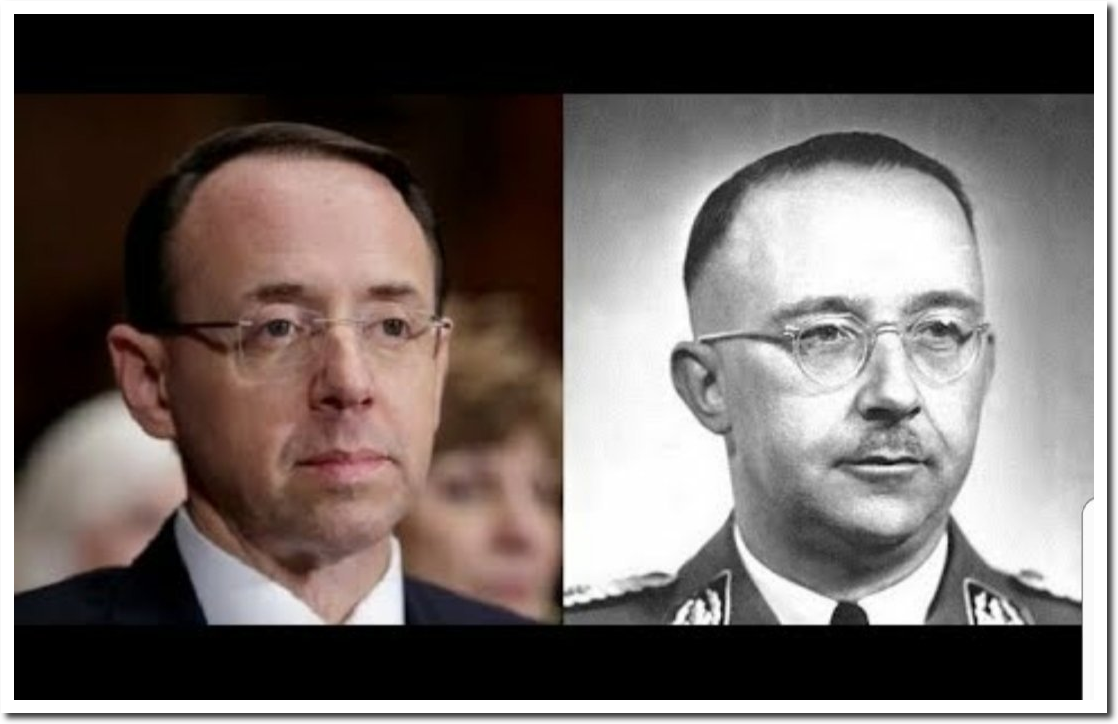
The smirk.

via The Deplorable Climate Science Blog

https://ift.tt/2NarQXY

June 28, 2018 at 05:19PM

SHOCKER: RECYCLING PLASTIC IS MAKING OCEAN LITTER WORSE

From the GWPF and the “Great Pacific Recycling Patch” department.

Save The Oceans – Stop Recycling Plastic – video follows

London 28 June: An explosive report from the Global Warming Policy Foundation (GWPF) reveals that efforts to recycle plastic are a major cause of the marine litter problem. The report, written by public health expert Dr Mikko Paunio, sets out the case for incinerating waste rather than trying to recycle it.


* Most of the plastic waste comes from just a few countries, mostly in Asia and Africa.

* 25% is “leakage” from Asian waste management processes — the rest is waste that has never been collected, but is simply thrown into rivers.

* But European countries ship inject huge quantities of waste into Asian waste management streams, ostensibly for recycling. As much as 20% — millions of tons every year — ends up in the oceans and will continue to do so.

* Since the Chinese banned waste imports at the start of the year, shipments have been diverted to other Asian countries with even weaker environmental controls (Figure 1).

* EU recycling is therefore a major contributor to marine waste and increasing recycling will therefore simply increase marine litter.

Author Dr Mikko Paunio says

“It is clear that the European contribution to marine waste is a result of our efforts to recycle. However, several countries have already shown that they can reduce this contribution to near zero, by simply incinerating waste”.

Despite this success, the EU is trying to redouble recycling efforts and to close down the incineration route, mistakenly believing that this will reduce carbon emissions. As Dr Paunio puts it,

“The effects look as though they will be appalling. We can expect a great deal more plastic to end up in the environment, and in the oceans in particular. If the EU was serious about its war against marine pollution it should consider banning the export of plastic recyclate rather than banning plastic straws or taxing incineration.”

Figure 1: UK waste exports, 2017 versus 2018. Source: British Plastic & Rubber


via Watts Up With That?

https://ift.tt/2N9og0D

June 28, 2018 at 05:01PM

New York EPA Lawsuit – Climate Hydrofluorocarbon Fight Heats Up

Guest essay by Eric Worrall

US States led by New York are suing the EPA to try to prevent Pruitt from reversing Obama era rules limiting the use of HFCs.

A.G. Underwood Sues EPA Over Illegal Rollback Of Key Climate Protection Regulation

AG Underwood Leads Coalition of 11 AGs, Charging EPA with Illegally Seeking to Roll Back Prohibition on Powerful Climate Change Pollutants Known as Hydrofluorocarbons

HFCs are Fastest Growing Source of GHG Emissions; Original EPA Rule Would Avoid Up to 31 Million Metric Tons of GHG a Year

NEW YORK – New York Attorney General Barbara D. Underwood, leading a coalition of 11 Attorneys General, today filed suit against the Environmental Protection Agency (EPA) for seeking to illegally roll back key climate protection regulations adopted in 2015. Specifically, the coalition charges that EPA violated the federal Clean Air Act when it effectively rescinds regulations prohibiting the use of hydrofluorocarbons (HFCs) – which are extremely potent climate change pollutants – through “guidance,” rather than a public rulemaking process, as required by the law.

Lifting limits on the use of HFCs will damage efforts to combat climate change. When it finalized its HFC rule in 2015, EPA estimated that the rule would avoid 26 to 31 million metric tons of greenhouse gases annually by 2020. A reduction of 30 million metric tons is approximately equivalent to 6.4 million passenger vehicles driven for one year, or the annual energy use for 3.2 million homes.

“The Trump EPA is seeking to gut critical climate protection rules through the backdoor – once again endangering New Yorkers while thumbing their nose at the law,” Attorney General Underwood said. “My office will continue to fight back against the Trump Administration’s brazen disregard for rule of law, and the health, safety, and welfare of New Yorkers.”

Joining Attorney General Underwood in the lawsuit are the Attorneys General of California, Delaware, Illinois, Massachusetts, Minnesota, New Jersey, Oregon, Vermont, Washington, and the District of Columbia, and the Pennsylvania Department of Environmental Protection.

Since 1990, the Clean Air Act has required EPA to phase out chemicals such as chlorofluorocarbons (CFCs), which destroy the earth’s ozone layer. The law included a “Safe Alternatives Policy” to ensure that when manufacturers replaced CFCs and other ozone-depleting substances in their products, their replacements would “reduce overall risks to human health and the environment.” Pursuant to this provision of the law, in 2015, EPA finalized a rule that prohibited or limited the use of HFCs as replacements for ozone-depleting substances due to their potency as climate change pollutants.

EPA’s 2015 rule is a vital to addressing climate change. HFCs are thousands of times more potent for global warming than carbon dioxide and are the fastest growing source of emissions in the United States and globally. Controlling HFCs are also vital to New York’s goal of reducing climate change pollution emissions 80 percent by 2050, as by 2050 the chemicals will account for 25 percent of the state’s emissions.

Two manufacturers of HFCs subsequently sued EPA over the 2015 rule.  In deciding that suit, the U.S. Court of Appeals for the District of Columbia unanimously affirmed EPA’s legal authority to designate HFCs as prohibited replacements for ozone-depleting substances. However, in a split decision, the court also ruled that the Agency lacked authority to require a manufacturer that has already replaced an ozone-depleting substance with HFCs to switch to a safer alternative. The court partially vacated the rule — solely with respect to this requirement – and remanded it back to EPA.

In April of this year, EPA Administrator Pruitt issued a document, styled as “guidance,” that effectively rescinds the 2015 rule in its entirety. That guidance, issued without public notice and opportunity for comment, states that the Agency is voiding the HFC limits adopted in the 2015 rule “in their entirety” – including those affirmed by the D.C. Circuit court.

EPA’s decision to void the rule completely will likely result in a significant increase in HFC emissions. For example, EPA estimated in 2016 that there are nearly 200,000 commercial refrigeration units nationwide that use ozone-depleting substances. Because of EPA’s new guidance, those units are no longer prohibited from switching to HFCs – despite the court’s explicit ruling that this aspect of the 2015 rule was lawful.  EPA has pledged to undertake a rulemaking to address the court’s decision, but has not provided any timetable for doing so.

Today’s lawsuit was filed in the U.S. Court of Appeals for the District of Columbia Circuit and charges that Administrator Pruitt’s use of guidance to rescind the 2015 rule violates the Clean Air Act. Under the Act, the guidance is a substantive rule that required public notice and comment prior to being finalized.

This matter is being handled for Attorney General Underwood by Senior Counsel for Air Pollution and Climate Change Litigation Michael J. Myers, Affirmative Section Chief Morgan A. Costello, Assistant Attorney General Joshua M. Tallent, and Staff Scientist Charles Silver. The Environmental Protection Bureau is led by Bureau Chief Lemuel M. Srolovic and is part of the Division of Social Justice, which is led by Executive Deputy Attorney General for Social Justice Matthew Colangelo.

Source: https://ag.ny.gov/press-release/ag-underwood-sues-epa-over-illegal-rollback-key-climate-protection-regulation

The lawsuit filed by AG Underwood is available here.

This issue goes back to former President Obama’s war on safe refrigerants.

HFCs are powerful greenhouse gasses which opponents claim pose a threat even in tiny concentrations. This has led to ridiculous claims like the claim that the use of asthma inhalers is heating the planet.

Western hysteria over HFCs has also led to bizarre international diplomatic incidents. In 2011 China threatened to vent vast quantities of HFCs unless they received billions of dollars in climate compensation. There were even suggestions that China was deliberately producing excess HFCs to qualify for greater climate payouts from the West.

The available alternatives to HFCs or CFCs are flammable, toxic or both. A HFC leak from your home refrigerator just means your fridge stops working. A flammable refrigerant gas leak or ammonia leak could be more serious.

In my opinion this lawsuit is just another example of green misanthropy. The safety of humans never seems that important to climate warriors. I’m not convinced that the alternatives to HFCs are safe, but this won’t prevent greens from trying to force the adoption of in my opinion dubious alternatives to harmless HFCs if they can make it happen.

via Watts Up With That?

https://ift.tt/2KumiGl

June 28, 2018 at 03:57PM