Month: June 2018

How to Crash the Earth

On December 28th, 1978, a DC8 flying into Portland Oregon from New York City (United Airlines flight 173) was on final approach, when a cockpit light indicated that there was a nose-gear problem. The crew needed time to investigate, so the captain put the plane into an emergency holding pattern. As he did so, the flight engineer warned that the fuel state was critical, saying, “Fifteen minutes is gonna run us really low here”. But he never raised his concerns again, not even after more than fifteen minutes had passed. If he was at all worried that the captain did not appear to heed his warning, this certainly isn’t manifest in the voice recorder transcript. Tragically, the plane did run out of fuel and crashed seven miles short of the airport perimeter, killing the flight engineer and nine other souls on board. I’m sure you’ll agree that was a high price indeed to pay for reticence.

This and similar incidents led the aviation industry to look into what is known as ‘cockpit culture’, in which the pilot behaves autocratically and shows insufficient regard for the input provided by supporting crew members—these crew members, in their turn, appearing to be intimidated by the captain’s authority. As a result of these investigations, aircrew training was radically revised and the industry introduced something it called ‘Crew Resource Management’ (CRM).

CRM is designed to improve teamwork, which it does so primarily by improving communication between crew members, in particular by teaching junior crew members how to question the pilot’s actions (or inaction) without the pilot feeling that his or her authority is being compromised. For example, one may need to question a pilot that starts flipping switches that shouldn’t be flipping switched. The effect of CRM is to maximise use of crew resources and, most importantly, promote situational awareness in the cockpit.

If accident statistics are anything to go by, the introduction of CRM would appear to have been somewhat successful, so much so that versions of it can now be found in other sectors; for example, in the offshore oil industry, the fire service, and the medical profession. And then there is the maritime profession, which has its own version, referred to as ‘Bridge Resource Management’ (although it seems the captain of the Concordia may have mislaid his BRM manual).

Such widespread adoption amongst the various sectors is understandable. So the question isn’t why has CRM become so widespread—the question is why isn’t it now universal. For example, surely there are plenty of political and social scenarios which could benefit from the promotion of situational awareness. And if CRM can teach us anything about how this may be achieved, then we should be taking note.

So what is this magic formula that has transformed accident statistics across so many industries? Transport Canada’s CRM training manual sums it up very nicely in its introduction, when it says:

“The key to the success of a CRM program is the mutual respect and confidence that is created among crew members, which fosters an environment that is conducive to openness, candour and constructive critique.”

Well this definitely resonates with me. I don’t remember flying any aeroplanes during my career, but I do remember having many a dog-fight with senior management, in which I could have made an important contribution to the company’s situational awareness, had it not been for the lack of professional respect I encountered—especially in my capacity as quality manager.

Such disrespect could take a rather extreme form. In fact, sometimes it felt like a form of recreational persecution; not really a witch hunt, more like a fox hunt, in which gratuitous, quality manager baiting became a right of passage into senior management. When daddy gorilla is having his sport, there is no room for situational awareness. But you see, that is the defining characteristic of authority—it survives only because it is successful in discrediting alternative views. It is rarely founded upon mutual respect, and it hardly ever fosters an environment that is conducive to openness, candour and constructive critique.

It hardly needs me to point out how this dynamic plays out in the world of climate science. Within the profession, judicious grant approvals and pal review have done a mighty fine job of ensuring that those views that concur with the approved orthodoxy prevail. And woe betide anyone who lies outside that club of peer-reviewed scientists, if they were to dare to suggest that they have anything to offer to improve situational awareness. Furthermore, the testimony from former members of the IPCC, having resigned in protest over editorial abuse during the production of the Assessment Reports, hardly inspires confidence. If I could use any phrase to sum up the customary attitudes, I think it would be ‘cockpit culture’.1

We can’t know exactly what was going on in the minds of those who were on the flight-deck of flight 173. But if the black box transcript is anything to go by, long before the plane hit the ground, the science had been settled and there was no longer any meaningful debate to be had. A more vociferous flight engineer might have saved the day but it is highly likely that the individual concerned had long before learnt the professional value of silence; and this proved a very difficult lesson to unlearn, even when his life depended on it.

The message you take away from this anecdote will depend very much upon the position you take in the climate science debate. Does the flight engineer represent the climate scientists warning that planet Earth will crash if no-one listens to them? Or was the pilot representative of the authorities who fail to see the folly of trying to keep the global economy in the air without the aid of fossil fuel? Either way, the real lesson is this:

The key to success in tackling the climate change issue will be the mutual respect and confidence that is created in a society that fosters an environment conducive to openness, candour and constructive critique. Anything short of that will crash the plane.

Footnote:

1. Read here for a timely example of the disquiet that cockpit culture is still causing on the climate science flight-deck.

via Climate Scepticism

https://ift.tt/2tpACZl

June 20, 2018 at 11:49AM

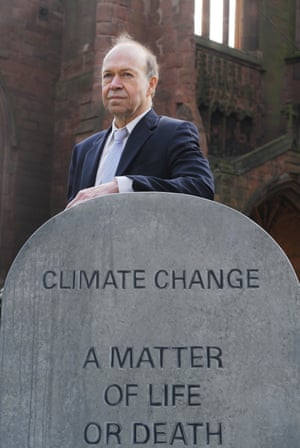
Hansen – 30 years on, world is failing ‘miserably’ to address climate change

By Paul Homewood


From the Guardian:


image

Thirty years after a former Nasa scientist sounded the alarm for the general public about climate change and human activity, the expert issued a fresh warning that the world is failing “miserably” to deal with the worsening dangers.

While Donald Trump and many conservatives like to argue that climate change is a hoax, James Hansen, the 77-year-old former Nasa climate scientist, said in an interview at his home in New York that the relevant hoax today is perpetrated by those leaders claiming to be addressing the problem.

Hansen provided what’s considered the first warning to a mass audience about global warming when, in 1988, he told a US congressional hearing he could declare “with 99% confidence” that a recent sharp rise in temperatures was a result of human activity.

Since this time, the world’s greenhouse gas emissions have mushroomed despite repeated, increasingly frantic warnings about civilization-shaking catastrophe, from scientists amassing reams of evidence in Hansen’s wake.

“All we’ve done is agree there’s a problem,” Hansen told the Guardian. “We agreed that in 1992 [at the Earth summit in Rio] and re-agreed it again in Paris [at the 2015 climate accord]. We haven’t acknowledged what is required to solve it. Promises like Paris don’t mean much, it’s wishful thinking. It’s a hoax that governments have played on us since the 1990s.”

Hansen’s long list of culprits for this inertia are both familiar – the nefarious lobbying of the fossil fuel industry – and surprising. Jerry Brown, the progressive governor of California, and the German chancellor, Angela Merkel, are “both pretending to be solving the problem” while being unambitious and shunning low-carbon nuclear power, Hansen argues.

James Hansen: ‘Promises like Paris don’t mean much, it’s wishful thinking. It’s a hoax that governments have played on us since the 1990s.’

There is particular scorn for Barack Obama. Hansen says in a scathing upcoming book that the former president “failed miserably” on climate change and oversaw policies that were “late, ineffectual and partisan”.

Hansen even accuses Obama of passing up the opportunity to thwart Donald Trump’s destruction of US climate action, by declining to settle a lawsuit the scientist, his granddaughter and 20 other young people are waging against the government, accusing it of unconstitutionally causing peril to their living environment.


Read the full story here.

via NOT A LOT OF PEOPLE KNOW THAT

https://ift.tt/2JXrwhG

June 20, 2018 at 11:10AM

BBC Discover UHI!

By Paul Homewood


h/t Joe Public


BBC Weather discovers UHI effect!


image

https://twitter.com/bbcweather/status/1009205777117188097

via NOT A LOT OF PEOPLE KNOW THAT

https://ift.tt/2M96Boi

June 20, 2018 at 11:10AM

Existing studies may have misgauged how carbon is distributed around the world


From PRINCETON UNIVERSITY

Ocean’s heat cycle shows that atmospheric carbon may be headed elsewhere

As humans continue to pump the atmosphere with carbon, it’s crucial for scientists to understand how and where the planet absorbs and naturally emits carbon.

A recent study in the journal Nature Geosciences examined the global carbon cycle and suggests that existing studies may have misgauged how carbon is distributed around the world, particularly between the northern and southern hemispheres. The results could change projections of how, when and where the currently massive levels of atmospheric carbon will result in environmental changes such as ocean acidification.

By reexamining ocean circulations and considering the carbon-moving power of rivers, the study’s authors suggest that as much as 40 percent of the world’s atmospheric carbon absorbed by land needs to be reallocated from existing estimates. In particular, the Southern Ocean encircling Antarctica and forests in the northern hemisphere — while still substantial absorbers or “sinks” of carbon –may not take up as much as scientists have figured.

“The carbon story we got is more consistent with what people have observed on the ground,” said first author Laure Resplandy, an assistant professor of geosciences and the Princeton Environmental Institute.

“Rivers have been largely overlooked,” Resplandy said. “We need to better constrain the transport of carbon from the land to the ocean by rivers. Otherwise, this carbon is attributed to the land sink and is missing from the ocean sink. If carbon goes into the land or into the ocean, it doesn’t have the same impact.”

Resplandy and her co-authors used models and field observations to find that the world’s oceans transport heat between the northern and southern hemispheres in the same way that carbon is transported. The transport of heat, however, is easier to observe. By tracking this heat, the researchers discovered that the ocean in the southern hemisphere is a much smaller carbon sink than previously thought and that the land at the same latitude is an almost non-existent source of carbon.

At the same time, the land in the northern hemisphere is a much smaller sink, meaning that it absorbs less carbon than climate models had accounted for. Instead, the researchers found that this carbon is sent to the ocean by rivers and transported to the southern hemisphere by ocean currents with 20 to 100 percent more strength than previous studies and models had shown.

For scientists, the world’s carbon “budget” is like a bank ledger, Resplandy said. The carbon being absorbed into the global cycle needs to match the carbon being emitted. While the ocean carbon cycle is well documented, direct observations of carbon flux on land are difficult to obtain and influenced by numerous factors. As a result, the extent to which land acts as a sink or source is largely deduced by assigning it whatever carbon is left over after ocean data are considered, Resplandy said.

“In the southern hemisphere, the ocean sink was overestimated. As a result, the land, which is deduced from observed atmospheric carbon dioxide and the assumed ocean sink in the same region, was found to be a source,” Resplandy said.

“This was highly surprising though as there is not a lot of land mass in the southern hemisphere to sustain this source,” she said. “Our new estimate reconciles this apparent discrepancy by suggesting that there is a weaker ocean sink and close-to-zero land flux in the south.”

In a commentary about the paper published in Nature Geosciences, Andrew Lenton, a research scientist at the Centre for Southern Hemisphere Oceans Research in Australia, wrote that the researchers established a correlation between heat and carbon transport, and showed that the pre-industrial carbon cycle can inform the understanding of the cycle today.

The researchers “provided an important baseline for understanding and attributing changes in land and ocean sinks in response to increasing atmospheric CO2 concentrations,” Lenton wrote. “Their results demonstrate the importance of the pre-industrial carbon cycle in setting the distribution of carbon sinks in the present day, and the power of exploiting the relationship between ocean heat and carbon transport driven by large-scale circulation.”

Scientists need to know how much carbon is entering the oceans, and where, so that they can more accurately project environmental changes that have a global reach, Resplandy said. Oceans, especially in the southern hemisphere, naturally take up carbon and heat from the atmosphere. But the price paid is a warmer ocean and higher acidity that threatens marine life and sea-based economies such as fishing.

“Now it matters to do a better job understanding the ocean,” Resplandy said. “Our main point is that carbon gets re-distributed because it was wrongly allocated. A lot of people had different pieces, but all the pieces weren’t quite fitting together.”

###

via Watts Up With That?

https://ift.tt/2tbHzxK

June 20, 2018 at 11:08AM