Month: June 2018

Ross McKitrick: Global Warming Predictions Have A Big, New Problem — A Reality Check

Looking at the Equilibrium Climate Sensitivity measurements, it might not get as hot some people seem to think

One of the most important numbers in the world goes by the catchy title of Equilibrium Climate Sensitivity, or ECS. It is a measure of how much the climate responds to greenhouse gases. More formally, it is defined as the increase, in degrees Celsius, of average temperatures around the world, after doubling the amount of carbon dioxide in the atmosphere and allowing the atmosphere and the oceans to adjust fully to the change. The reason it’s important is that it is the ultimate justification for governmental policies to fight climate change.

The United Nations Intergovernmental Panel on Climate Change (IPCC) says ECS is likely between 1.5 and 4.5 degrees Celsius, but it can’t be more precise than that. Which is too bad, because an enormous amount of public policy depends on its value. People who study the impacts of global warming have found that if ECS is low — say, less than two — then the impacts of global warming on the economy will be mostly small and, in many places, mildly beneficial. If it is very low, for instance around one, it means greenhouse gas emissions are simply not worth doing anything about. But if ECS is high — say, around four degrees or more — then climate change is probably a big problem. We may not be able to stop it, but we’d better get ready to adapt to it.

So, somebody, somewhere, ought to measure ECS. As it turns out, a lot of people have been trying, and what they have found has enormous policy implications.

To understand why, we first need to delve into the methodology a bit. There are two ways scientists try to estimate ECS. The first is to use a climate model, double the modeled CO2 concentration from the pre-industrial level, and let it run until temperatures stabilize a few hundred years into the future. This approach, called the model-based method, depends for its accuracy on the validity of the climate model, and since models differ quite a bit from one another, it yields a wide range of possible answers. A well-known statistical distribution derived from modeling studies summarizes the uncertainties in this method. It shows that ECS is probably between two and 4.5 degrees, possibly as low as 1.5 but not lower, and possibly as high as nine degrees. This range of potential warming is very influential on economic analyses of the costs of climate change.

The second method is to use long-term historical data on temperatures, solar activity, carbon-dioxide emissions and atmospheric chemistry to estimate ECS using a simple statistical model derived by applying the law of conservation of energy to the planetary atmosphere. This is called the Energy Balance method. It relies on some extrapolation to satisfy the definition of ECS but has the advantage of taking account of the available data showing how the actual atmosphere has behaved over the past 150 years.

The surprising thing is that the Energy Balance estimates are very low compared to model-based estimates. The accompanying chart compares the model-based range to ECS estimates from a dozen Energy Balance studies over the past decade. Clearly these two methods give differing answers, and the question of which one is more accurate is important.

Climate modelers have put forward two explanations for the discrepancy. One is called the “emergent constraint” approach. The idea is that models yield a range of ECS values, and while we can’t measure ECS directly, the models also yield estimates of a lot of other things that we can measure (such as the reflectivity of cloud tops), so we could compare those other measures to the data, and when we do, sometimes the models with high ECS values also yield measures of secondary things that fit the data better than models with low ECS values.

This argument has been a bit of a tough sell, since the correlations involved are often weak, and it doesn’t explain why the Energy Balance results are so low.

The second approach is based on so-called “forcing efficacies,” which is the concept that climate forcings, such as greenhouse gases and aerosol pollutants, differ in their effectiveness over time and space, and if these variations are taken into account the Energy Balance sensitivity estimates may come out higher. This, too, has been a controversial suggestion.

A recent Energy Balance ECS estimate was just published in the Journal of Climate by Nicholas Lewis and Judith Curry. There are several features that make their study especially valuable. First, they rely on IPCC estimates of greenhouse gases, solar changes and other climate forcings, so they can’t be accused of putting a finger on the scale by their choice of data. Second, they take into account the efficacy issue and discuss it at length. They also take into account recent debates about how surface temperatures should or shouldn’t be measured, and how to deal with areas like the Arctic where data are sparse. Third, they compute their estimates over a variety of start and end dates to check that their ECS estimate is not dependent on the relative warming hiatus of the past two decades.

Their ECS estimate is 1.5 degrees, with a probability range between 1.05 and 2.45 degrees. If the study was a one-time outlier we might be able to ignore it. But it is part of a long list of studies from independent teams (as this interactive graphic shows), using a variety of methods that take account of critical challenges, all of which conclude that climate models exhibit too much sensitivity to greenhouse gases.

Policy-makers need to pay attention, because this debate directly impacts the carbon-tax discussion.

Full post

via The Global Warming Policy Forum (GWPF)

https://ift.tt/2ys76I4

June 20, 2018 at 09:56AM

Latest Climate News From The “RIght-Wing Press”

Latest Climate News From The “RIght-Wing Press”

Early in life I had noticed that no event is ever correctly reported in a newspaper.

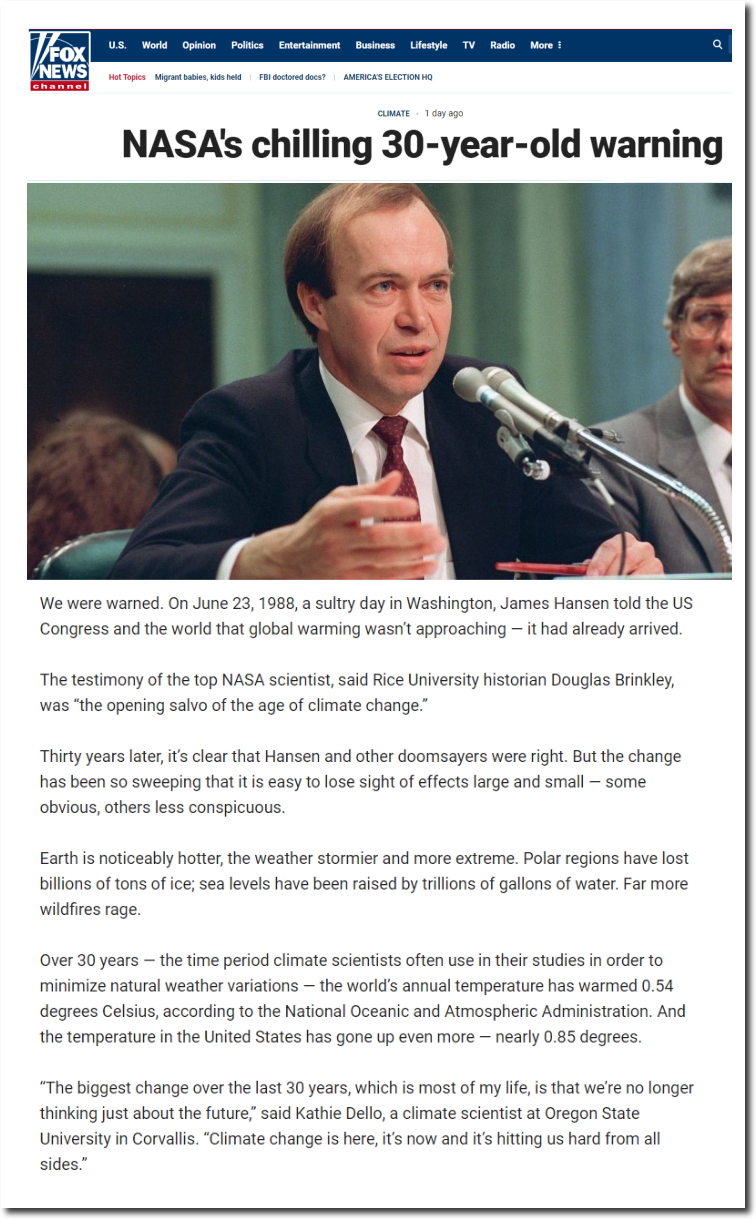
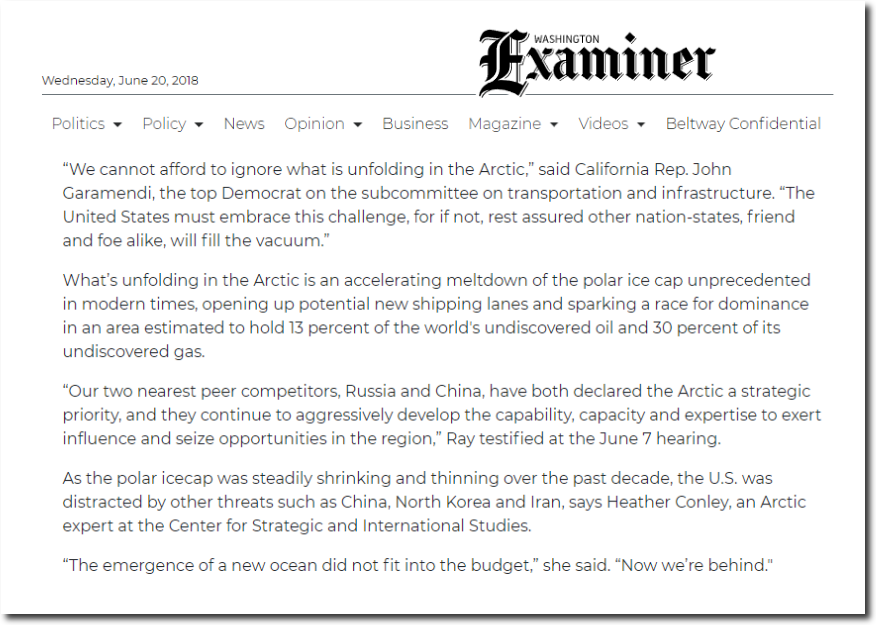
Fox News and the Washington Examiner are pushing some rather spectacular climate idiocy these days. Worse garbage than the New York Times and CNN.

NASA’s chilling 30-year-old warning | Fox News

The next ‘cold’ war: America may be missing the boat in the Arctic

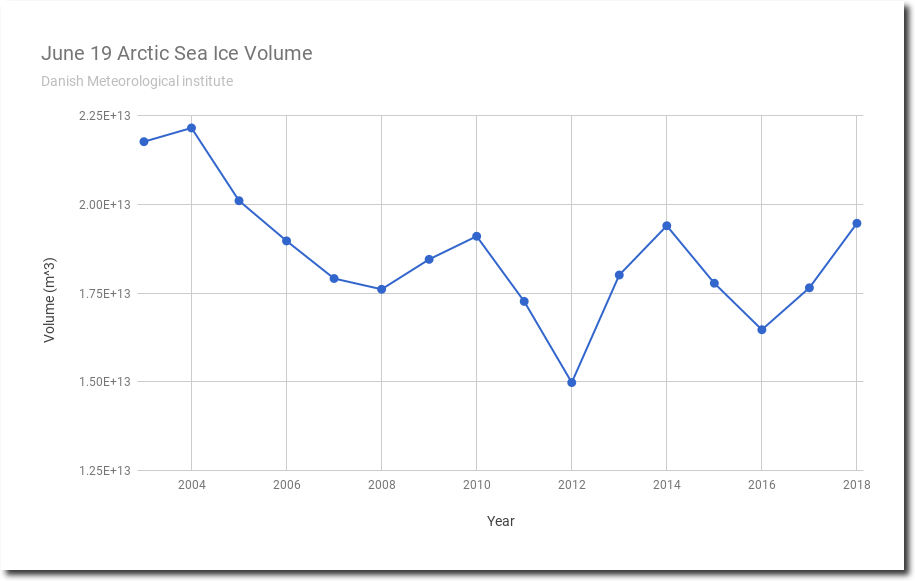
Meanwhile, back in the real world.  Arctic sea ice volume is the highest in the last thirteen years, and melt during the last two years was the slowest on record.

Spreadsheet    Data

This entry was posted in

Uncategorized

. Bookmark the

permalink

.

via The Deplorable Climate Science Blog

https://ift.tt/2Ia2iXk

June 20, 2018 at 09:34AM

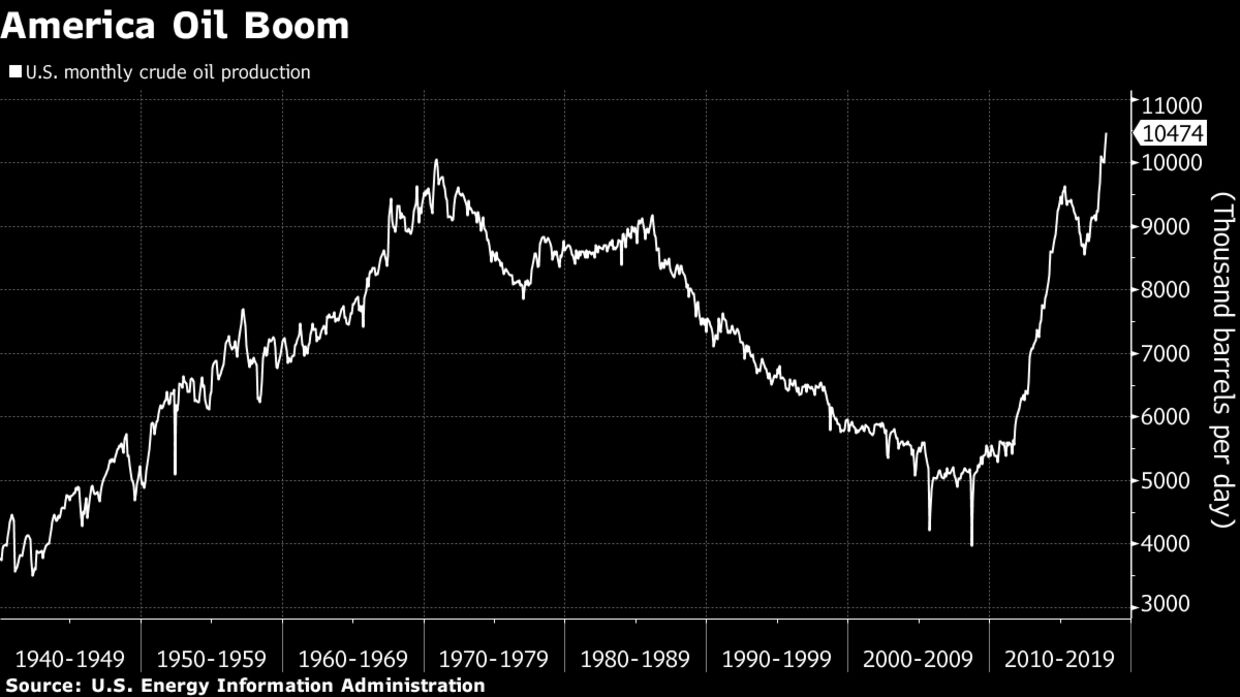
Pipelines Bottleneck: The Biggest U.S. Oil Patch Is Near Its Limit

The biggest U.S. shale region will have to shut wells within four months because there aren’t enough pipelines to get the oil to customers, the head of one of the industry’s largest producers said.

The worsening bottleneck in the Permian region that straddles west Texas and New Mexico offers an unexpected fillip to OPEC and other oil producers outside the U.S., who’ve seen rampant production from America’s shale producers grab market share.

“We will reach capacity in the next 3 to 4 months,” Scott Sheffield, the chairman of Pioneer Natural Resources Co. said in an interview at an OPEC conference in Vienna. “Some companies will have to shut in production, some companies will move rigs away, and some companies will be able to continue growing because they have firm transportation.”

His comments are the strongest indication yet that the growth in the red-hot shale region is about to slow down soon due to a lack of pipeline capacity. The problem has grown so bad that oil companies have been forced to load crude on to trucks and drive it hundreds of miles to pipelines in other parts of the state.

The Permian is growing at 800,0000 barrels a day annually and production currently stands at 3.3 million barrels a day, said Sheffield, who first drilled wells in the region in 1979 and is considered one of the architects of the shale revolution. Total pipeline capacity is 3.6 million barrels, so the region will reach capacity in the next three to four months and the bottleneck isn’t likely to ease for at least a year, he added.

Permian production could remain flat for the next year because of pipeline restraints, Sheffield told a session of the OPEC conference.

Full story

via The Global Warming Policy Forum (GWPF)

https://ift.tt/2toyNLZ

June 20, 2018 at 09:26AM

German National Daily ‘Die Welt’ On CO2 Reduction: “Why Has It Been 5 To Midnight 30 Years Long?”

The sustainable alarm. Commentary at Germany’s ‘Die Welt’: Why has the climate-last-chance alarm been blaring 30 years long now? And why has the planet today “suddenly” just been given yet another 20 years by experts?

Remember how in 2007 Al Gore warned we had only 10 more years to act?

Well, those 10 years have long since expired, and that deadline came and went without the planet changing much. Embarrassed, global warming alarmists quietly pushed the doomsday back once again. This time it was for real.

This has been going on for years now.

Today business journalist Daniel Wetzel here in a commentary at German national daily Die Welt finally is wondering why it’s been “5 to midnight for 30 years now”!

At Twitter here Wetzel remarked:

The end of the world has been postponed: the -budget is now larger than what was given by the last -report. Suddenly 20 years more time, reduction INDCs made in Paris are now enough. When it comes to climate change why has it been 5 to midnight for the last 30 years?”

Doomsday pushed back again…by 20 years!

All the climate alarms of the past 30 years have turned out to be false, and Wetzel notes above that the doomsday clock once again has been reset to give us yet another 20 years!

Over the past 30 years humanity has in fact prospered immensely, we still get our winters, the globe is barely warmer, storms have not been getting worse, and a number of serious studies show no significant sea level rise acceleration.

But this time, the alarmists say, the next 20 years will really be our last chance.

One reader at Twitter commented that it’s “acid rain scare reloaded.”

German power grid turns record costly, inefficient

If anything has changed because of “climate change”, it’s Germany’s electric power supply system. It’s gotten much more unstable and far more expensive because of all the volatile wind and solar power coming online.

In a  recent commentary at the online Die Welt, Mr. Wetzel wrote that Germany’s power grid has become highly unstable and expensive for consumers, mostly due to all the volatile green energies that forced fed into the country’s grid.

According to Wetzel, German consumers were forced to pay a record amount of money “for stabilizing the power grid under the conditions of the Energiewende.”

1.4 billion euros just to keep grid stable

Citing an annual report from the Bundesnetzagentur (Federal Power Grid Agency), power consumers paid a total of 1.4 billion euros for emergency interventions into the power grid, and thus smashing the previous high of 1.1 billion euros set in 2015.

Wetzel also reports that green energy production systems also had to be shut down at times because there was no place to send the unneeded power. Wetzel writes:

With excessive wind power feed in the north, the current leads to a dangerous overloading of the too few power transmission lines.”

Grid interventions almost daily

Wetzel adds that interventions to keep the grid stable occurred almost daily, and that grid operators ordered the shutdown of parks to keep unwanted power from getting fed into the grid (wind park operators still got paid even for the power they never produced). According to Wetzel, grid overload situation occurred on 353 days last year.

German power rates among the highest in the world

Currently German consumers are being saddled with surcharges of 6.96 cents per kilowatt hour just for the grid fees alone and another 6.69 euro-cents for kilowatt hour for the green energy feed-in, the Die Welt commentary writes.

Currently the average German consumer pays 29.44 cents per kilowatt hour, of which about 16 cents are made up of taxes, various fees, and surcharges, Wetzel reports.

In large part due to the Energiewende, Germany’s electricity prices for consumers have skyrocketed over the past decade.


via NoTricksZone

https://ift.tt/2toBiy7

June 20, 2018 at 07:13AM