
Posted: Feb 12, 2019 12:01 AM
The opinions expressed by columnists are their own and do not represent the views of Townhall.com.
The American media has focused recently on the newly released Green New Deal (GND), a resolution sponsored by U.S. Rep. Alexandria Ocasio-Cortez and U.S. Sen. Ed Markey that would fundamentally transform America’s energy policy and move closer to their socialist vision for the country. As a resolution, the GND has no power to actually regulate or tax but gives left-leaning congressmen and potential presidential candidates a vehicle to virtue-signal their embrace of a radical, anti-fossil fuel agenda.
One day before the much-ballyhooed release of the GND, and flying mostly under the radar, President Trump made an announcement that could have more of an effect on green energy than the Cortez-Markey proposal — and in the opposite direction.
That was the president’s February 6 notice that he was nominating David Malpass to replace the outgoing World Bank president. Mr. Malpass, Treasury undersecretary for international affairs and former senior economic advisor for the Trump campaign, has been highly critical of the institution that he is now set to lead.
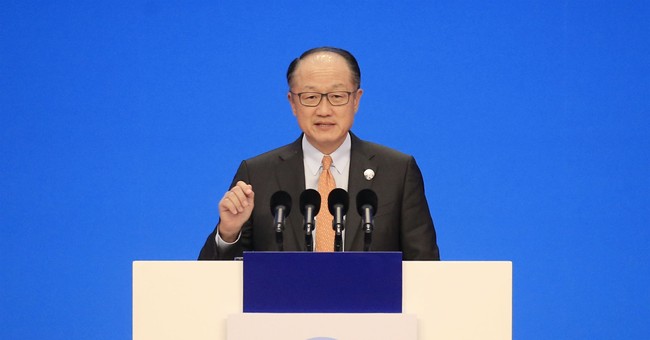
The current leader of the World Bank, Jim Yong Kim, made a surprise announcement in early February that he was leaving three years before the end of his second term. Kim left amid serious conflicts with the Trump administration over its decades-long trend toward investing in climate-change mitigation rather than in its original mission of reducing poverty. According to the World Bank, its dual mission is “ending extreme poverty and promoting shared prosperity.”
The World Bank justifies funding of projects such as large renewable energy initiatives — detailed in their Climate Change Action Plan — with arguments that a shift away from fossil fuels benefits the poor through reduced air pollution. The bank states that it “joined the fight against climate change because it could push another 100 million people into poverty by 2030.” Their plan sets out “ambitious targets to be met by 2020, including helping client countries add 30 gigawatts of renewable energy.” In 2016 the bank announced it would spend 28% of investments on climate-related projects by 2020.
The World Bank aims to help the poverty-stricken, but in truth, it will be the poor who will most feel the burden of the policies the bank endorses. Backing of agreements like the Paris Climate Accord will reduce the availability of inexpensive, reliable energy that can increase prosperity for billions of the poorest. Nearly a billion people do not have the benefit of electricity and another billion have very limited access to the energy standards we take for granted in the western world. In addition, the living standards of all peoples benefit from inexpensive, dependable energy from fossil fuels.
via Watts Up With That?
February 14, 2019 at 12:04PM
 Iowa Climate Science Education