Month: March 2019

The BBC’s Age of Denial

I doubt if a day goes past now without a blast of global warming propaganda from the BBC.

Isabel Hardman has a new five-part series on Radio 4, called the Age of Denial. Although it covers all forms of denial, it is clearly aimed at climate sceptics, as this opening episode makes obvious:

Hardman interviews Kari Marie Norgaard, a social scientist from Oregon, who has written a book about climate change denial.

You can listen to the first five minutes, but to give the gist, Norgaard visited a small town in western Norway in the winter of 2000/01 to do research for a book she was writing. She found that the winter that year was a mild one, with the snow arriving late.

But what really stunned Norgaard was that none of the locals wanted to talk about ‘climate change’, which she was convinced was to blame.

Hardman and Norgaard then discuss various reasons why this should be so, which amounts to no more than a load of psychobabble.

For some reason, it did not occur to either of them to ask what the locals knew already: that it was just the sort of weather event that they, or their forefathers, had seen in the past.

Indeed, when we check the actual data at Bergen, the longest-running site in the region, we find that those winter temperatures in 2000/01, far from being unusual, were the norm in the 1930s and 40s, and not infrequent at other times either:

In the remainder of the episode, Hardman discusses various theories from other psychoanalysts. But it is all just a spurious intellectual attempt to create a condition called ‘Denialism’. No doubt so that climate sceptics can be conveniently labelled and then ignored.

In reality, you don’t need to be a psychologist to understand why so many people are suspicious of what they are told about climate change. The answer lies in the fact that they see no evidence on the ground to support the barrage of apocalyptic warnings showered on them.

People who live near the coast can see with their own eyes that they are not about to be inundated by the sea. Temperature rise has been so small in the last century that most people would not even be aware of it if not told. As for extreme weather, older people know that there have always been floods, droughts, heatwaves and storms. Sadly it is the younger generation, who have no such experience, who are vulnerable to propaganda.

In short, people are far more knowledgeable than the sneering Isabel Hardman gives them credit for. And they know when they are being sold a pup.

Moreover, these ordinary people have far more pressing concerns in their daily lives than to be paranoid about climate change. Perhaps if Hardman came out of her metropolitan BBC bubble and talked to ordinary people, she might find this out for herself.

Rather than trying to package sceptics as people with psychological problems, she might ask why others have become totally paranoid about climate change. When I see school kids questioning the point of going to school when ‘their future could be ruined by climate change’, I truly despair.

What on earth are we doing to these youngsters? Do we really want them growing up so indoctrinated and unable to use their own faculties that they cannot even check the facts for themselves? Do we really want them to grow up so neurotic that they are scared of the weather?

Are we happy to see them marching around like a bunch of zombies, full of meaningless slogans about topics that they don’t have the slightest understanding about?

Full post

The post The BBC’s Age of Denial appeared first on The Global Warming Policy Forum (GWPF).

via The Global Warming Policy Forum (GWPF)

https://ift.tt/2FlTBv4

March 19, 2019 at 05:57AM
Researchers create hydrogen fuel from seawater

Desalination in California

As usual with these types of experiment, nothing can be assumed unless or until the tests of economic and industrial viability have been passed. They say the electrode ‘is able to go more than a thousand hours’ but that’s still only a few weeks. Storage and management of hydrogen is known to be tricky and expensive compared to most other fuels.

Stanford researchers have devised a way to generate hydrogen fuel using solar power, electrodes and saltwater from San Francisco Bay, reports Phys.org.

The findings, published March 18 in Proceedings of the National Academy of Sciences, demonstrate a new way of separating hydrogen and oxygen gas from seawater via electricity.

Existing water-splitting methods rely on highly purified water, which is a precious resource and costly to produce.

Theoretically, to power cities and cars, “you need so much hydrogen it is not conceivable to use purified water,” said Hongjie Dai, J.G. Jackson and C.J. Wood professor in chemistry at Stanford and co-senior author on the paper. “We barely have enough water for our current needs in California.”

Hydrogen is an appealing option for fuel because it doesn’t emit carbon dioxide, Dai said. Burning hydrogen produces only water and should ease worsening climate change problems.

Dai said his lab showed proof-of-concept with a demo, but the researchers will leave it up to manufacturers to scale and mass produce the design.

Tackling corrosion

As a concept, splitting water into hydrogen and oxygen with electricity—called electrolysis—is a simple and old idea: a power source connects to two electrodes placed in water. When power turns on, hydrogen gas bubbles out of the negative end—called the cathode—and breathable oxygen emerges at the positive end—the anode.

But negatively charged chloride in seawater salt can corrode the positive end, limiting the system’s lifespan. Dai and his team wanted to find a way to stop those seawater components from breaking down the submerged anodes.

The researchers discovered that if they coated the anode with layers that were rich in negative charges, the layers repelled chloride and slowed down the decay of the underlying metal.

Continued here.

via Tallbloke’s Talkshop

https://ift.tt/2FcBPsX

March 19, 2019 at 05:51AM

NOAA : “among the eight warmest Februarys on record”

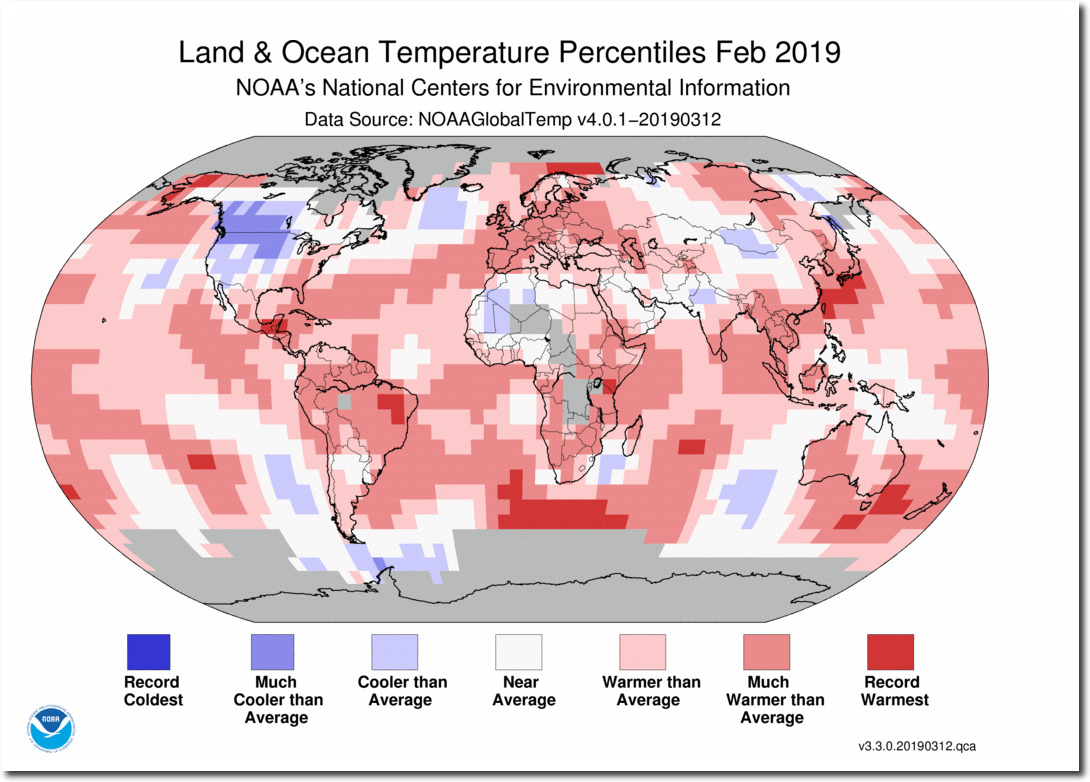
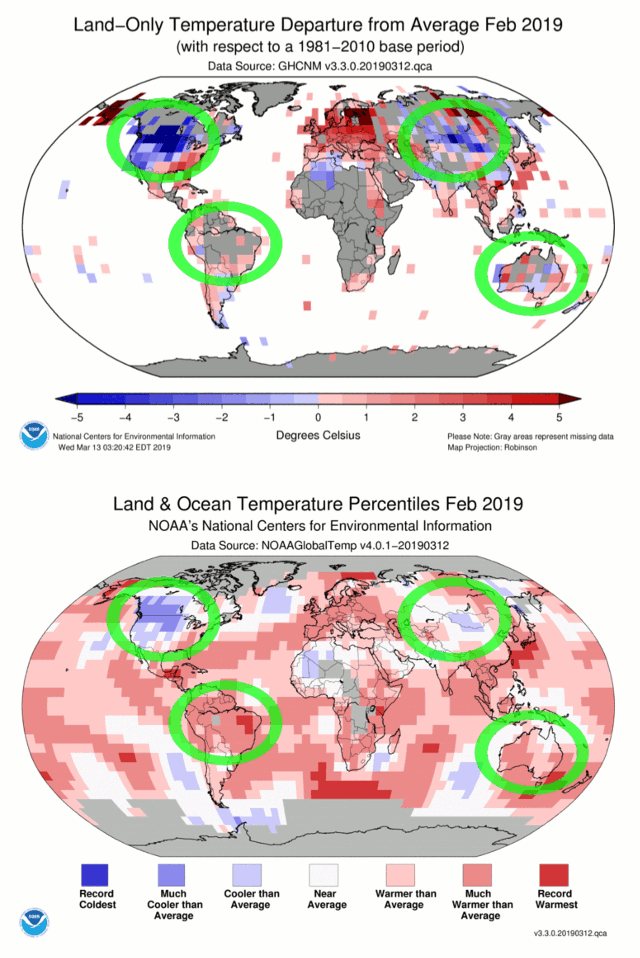
NOAA says last month was “among the eight warmest Februarys on record” in much of the Earth.

According to NCEI’s Regional Analysis, South America, Europe and Oceania had a February temperature that ranked among the eight warmest Februarys on record.

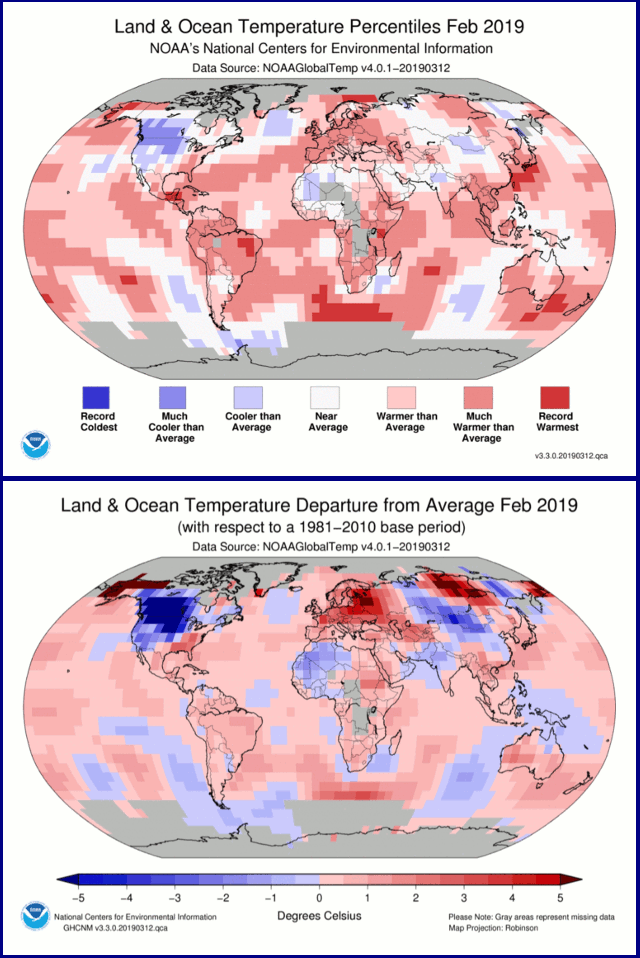
There is no such word as “Februarys” – plural for February is Februaries. But besides the fact they are illiterate, they are also lying.  This is the map they use to justify their claims:

It looks like the world is burning up, with just a few slightly cool areas. It has an official government seal on it, so it must be accurate, right?

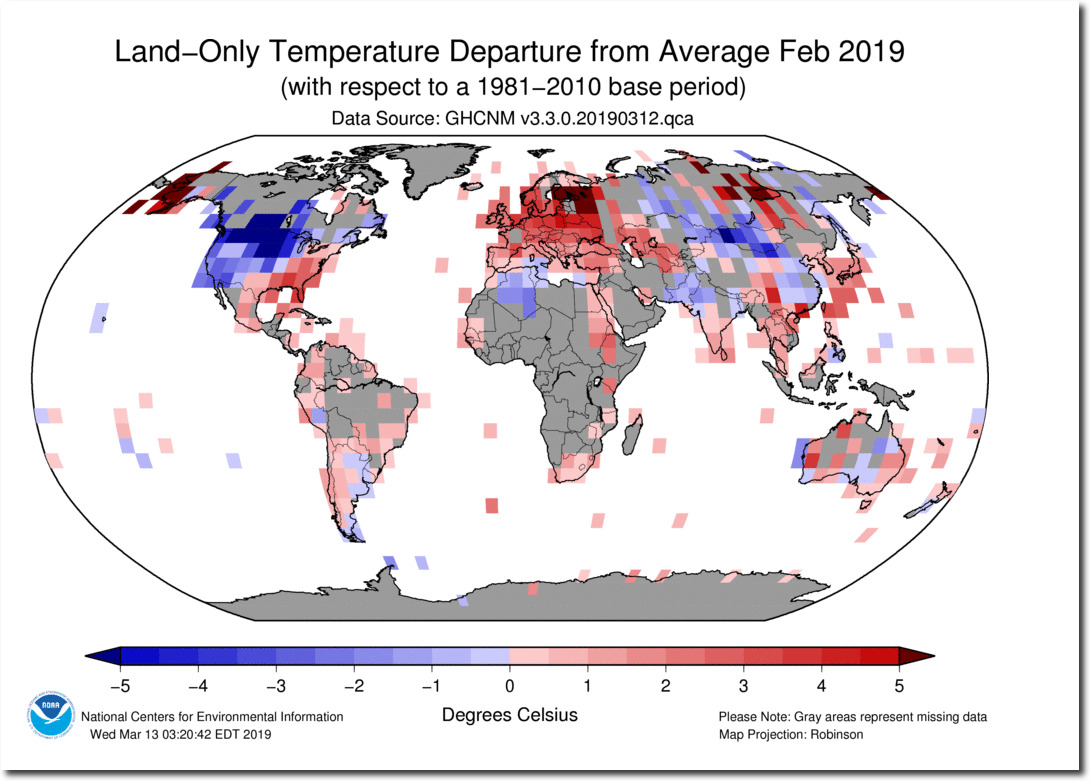
The map below shows where NOAA actually had surface temperatures in February.

201902.gif (1052×743)

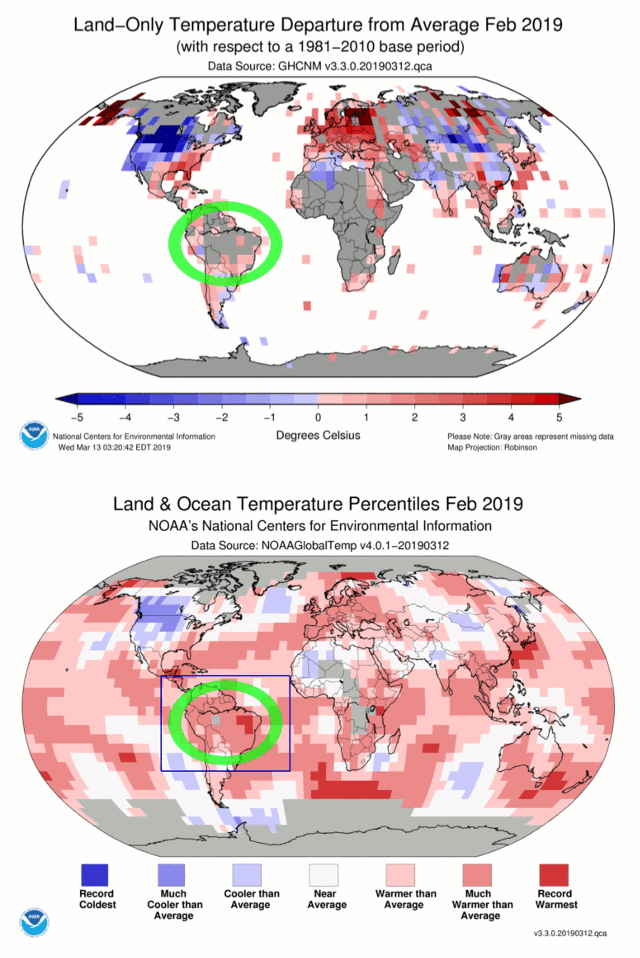
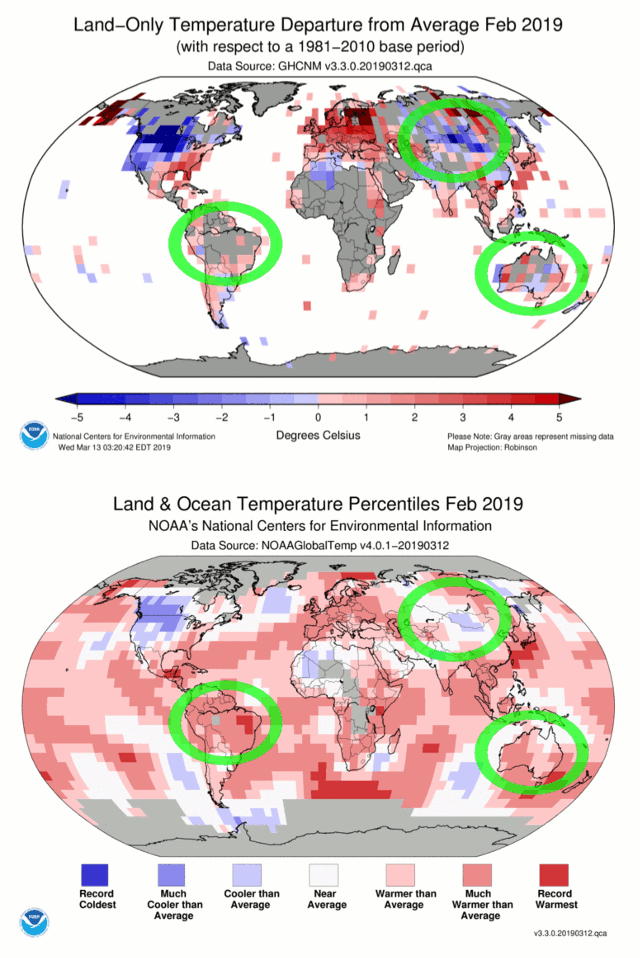
The map looks nothing like the one NOAA presents to the public.  By pixel count, 51% of the land area is gray “missing data,” 16% is below normal temperature, and 33% is above normal. The animation below shows how they created one of the eight warmest “Februarys” in South America – by simply making up data, including record warmth in Brazil in locations with no actual thermometer data.

Also note how they made the cold in Asia and parts of Australia disappear.

And they largely made the near record cold in much of North America disappear.

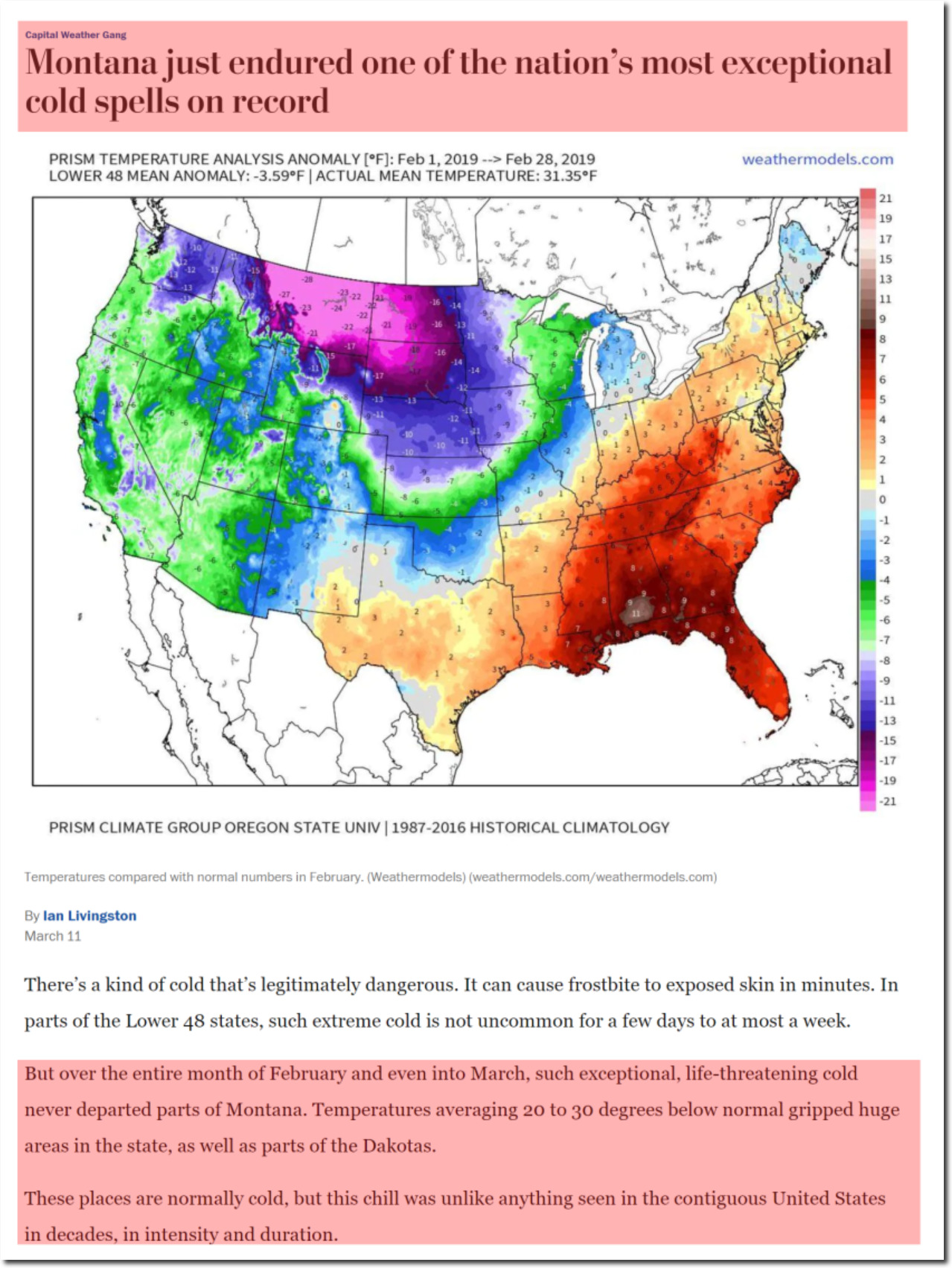
Montana and the Dakotas were 20 degrees below normal, as was much of Canada. Here is how the Washington Post described it:

The February temperature departures from normal were stunning. Several major climate locations averaged 27 to 28 degrees below normal, the most extreme departures in the Lower 48 for a full month since January 1969

Montana just endured one of the nation’s most exceptional cold spells on record – The Washington Post

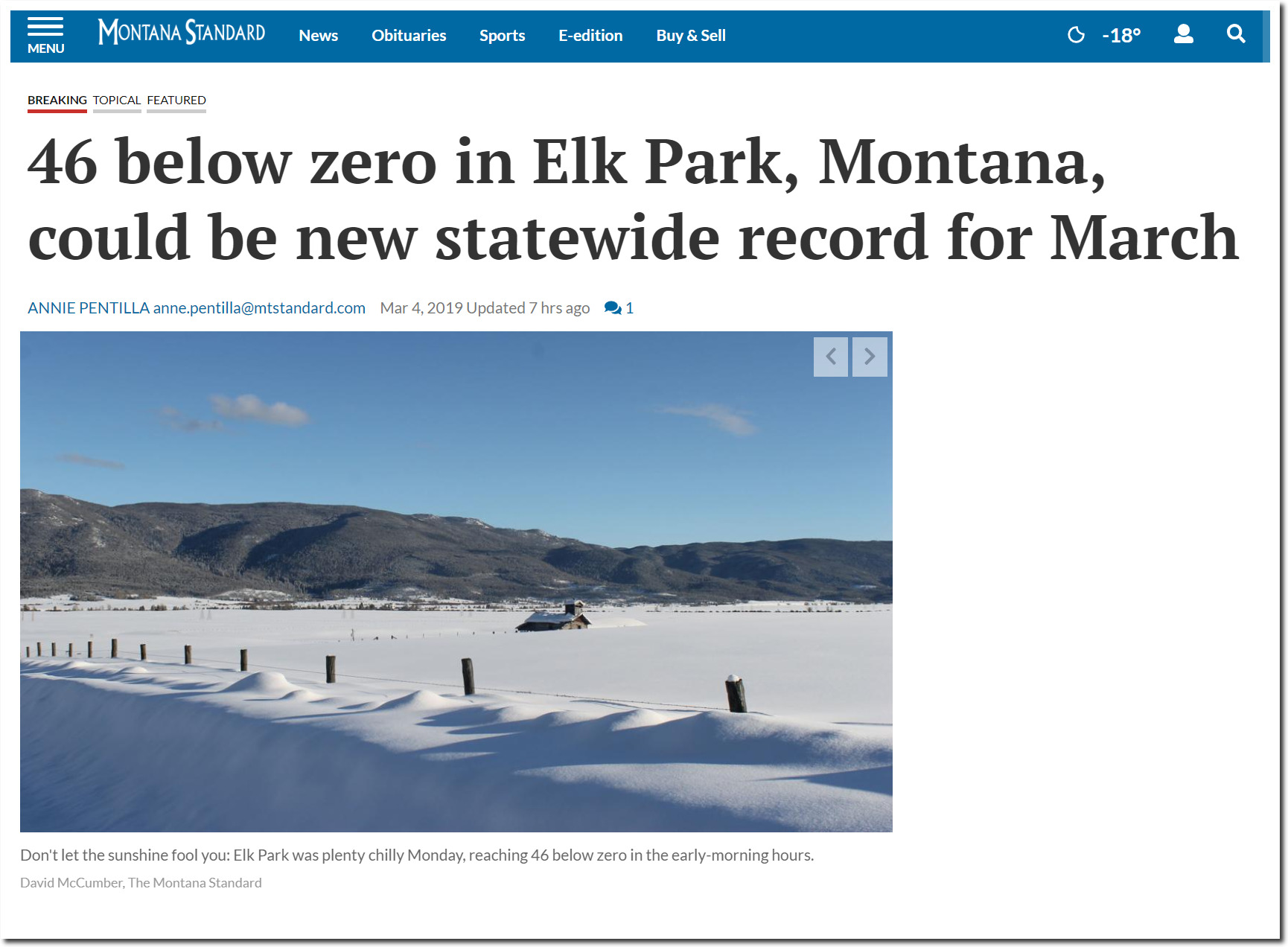
46 below zero in Elk Park, Montana, could be new statewide record for March | Local | mtstandard.com

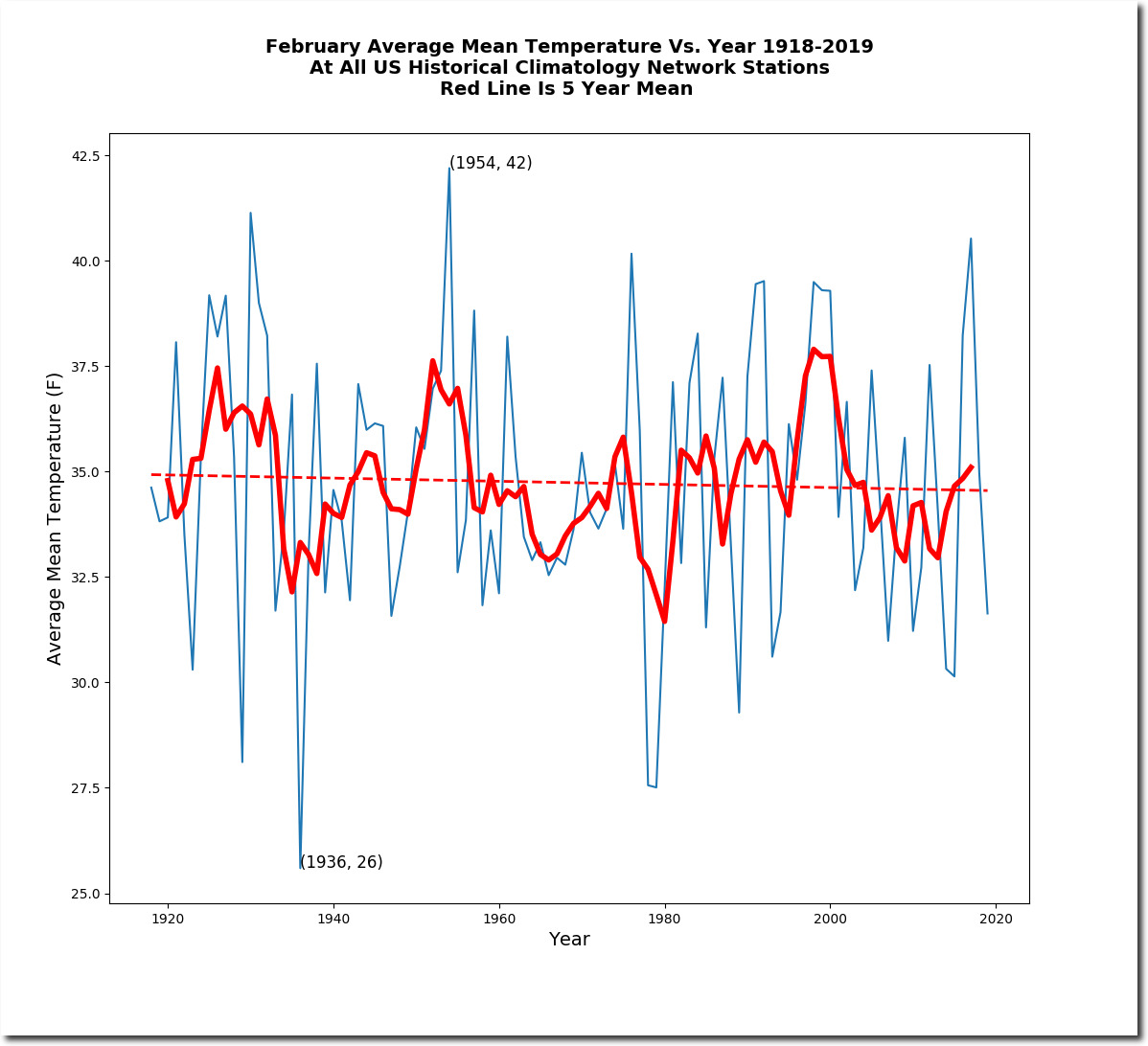
US February temperatures were well below normal, and about 10F cooler than February 1954.

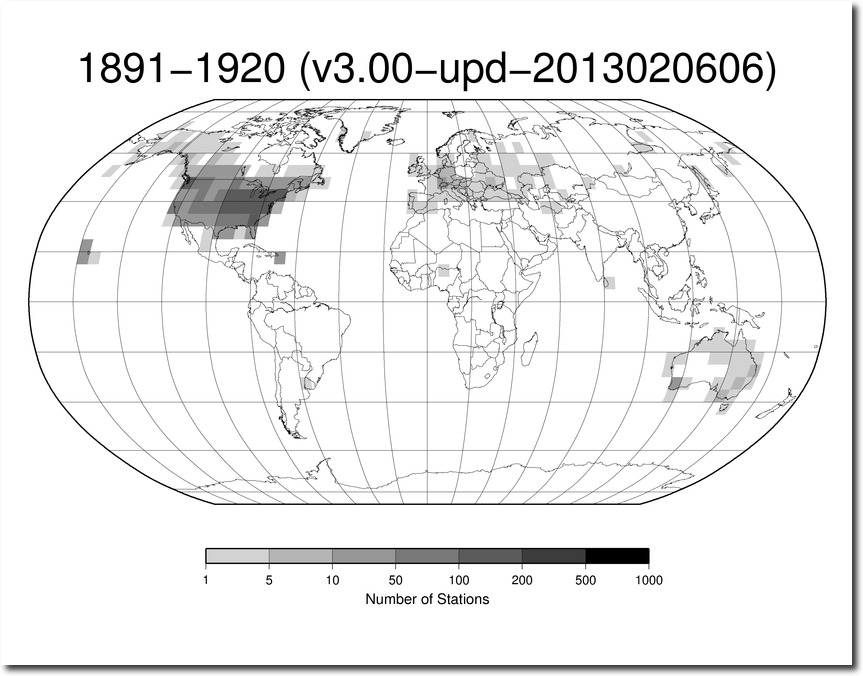
The US data is extremely important, because NOAA actually has very little historical data outside of the US, western Europe and parts of Australia..

ftp://ftp.ncdc.noaa.gov/pub/data/ghcn/daily/figures/station-counts-1891-1920-temp.png

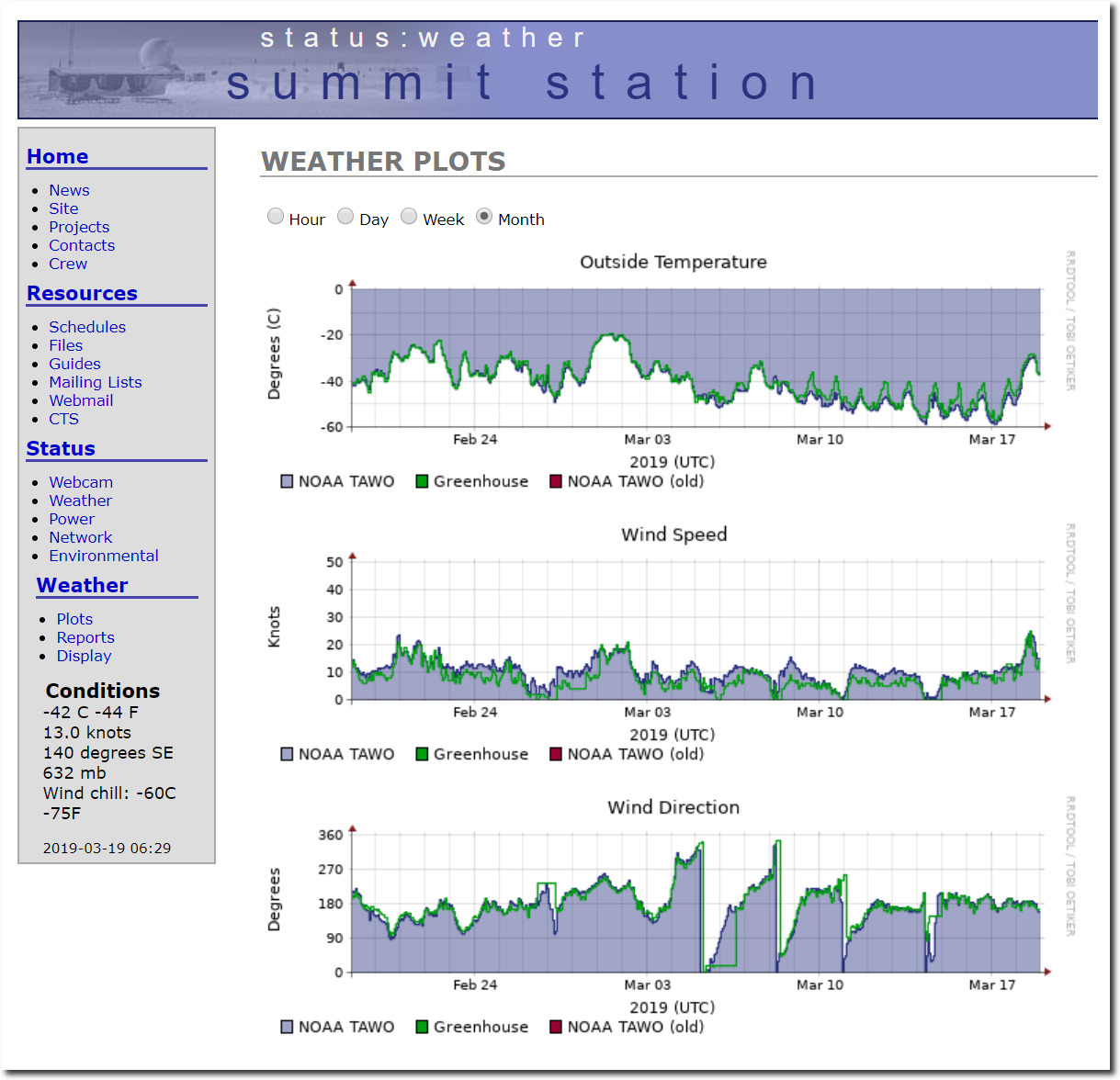
NOAA also claimed to have almost no February data for Greenland, where temperatures have been extremely cold over the past month.

summit:status:weather

The NOAA land data is fake, and an Orwellian rewrite of record cold at spots.  But the ocean data is even faker.

the global ocean-only surface temperature was 0.70°C (1.26°F) above average and the second warmest February since global records began in 1880

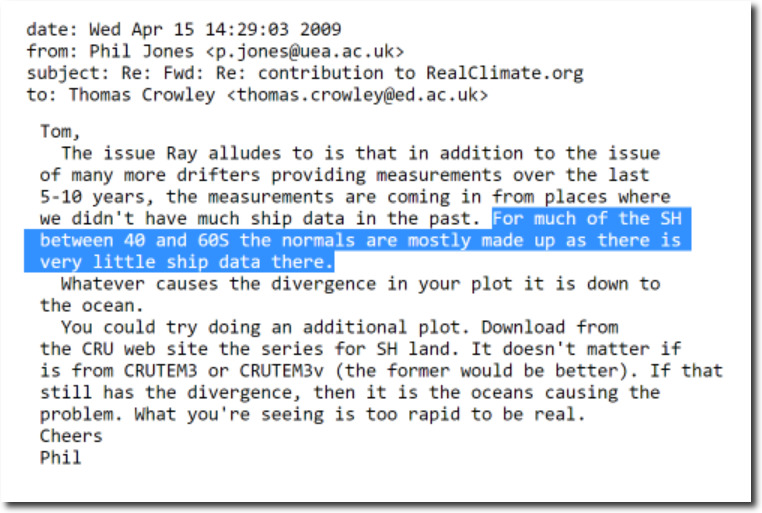
They claim to have ocean temperature records back to 1880 – which is patently false.  Prior to about 15 years ago, no one even pretended to have pre-1950 global ocean data. And as Phil Jones at CRU said, much of the data they are using is “made up.”

For much of the SH between 40 and 60S the normals are mostly made up as there is very little ship data there.

di2.nu/foia/foia2011/mail/2729.txt

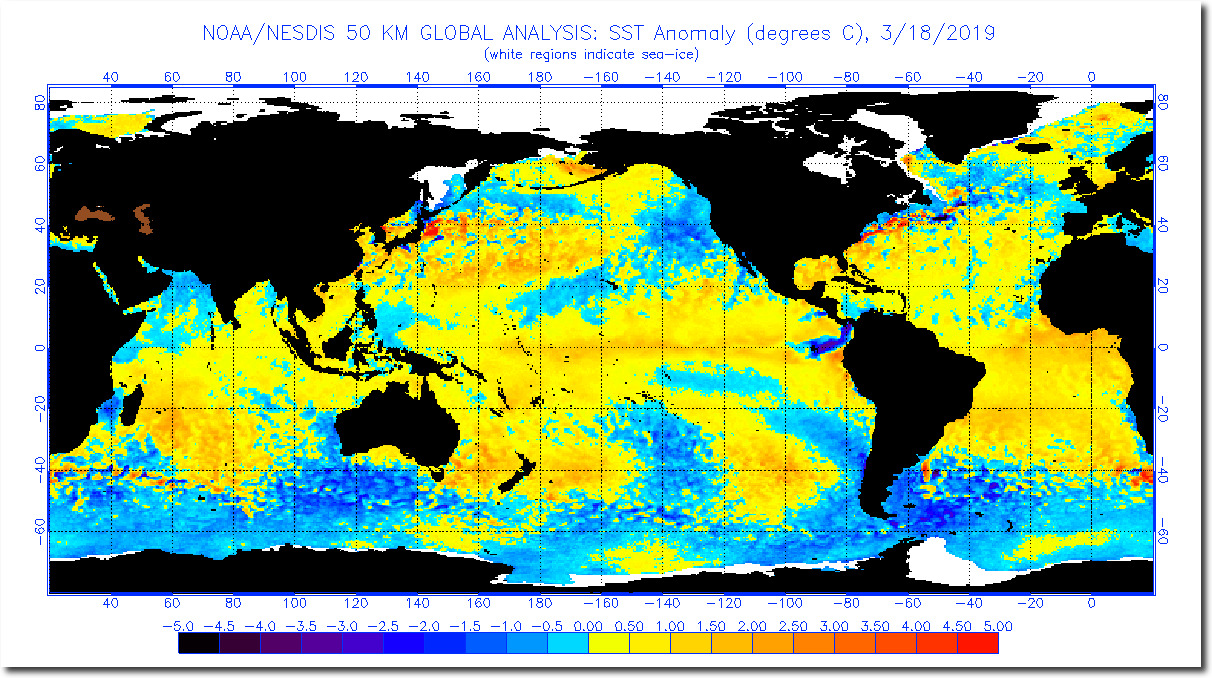
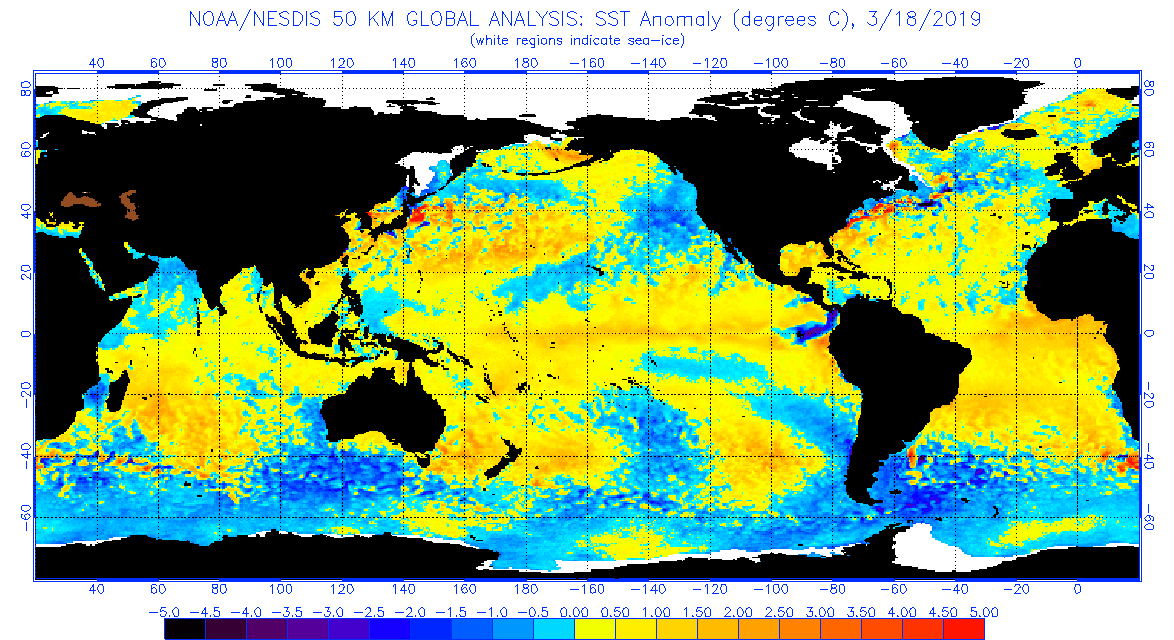
Sea surface temperatures are well below normal in much of the southern hemisphere.

anomnight.3.18.2019.gif (1174×640)

The animation below flashes between the NOAA temperature departure map and the temperature percentile map.  You can see how blues disappear, and pink turns to red.

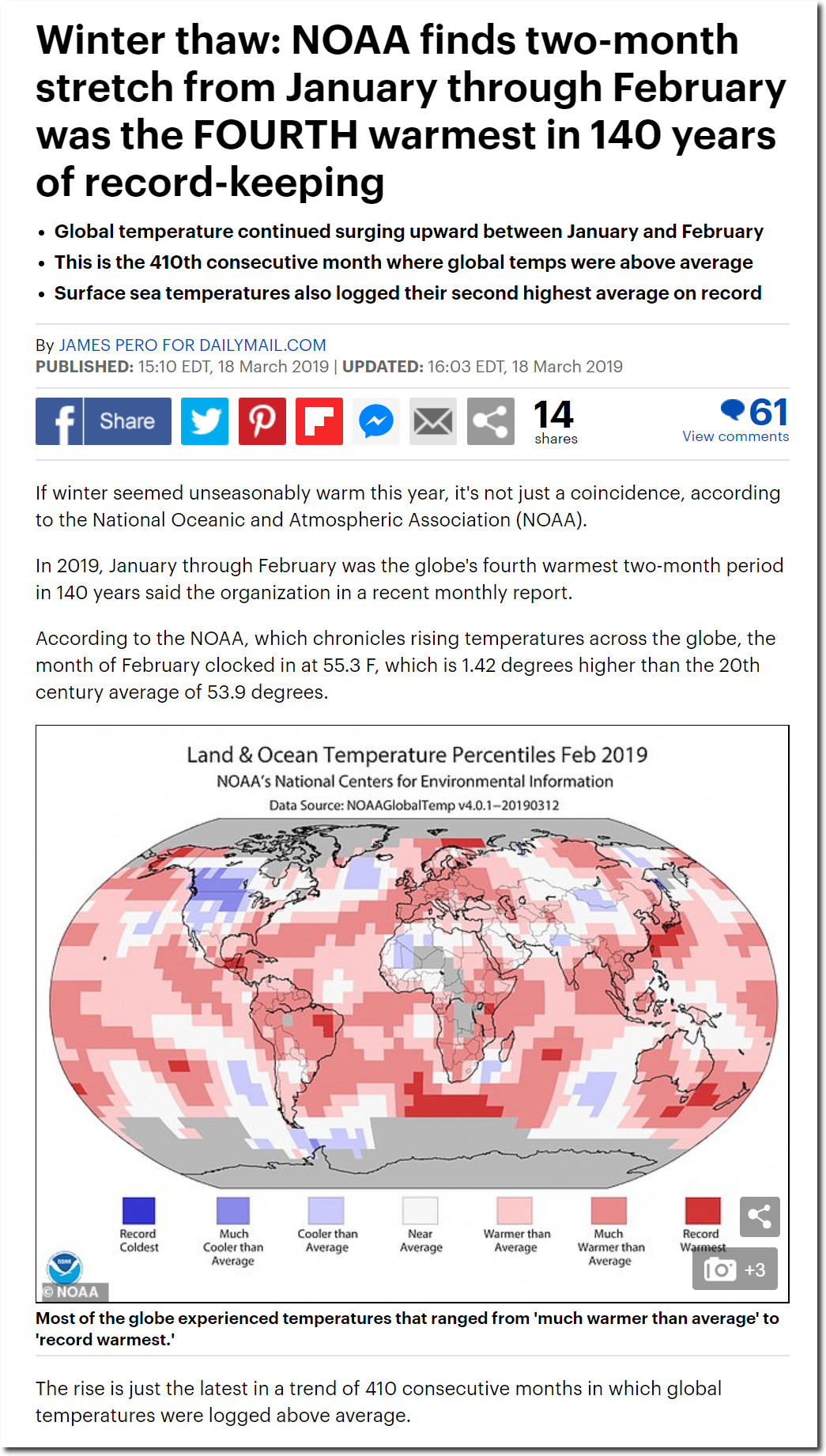
The next step of the process is generation of propaganda like this:

NOAA finds two-month stretch from January through February was FOURTH warmest in 140 years | Daily Mail Online

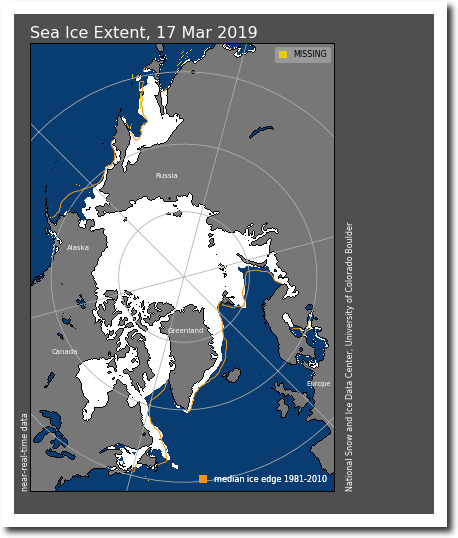
Arctic sea ice extent is very close to the 1981-2010 median edge. Ice doesn’t lie, but government climate scientists do.

Index of /DATASETS/NOAA/G02135/north/daily/images/2019/03_Mar/

The NOAA red hot map has no basis in science, which is standard practice for climate alarmists with an agenda.

via The Deplorable Climate Science Blog

https://ift.tt/2OcXcOR

March 19, 2019 at 05:35AM

Wind turbine infrasound as a weapon

Description: Industrial wind turbine infrasound is not the best weapon, but it is a weapon. This German video documents the harmful effects of the infrasound produced by industrial-sized wind turbines. The dangers of infrasound have been known since the 1980s when the U.S. military heavily invested in infrasound (below 20 Hz) as a weapon. HT/Fernando

via Watts Up With That?

https://ift.tt/2Jp1xQ9

March 19, 2019 at 04:01AM