
By Paul Homewood
h/t Joe Public
UK’s wildfires are due to climate change!


The UK has been hit by nearly a hundred large wildfires in 2019, making it the worst year on record already.
The hot spell in February and the recent Easter heatwave have contributed to a total of 96 major wildfires of 25 hectares or larger, eclipsing the previous high of 79 across the whole of 2018.
Researchers told New Scientist that the figures, collated by the European Forest Fire Information System, were evidence that climate change had already heightened the risk of wildfires in the UK.
More than 100 firefighters battled wildfires over the Easter weekend across Illkley Moor and Marsden Moor in West Yorkshire. Another fire broke out on moorland near Marsden on Tuesday afternoon, requiring ten fire engines to attend.
Fires throughout the year
There were also wildfires in Cornwall, Dorset, Derbyshire, Northern Ireland, the Peak District, Rotherham, Wiltshire and Wales, according to the National Fire Chiefs Council (NFCC).
Scotland was affected by fires across the Highlands, including a large one that posed a “serious risk” to the Moray windfarm.
The spate of blazes follows a series of major wildfires during the hot, dry weather of 2018, including the Saddleworth Moor fire near Manchester, which burned for five days and made pollution levels spike.
Paul Hedley, national wildfires lead for the NFCC, said it was “really significant” that the number of large wildfires in 2019 had already overtaken 2018’s tally so early in the year.
The big change he has observed is that the wildfires are no longer confined to the traditional season of fires from late March to late September. “What seemed to happen last year and is happening this year, is we are not talking about a wildfire season – we are getting significant wildfires happening throughout the year,” says Hedley.
The scale and duration of the wildfires was a huge stretch on fire and rescue service resources, Hedley adds.
Spring is the point in the year when flammability peaks, with the most dead leaf and woody matter available to burn, says Thomas Smith of the London School of Economics, in the UK.
Barbeques and arson
Layered on top of that seasonal risk has been fire-friendly weather and an increased risk of ignition through accidents, such as a barbeque in the case of the West Yorkshire blazes, or arson.
“Both the fires in February and over this Easter weekend coincided with long warm dry periods with steady easterly winds – fire weather – and also with ignition risk from school holidays,” says Smith.
Weather that is conducive to wildfires has become more likely in recent decades, with the average length of warm spells increasing from 5.3 to 13.2 days in recent years.

“I would argue that those statistics suggest that we are already experiencing climate change and that it has already led to increasing wildfire risk,” Smith adds. He says the past two years have been the worst for UK wildfires that he can remember.
The total area burned in 2019 so far is 17,199 hectares, almost on a par with the highs of 2018 and 2011, but with eight months of the year left to go.
The rural nature of most UK wildfires means relatively little property is damaged compared to the multibillion-dollar cost of Californian wildfires. But they draw fire engines away from towns and cities, increasing fire risk there, and can cause health problems by causing pollution levels to rise, as happened in Greater Manchester last year.
Only one slight problem. The European Forest Fire Information System, which provides the figures for the “record” claims, only started collecting data in 2011!

http://effis.jrc.ec.europa.eu/static/effis_stats/effis-estimates/GB
As for the dry weather, which has led to this latest spate of fires, dry springs are nothing new in England.
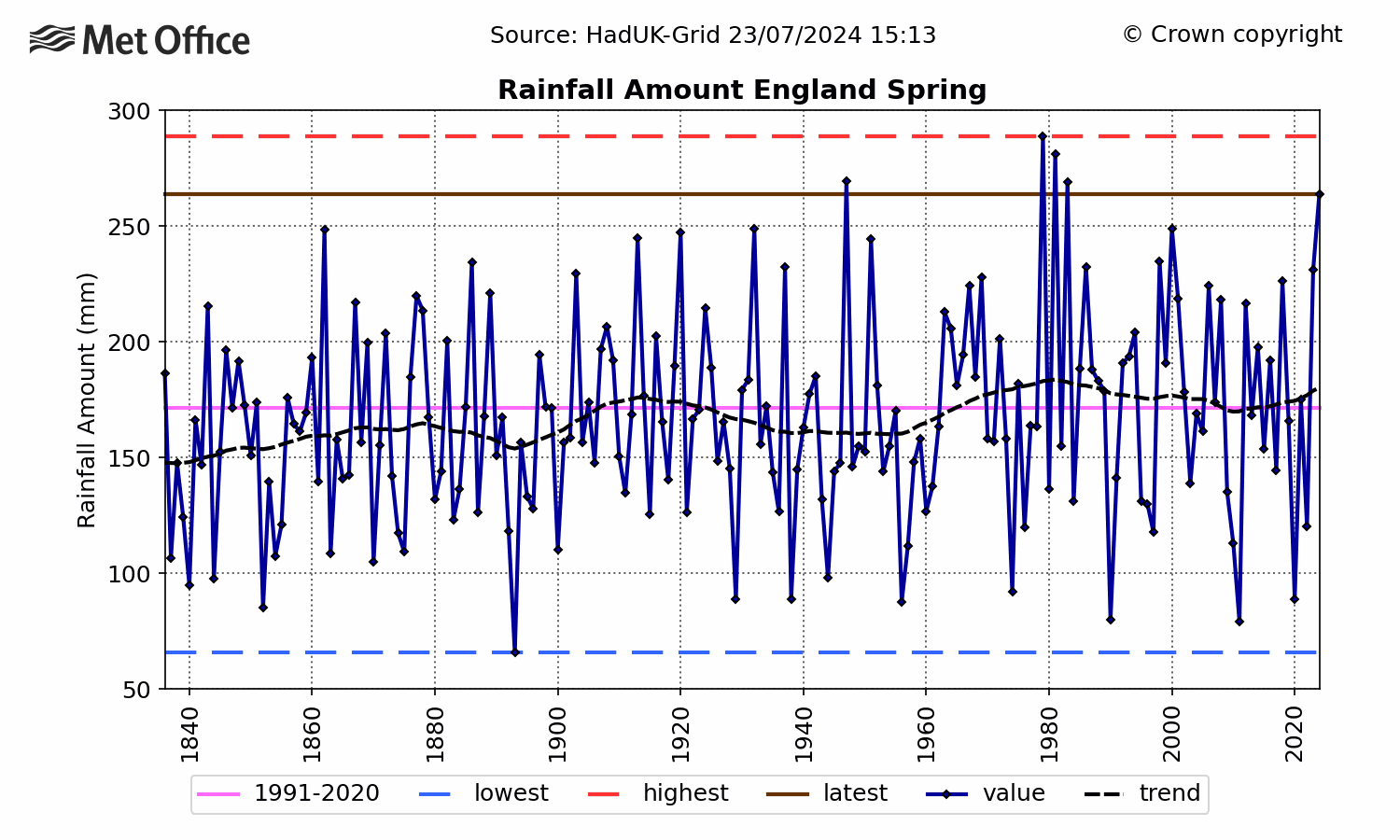
https://www.metoffice.gov.uk/climate/uk/summaries/actualmonthly
Rainfall in March alone totalled 89mm, so this spring is already wetter than several others on record.
But who needs facts, when you can blame it on global warming!
via NOT A LOT OF PEOPLE KNOW THAT
April 27, 2019 at 05:42AM
 Iowa Climate Science Education