Back in 1975, when there was still considearable concern about decades of Northern Hemisphere cooling, the National Academy of Sciences (NAS) announced in their report that the end of the current interglacial could arrive sooner than thought.
“[T]here is a finite probability that a serious worldwide cooling could befall the earth within the next hundred years.”
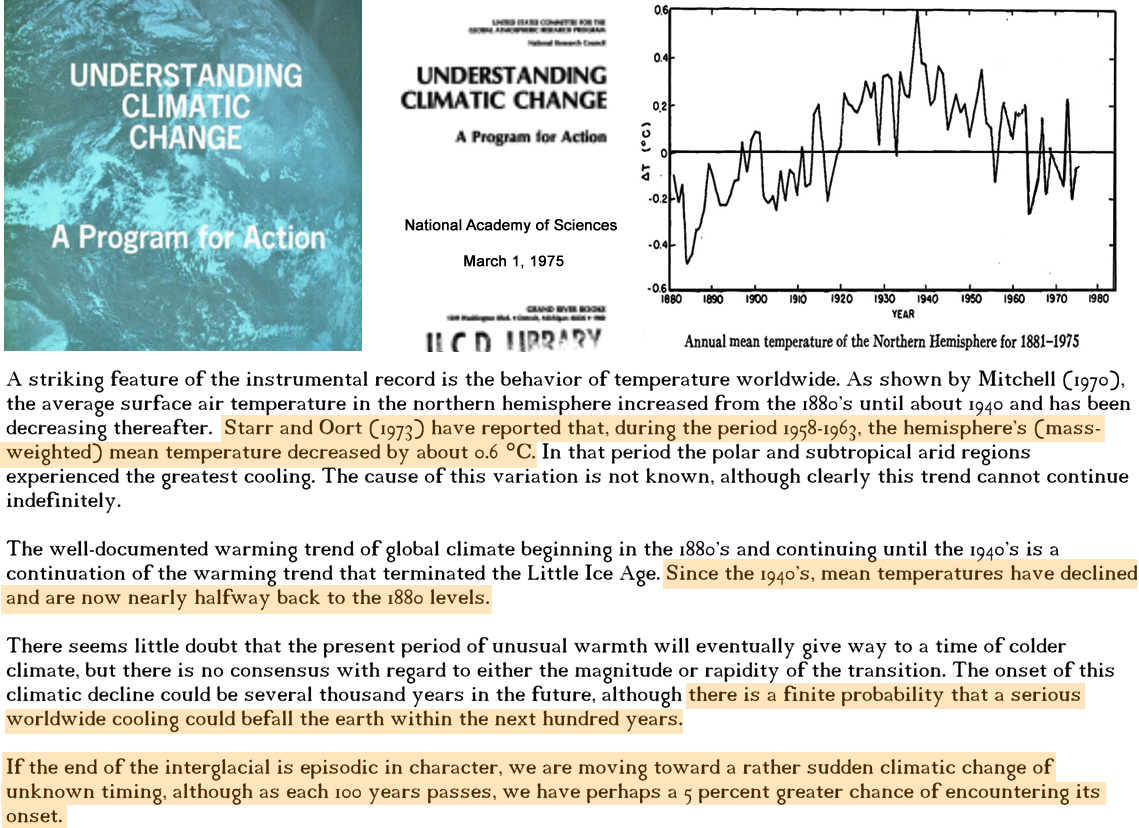
Image Source: NAS, 1975, Understanding Climatic Change
The NAS cooling concerns were substantiated by a 1973 scientific paper published in Nature that quantified a sharp cooling surge from 1958 to 1963.
According to Starr and Oort (1973), about 175,000 measured monthly temperatures for “92% of the atmosphere” indicated that the Northern Hemisphere cooled by -0.6°C during 1958-’63.
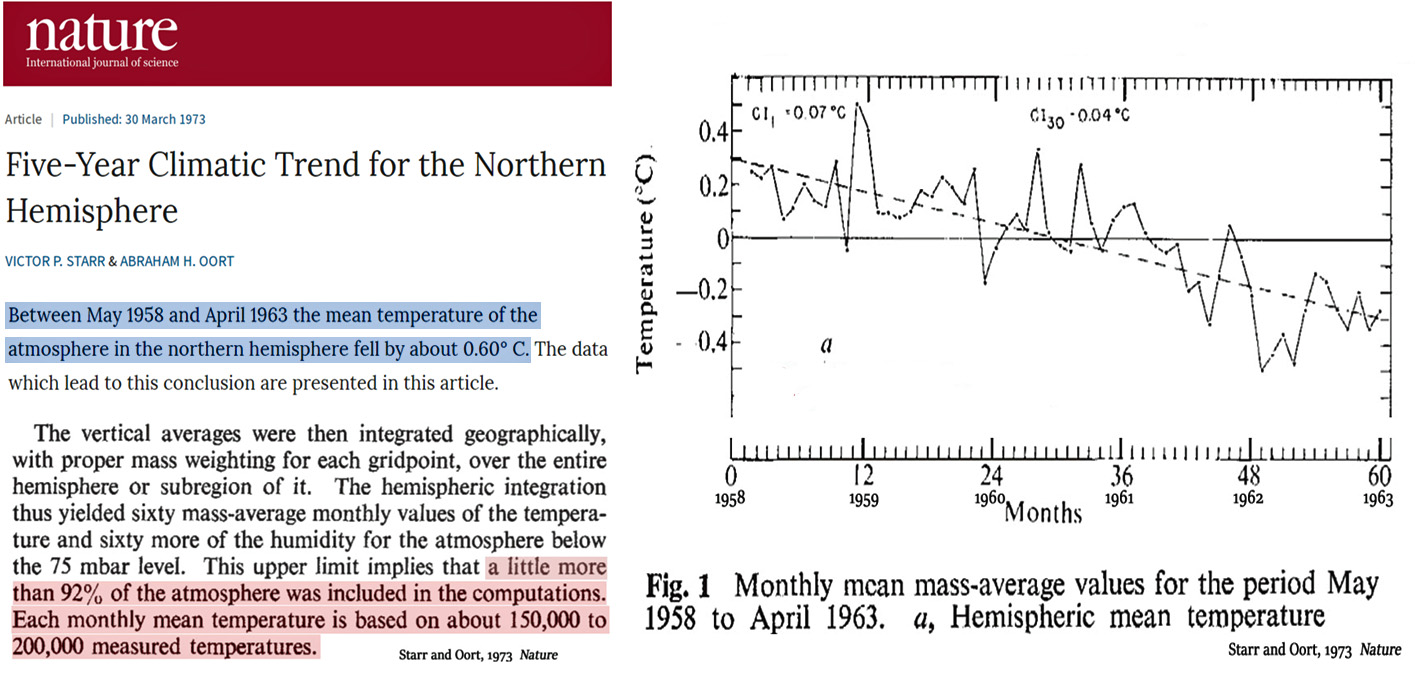
Image Source: Starr and Oort (1973)
In today’s NASA GISS temperature record there is no indication that a NH cooling of -0.6°C ever occurred.
Instead, the 1958-63 period looks to be either flat or only modestly decling (<0.1°C).
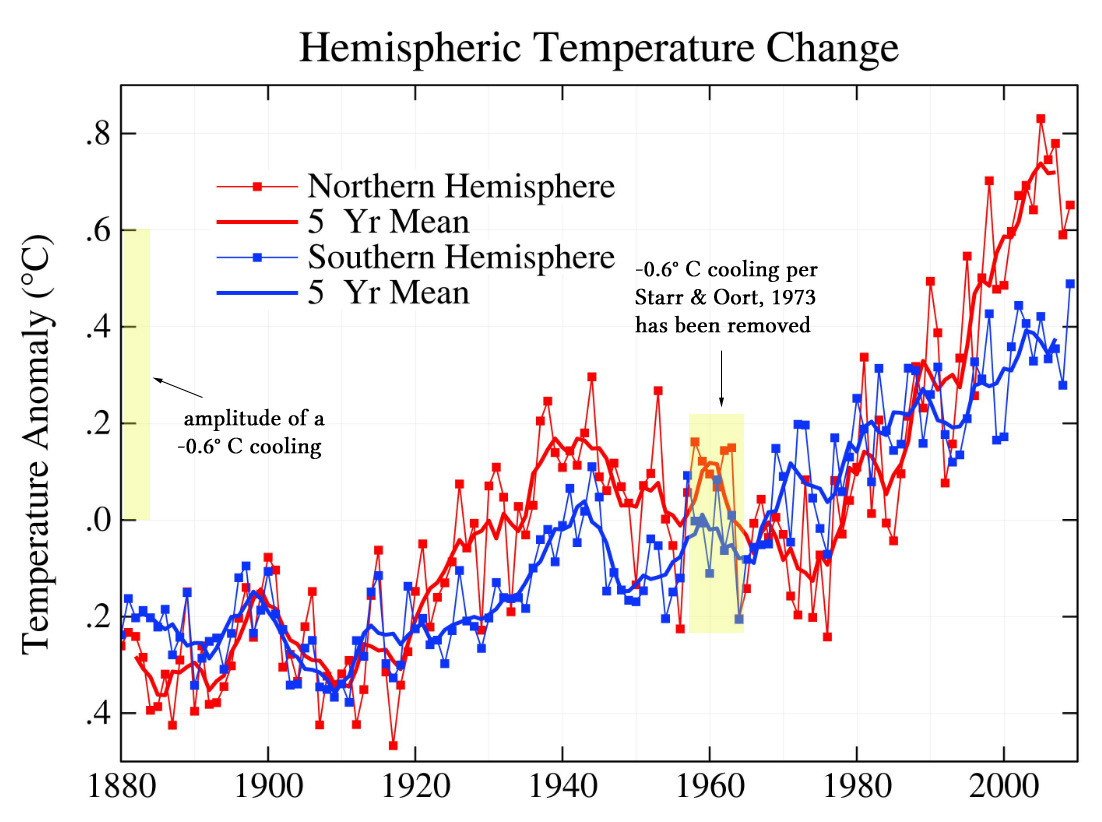
Image Source: NASA GIS
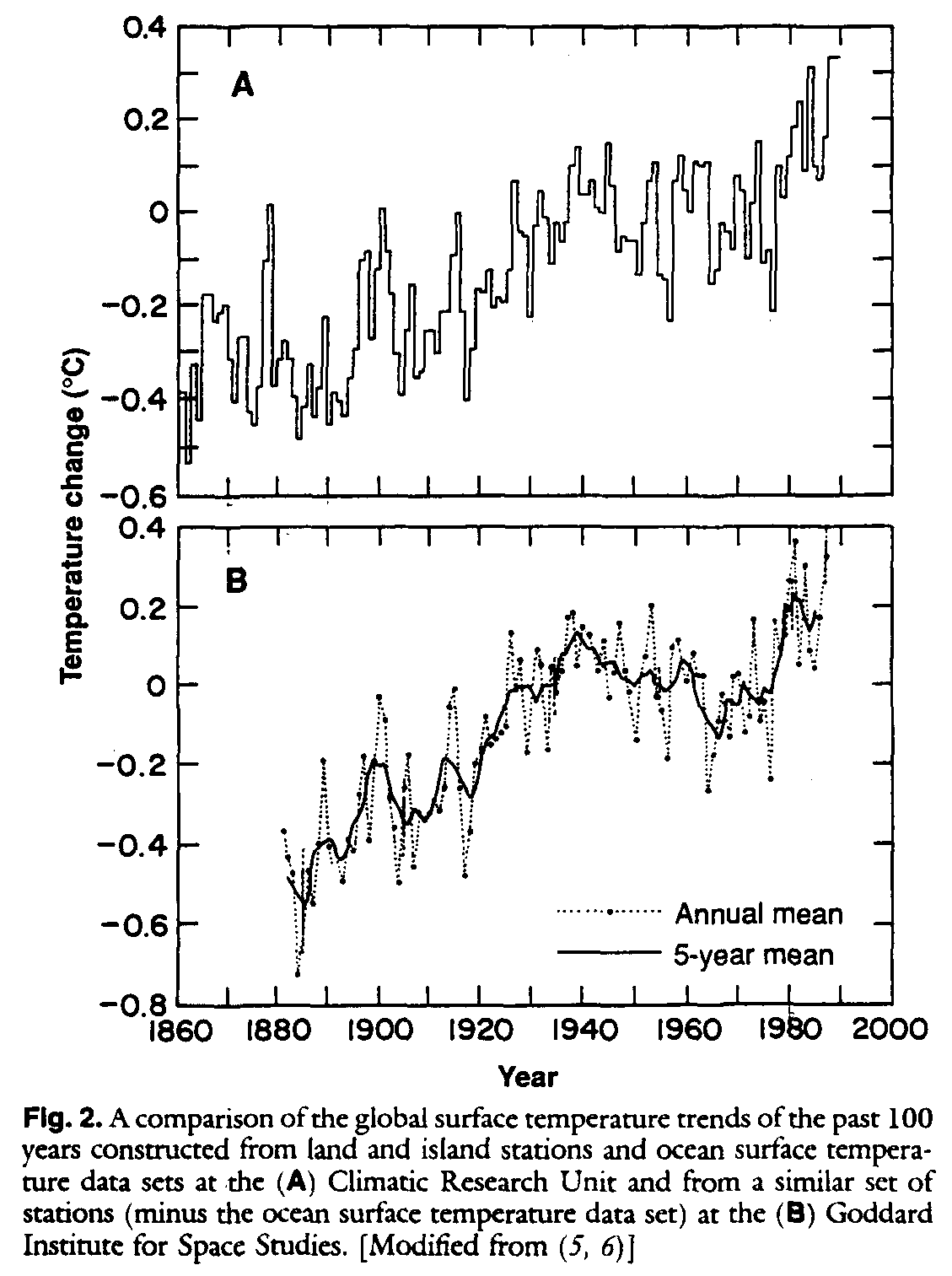
According to the prevailing evidence at the time, Pirazzoli, 1990 reported that a 0.5°C increase in global temperature had occurred between the years 1880 and 1950.
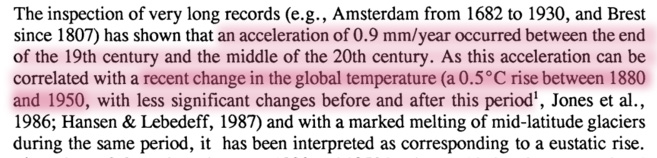
Today, that 0.5°C warming has disappeared. The same NASA GISS data set now has no warming between 1880 and 1950.
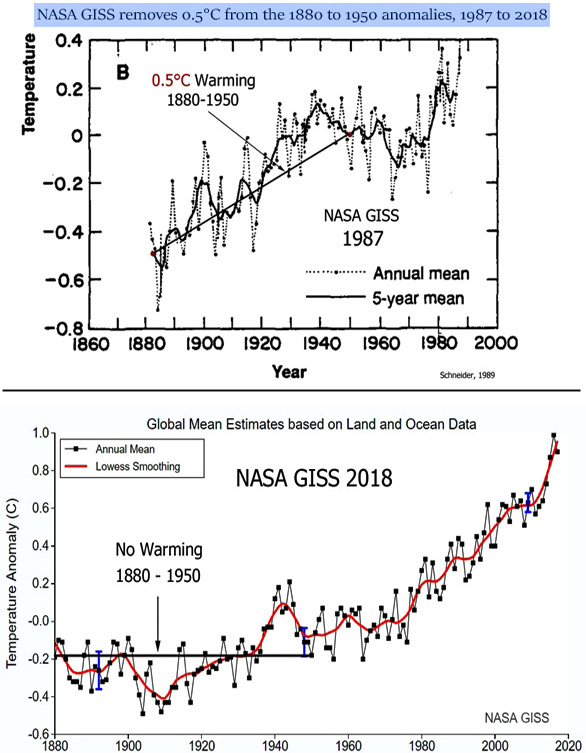
Image Source: Schneider, S. H. 1989, NASA GISS
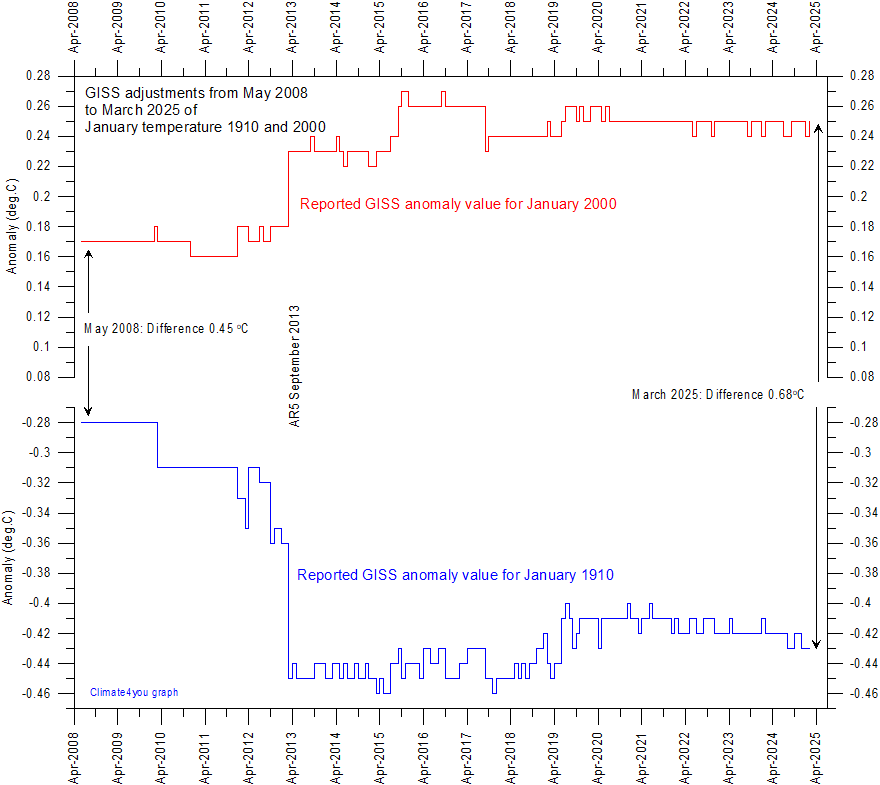
Between 2008 and 2018, NASA GISS added 0.24°C of trend-steepening warmth to the 1910 to 2000 period. To accomplish this transformation, the pre-1950 temperatures were cooled, and the more recent temperatures were warmed up so as to create a more linear warming trend.
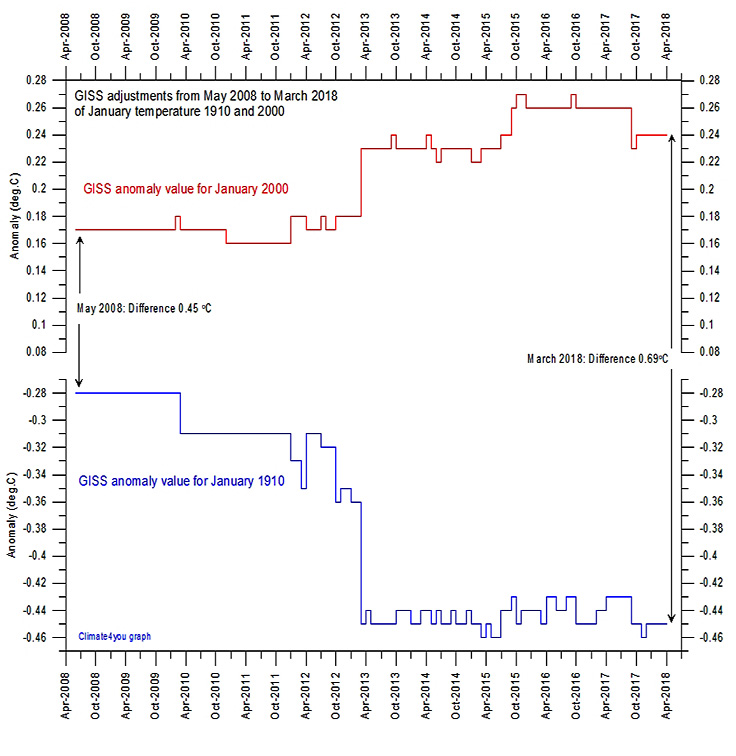
Image Source: climate4you.com
The motivation to change the data (i.e., “correct” the temperature record to support the “argument”), can be gleaned from the leaked e-mail exchanges between the overseers of temperature data sets.
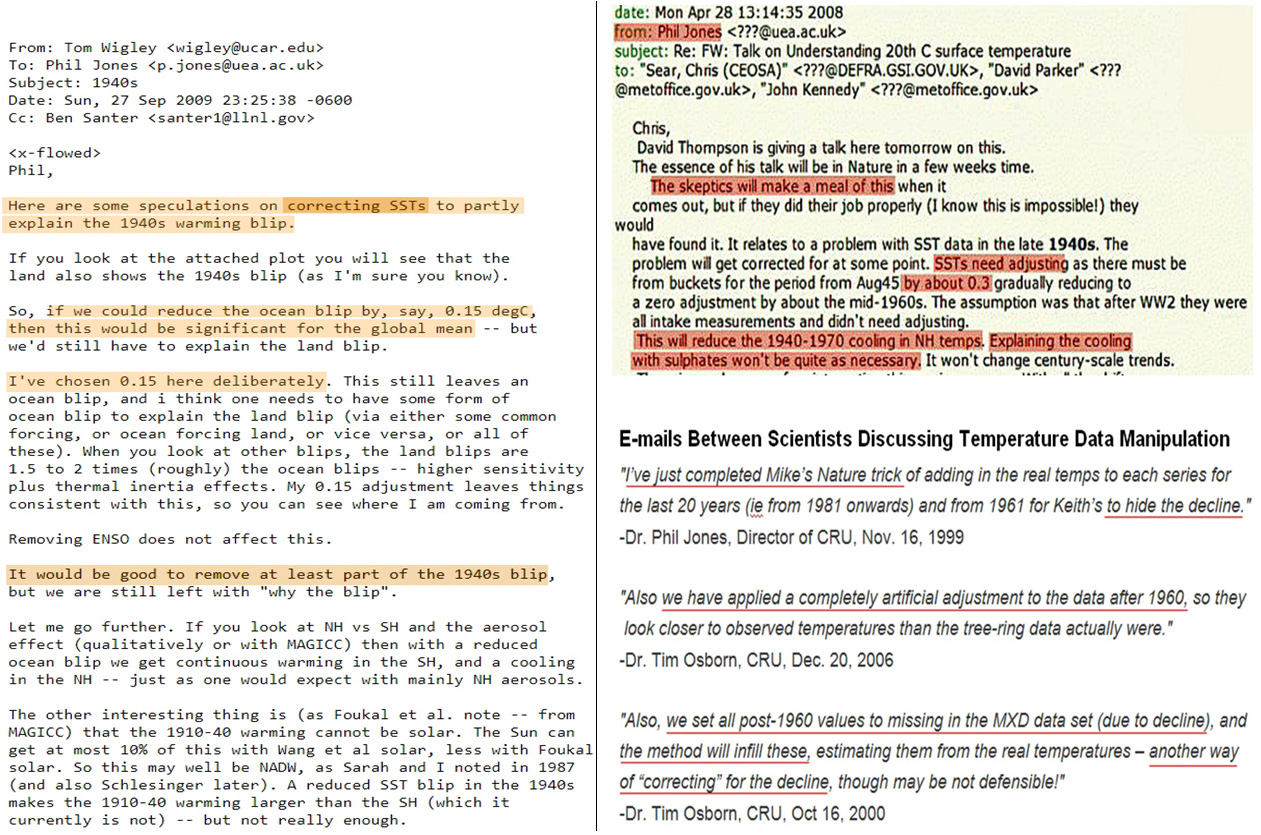
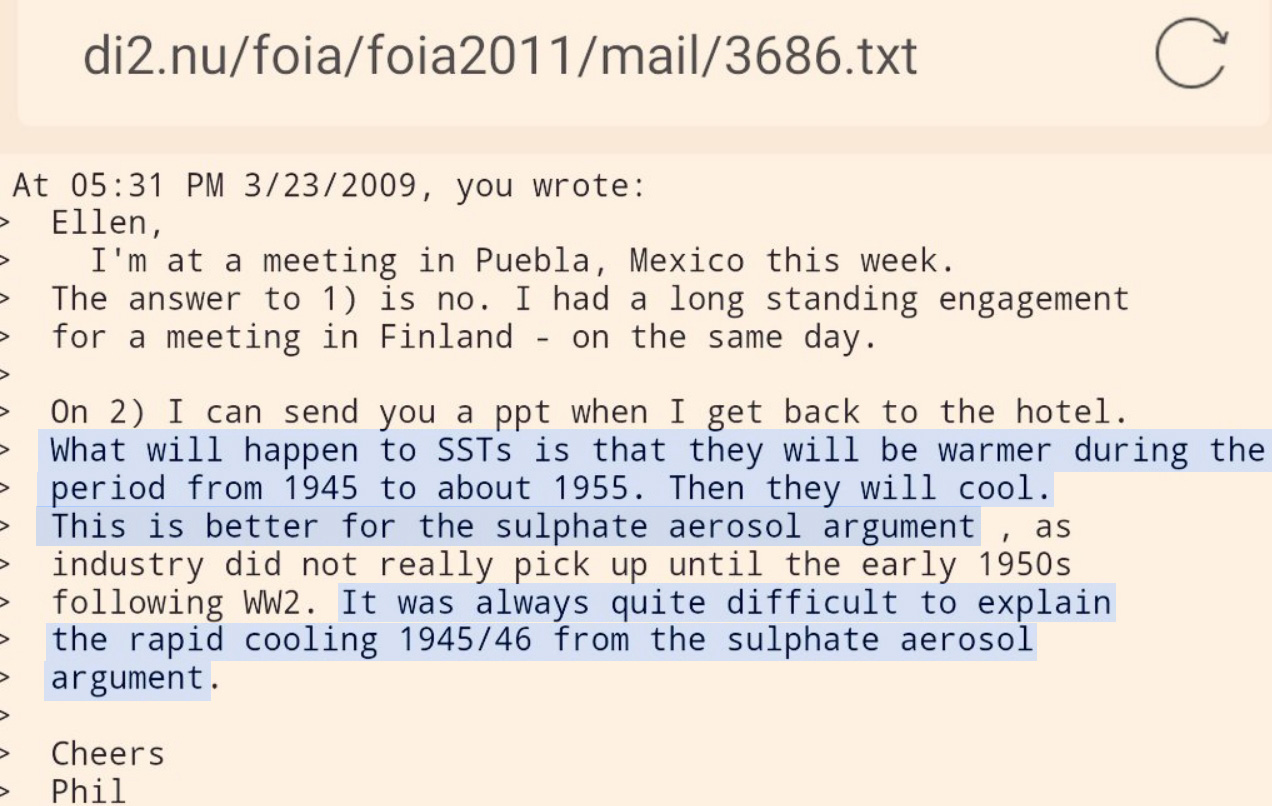
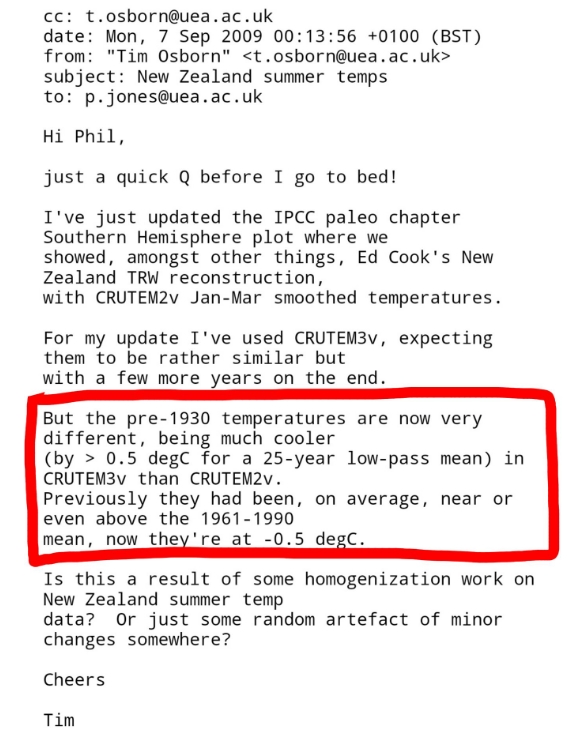
As there is considerable evidence that the integrity of the climate record has been compromised, it may be time to reconsider what the global temperature trends may look like when they are not “corrected” to fit the narrative preferred by data overseers.
A year ago, a global instrumental dataset (450 temperature stations from across the world) was published (Lansner and Pepke Pedersen, 2018) that only used non-coastal — non-urban and non-ocean-air affected — thermometers. In other words, these temperature data have not been corrupted by aritificial or non-climatic thermal influences.
Without the biases and adjustments, the 1900 to 2010 instrumental record shows the more recent decades no warmer than the 1920s to 1940s. Further details on this temperature data set can be found here.
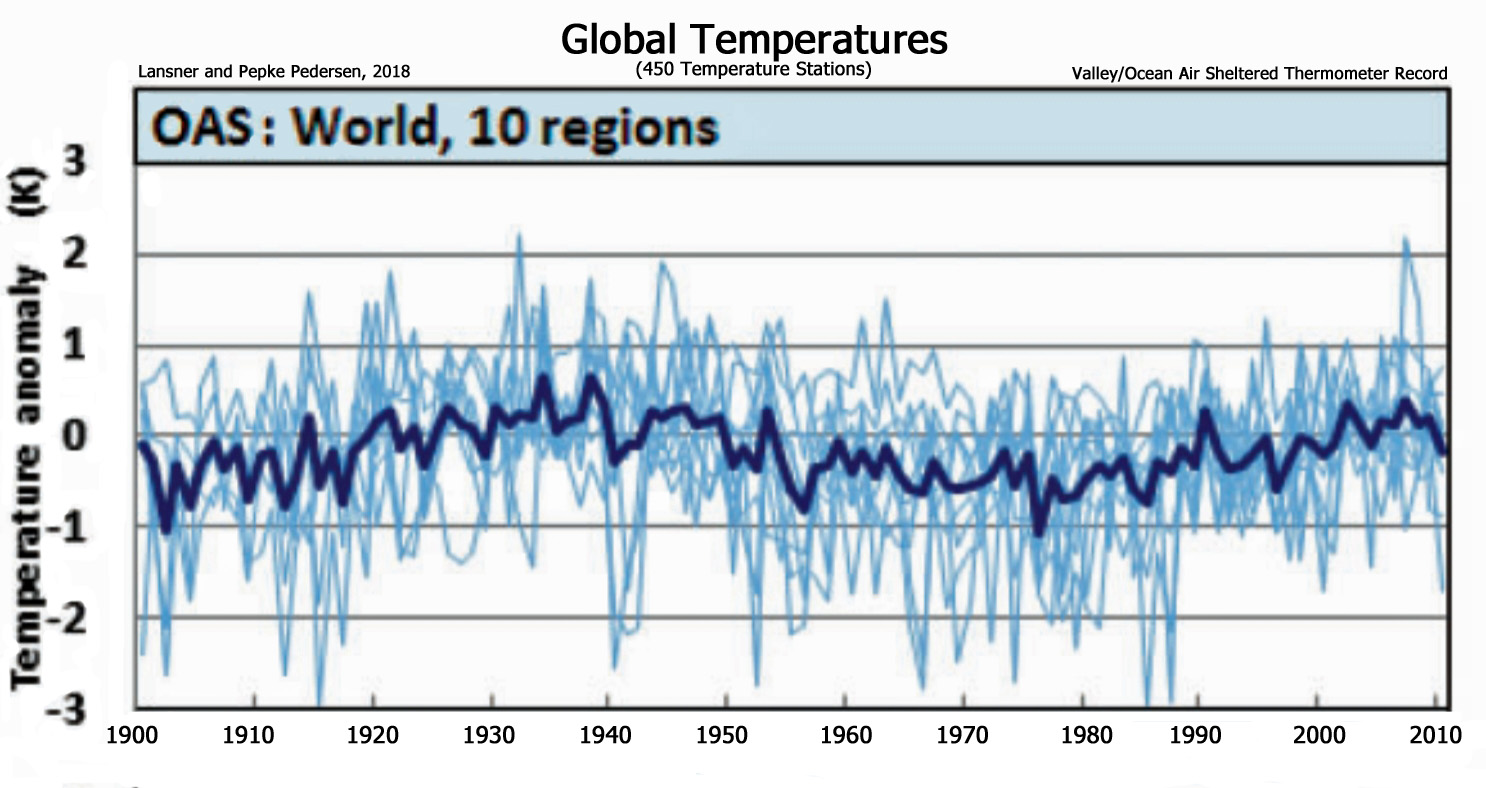
Image Source: Lansner and Pepke Pedersen, 2018
via NoTricksZone
April 29, 2019 at 10:22AM
 Iowa Climate Science Education