
Guest “picking a fight with both sides” by David Middleton
JUL 15, 2019
EPA Drilling Regulations Remain Underrated Obstacle to Solving Global WarmingWilliam Murray
Manager, EnergyMeeting the goals of the 2015 Paris Agreement to limit global warming will be impossible unless the United States leads the way.
[…]
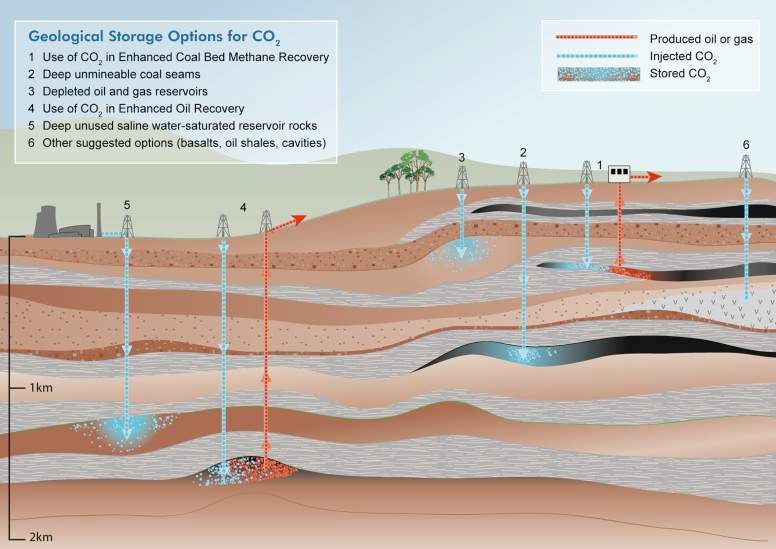
What remains is CCS technology, which the oil and gas industry has used to enhance the recovery of oil for the past nearly 50 years. Each year, this technology already traps more than 60 million tons of carbon dioxide permanently underground, preventing it from entering the atmosphere and contributing to global temperature increases. Congress has incentivized industrial companies to invest in this kind of CCS technology through tax breaks, but companies still are running into problems. Of paramount concern is the Environmental Protection Agency’s oversight of the well-drilling that is the necessary prerequisite for storing CO2 underground.
The Environmental Protection Agency (EPA) has oversight authority over the Safe Drinking Water Act’s rules that protect the country’s 151,000 public water systems. In general, this oversight works pretty well, permitting thousands of industrial wells to be drilled every year with virtually no damage to underground sources of drinking water.
In 2010, the EPA created a new class of drilling category especially for geologic storage of CO2 on the presumption that there would be demand for the technology. Instead of streamlining the practice, however, the EPA created overly prescriptive rules, onerous reporting requirements, and unintended liability issues — all of which have led to costly lag times in project development. In nearly a decade since the EPA initiated these Class VI permits, fewer than 10 have been licensed, even though tax breaks were supposed to lower the investment risk for companies.
In 2011, Illinois-based Archer Daniels Midland applied for an EPA well permit to place 1 million tons of carbon dioxide into an underground saline aquifer. But the newness of the permit-type, combined with disagreements over long-term liability issues, meant the project took roughly six years to finalize. The Illinois project remains the only major attempt to sequester carbon deep underground; two other efforts in Montana and Kansas were derailed due to permit issues.
[…]
In the decade-plus since passage of the fracking exemption, U.S. oil and gas production has exploded well beyond what was originally thought possible — from 5 million barrels a day to almost 13 million barrels a day — while the country could become a net exporter of crude oil and oil products by 2020. Meanwhile, the boost in natural gas production has displaced coal use for electricity, causing U.S. emissions to fall more than 10 percent from their peak in 2005.
Under the right circumstances, a similar change can occur in carbon capture and storage.
[…]
Irony can be so ironic… EPA regulations designed to facilitate carbon capture and sequestration (CCS) are actually inhibiting CCS projects.
R Street?
R Street is basically a RINO think tank; former South Carolina Representative Bob Inglis is on their Board of Directors.
R Street is partly good…
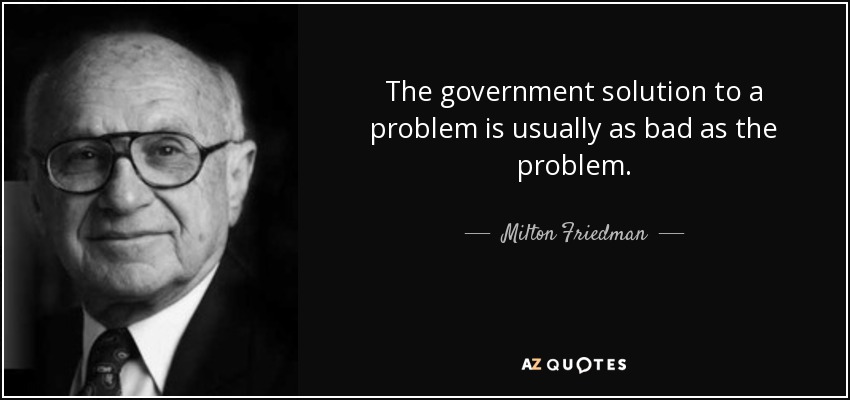
R Street is a free-market think tank with a pragmatic approach to public policy challenges. We draw inspiration from such thinkers as Milton Friedman, Friedrich Hayek, Ronald H. Coase, James M. Buchanan and Arthur C. Pigou.
We favor consumer choice; low, flat taxes; regulation that is transparent and applied equitably and systems that rely on price signals rather than central planning. Thus, it is fair to say we are on the political right.
Partly bad…
At the same time, we recognize that public goods, natural monopolies and externalities are real concerns that governments must address.
So much for being inspired by Milton Friedman.
Partly sort of realistic…
We also understand that life in a democratic society sometimes means reaching a compromise that doesn’t necessarily represent a first, best solution.
We offer research and analysis that advance the goals of a more market-oriented society and an effective, efficient government, with the full realization that progress on the ground tends to be made one inch at a time. In other words, we look for free-market victories on the margin.

R Street’s energy “expert,” William Murray is the former editor of RealClearPolitics‘ energy page, “has a bachelor’s degree in American and British literature from Whitman College and master’s degrees in journalism and security studies from Columbia and Georgetown University, respectively.”
Firstly, you have to filter out all of the alarmist nonsense. “Solving global warming” is not an urgent matter. It’s not even something that can be “solved.” Mr. Murray is not a scientist, certainly not a geologist… Nor is he an energy industry professional. Like most of the R Street RINO’s, he appears to totally buy into the “climate crisis” horst schist. But he does have a point about CCS.
Secondly, for any of this to make sense, you have to accept the real probability that each doubling of atmospheric CO2 increases the bulk temperature of the atmosphere by anywhere from 0.5 to 1.5 °C and that a rapid rise of atmospheric CO2 beyond 1,000 ppmv could yield some unpredictable changes in marine geochemistry. Clearly a doubling of the assumed pre-industrial CO2 concentration of 280 ppmv, will not lead to a climate crisis, catastrophe or emergency… But, could a tripling or quadrupling of that 280 ppmv pose a potential problem in a couple of hundred years? Maybe.
If you accept these parameters of what may become somewhat of a problem over the next few hundred years, carbon capture and sequestration (CCS) is a logical part of the solution… Particularly since it can be implemented slowly.
It’s a fossil fueled world!

It’s a fossil fueled world and that’s not going to significantly change over the next 50 years, not even if little Greta stomps her feet and holds her breath until she’s blue in the face.

You can actually get there from here: Drill, baby, drill!
This paper from the Society of Petroleum Engineers (SPE) website is an excellent summary of CCS and CCSU, once you get past the standard recitation of IPCC horst schist.
Carbon Capture and Sequestration
Michael Sheppard[…]
Geological Sequestration of Carbon Dioxide
In all cases where fossil fuels are the source of energy, CO2 is inevitably produced; if we are to prevent this CO2reaching the atmosphere, CCS will be absolutely essential. CCS lends itself most readily to applications in which power is produced centrally (as in the case of coal-powered electricity stations). CO2 can be stripped from power-station emissions by a number of means, and these captured emissions can be compressed, transported, and stored.[…]
The volumes of CO2 that need to be dealt with, however, are large. Emissions of CO2 currently run at over 30 billion tons a year, and sequestering just a tenth of this would entail pumping about 75 million barrels of supercritical CO2per day into geological formations. At the level of an individual power plant, sequestering CO2 from a 500-MW coal-fired power station would require pumping around 75,000 B/D1 of supercritical CO2 into a suitable formation.
The expertise and the technologies needed to sequester such volumes already exist to a large degree within the oil and gas industry. Several demonstrations of CO2 sequestration already are underway, including the In Salah saline formation project in Algeria (Riddiford et al. 2004) and the Sleipner project in the Norwegian North Sea.
[…]
EOR: The win-win aspect
Enhanced Oil Recovery Using CO2
CO2 is already pumped into oil reservoirs for enhanced oil recovery (EOR), although most of the CO2 currently used for EOR comes from natural sources, and existing EOR practices are not implemented with a view to storing CO2. However, it would be possible to modify CO2 EOR to emphasize CO2 storage while at the same time improving oil recovery. Although CO2 EOR would not provide accommodation for more than a very small fraction of the volume of CO2 currently emitted, it does provide a laboratory for technologies required for routine sequestration that is driven by the commercial incentive to improve recovery of the oil from older reservoirs. Moreover, in a world where CO2 is much more readily and cheaply available, there will be an incentive to use CO2 earlier in the oil-recovery stage to better exploit dwindling resources.
Currently, about 300,000 bbl/d of US oil production is due to CO2 enhanced oil recovery (EOR). As recently as EIA’s 2014 Annual Energy Outlook, this was projected to significantly increase due to high oil prices.

The US Department of Rick Perry, I mean Energy, estimates that CO2 EOR could recover about 85 billion barrels of oil from existing U.S. oil fields:


How can we know it will work safely?
This is what CO2 EOR has safely done since 1972:
SACROC
Discovered in 1948, the SACROC unit is one of the largest and oldest oil fields in the United States using carbon dioxide flooding technology. The field is comprised of approximately 50,000 acres located in the Permian Basin in Scurry County, Texas. Kinder Morgan owns an approximate 97 percent working interest in SACROC and has expanded the development of the carbon dioxide project initiated by previous owners and increased production over the last several years.In 2016, SACROC produced approximately 29,300 barrels of oil per day, and NGL production averaged approximately 20,900 barrels per day. Kinder Morgan continues to effectively develop this mature field through innovative use of seismic data, lateral drilling and advanced conformance techniques.
Since 1972, over 175 million metric tons of CO2 have been injected into the SACROC reservoir; there has never been any evidence of leakage.
SACROC was discovered in 1948. When the injection began, total recovery was less than 20% of the original oil in place (OOIP). The CO2 EOR has led to nearly a 50% recovery of the OOIP and the field is still going strong.

Are there hazards?
There are always drilling hazards and these are very similar to those of drilling oil & gas wells and operating wastewater injection wells.
CO2 injection wells can experience well control incidents (kicks, blowouts, etc.), in much the same manner as oil & gas wells do. These are rare, relative to the numbers of wells drilled and the industry goes to great lengths to prevent and/or mitigate well control incidents, but no human industry is perfect.
Depleted oil & gas fields are the ideal repositories because there is little or no risk of induced seismicity and the fact that there was oil and/or gas trapped there means that there is a competent geologic seal. The main risk here is that the old wells weren’t properly plugged and abandoned (P&A’ed). There would have to be close monitoring for leakage in the vicinity of the old wells. Improperly P&A’ed wells might have to be drilled out and properly P&A’ed.
Saline aquifers have the advantage of having few, if any, old wellbores. They also have the disadvantage of being at virgin pressure. The main risk here is induced seismicity. Detailed geotechnical analyses would have to be conducted prior to drilling injection wells and the area would have to be carefully monitored for seismicity during injection.
CO2 injection operations have been safely conducted for decades. The safety record is on par with that of drilling and producing oil & gas wells, excellent, but not perfect.
If oil companies are doing this anyway, why should it be subsidized?
Oil companies are doing this where it makes economic sense under current economic conditions and about 80% of the CO2 comes from natural reservoirs, where it is sufficiently concentrated for economic extraction. Taking CO2 out of natural reservoirs for EOR operations does not address the problem, to the extent there is one.

CO2 EOR operations are expensive and rarely justified with oil prices below $85/bbl.
Implementing a CO2 EOR project is a capital-intensive undertaking. It involves drilling or reworking wells to serve as both injectors and producers, installing a CO2 recycle plant and corrosion resistant field production infrastructure, and laying CO2 gathering and transportation pipelines. Generally, however, the single largest project cost is the purchase of CO2. As such, operators strive to optimize and reduce the cost of its purchase and injection wherever possible.
Higher oil prices in recent years have significantly improve the economics of CO2 EOR. However, oil field costs have also increased sharply, reducing the economic margin essential for justifying this oil recovery option to operators who still see it as bearing significant risk. Both capital and operating costs for an EOR project can vary over arange, and the value of CO2 behaves as a commodity, priced at pressure, pipeline quality, and accessibility, so it is important for an operator to understand how these factors might change. Total CO2 costs (both purchase price and recycle costs) can amount to 25 to 50 percent of the cost per barrel of oil produced. In addition to the high up-front capital costs of a CO2 supply/injection/recycling scheme, the initial CO2 injection volume must be purchased well in advance of the onset of incremental production. Hence, the return on investment for CO2 EOR tends to be low, with a gradual, long-term payout.
Given the significant front-end investment in wells, recycle equipment, and CO2, the time delay in achieving an incremental oil production response, and the potential risk of unexpected geologic heterogeneity significantly reducing the expected response, CO2 EOR is still considered to be a risky investment by many operators, particularly in areas and reservoirs where it has not been implemented previously. Oil reservoirs with higher capital cost requirements and less favorable ratios of CO2-injected-to-incremental-oil produced will not achieve an economically justifiable return on investment without advanced, high-efficiency CO2 EOR technology and/or fiscal/tax incentives for storing CO2.
If the government wants oil companies to spend more of their money on CO2 EOR operations than would be supported by current economics, they need to provide an incentive. So… they devised a tax credit to encourage oil companies to spend more of their money on CO2 EOR operations.
Subsidizing something that works makes a helluva lot more sense than subsidizing green schist that doesn’t work. The Section 45Q tax credit was established in 2008, it was enhanced in 2018 in an unusually bipartisan fashion.
A bipartisan group of Senators, spearheaded by Heidi Heitkamp (D-ND), John Barrasso (R-WY), Sheldon Whitehouse (D-RI) and Shelley Moore Capito (R-WV), led the effort to enhance the 45Q credit. Their bill, S. 1535, the Furthering carbon capture, Utilization, Technology, Underground storage, and Reduced Emissions Act (FUTURE Act), was included in Senate Finance Committee Chairperson Orrin Hatch’s (R-UT) larger tax extenders bill, S. 2256, before finally gaining inclusion in the Bipartisan Budget Act of 2018.
Time is actually on our side
The good thing is that we have decades, if not centuries, to address this potential problem and improve the technology. Just sequestering 10% of fossil fuel CO2 emissions would require an injection rate almost equal to the current global crude oil production rate. However, as natural gas advanced combined cycle and, hopefully, nuclear power plants replace retiring coal-fired plants, the volume of CO2 requiring sequestration will rapidly shrink. And there are promising technological advances that could drastically and economically reduce CO2 emissions from natural gas-fired power plants.
Experimental Texas power plant aims to make electricity cheaper, cleaner
Erin Douglas March 1, 2019
LA PORTE — Just off of Highway 225 past the refineries and coal stacks that line the freeway, one small plant is proving that generators can make electricity without emissions. Nothing that turns into acid rain. Nothing that makes it hard to breathe. Nothing that contributes to climate change.
Distinguished from the other industrial sites only by a green leaf on its sign, the demonstration plant has been testing operations for just under a year to prove a power technology that, instead of emitting carbon dioxide, heats it to drive the turbines that make electricity. All but 3 percent of the carbon dioxide is recycled to produce more electricity; the rest can be captured and stored,ready for pipelines to customers in the oil and gas and other industrial industries.
[…]
NET Power, backed by a North Carolina investment firm 8 Rivers Capital and other investors, such as the Houston oil company Occidental Petroleum, uses a technology called the Allam power cycle, which heats up carbon dioxide in a combustion chamber to an extremely high temperature — a point known as supercritical carbon dioxide, at which the CO2 gas becomes like a liquid. The process uses the heat and mass of supercritical carbon dioxide to turn the turbines. The carbon dioxide, still very hot, then cools and is recycled through the plant.
The excess carbon dioxide generated by the process could be captured at the correct pressure and quality to be easily transported via pipeline. Normally, in air combustion, sequestration of carbon dioxide is difficult because it is expensive to separate the carbon from the air, and then bring it to the correct pipeline pressure. The Allam power cycle removes the need for this separation.
This is potentially a big deal for Texas, where carbon dioxide that can be transported via pipeline is in demand from its energy and chemical industries. Oil and gas companies can pump carbon dioxide into aging oil wells to increase production, a process known as enhanced oil recovery. It can also be used to make cement.
The $140 million demonstration plant, on West Fairmont Parkway in La Porte, will have the capacity to produce 25 megawatts of electricity, enough to power about 5,000 Texas homes on a hot summer day. Construction on the plant began in March of 2016; it began testing operations in May.
[…]
NET Power estimates that commercial versions of the plant, which would have a generating capacity of about 300 megawatts, could produce power for $20 per megawatt hour, assuming the federal tax credits that provide incentives for storing carbon dioxide stay in place. That prices also assumes the company can sell their pipeline-ready carbon dioxide for $15 per ton, as well as the nitrogen and argon they produce.
NET Power estimates a combined natural gas cycle produces power at about $44 per megawatt hour, assuming a price of about $2.96 per thousand cubic feet of natural gas. NET Power estimates that 450 of its power plants could replace all the new fossil fuel power plants needed from now until 2040 in the U.S.
[…]
This is a rarity, a well-written article from the Houston Chronicle.
How is this different from solar & wind tax credits?
In principle, it isn’t different. In practice, it is subsidizing low-carbon emissions energy production that actually works. While, as a philosophical libertarian, I wish government would not intervene at all, I know that they will and the best we can do is to nudge that intervention in the right direction. Call it a Milton Friedman-Voltaire hybrid philosophy.
Is this a solution in search of a problem?
Maybe. But it’s fairly clear that the U.S. government will eventually impose stricter carbon emissions regulations on fossil fuel consumption. President Trump can only hold the line until January 21, 2025, if we’re lucky. And there are few among Republican Party leadership who would hold the line as well as he has. Apart from Sen. Joe Manchin (D-WV), Democrats are 100% on the climate “crisis” bandwagon because they see it as the fast track to socialism, if not outright Marxism.
The political reality is that tighter carbon regulations and/or taxes are very likely in the not to distant future. CCS and CCSU are the least economically harmful path forward.
A note on comments
I fully realize that this post will be disagreed with by both sides of the climate debate. One side will say I am being a denier for minimizing the severity of the “climate crisis” and the other will literally deny the possibility of a problem in the comfortably distant future. I won’t engage in debate either way in the comments section of this post. My responses will be limited to the geological and economic feasibility of carbon capture, sequestration and utilization.
Another Note on comments
Any comments made by people who clearly didn’t read the post, in its entirety, will be ignored by me. How will I know you haven’t read the entire post? It’s usually fairly easy. But, just to be sure… Start you comment with the phrase, Delta House, and that way, I’ll know you read the post.
References
National Energy Technology Laboratory, U.S. Department of Energy. “Carbon Dioxide Enhanced Oil Recovery: Untapped Domestic Energy Supply and Long Term Carbon Storage Solution”. 2010.
Porse, Sean, Sarah Wade, & Susan Hovorka. (2014). “Can We Treat CO2 Well Blowouts like Routine Plumbing Problems? A Study of the Incidence, Impact, and Perception of Loss of Well Control”. Energy Procedia. 63. 7149-7161. 10.1016/j.egypro.2014.11.751.
Sheppard, M. C., R. H. Socolow (2007). “Sustaining fossil fuel use in a carbon constrained world by rapid commercialization of carbon capture and sequestration”. AIChE J 53:3022–3028
via Watts Up With That?
July 30, 2019 at 01:02PM
 Iowa Climate Science Education
Reblogged this on Climate- Science.
LikeLike