
By Paul Homewood
It’s amazing how a slightly warmer climate seems to make everything much worse!!

With homes under water in South Yorkshire, near record flooding in Venice, and burgeoning wildfires in Australia, many people are asking if and how climate change is connected to these extreme weather events.
What can we say about the role of climate change in floods like those seen in South Yorkshire?
There are some basic physical factors that help explain the scale of the downpours that recently swamped the village of Fishlake and other locations in Yorkshire, Derbyshire and Lincolnshire.
The very scientific sounding Clausius-Clapeyron equation is one key element.
Clausius and Clapeyron are the surnames of the German and French meteorologists who discovered that a warmer atmosphere holds more moisture. For every 1 degree C increase in temperature, the air can hold about 7% extra water vapour.
When you get the sorts of storms that generate rapid cooling, you get heavier rain falling rapidly out of the clouds, as happened in parts of England last week.
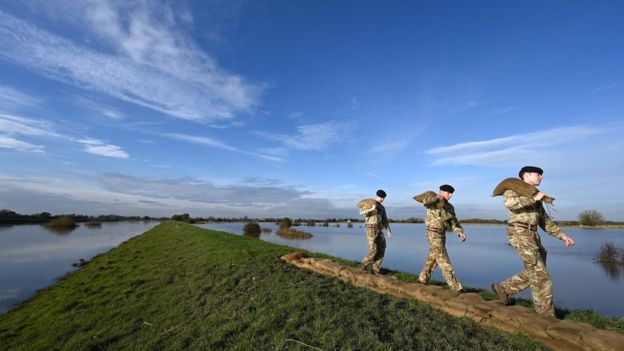 Image copyright Getty Images Image caption Soldiers helping out at the flooded village of Fishlake in Yorkshire
"As temperatures are warmer we get more intense rain, which by itself bring more floods, even if the number of storms hitting our shores don’t change," said Prof Piers Forster from the University of Leeds.
"When coupled to warmer, wetter winters generally, as expected from climate change, the ground becomes more saturated so any rainfall will give a greater chance of flooding."
This is, in essence, the scenario that played out in Fishlake last week.
Will we see more such flooding in the near future?
UK scientists observe and predict a 10-20% increase in rainfall during the wettest days, so it is very possible that we will see other examples of this type of downpour across this winter.
In coastal areas, the chances of flooding are made worse by the rise in sea level.
However, the chances of an area flooding or not is also complicated by human factors such as farming practices, the building of houses on flood plains and the vagaries of the British weather.
What about Venice?
Venice has been hit by floods that have seen more than 80% of the city, a Unesco world heritage site, under water when the tides were at their highest.
The Mayor of Venice was very quick to attribute the floods to climate change. Critics though have pointed to delays and corruption in relation to the installation of a major floodwater defence system that might have limited the damage.
 Image copyright Getty Images Image caption Flooding in Venice is the worst in 50 years
Climate scientists, however, see a clear relation between rising temperatures and the inundation.
"Sea level rise is rising globally and it is also rising in the Adriatic," said Prof Gabi Hegerl, from the University of Edinburgh.
"Venice is also subsiding a bit, so you have a bit of a double whammy.
"The immediate flood has been caused by the Sirocco wind and the high tides but it wouldn’t have been as high without the sea having risen as well."
What about the Australian fires – where’s the climate link?
The latest Lancet report on health and climate change "found that human exposure to fires had doubled since 2000".
"Wildfires not only cause deaths and health damage but had significant economic and social impacts," it found.
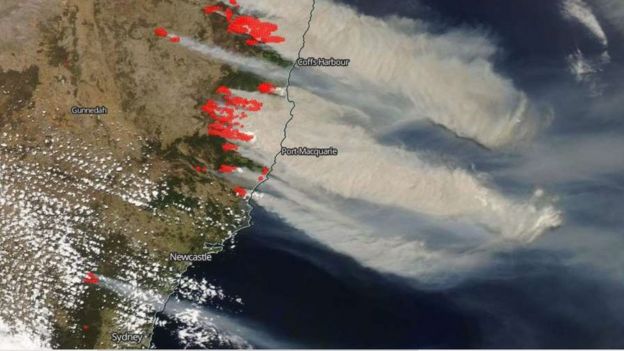 Image copyright ECMWF Copernicus Image caption An image from the Copernicus satellite showing the extent of fires in New South Wales
In Australia, the bushfires this year have come far earlier and on a larger scale than seen previously.
While climate change doesn’t directly cause fires like these – it is major factor in creating the right conditions for fires to take hold.
"In areas like Australia where we have had prolonged dry periods, you can’t definitely attribute this to climate change but the environmental conditions are increasingly ripe for these sorts of things," said Prof Nigel Arnell from the University of Reading.
"The precursors are all going in the direction of increased fire risk in those fire-prone regions."
Other researchers also point to indirect links.
"Most droughts are found to be in part caused by climate change," said Prof Piers Forster.
"Stronger winds, again associated with more energy in the climate system, add to the fire risk and make them more intense and faster moving."
https://www.bbc.co.uk/news/science-environment-50407508
So let’s take each assertion in turn:
South Yorkshire floods
If we assume that the Clausius-Clapeyron equation is correct, and that there are no offsetting factors which the actual data would indicate, Sheffield would have received an extra 6mm of rain last week.
Is McGrath, or any of his scientist buddies, actually saying this would have made any noticeable difference to the current flooding, or that the floods would not have happened? The idea is simply absurd.
And does he actually have any evidence that floods in Britain are any worse than in the past? No, I thought not, all he can offer is theoretical modelling.
Piers Forster also claims:
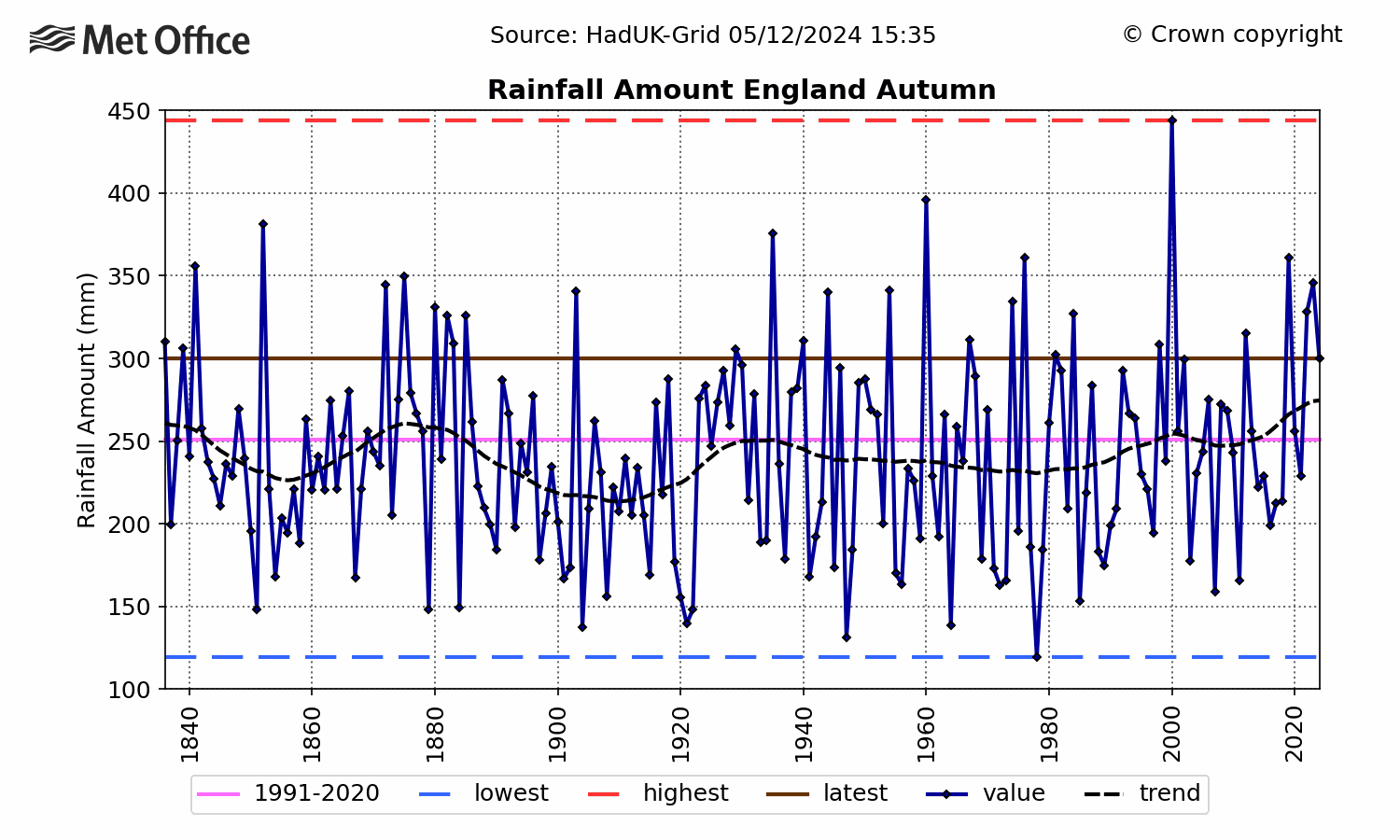
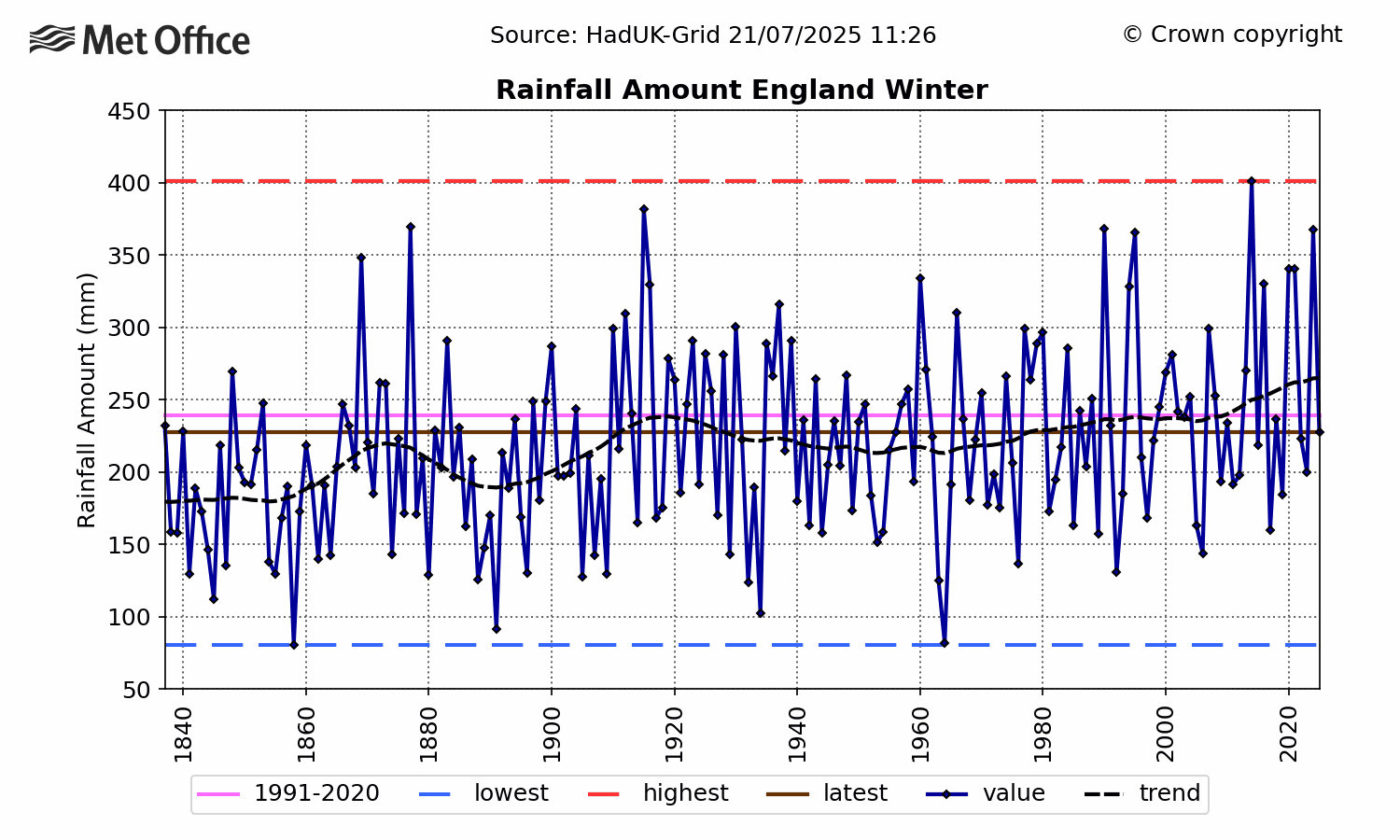
When coupled to warmer, wetter winters generally, as expected from climate change, the ground becomes more saturated so any rainfall will give a greater chance of flooding.
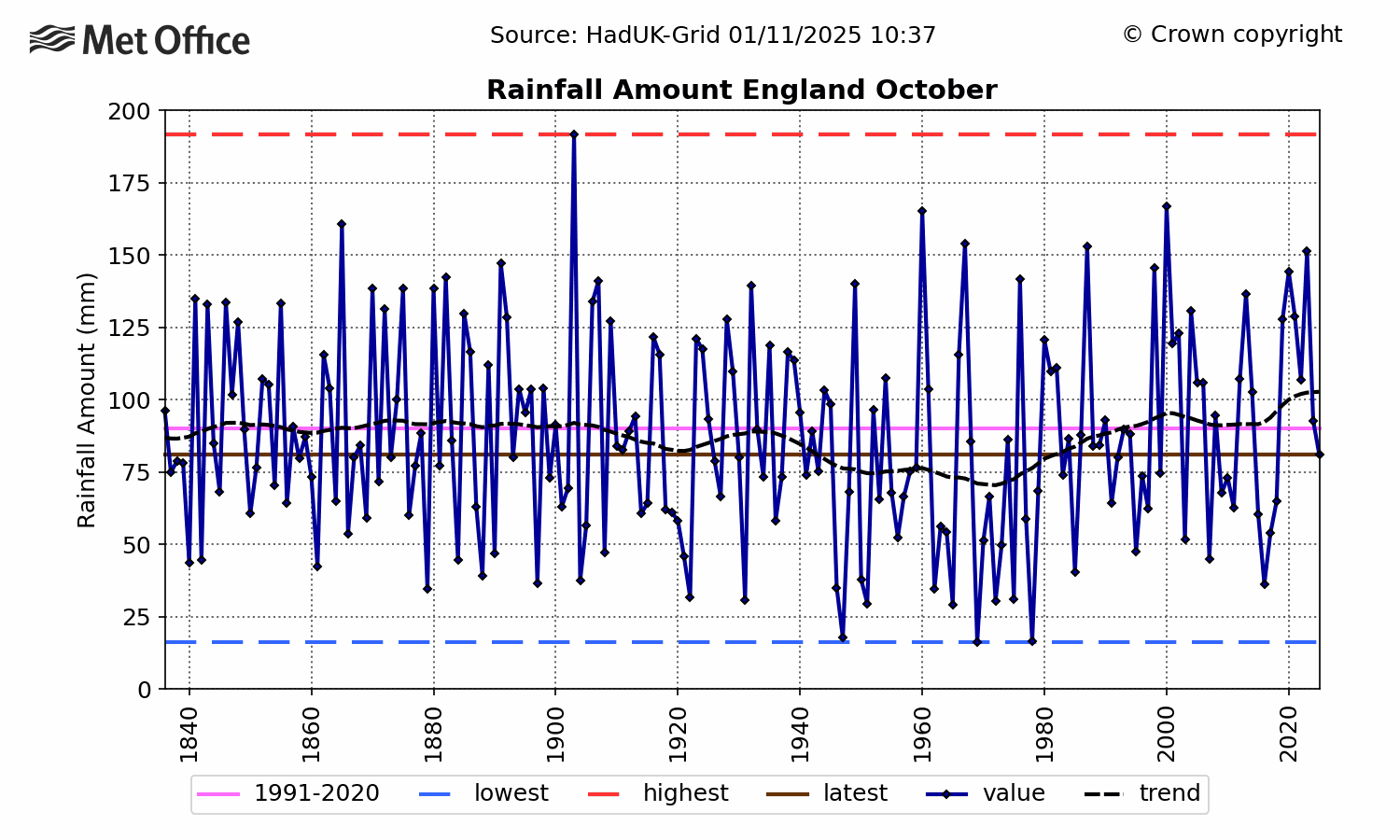
If he had not noticed, we are currently in autumn, and rainfall in England is not increasing in autumn, or for that matter in winter either:
And just to complete the equation, last month was not abnormally wet either:
Venice floods
As even the Venice mayor had to admit, flooding was even worse in 1966.
Of course, nobody can dispute the fact that seas are gradually rising and will exacerbate natural flooding events in Venice. However sea levels have been rising in Venice since at least 1909, and the rate of rise has slowed significantly in the last 50 years.
There is no evidence that rising seas are connected to man made warming:


https://tidesandcurrents.noaa.gov/sltrends/sltrends_station.shtml?id=270-054
Australian wildfires
We are told:
The latest Lancet report on health and climate change "found that human exposure to fires had doubled since 2000".
Yet wildfire experts say that globally wildfires are now burning less acreage than they did in the past.
What, of course, may be true is that many more people are now living in fire prone areas.
McGrath then moves on to droughts, which Forster claims are found to be in part caused by climate change.
If he had bothered to check, he would have found out that NSW rainfall in the last few months has not been unusually low:


As for longer trends, NSW used to be a much drier place:

Still who needs “facts”?
via NOT A LOT OF PEOPLE KNOW THAT
November 15, 2019 at 07:54AM
 Iowa Climate Science Education
Reblogged this on Climate- Science.press.
LikeLike