
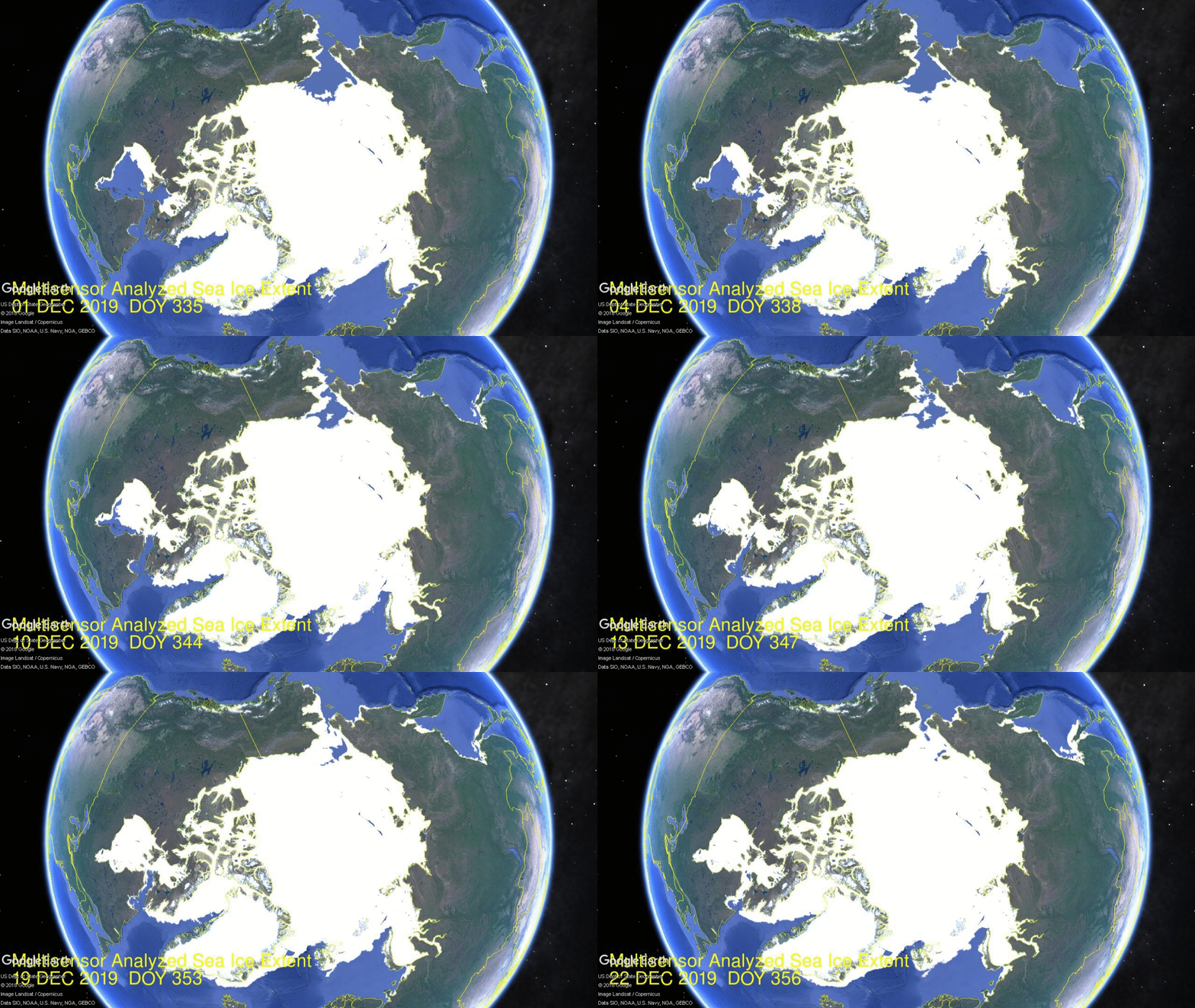
The image above, supported by the table later on shows that in December ice has recovered in the central Arctic with open water found only on the margins, as is typical this time of year. The animation shows progression of ice extent from Dec. 1 to Dec. 22, 2019.
Most dramatic is Hudson Bay on the left filling in over these 3 weeks, from 445k km2 up to 1214k km2, 96% of maximum. At the top, Chukchi Sea also ices over, from 589k km2 to 933k km2, 97% of max. Above Chukchi is Bering Sea just starting with fast ice, and Okhotsk growing ice as usual. The two places lagging behind in ice recovery are Bering Sea and Baffin Bay.
The graph below shows the ice extent growing during December compared to some other years and the 12 year aveerage (2007 to 2018 inclusive).

Note that the NH ice extent 12 year average increases almost 2M km2 during December, up to 13.1m km2. MASIE 2019 shows a faster icing rate, starting 600k km2 lower than average and now down 200k km2, or 1.5%. MASIE and SII are tracking quite closely this month. By month end all years appear to be converging on the 12-year average.
| Region | 2019356 | Day 356 Average | 2019-Ave. | 2010356 | 2019-2007 |
| (0) Northern_Hemisphere | 12428357 | 12623541 | -195184 | 12257118 | 171239 |
| (1) Beaufort_Sea | 1070223 | 1070266 | -42 | 1070445 | -222 |
| (2) Chukchi_Sea | 933276 | 953650 | -20374 | 964317 | -31041 |
| (3) East_Siberian_Sea | 1087137 | 1087133 | 4 | 1087137 | 0 |
| (4) Laptev_Sea | 897845 | 897842 | 3 | 897845 | 0 |
| (5) Kara_Sea | 929742 | 864955 | 64786 | 934937 | -5195 |
| (6) Barents_Sea | 447093 | 358194 | 88899 | 607130 | -160037 |
| (7) Greenland_Sea | 533666 | 562497 | -28831 | 579647 | -45980 |
| (8) Baffin_Bay_Gulf_of_St._Lawrence | 751185 | 924722 | -173536 | 630041 | 121144 |
| (9) Canadian_Archipelago | 854282 | 853082 | 1201 | 853214 | 1068 |
| (10) Hudson_Bay | 1213848 | 1199010 | 14839 | 767479 | 446370 |
| (11) Central_Arctic | 3225391 | 3199892 | 25499 | 3244808 | -19417 |
| (12) Bering_Sea | 147493 | 312873 | -165379 | 219969 | -72475 |
| (13) Baltic_Sea | 11462 | 20025 | -8564 | 100363 | -88902 |
| (14) Sea_of_Okhotsk | 324167 | 306066 | 18101 | 283712 | 40455 |
The table shows where the ice is distributed compared to average. Bering Sea and Baffin Bay have the only large deficits to average, while Kara and Barents Seas are in surplus.

Illustration by Eleanor Lutz shows Earth’s seasonal climate changes. If played in full screen, the four corners present views from top, bottom and sides.
via Science Matters
December 23, 2019 at 02:43PM
 Iowa Climate Science Education