I’m thinking I’ll take this one with a grain of salt.
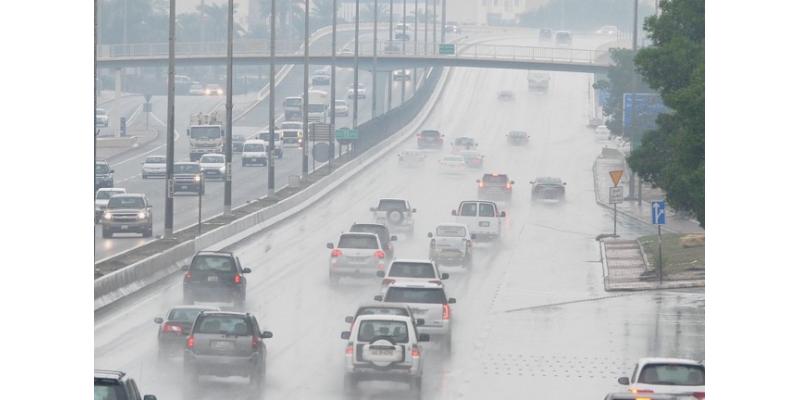
9 Feb 2020 – Meteorological departments are no longer the only source of people seeking information about the weather, writes Amira Mohsen. Technology is available to everyone through their smart phones, so amateurs flocked to follow the weather … Sometimes they preceded the official authorities in announcing rainy seasons or waves of dust and hail.
In Kuwait, one of these amateurs who has followed the weather since November 2018, warned via Twitter of an unprecedented rainy season based on his “knowledge with God.” It turned out that his forecast was true, and the region witnessed a good rainy season. He become Saud Al-Mukhallad “Basheer Al-Matar” as called by the Kuwaiti press.
Al-Mukhallid announced a few days ago that a severe cold wave will hit Kuwait and surrounding countries, declaring that it is an unprecedented wave that the region has not seen in 500 years. He forecasts six degrees below zero (C), while accredited meteorologists expect two degrees above zero. Al-Khaled expected that Iraq would be covered with white snow, declaring it an unprecedented case of gio.
Two days ago he warned the Ministry of Education to take measures to protect students from the expected cold, especially on Tuesday and Wednesday, saying it will be unprecedented in the Arabian Peninsula, and in turn, the Kuwaiti Minister of Education Dr. Saud Al-Harbi asked the Meteorological Department to take the necessary measures.
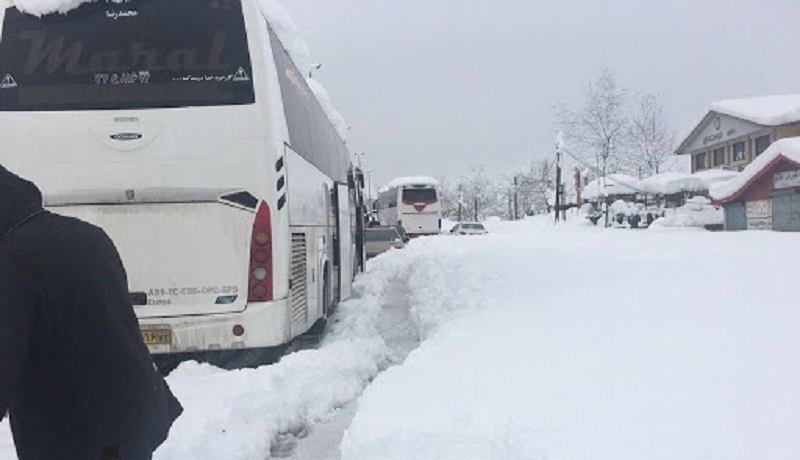
11 Feb 2020 – Currently the water in 4 villages of Gilan province has been cut off due to heavy snowfall, and the electricity and landline of some households in Guilan are still cut off.
Additionally, Guilan residents and many travelers have had problems on the roads leading to the province.
Gilan Provincial Crisis Director General said heavy snowfall and heavy snowstorms have stopped traffic on Saravan highway for 2km.
Guilan Police Chief Rahul Gandhi said the police arrested two thousand passengers on many roads in the province and said: “In this weather it will not be allowed to travel to Guilan before the weather conditions change.”
I couldn’t make this sort of schist up if I was trying…
Very little money is actually spent on climate research Researchers have looked at where USD 1.3 trillion in research funding is spent across the globe. Less than 5 per cent of this money has gone to climate research. Studies that examine how society can cope with the climate of the future are given a very small share of this pot.
Ulla Gjeset Schjølberg JOURNALIST
Nancy Bazilchuk ENGLISH VERSION
PUBLISHED Friday 07. February 2020
In a recent study, researchers at the Norwegian Institute of International Affairs (NUPI) and the University of Sussex reviewed how much of US 1.3 trillion (NOK 11.4 trillion) in research funding is dedicated to climate research.
[…]
Climate change research received just under 4.6 per cent of the research funding allocated between 1990 and 2018, researchers found.
And while research in the natural sciences and technology received about USD 40 billion, social science and humanities research received just USD 4.6 billion during the same period.
An analysis of 1500 grants for social science research aimed at curbing climate change showed that this type of research is being awarded USD 393 million.
[…]
“The one-sided emphasis on the natural sciences leaves one wondering whether funding for climate research is managed by climate sceptics. It’s as if they don’t quite believe in climate change, so they keep trying to find out how it really works, rather than trying to work out how to stop it,” researcher Indra Øverland said in a NUPI press release.
“The one-sided emphasis on the natural sciences leaves one wondering whether funding for climate research is managed by climate sceptics. It’s as if they don’t quite believe in climate change, so they keep trying to find out how it really works, rather than trying to work out how to stop it,” researcher Indra Øverland said in a NUPI press release.
Bare husk … Du kan ikke fikse dumt.
Clearly, in the minds of fake scientists (social sciences), we shouldn’t be spending money on natural sciences, trying to understand how climate change works… We should be giving that money to people like John Cook and Stephan Lewandowsky to fund Enviromarxist propaganda…
The researchers write in their study that social science research plays an important role in understanding how climate change can be slowed.
“One of the most urgent unsolved puzzles is how to get people to act on what they know, that is to say, how to alter society to curb climate change,” they write.
Peer reviewed international journal that examines the relationship between energy systems and society
Energy Research & Social Science (ERSS) is a peer-reviewed international journal that publishes original research and review articles examining the relationship between energy systems and society. ERSS covers a range of topics revolving around the intersection of energy technologies, fuels, and resources on one side; and social processes and influences – including communities of energy users, people affected by energy production, social institutions, customs, traditions, behaviors, and policies – on the other. Put another way, ERSS investigates the social system surrounding energy technology and hardware. ERSS is of relevance for energy practitioners, researchers interested in the social aspects of energy production or use, and policymakers.
When I was in college, my recollection is that the “science” textbooks for non-science majors had similar titles:
Subject
Science Majors
Non-Science Majors
Physics
College Physics
Physics and Society
Chemistry
General Chemistry
Chemistry and Society
Biology
Principles of Zoology
Animals and Society
Geology
Earth
Too Difficult for Society
Only one of the above titles is an actual textbook. Earth by Press & Siever was my freshman physical geology textbook. It’s sitting on my desk in my office. However, the science major textbooks are my closest recollections of my other freshman textbooks. The non-science major textbooks are my vague recollections, except the geology one… That’s a wise @$$ remark.
The main gist of is that people must be brainwashed…
Limiting global warming to 1.5°C will require reaching 80% zero-emission energy by 2030 and 100% by 2050 [10].
Figure 5. The observations (HadCRUT4) are tracking an AOC world: RCP2.6-RCP4.0. (Modified after IPCC AR5).
Without decarbonizing much of anything, the observations at airports (HadCRUT4) are tracking the high-end of RCP2.6 and mid-range of RCP4.5. Both of these are strong mitigation scenarios. If we look at the observations in the atmosphere (UAH v6.0), we’re barely tracking above 1.5 °C
Figure 6. UAH v6.0 plotted with old IPCC “story line” scenarios.
There’s nothing special about limiting warming to 1.5 °C relative to the late Little Ice Age. Being a little warmer than the coldest climate of the Holocene Epoch is a very good thing.
Obviously, to the math- and science-challenged world of social science, that’s not good enough.
Despite progress in some areas, ongoing changes are too shallow and too slow to reach such targets. Solar, wind, geothermal, and modern bioenergy combined still make up only 6.7% of the world’s total final energy consumption [13]. Meanwhile, in the decade from 2007 to 2017, oil, gas, and coal production grew by 13%, 25% and 8%, respectively and, consequently, CO2 emissions grew by almost 11% [14]. During the same period, three times more money was spent on oil, gas, and coal facilities than on all forms of renewable energy infrastructure, including hydropower and biofuels [15]. Deforestation and population growth also continue at a high pace [16].
Human habits are difficult to change; doing so requires altering attitudes, norms, incentives, ethics, and politics at the personal, community, and national levels [17]. Therefore, some of the key climate-change puzzles are in the realm of the social sciences broadly defined: anthropology, economics, education, international relations, human geography, development studies, legal studies, media studies, political science, psychology, and sociology [18]. Yet, as we find here, these are precisely the fields that receive least funding for climate research.
From 2007-2017 “three times more money was spent on oil, gas, and coal facilities than on all forms of renewable energy infrastructure” and in 2017 fossil fuels delivered nearly eight times as much energy as “all forms of renewable energy infrastructure, including hydropower and biofuels.”
Figure 8. It’s a fossil fueled world. (2018 BP Statistical Review of World Energy).
Spend $3x to get 8x(Energy) = No brainer.
So, clearly we need an army of fake scientists to say…
And convince us that we should all gladly freeze in the dark to save the planet. Who’s up for some George Carlin?
WARNING: Lot’s of profanity! Don’t watch if you have sensitive ears.
WARNING: Lot’s of profanity! Don’t watch if you have sensitive ears.
References
Cook, J., Supran, G., Lewandowsky, S., Oreskes, N., & Maibach, E., (2019). “America Misled: How the fossil fuel industry deliberately misled Americans about climate change”. Fairfax, VA: George Mason University Center for Climate Change Communication. Available at https://ift.tt/2qyKTof
Kobashi, T., Menviel, L., Jeltsch-Thömmes, A. et al. “Volcanic influence on centennial to millennial Holocene Greenland temperature change”. Scientific Reports 7, 1441 (2017). https://ift.tt/384l00f
McKay, N., Kaufman, D. “An extended Arctic proxy temperature database for the past 2,000 years”. Scientific Data 1. 140026 (2014). https://ift.tt/2H0rYaY
Øverland, I. and Sovacool, B.K: “The misallocation of climate research funding”. Energy Research & Social Science (2020)
When we talk about the impact of household energy bills of switching from gas to electricity, we need to bear in mind that electricity prices are going to be forced upwards in the next few year by new, subsidised wind power coming on stream.
Currently it is estimated that green levies will increase by a further £2.0bn by 2023/24:





 Iowa Climate Science Education