Month: February 2020

Historic Climate Cycles (glaciers added)

Update: February 7, 2020

This is an update to a post The Ever Changing Climate with a new slide showing fluctuating Alpine glaciers over several thousand years.  Context below is from the previous with the new content.

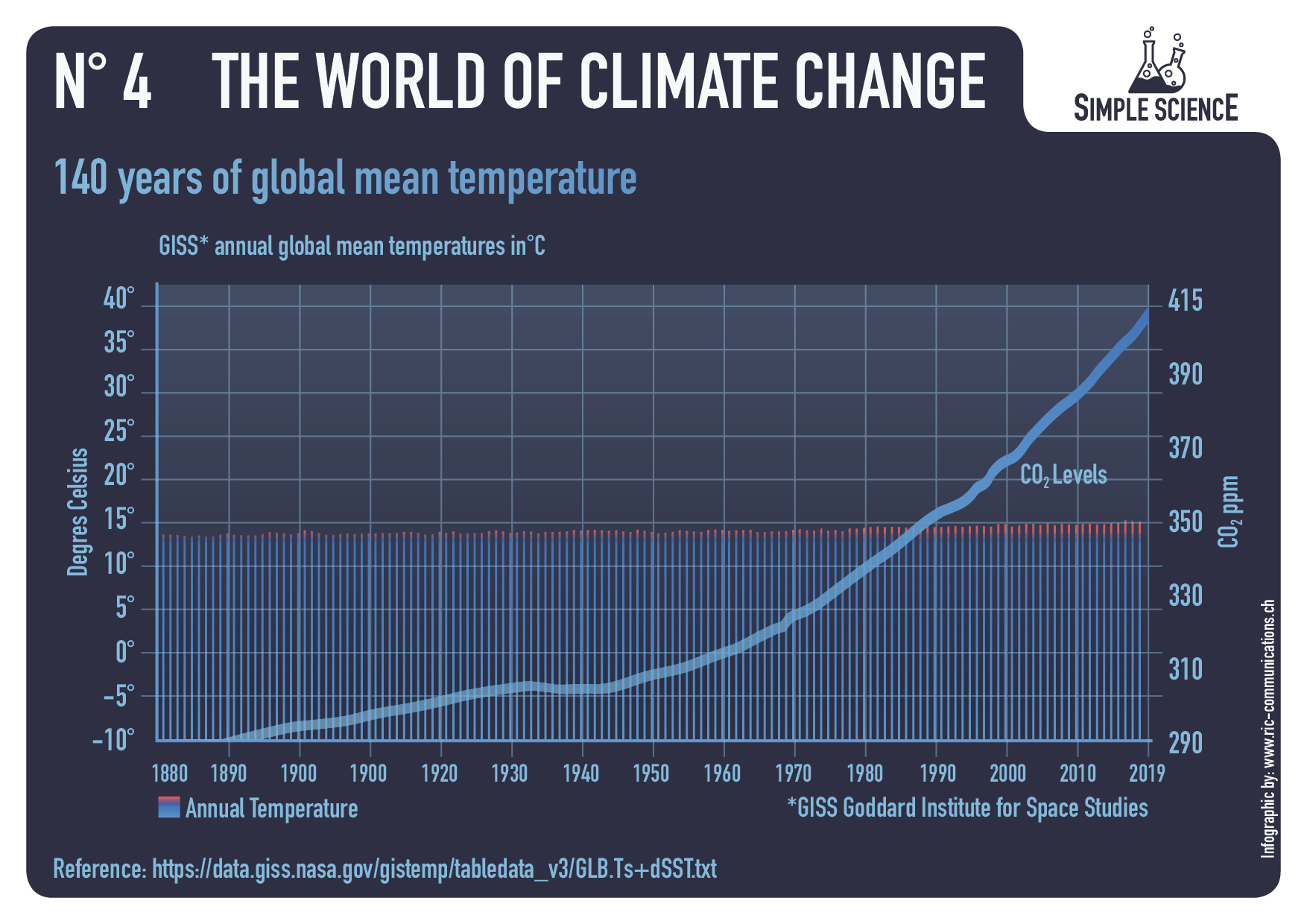
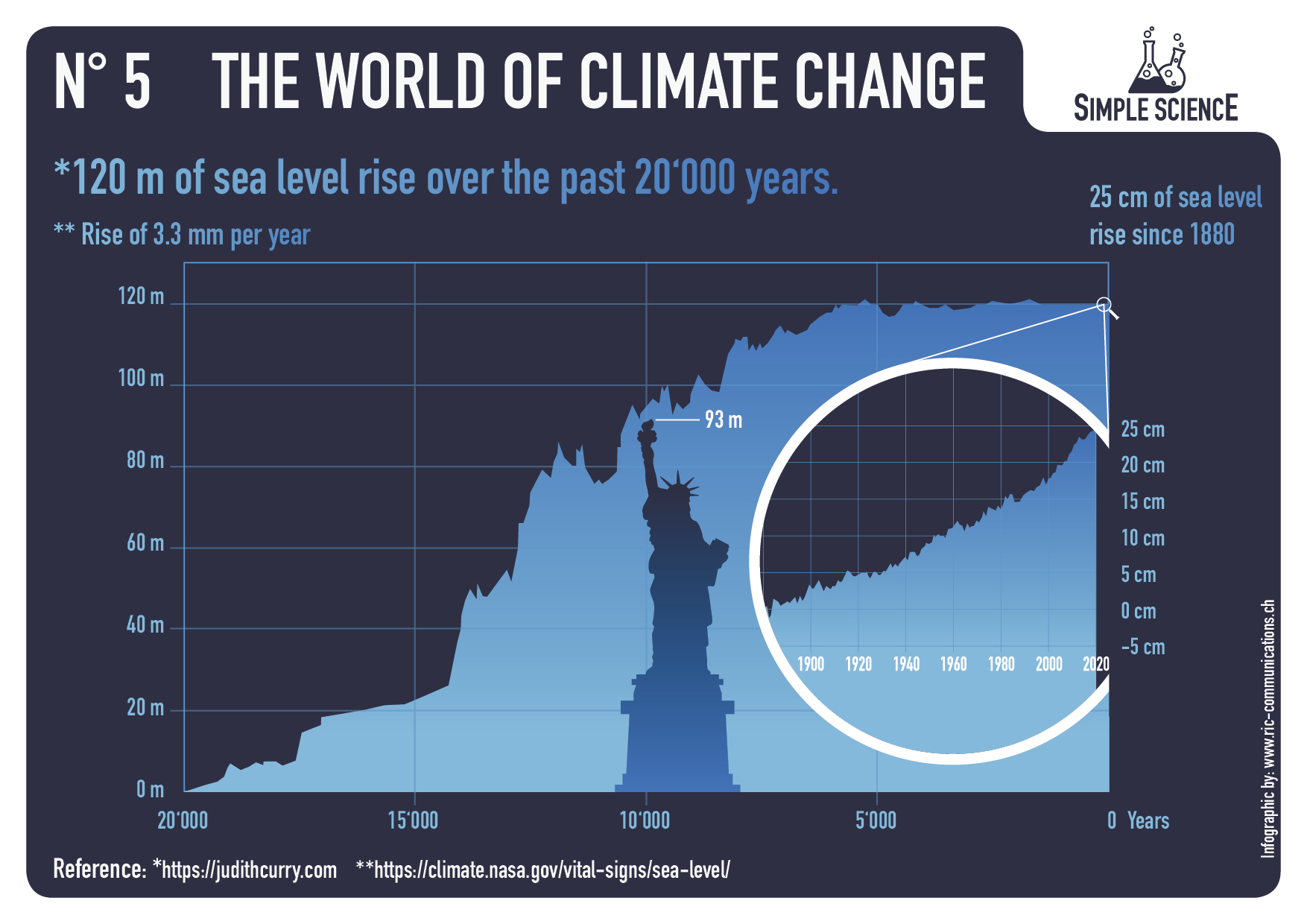
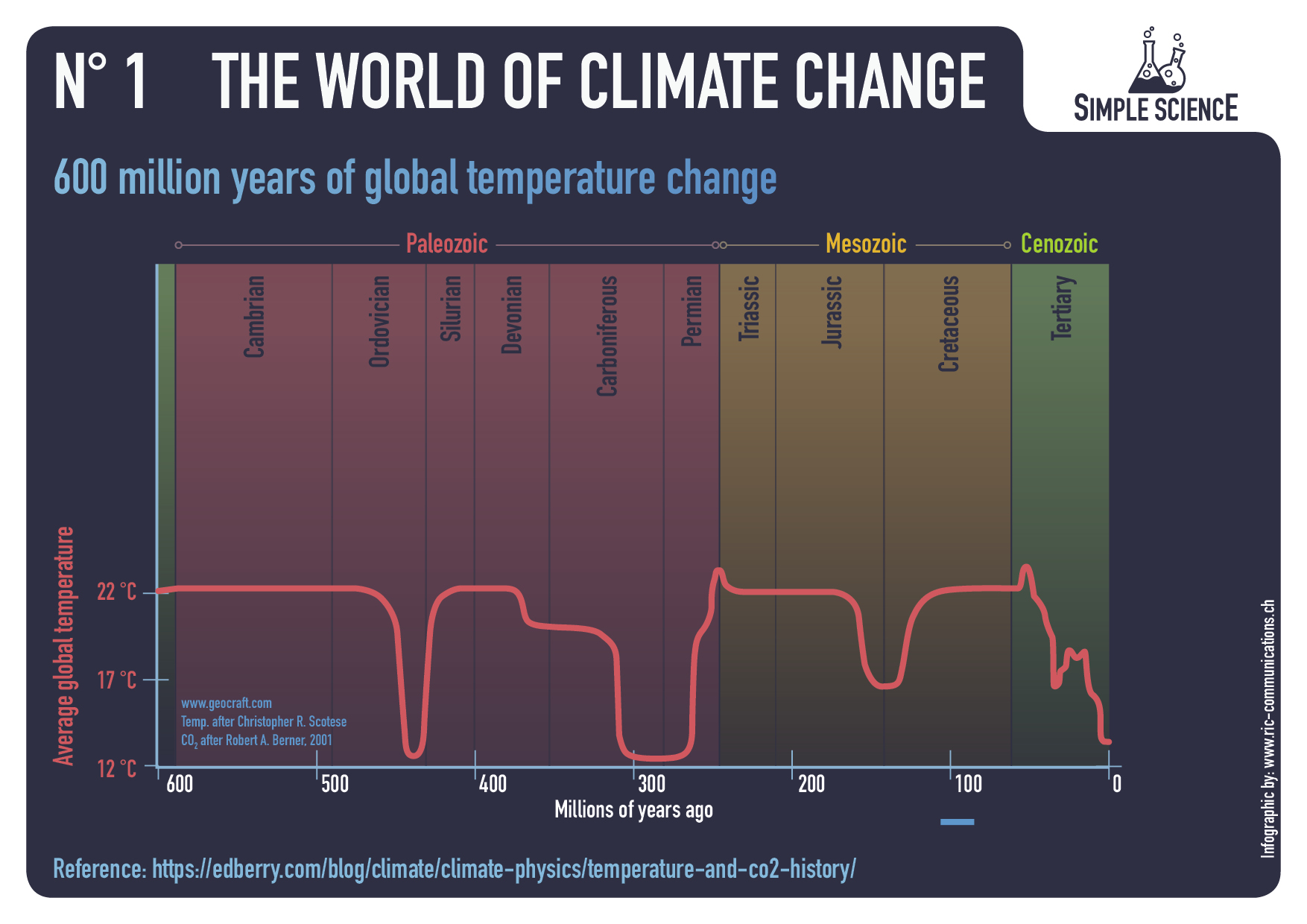
Raymond of RiC-Communications  studio commented on a recent post and made an offer to share here some graphics on CO2 for improving public awareness.  He has produced 12 interesting slides which are presented in the post Here’s Looking at You, CO2.   I find them straightforward and useful, and appreciate his excellent work on this. Project title is link to RiC-Communications. This post presents the five initial charts he has so far created on a second theme The World of Climate Change and adds another regarding Alpine glacier studies by two prominent geologists.  I appreciate that Raymond was able to interact with these two experts in their native German language.

This project is The World of Climate Change

Infographics can be helpful, in making things simple to understand. Climate change is a complex topic with a lot of information and statistics. These simple step by step charts are here to better understand what is occurring naturally and what could be caused by humans. What is cause for alarm and what isn’t cause for alarmism if at all. Only through learning is it possible to get the big picture so as to make the right decisions for the future.

– N° 1 600 million years of global temperature change
– N° 2 Earth‘s temperature record for the last 400,000 years
– N° 3 Holocene period and average northern hemispheric temperatures
– N° 4 140 years of global mean temperature
– N° 5 120 m of sea level rise over the past 20‘000 years
– N° 6 Eastern European alpine glacier history during the Holocene period.
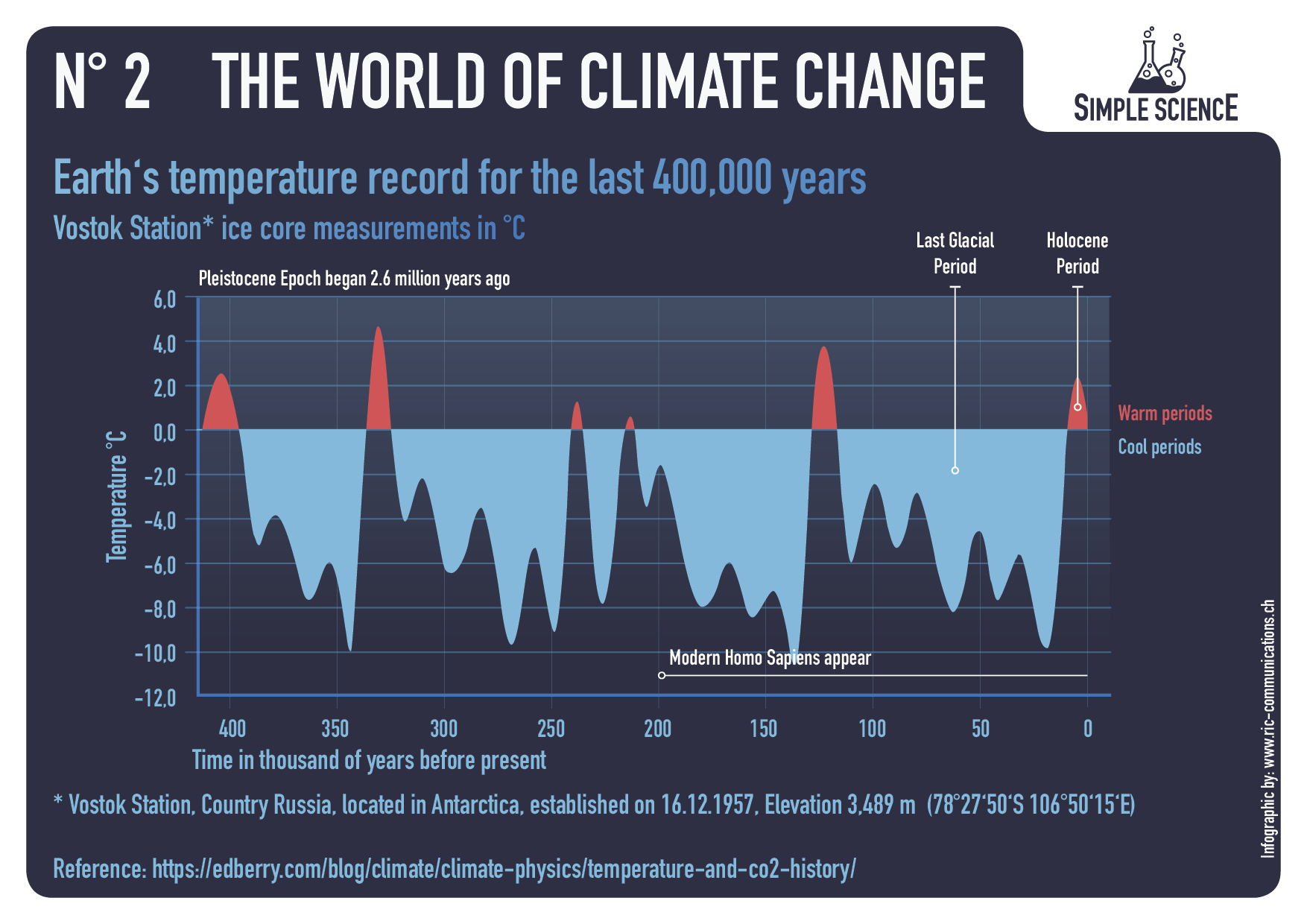
Comment:

This project will explore information concerning how aspects of the world climate system have changed in the past up to the present time.  Understanding the range of historical variation and the factors involved is essential for anticipating how future climate parameters might fluctuate.

For example:

The Climate Story (Illustrated) looks at the temperature record.

H20 the Gorilla Climate Molecule looks at precipitation patterns.

Data vs. Models #2: Droughts and Floods looks at precipitation extremes.

Data vs. Models #3: Disasters looks at extreme weather events.

Data vs. Models #4: Climates Changing looks at boundaries of defined climate zones.

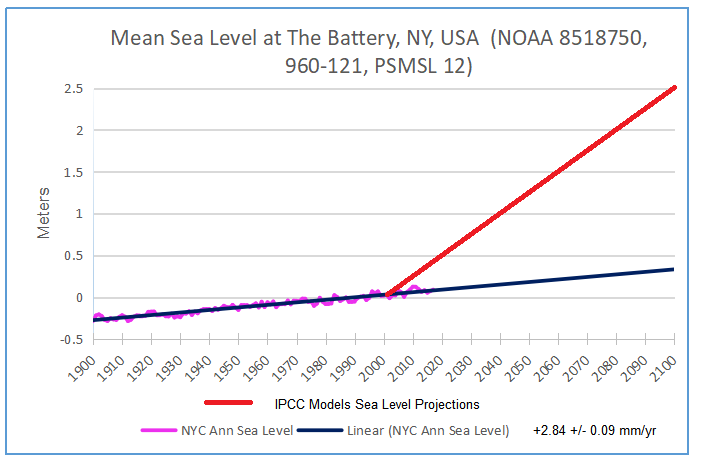
And in addition, since Chart #5 features the Statue of Liberty, here are the tidal guage observations there compared to climate model projections:


via Science Matters

https://ift.tt/3btuMLM

February 7, 2020 at 06:27AM

On cue — after droughts and fires, then come the floods

So much for the “hotter drier” future they were warning us about 3 weeks ago

As predicted, droughts in Australia often end in floods. It is the way it has always been. Today people are already being rescued from the rising water and possibly another 200 -300mm of rain may fall before Sunday warns the BOM. Many fires have been extinguished.

Climate change has made no difference to the drought trends in Australia in the last 178 years and climate models are totally skilless at rainfall. When will the climate modelers admit that these are natural cycles?

‘We’re only half way through’: East coast smashed by flashflooding and heavy winds

Forecasters become increasingly concerned that even more rain could fall even faster than expected as five people have been rescued from floods.

The NSW State Emergency Service issued a flood warning for Sydney’s metropolitan areas, saying forecast weather conditions were “likely to cause widespread flooding”.

Flooding has already occurred in Roseville in Sydney’s Upper North Shore and the north-western suburb of Putney, where commuters are advised to allow extra travel time.

Meteorologist have said they are increasingly worried about the unfolding weather event […]

Rating: 10.0/10 (2 votes cast)

via JoNova

https://ift.tt/31waoVG

February 7, 2020 at 05:27AM

The Government’s Hybrid Car Fiasco Shows The UK Is Nowhere Near A Coherent Environmental Policy

After confidently telling motorists for decades that certain types of vehicle were better for the environment, our politicians now plan to penalise those same drivers by government fiat. 

This is not the first time that the prevailing wisdom has shifted dramatically, to the cost of consumers CREDIT: OWEN HUMPHREYS /PA 

This week’s announcement that the sale of new hybrid cars will be banned from 2035, alongside new petrol and diesel cars, came as a shock to customers and an industry that had been supported by rhetoric from a succession of ministers promoting their supposedly green credentials.

The resale value of these fairly expensive vehicles is likely to plummet as a result of government action, so owners are right to be angry. With new sales of hybrid, petrol and diesel banned, it is likely that much of the infrastructure essential to driving these cars will also disappear, rendering them unusable in practice. Readers may recall that we’ve been here before.

This is not the first time that the prevailing wisdom has shifted dramatically, to the cost of consumers. The last Labour government incentivised the purchase of diesel vehicles following changes to the car tax system in 2001. Despite tending to be more fuel efficient, evidence suggested that diesel vehicles emitted greater amounts of other pollutants. The New Labour tax break contributed to increased sales of diesel cars and a corresponding decrease in air quality. The government, in effect, promoted polluting vehicles under the guise of the green agenda.

Almost 20 years later and we are in the same position. Affluent consumers rushed to buy the latest hybrid Prius after the government backed them as a solution to the climate crisis and the UK’s worsening air quality, especially in London where city authorities made the cars exempt from congestion zones and the latest Ultra Low Emission Zones. Now those same authorities are penalising hybrid drivers.

Nothing better sums up the risk of the state seeking to pick winners and losers in the name of environmentalism, or the way in which ordinary taxpayers inevitably pick up the tab for policymakers’ mistakes. This epitomises the government’s contradictory set of policies, and the broader lack of joined-up thinking on energy and the environment.

Not only is Boris Johnson’s government pushing ahead with the net zero emissions target hastily agreed by Theresa May last year – it is arguably doing so with even greater enthusiasm. The decision to ban “offending” vehicles by 2035, after all, merely expedites an existing government target by five years. 

As such, they have adopted a black and white attitude towards green technologies – ignoring any downsides that might arise from their development or use. For instance, some models of hybrid car are better for the environment than petrol and diesel cars, but the latest announcement will undoubtedly give people second thoughts about trading in their old polluting banger for a hybrid. There are also serious questions about whether we are prepared for the vast rollout in infrastructure the electric car revolution envisaged by politicians will require, and yet the government seems deaf to the concerns of businesses and industry experts about its feasability.

Across government departments, there is a severe disconnect; policies for green subsidies in some areas sit uneasily alongside significant punitive taxes in others and support for non-renewables elsewhere. Sometimes the aims are wholly contradictory. 

In the energy sector, wind and solar still receive substantial subsidies – although much lower than in the recent past – while Ofgem notes that around £120 of the average household energy bill is as a direct result of “environmental and social obligation costs” – that’s green taxes to you and me.

Full post (£)

The post The Government’s Hybrid Car Fiasco Shows The UK Is Nowhere Near A Coherent Environmental Policy appeared first on The Global Warming Policy Forum (GWPF).

via The Global Warming Policy Forum (GWPF)

https://ift.tt/3896Yui

February 7, 2020 at 05:12AM

NASA to Industry: Send Ideas for Lunar Rovers

ltv-climbinghill-viperltv-climbinghill-viper

From NASA

Feb. 6, 2020

Concept image showing the backseat view in a Lunar Terrain Vehicle. Concept image showing the backseat view in a Lunar Terrain Vehicle.

Concept image showing the backseat view in a Lunar Terrain Vehicle. Credits: NASA

As NASA’s Artemis lunar exploration program mounts toward a robust decade of modern science, research, and human exploration at the Moon, the agency is asking American companies to think about how to get around on the lunar surface.

NASA issued two separate Requests for Information (RFI) seeking industry approaches for development of robotic mobility systems and human-class lunar rovers. With these RFIs, NASA seeks to foster an emerging American market of lunar transportation capability by engaging the terrestrial vehicle and robotic communities.

First, the space agency is asking for concepts on robotic mobility systems to transport instruments across the lunar surface, conducting critical scientific research across wide areas of terrain, including areas where humans may not explore.

“As we return to the Moon with Artemis, we’re seeking new and innovative approaches that allow us to operate robotically anywhere on the lunar surface and explore more of our nearest neighbor than ever before,” said Steve Clarke, deputy associate administrator for exploration, Science Mission Directorate at NASA Headquarters in Washington. “We are turning to industry to offer us exciting approaches to leverage existing systems here on Earth—including law enforcement, military, or recreational vehicles—that could be modified for use in space to enhance our mobility architecture.”

To expand the exploration footprints of the first woman and next man on the Moon, NASA also is seeking industry feedback on relevant state-of-the-art commercial technologies and acquisition strategies for a new lunar terrain vehicle or LTV. The LTV will be a human-rated, unpressurized (unenclosed) rover that will be used to help astronauts explore and conduct experiments somewhere humans have never been before: the lunar South Pole.

“The most we can expect crew to walk while wearing their spacesuits is about a half-mile,” said Marshall Smith, director of human lunar exploration programs in the Human Exploration and Operations Mission Directorate at NASA Headquarters. “If we can place a rover near a landing site before crew arrive, the potential for scientific return on those first missions will grow exponentially.”

The proof is in the past. The total areas explored for Apollo astronauts grew from a little over half a mile during Apollo 11, to 15 miles during Apollos 15-17. With the Lunar Roving Vehicle, astronauts were able to explore much more diverse geological features to maximize the science return of those missions.

“We also want to hear from industry leaders in all-terrain vehicles, electric vehicles, and more—this is not exclusive to the space industry,” notes Smith. “We want our rovers on the Moon to draw on, and spur, innovations in electric vehicle energy storage and management, autonomous driving, and extreme environment resistance.”

Clarke added, “Companies of all sizes are already partnering with us to deliver payloads to the lunar surface through our Commercial Lunar Payload Services (CLPS) initiative. We look forward to what industry shares with us as we consider early ideas on how humanity will explore the Moon robotically and with crew in the coming years.”

Increasing mobility on the Moon is the latest step to strengthen NASA’s Artemis program, where the agency will use the Moon to test new systems and technologies before sending crew to Mars in the 2030s. The agency will soon select new providers to design and develop a Human Landing System as well as new logistics suppliers for the Gateway in lunar orbit. And, as Clarke mentioned, NASA is continuing to accelerate its scientific work ahead of a human return, working with a pool of 14 companies on contract to bid on commercial Moon deliveries. Two of those providers, Astrobotic and Intuitive Machines, will deliver the first sets of science instruments and technology development payloads to the lunar surface next year.

The RFIs are to inform strategic planning, inviting industry to provide information to help shape the evolution of the Artemis mobility architecture to achieve the greatest scientific and exploration value.

Responses to the SMD RFI are due March 6, and responses to the HEOMD RFI are due Feb. 26. NASA will host a virtual industry forum Feb. 12, to explain the strategy and answer questions from potential responders. Connection details for the virtual industry forum can be found in the RFIs.

The LTV RFI is available here:

https://beta.sam.gov/opp/46cd587dcba34a8e96792f26d3c7a8d8/view

The robotic mobility systems RFI is available here:

https://beta.sam.gov/opp/14d4f43f22d94fd7b003e98b8e253c95/view?keywords=NASA&sort=-modifiedDate&index=&is_active=true&page=1

For more information about NASA’s Artemis lunar exploration program, visit:

https://www.nasa.gov/artemisprogram

Last Updated: Feb. 6, 2020

Editor: Erin Mahoney

via Watts Up With That?

https://ift.tt/2utH1XP

February 7, 2020 at 04:55AM