Month: February 2020

Pontificating Politicians Plan To Outlaw The Engine, But Forecasters Say Nothing Much Changes

Virtue signalling politicians compete with each other to bring forward the theoretical day when carbon dioxide (CO2) is eliminated from our cars, trucks, ships and airliners, but experts say this is not going to happen any time soon and traditional engines will retain dominance for years to come.

Man with yellow vest protesting in France. GETTY

Prime Minister Boris Johnson declared Britain would bring forward the day new gasoline, diesel and hybrid powered cars and SUVs would be banned from sale to 2035 from 2040. Countries like Denmark have already declared 2030 to be the year when everybody must only buy battery-electric powered cars, or fuel-cell ones if available. The European Union (EU), minus Poland, has a target of going net carbon neutral by 2050.

The EU has decreed that by 2030, the average fuel consumption of internal combustion engine-powered vehicles must be 92 miles per U.S. gallon, which is just another way of saying all new cars must be battery-electric vehicles (BEV). That’s a problem given they are unaffordable to average income buyers.
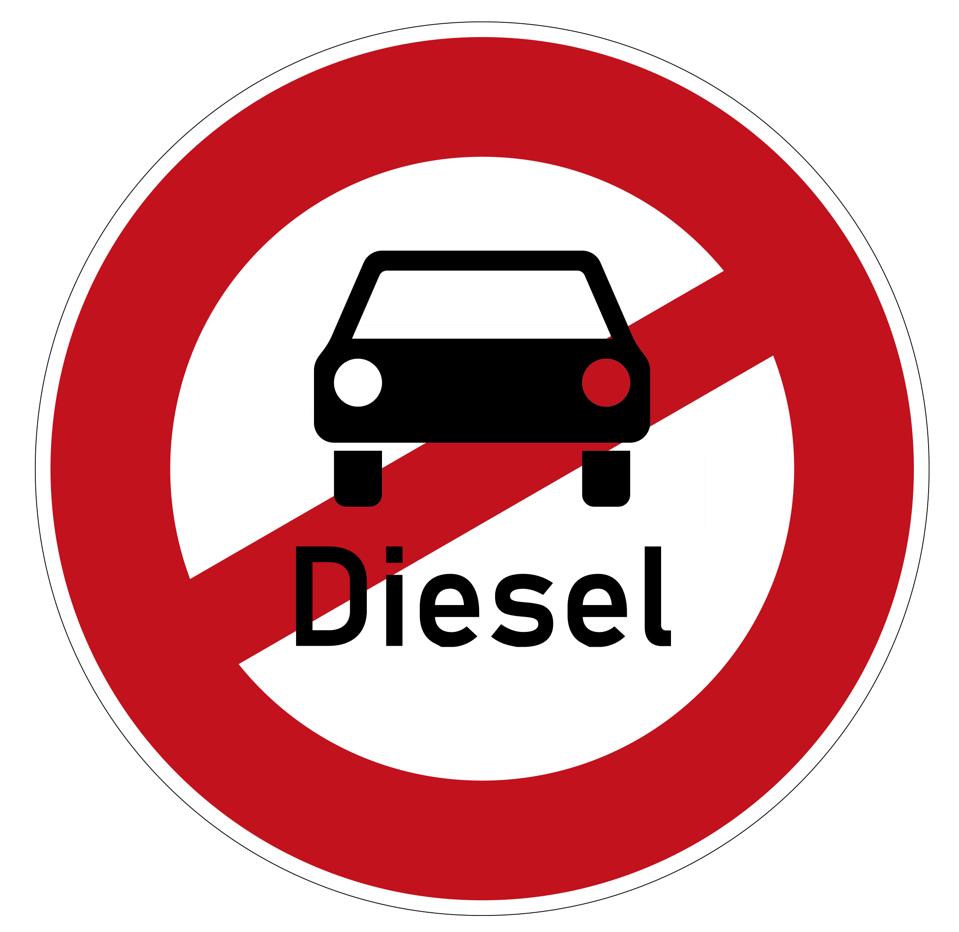
German Traffic Sign ″dieselfahrverbot″

German Traffic Sign “dieselfahrverbot”

Forecasters in the real world paint a different picture. According to investment bank Morgan Stanley, global sales of BEVs will only reach 24% by 2030, from about 2% in 2019 and 11% in 2025. And that is a stretch if you look at IHS Markit’s projection of BEV production reaching only 15.9% by 2030, while output of gasoline, diesel, and mild-hybrids cars and SUVs would still account for just over 70% of sales.

Either way, a big gap is opening up between what politicians say, urged on by high-profile environmentalists like Greta Thunberg, and what is happening in the real world. The key point surely is that politicians making unrealistic claims for short-term gain will probably be retired when their plans implode, and the rioting starts. Forecasters have to stick around and live with their predictions. 

Professor Gautam Kalghatgi, visiting professor for Mechanical Engineering at Imperial College London, and Engineering Science at Oxford University says the politicians and environmentalists declared aims are not possible.

“Internal combustion engines (ICE) are going to power transport to a very large extent for decades to come, so the best way to ensure the sustainability of transport is to improve ICE engines. It is imperative to improve such engines to improve the sustainability of transport,” Kalghatgi said in a speech to the Global Warming Policy Foundation.

“Even by 2040, transport will be dominated by combustion engines and 85 to 90% of transport energy will come from oil,” Kalghatgi said, quoting the U.N. accredited World Energy Council data.

Tell that to the British government, which this week said its planned ban on the sale of new gasoline, diesel and hybrid autos might well be brought forward to 2032 from 2035.
windmills in zhoushan

Wind turbines against blue sky.Green energy concept.Zhoushan,Zhejiang province,China.

GETTY

Britain’s Institution of Mechanical Engineers (IMechE) applauds the British government’s motives in seeking to ban ICE vehicles but believes this isn’t the fastest way to get rid of CO2. It argues that because of the 300 million plus number of ICE cars on Europe’s roads with an average life span of about 12 years it would be impossible to replace them quickly with battery-electric vehicles. So it would make sense to invest in making current ICE technology more efficient.

“Whilst we rightly continue to invest in electric vehicles we must also pursue and invest in renewable and low carbon fuels made from sustainable and net zero sources. These alternative fuels would be able to use the existing infrastructure, reducing consumer impact at the fuel pump and potentially avoiding the cost associated with new infrastructure to support electric vehicle adoption at pace,” IMechE said in a statement.

In an earlier report IMechE said policy makers need to be aware that electric vehicle technology is far from zero-emissions when it is subject to life-cycle or “cradle to grave” analysis.

“This analysis shows that an electric vehicle produces about half the greenhouse gas emissions over its lifetime as a (gasoline) vehicle when taking into account emissions produced as a result of the manufacture of the vehicle, mainly the battery pack, and the source of power used to charge it,” IMechE said.
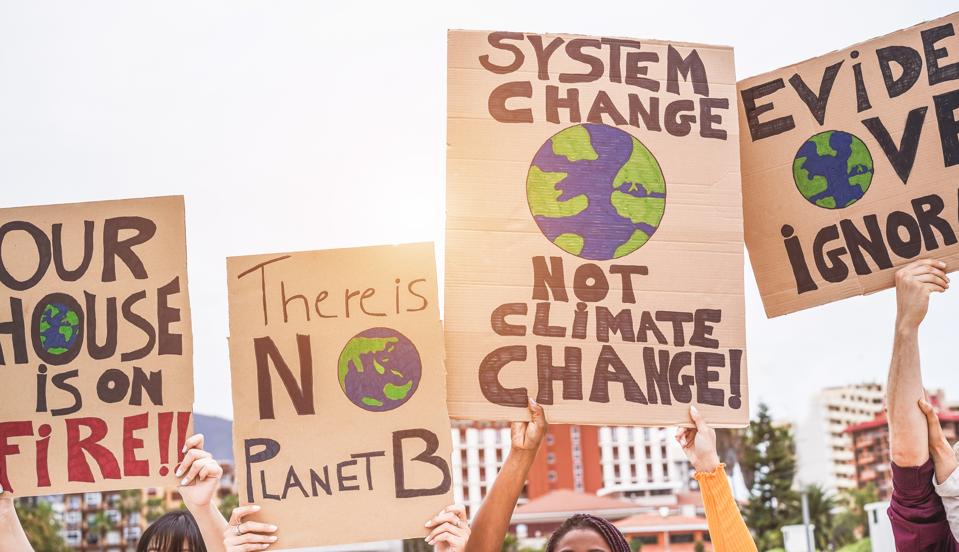
Group of demonstrators on road, young people from different culture and race fight for climate change - Global warming and enviroment concept - Focus on banners

GETTY

Kalghatgi said in an interview that BEVs can’t possibly meet the goals assigned to them. They don’t save much CO2, they are too expensive to replace affordable mass market cars and SUVs, the charging network and power generation requires massive investment, and raw materials required in the production of batteries look to be in short supply with the inevitable price spikes as demand increases.

Full Post

The post Pontificating Politicians Plan To Outlaw The Engine, But Forecasters Say Nothing Much Changes appeared first on The Global Warming Policy Forum (GWPF).

via The Global Warming Policy Forum (GWPF)

https://ift.tt/2SMR83D

February 20, 2020 at 07:47AM

Record snowfall in Colorado – And still 10 days to go in the month

“COLORADO IS “FEBRUBURIED — BRECKENRIDGE SUFFERS SNOWIEST FEB EVER, WHILE DENVER IS JUST 6.6 INCHES OFF ITS ALL-TIME RECORD,” reads the headline.

“This morning we reported 10 inches [25.4cm] of snow overnight, which pushed us over the edge to the snowiest February we have on record! Our 87 inches [221cm] so far topped the recent record of 85 inches [216cm] from the 2013-14 season, 82 inches [208cm] from the 1992-93 season, and average February snowfall of 50 inches [127cm]. With the snow still falling and two weeks left in the month, you could say we are FebruBURIED,” wrote Nicole Stull, spokeswoman for Breckenridge, in an email.

CO’s statewide snowpack is currently sitting some 113% above the 1981-2010 norm.

Many other Summit County regions are also reporting monster February snowfall totals, according to ski area reports and Open Snow data, and as originally published by skyhinews.com:

“We’ve had 60 inches [152.4cm] of snow so far in February,” said Arapahoe Basin Ski Area spokeswoman Leigh Hierholzer. “Definitely one of our snowiest Februarys on record so far for the month.”

Copper Mountain Resort and Loveland Ski Area have busted their February snow totals for the past five consecutive years.

Meanwhile, it has snowed on 9 out of the first 16 days at Denver International Airport, pushing the city’s official February snow total to 15.8 inches [40.1cm], just 6.6 inches from tying the snowiest February on record, the 22.4 [56.9] inches fell in 2015, with almost half of the month left to go, and further flurries in the forecast.

Snow is expected to continue across the state through Tuesday, according to OpenSnow meteorologist Joel Gratz, with further inches likely Wednesday into Thursday, and then another powerful system is forecast to move through Colorado next week:

https://electroverse.net/colorado-is-februburied/

Thanks to Don Bishop for this link


The post Record snowfall in Colorado – And still 10 days to go in the month appeared first on Ice Age Now.

via Ice Age Now

https://ift.tt/38M2n1s

February 20, 2020 at 07:25AM

Natural Gas Is Next Target Of Climate Activists

“Natural gas is a much ‘dirtier’ energy source than we thought…”

In the thick of a Greenland summer of field work in 2015, Benjamin Hmiel and his team drilled into the massive ice sheet’s frozen innards, periodically hauling up a motorcycle-engine-sized chunk of crystalline ice. The ice held part of the answer to a question that had vexed scientists for years: How much of the methane in the atmosphere, one of the most potent sources of global warming, comes from the oil and gas industry?

Previously, geologic sources like volcanic seeps and gassy mud pots were thought to spit out about 10 percent of the methane that ended up in the atmosphere each year. But new research, published this week in Nature, suggests that natural geologic sources make up a much smaller fraction of the methane in today’s atmosphere. Instead, the researchers say, that methane is most likely attributable to industry. Added up, the results indicate we’ve underestimated the methane impacts of fossil fuel extraction by up to 40 percent.

That’s both bad news for climate change and good, says Hmiel, the lead author of the study and a researcher at the University of Rochester. Bad, because it means that oil and gas production has had a messier, bigger impact on the greenhouse gas budget than scientists knew. But Hmiel finds the result encouraging for almost the same reason: The more of the methane emissions that can be pinpointed to human activity like oil and gas extraction, the more control it means policymakers, businesses, and regulators have to fix the problem.

“If we think of the total methane in the atmosphere as slices of a pie—one slice is from ruminants, this other is from wetlands. The slice is we used to think was from geologic methane was too big,” says Hmiel. “So what we’re saying is that the fossil fuel pie slice is larger than what we thought, and we can have a bigger influence on the size of the slice, because it’s something we can control.”

Full post

The post Natural Gas Is Next Target Of Climate Activists appeared first on The Global Warming Policy Forum (GWPF).

via The Global Warming Policy Forum (GWPF)

https://ift.tt/2PaRiiT

February 20, 2020 at 06:45AM

Cummings Pushes To Hike Fuel Duty ‘So That Boris Will Look Good For Glasgow Climate Conference’

“Cummings was pushing Sajid to put up fuel duty, so the PM will look good for the climate conference we’re hosting.”

 Britain's 37million drivers face the first fuel duty hike in ten years
Britain’s 37million drivers face the first fuel duty hike in ten years – Credit: PA:Press Association

Britain’s 37million drivers could face the first fuel duty rise in a decade next month. They may be targeted in the Budget as Boris Johnson’s all- powerful adviser Dominic Cummings eyes up a £4billion spending pot.

He wants to end the fuel duty freeze, which has been in place since 2010 and saves drivers about £1.50 every time they fill up.

The tax will probably go up by the rate of inflation, putting 2p on a litre of fuel.

However, the rise might be delayed until next year.

Mr Cummings wants to use fuel tax to fund the PM’s promised spending on infrastructure outside the capital, Treasury sources say.

Some in No10 believe it will also boost the Tories’ reputation on the environment.

Fuel duty was frozen thanks to The Sun’s long-running Keep it Down campaign. It was one of the issues on which Mr Cummings and Sajid Javid disagreed before the latter quit as Chancellor last week.

A Treasury official said: “Cummings was pushing Sajid to put up fuel duty, so the PM will look good for the climate conference we’re hosting.”

But Mr Javid’s replacement, Rishi Sunak, is a No10 loyalist and thought unlikely to block any attempt to end the freeze on March 11.

During the election, Mr Johnson told The Sun he had “absolutely no intention” of raising fuel duty.

But allies of Mr Johnson and the new Chancellor refused to rule it out yesterday. One said: “Rishi is still getting his feet under the desk. There have been no decisions yet.”

Experts say a five-year freeze will cost the Government about £4billion a year.

But Tory MP Robert Halfon told The Sun: “This war on motorists has got to stop.”

And Howard Cox, of the FairFuel campaign, said ministers should be trying to cut fuel duty and that any rise would be “devastating to hard-pressed motorists”.

Full story

The post Cummings Pushes To Hike Fuel Duty ‘So That Boris Will Look Good For Glasgow Climate Conference’ appeared first on The Global Warming Policy Forum (GWPF).

via The Global Warming Policy Forum (GWPF)

https://ift.tt/2uSoCEB

February 20, 2020 at 06:37AM