Month: July 2020

Iceland Earthquake Swarm Continues – Hits Over 10,000 Quakes

Scientists speculate that it could relate to geothermal production in the area.
________________

It’s the biggest swarm to hit the Tjörnes Fracture zone in almost half a century, and experts are unsure what is causing it – or when it will end.

“It is very difficult to say [when the swarm will end],” said Kristín Jónsdóttir, Earthquakes Hazards Officer for the Icelandic Meteorological Office (IMO). “The behavior is episodic, we record hundreds of earthquakes in a few hours and then it becomes quiet and all of a sudden it starts again. The last swarm in 2012 was ongoing for a few weeks. Let’s hope we only have a few weeks to go.”

Jónsdóttir had previously told Icelandic National Broadcasting Service RÚV that the cause of the current earthquake swarm was not known, but that they were “trying to figure out what’s going on.” She said it could relate to geothermal production in the area.

I posted about this back on June 30, when the earthquake count stood at about 9,000.

https://www.newsweek.com/iceland-earthquake-swarm-10000-1515899

Thanks to Laurel for this link

The post Iceland Earthquake Swarm Continues – Hits Over 10,000 Quakes appeared first on Ice Age Now.

via Ice Age Now

https://ift.tt/3h4ynBF

July 14, 2020 at 09:46PM

Vox: “Many technologies needed to solve the climate crisis are nowhere near ready”

Guest essay by Eric Worrall

Vox author David Roberts starts well by pointing out renewable energy is not ready to power the world, and makes a passionate argument for increased funding of renewable energy innovation. But a lot of greens, he completely ignores the nuclear option.

Many technologies needed to solve the climate crisis are nowhere near ready

Getting to net-zero carbon emissions will require rapid, radical innovation, a new report says.

By David Roberts @drvox david@vox.com  Jul 14, 2020, 9:30am EDT

Reaching global net-zero is necessary to stabilize the atmosphere at any temperature. Otherwise, it continues warming. “The difference between one and a half degrees, two degrees, and two and a half degrees [of warming] is functionally just the amount of time you have to achieve net zero,” says Julio Friedmann, an energy researcher at the Center for Global Energy Policy at Columbia University. Failing to reach net zero means failing to stabilize the atmosphere.

From an engineering perspective, the central question is whether the tools available are up to the task required of them.

The International Energy Agency (IEA) has recently set out to answer that question, under the rubric of its Energy Technology Perspectives (ETP) program, which this month issued its latest Clean Energy Innovation report.

Many technologies that will be needed for deep decarbonization are nowhere near ready

The IEA begins by determining how ready current clean energy technologies are to meet the UN’s Sustainable Development Scenario (SDS), which would reach global net-zero emissions by 2070 and stabilize global temperature rise at 1.8°C (along with meeting several other sustainable development goals). 

In the energy sector, IEA identifies four key approaches to decarbonization that are lagging technologically:

  1. Electrification of end uses, particularly heating and transportation
  2. Carbon capture, utilization, and storage (CCUS)
  3. Low-carbon hydrogen and hydrogen fuels
  4. Bioenergy

Within those four approaches, IEA assesses more than 400 separate technologies. What is remarkable, and disheartening, is how few of them are on track to meet the SDS goals.

Read more: https://www.vox.com/energy-and-environment/2020/7/14/21319678/climate-change-renewable-energy-technology-innovation-net-zero-emissions

Disappointingly, the IEA executive summary does not mention nuclear power either, though nuclear energy receives several positive mentions in the main body of the report (available via the executive summary).

If climate change is such a desperate emergency, we haven’t got time to mess about with moonshots and high risk innovation gambles. We need to focus on a 1970s solution we know will work, not a 2070s solution which has not been developed yet, and which might never realise the hopes of proponents.

Going nuclear unequivocally works, because it has already been done. France proved in the 1970s you can convert from coal to nuclear. France has a good safety record, and they still get most of their energy from nuclear power plants.

Just copying the 1970s French nuclear programme worldwide, putting surviving 1970s French engineers in charge of a global nuclear mass production programme, going nuclear would knock at least 30% off global CO2 emissions in as little as one to two decades – far more than has been achieved by almost half a century of renewable energy efforts.

Even if you don’t understand climate science, or if you believe global warming is a major threat to the future of mankind, the widespread lack of climate activist enthusiasm for nuclear energy is the point where green arguments blatantly stop making sense.

A switch to nuclear energy would not have to be permanent. Even if the end goal is still renewable energy, going nuclear would buy the world the lifetime of the new nuclear plants, 50 – 90 years of ultra low CO2 emissions, loads of extra time to develop all those experimental renewable energy technologies.

Like this:

Like Loading…

Related

via Watts Up With That?

https://ift.tt/2B2PFA0

July 14, 2020 at 08:22PM

Cancel culture discussion thread

by Judith Curry

A change of topic.

I’m running out of steam on COVID-19.  Still collecting articles, we’ll see if i do any more threads on that topic (of course I hope that Nic will have some new analyses for us.)

I’ve written a number of posts on the topic of freedom of speech [link].  6 years ago, I thought the biggest threat to free speech was Michael Mann’s frivolous ‘libel’ lawsuits.  Then circa 2016, we saw the craziness on campuses, with cancelling speakers and sanctioning faculty members who were doing ‘violence’ to the campus snowflakes by talking about uncomfortable issues.

From the perspective of 2020, all that seems positively ‘quaint.’ What we have been seeing for the past year in the U.S. (apart from China/ don’t seem to be seeing this elsewhere in the western world?) is mind boggling not to mention horrifying.

No time to write anything original on this topic, but here is a collection of articles that I’ve flagged recently, should provide fodder for some interesting discussion.

Bari Weiss’ resignation letter from the NYTimes [link]

Reason:  Bari Weiss’ resignation from the NYTimes [link]

Guardian:  Cancel culture doesn’t stifle debate, but it does challenge the old order [link]

Harper’s Magazine:  A letter on justice and open debate [link]

Lawrence Krauss:  The ideological corruption of science [link]

Quillette:  Yes there is such a thing as cancel culture [link]

Quillette:  Arguing in America [link]

In defense of reactionary liberalism [link]

The groupthink pandemic [link]

On critics and bullies [link]

James Flynn:My book defending free speech has been pulled [link]

Three ideas to end the rot on campus [link]

Jordan Peterson:  The activists are now stalking the hard scientists [link]

Today’s must-read: academic fired for research results showing, as so many other studies have done, police shootings in the US show few signs of racial bias. Global petition of 1700 ignored. https://infoproc.blogspot.com/2020/06/resignation.html

If its not ‘cancel culture,’ what kind of a culture is it? [link]

Steven Pinker beats cancel culture attack [link]

Tribalism comes for pandemic science [link]

via Climate Etc.

https://ift.tt/2B04bIP

July 14, 2020 at 07:10PM

Bloomberg : 100 Degree Weather In Phoenix Is Climate Change

Bloomberg : 100 Degree Weather In Phoenix Is Climate Change

Bloomberg thinks Phoenix is dying like New York.  It is actually the fastest growing city in the US.

Deaths from natural disasters are down 90% across the globe over the past century.

Natural Disasters – Our World in Data

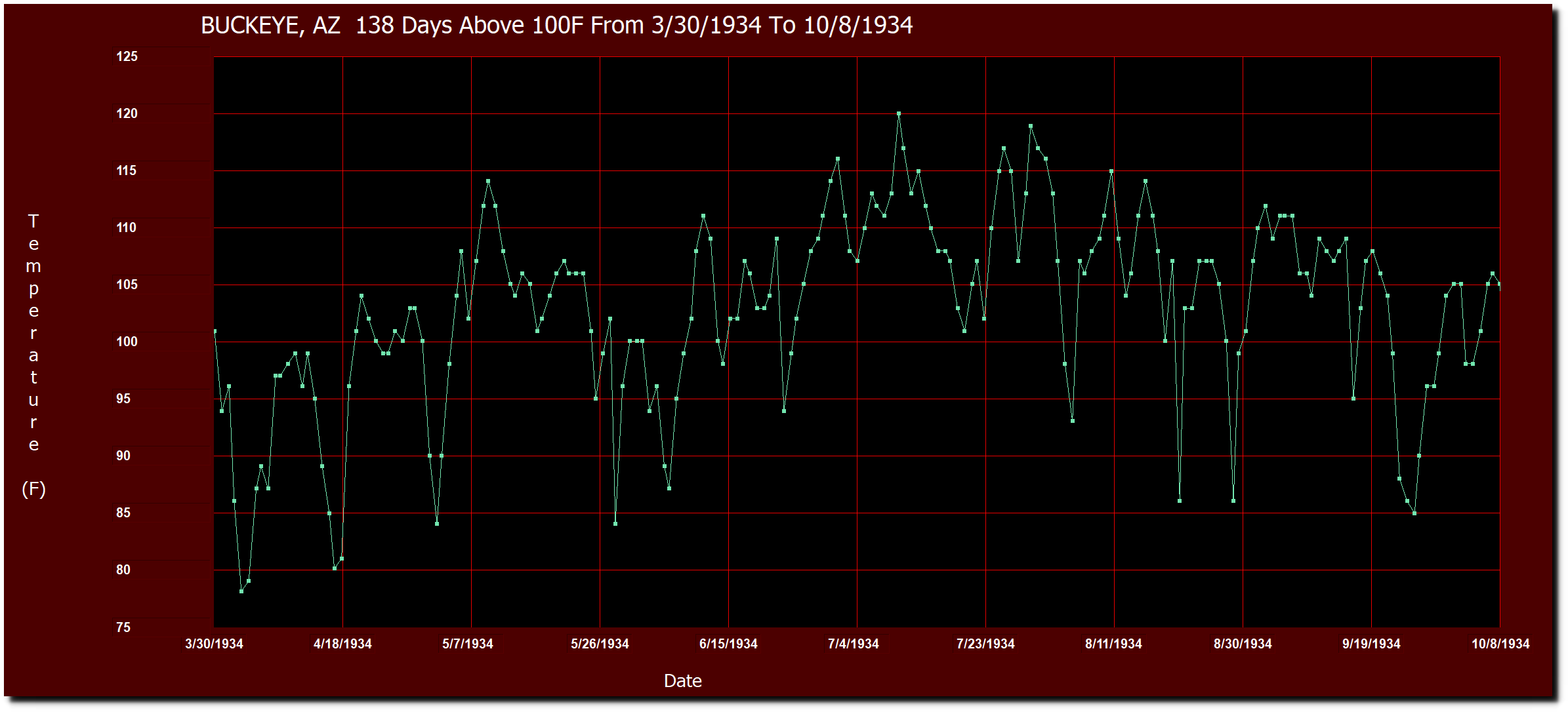
Now let’s look at Bloomberg’s understanding of climate. The closest USHCN station to Phoenix is at Buckeye.

They average 105 days above 100F per year, and had 138 days above 100F in 1934 – the hottest year on record in the US.

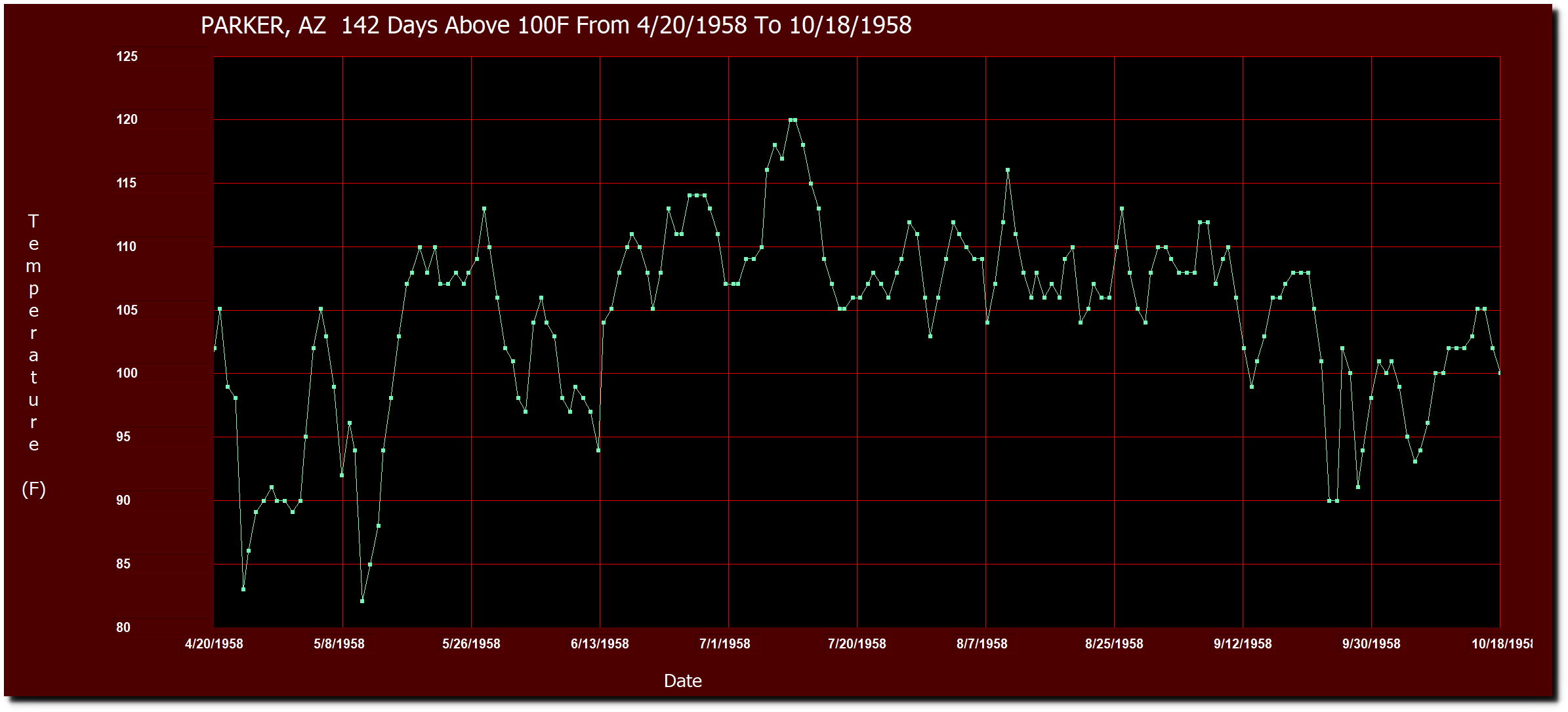
Parker holds Arizona’s record with 142 days above 100F in 1958.

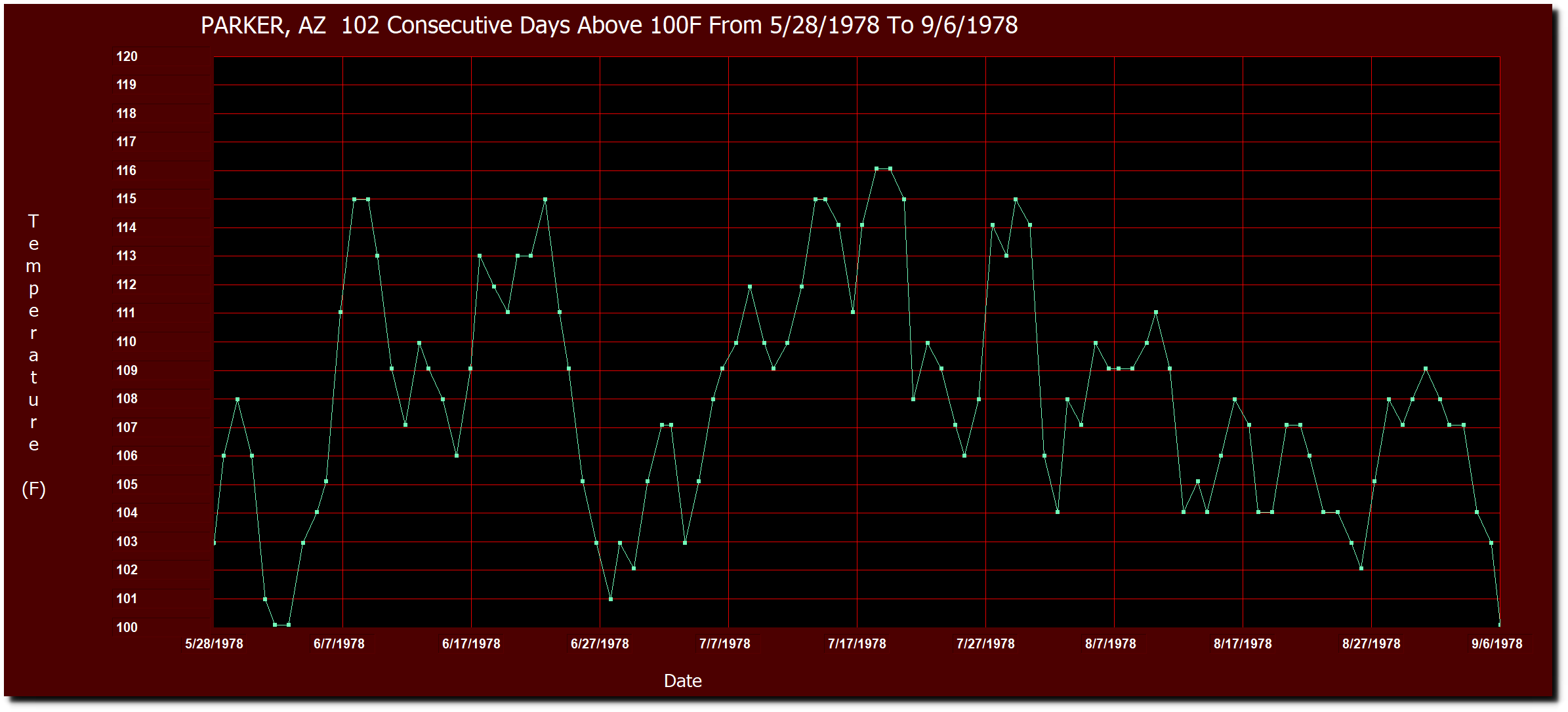
And in 1978, Parker had 102 consecutive days over 100 degrees. They averaged 108 degrees during that stretch.

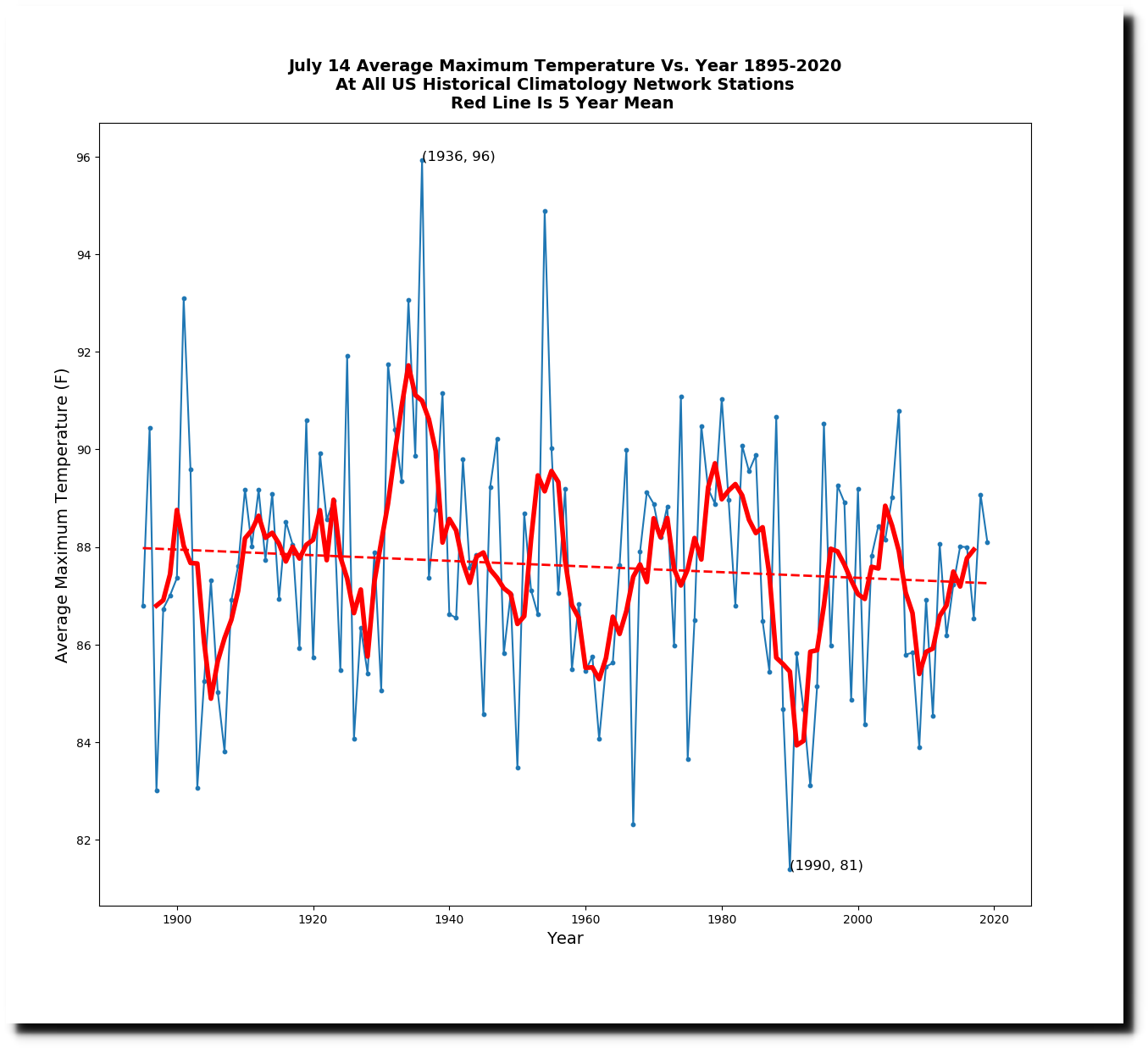
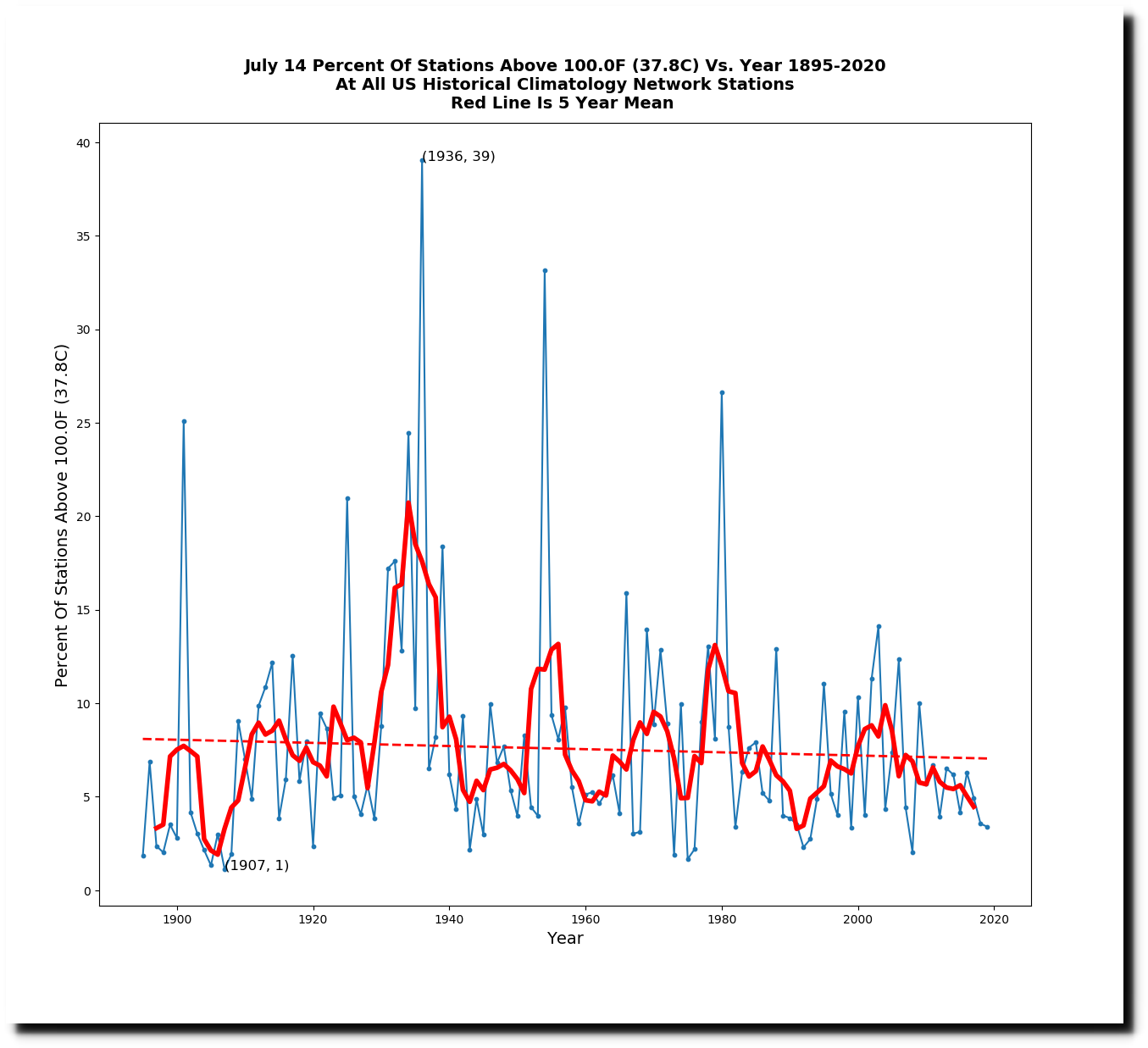
Excellent timing by Bloomberg though.  This date in 1936 may have been the hottest day in US history. The average temperature across the US was 96 degrees.

Almost 40% of the US was 100 degrees that day, and a large section of the Midwest was above 110 degrees. Wisconsin set their all-time record of 114 degrees, and Michigan set their all-time record of 112 degrees.

The heat of July 14, 1936 likened to the 1918 flu pandemic, which killed fifty million people. Detroit had one death every ten minutes.

14 Jul 1936, 9 – The Leader-Post at Newspapers.com

Bloomberg got every single thing wrong, because he believes fake news from the Washington Post.

This entry was posted in

Uncategorized

. Bookmark the

permalink

.

via Real Climate Science

https://ift.tt/32jhvTC

July 14, 2020 at 05:04PM