Month: July 2020

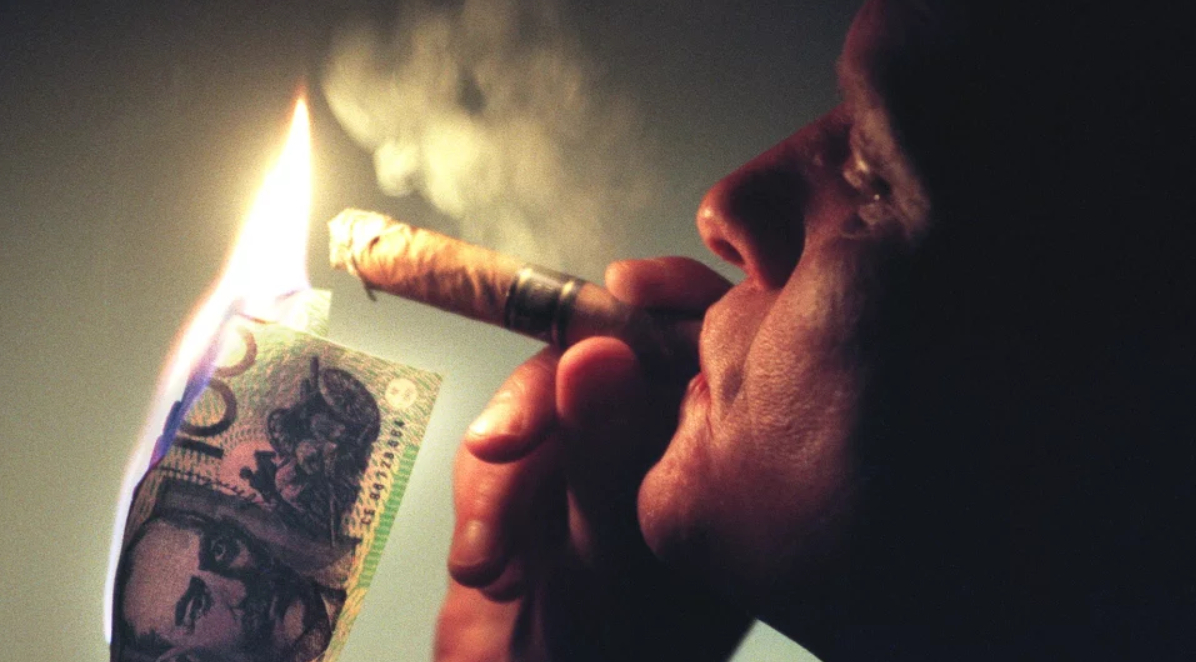
Making Money From Power: How Virtue Signalling Corporations Profit From Unreliable Wind & Solar

Ignore the voluble pomposity and faux moral piety, the sole motivation driving the all wind & solar crowd is money. Lots and lots of other people’s money.

And forget about saving the planet, this is about making a group of cynical, conniving and audacious rent-seekers fabulously, indeed filthy, rich.

In what is the greatest, state-sanctioned wealth-transfer in human history, hundreds of $billions is being funnelled from the pockets of taxpayers and consumers into the coffers of wind and solar power outfits, around the globe.

Aiding and abetting those that profit handsomely from policies that are destroying business and industry, and punishing households, with spiralling power prices, are outfits like the Sierra Club, Greenpeace and GetUp! Operations that will do and say anything, provided what’s deposited in their Swiss bank accounts comes with a sufficient trail of consecutive zeros.

Mike Moore’s Planet of the Humans incensed renewable energy rent seekers, climate cultists and the mainstream media, alike. Central to its narrative is the fact that subsidised renewable energy was designed by and for the benefit of crony capitalists – a group of self-serving sanctimonious windbags, like Al Gore and his mate Bill McKibben.

In Australia, the very same forces at work, with so-called business groups pushing nonsensical CO2 emissions targets to be met 30 years hence. As Alan Moran details below, forget about the virtue, just follow the money.

Power companies must decide: are they about virtue signalling or cheap, reliable energy?
Spectator Australia
Alan Moran
30 June 2020

Yesterday, The Australian reported dissent within the Australian Energy Council (AEC), the industry association that represents electricity generators. Of its 24 members two, Delta and Infigen, have strongly opposed a formal AEC position that advocates the industry operating with zero CO2 emissions by 2050. This would entail the elimination of coal and gas, which presently comprise 80 per cent of electricity supply.

That position is one adopted by other industry associations like the Business Council of Australia (BCA) and the Australian Industry Group which, like the Minerals Council and the National Farmers Federation, long ago abandoned reform agendas and shifted their lobbying focus to virtue signalling and special deals for their members. The BCA even welcomed Anthony Albanese’s offer to have the government join it in accepting the ALP’s policy as “bipartisan”.

By plumping for fuel neutrality, the AEC secretariat has also faced reduced access to green dominated state government bodies, which provide energy subsidies costing almost $1 billion a year.

All major industry associations now promote abandoning electricity generation from coal as the key to reducing greenhouse gases. This is notwithstanding electricity comprises only 25 per cent of emissions and that alternative technologies – other than the similarly demonised nuclear – are at least three times the cost of fossil fuels.

The fact that the AEC as an industry association even exists is astonishing given the disparate interests of the firms.

Some of its members are basically renewable energy businesses –– both hydro and wind/solar — which have vested interests in measures that require more of the subsidies that have destroyed the competitiveness of the Australian industry. Others are owned by ALP State governments which have drunk the anti-CO2 Koolaid. Still, others are fundamentally retailers most of which have marketing themes based on renewable energy. The big three (AGL, Energy Australia and Origin) are integrated retailers and generators; their retail arms are keen to avoid any PR backlash from association with coal and their generation arms, having learned how to turn a profit from renewables, are somewhat indifferent between generator technologies.

That said, establishing a goal for 2050 is absurd. Any industry member punting on a position 30 years hence would be wise to reflect on how their predecessors in 1990 might have envisaged the industry in 2020. In 1990, the industry comprised state government-owned integrated generator, transmission, distribution and retail entities. There were no subsidised wind/solar renewables. Competition was non-existent but the industry was poised to become market-oriented and largely privatised and would, within 10 years, become the world’s lowest-cost electricity supplier. At that stage, it appeared that energy-intensive industry like aluminium smelting would continue to gravitate towards Australia.

In the space of 30 years, the electricity supply has moved from entrepreneurially shrugging off government control and achieving global leadership in costs, back to being once again focussed on government policies and favours. This has meant sacrificing the magnificent coal deposits that allow low-cost electricity for households and industry alike and substituting them for high-cost, low-reliability wind/solar. Manufacturing and processing costs have been undermined – aluminium smelters rather than becoming globally dominant are now hospitalised.

Many of those in leadership positions in businesses, government and industry associations, have taken an environmental unit in one of the higher education institutions long under green left control. As a result, they genuinely believe that in erasing coal from the electricity supply means not only saving the world but tapping an energy source that is or soon will be cheaper than fossil fuels.

The past thirty years has proved this to be wrong but, sadly, in green matters confirmation bias usurps logic and experience.
Spectator Australia
 

Like this:

Like Loading…

Related

via STOP THESE THINGS

https://ift.tt/2Di1EKM

July 7, 2020 at 02:31AM

Victoria in lockdown again. Border Wars suddenly vanish as hypocrite NSW leaders close state finally

The whole of Melbourne is now in a six week lockdown again, but thankfully, most of regional Victoria isn’t.  The freedom in regional Victoria is solely due to a “ring” around Melbourne.

Not only is the second peak  bigger than the first one, but it’s all community spread this time. 191 new cases of Covid19 were announced in Victoria today. Ominously, only 37 so far can be traced, which means this is not just about spot testing in the nine high rise towers that are now locked down. No indoor sport, no gyms, or concerts, museums or zoos. No more dining in restaurants and given the disturbing number associated with schools, the start of Term 3 has been delayed by a week for years 1 – 10, and possibly longer. But fishing, boating, golf, and surfing are OK. It’s good to see the quarantines are evolving, recognising the minimal benefit of stopping outdoor activity. For people overseas, the Australian style of lockdown permits people to move for work if they can’t stay home, and to shop for essentials and to exercise.  Jobs are considered essential, but people are encouraged to work from home if they can.

For comparison, the […]

Rating: 0.0/10 (0 votes cast)

via JoNova

https://ift.tt/31QBWav

July 7, 2020 at 02:12AM

Boris Johnson Warned That Tone Deaf Carbon Taxes Risk ‘Poll Tax’ Fiasco

London, 7 July: Boris Johnson has been warned that adopting extreme and politically insensitive carbon taxes threatens economic recovery, and will burden families, farmers and businesses resulting in an electoral debacle on a par with the “Poll Tax” fiasco.

The green lobbyists and campaigners making up the self-described “Zero Carbon Commission” [1] are proposing the immediate introduction of carbon taxation in key sectors of the economy, several of which have not previously been deeply affected by climate policies.

For example, the proposed levels of carbon tax would put about £3 billion a year on domestic gas and oil heating bills, exacerbating an already serious Fuel Poverty problem.

The electricity sector, where green subsidies to renewables already cost consumers over £10 billion a year, would see a carbon tax burden of about £2.5 billion per year, wiping out any saving made possible from leaving the EU and its Emissions Trading Scheme.

To add insult to injury, the “Commission” suggests that this carbon tax revenue should be used to pay for a resumption of subsidies to new renewable generators, incidentally giving the lie to the widely disseminated claim that renewables are now economically viable without subsidy.

Climate policies have hitherto steered clear of agriculture, but the Commission’s proposed greenhouse gas taxes would cost UK farmers approximately £300m a year, and they would also lose the fuel duty exemption on red diesel. 

With staggering cynicism the “Commission” notes that all these costs and burdens on the national food supply “could be passed on to consumers, creating increased incentives to adopt lower carbon diets”.

Industry and commerce would also be affected, with SME gas consumption being hit hard for the first time. The total burden for non-energy intensive commercial users would be in the region of £2 billion a year. 

Dr Benny Peiser, director of the Global Warming Policy Forum said:

Since this proposal was authored by a PR company you might have expected some political nous, but this scheme for carbon taxes puts a huge burden on households and businesses. Adopting it would be political suicide for any government, particularly Boris Johnson’s government as it struggles to restore the economy.

It probably seemed great at a dinner party in Islington; it won’t go down so well in the Red Wall constituencies.”

Notes for Editors

[1] In spite of its name the Zero Carbon Commission is not an official body. Its membership includes John Sauven, the Executive Director of Greenpeace UK, Georgia Berry the communications Director of OVO, the UK’s second largest electricity and gas retailer, Baroness Bryony Worthington the climate campaigner, Professor Fankhauser of the Grantham Institute on Climate Change, Professor Ekins of the UCL Institute for Sustainable Resources, Dr Rhian-Mari Thomas of the banking pressure group the Green Finance Institute, as well Lord Turner, former Chair of the Committee on Climate Change, and Nick Butler, a former BP Vice President under Lord Browne. The report was authored by a PR company, Public First, and is available from their website: http://www.publicfirst.co.uk/new-report-for-the-zeroc-commission.html

The post Boris Johnson Warned That Tone Deaf Carbon Taxes Risk ‘Poll Tax’ Fiasco appeared first on The Global Warming Policy Forum (GWPF).

via The Global Warming Policy Forum (GWPF)

https://ift.tt/3iFSB6r

July 7, 2020 at 02:02AM

George Will on Climate Alarmism (2009 op-ed reads well today)

“An unstated premise of eco-pessimism is that environmental conditions are, or recently were, optimal. The proclaimed faith of eco-pessimists is weirdly optimistic: These optimal conditions must and can be preserved or restored if government will make us minimize our carbon footprints and if government will ‘remake’ the economy.” (George Will, 2009)

Climate alarmism is now in its 4th decade. It can be dated, at least, to James Hansen’s congressional testimony in mid-1988, which inspired the New York Times to report on the front page:

If the current pace of the buildup of these gases continues, the effect is likely to be a warming of 3 to 9 degrees Fahrenheit from the year 2025 to 2050…. The rise in global temperature is predicted to cause a thermal expansion of the oceans and to melt glaciers and polar ice, thus causing sea levels to rise by one to four feet by the middle of the next century.

Data set from then to today will show that temperature and sea-level-rise is about 1/6th of the way there with 2025 looming. Maybe the very bottom of the range will be met by 2050, but little more. Falsified alarmism….

Will’s “Dark Green Doomsayers” was published in the Washington Post in February 2009, making it eleven and a half years old. Much of the article could be published today with equal intellectual force. The California droughts wax and wane despite the “no more agriculture in California” alarm of Obama’s Energy Secretary Steven Chu at the time.

Updating Will, recent Arctic sea ice change is “unexceptional” compared to recent years and recent decades, reported NOAA. Antarctica’s 40-year record (through 2018) shows “a positive overall trend in yearly average ice extents,” according to NOAA expert Claire Parkinson. The Greenland Ice Sheet is at normal levels after the Spring melting.

Regarding “the Pause” in recorded global warming (1998–2012), noted by Will in his final paragraph, average temperatures resumed an upward course, although overall the recorded warming since the 1970s is about one-half of model predicted. And moderate warming, natural or otherwise, has distinct benefits, not only negatives. Climate economists might argue for a positive externality given CO2 fertilization.

Regarding California water, drought conditions ended in March 2019, ate are over, with certain areas above and others below normal. The state’s reservoirs are near normal. So much for Secretary Chu’s prediction that climate change could ruin The Golden State’s agricultural industry, which generates about $50 billion per year from 400+ commodities.

George Will’s article follows.

A corollary of Murphy’s Law (“If something can go wrong, it will”) is: “Things are worse than they can possibly be.” Energy Secretary Steven Chu, an atomic physicist, seems to embrace that corollary but ignores Gregg Easterbrook’s “Law of Doomsaying”: Predict catastrophe no sooner than five years hence but no later than 10 years away, soon enough to terrify but distant enough that people will forget if you are wrong.

Chu recently told the Los Angeles Times that global warming might melt 90 percent of California’s snowpack, which stores much of the water needed for agriculture. This, Chu said, would mean “no more agriculture in California,” the nation’s leading food producer. Chu added: “I don’t actually see how they can keep their cities going.”

No more lettuce or Los Angeles? Chu likes predictions, so here is another: Nine decades hence, our great-great-grandchildren will add the disappearance of California artichokes to the list of predicted planetary calamities that did not happen. Global cooling recently joined that lengthening list.

In the 1970s, “a major cooling of the planet” was “widely considered inevitable” because it was “well established” that the Northern Hemisphere’s climate “has been getting cooler since about 1950” (New York Times, May 21, 1975). Although some disputed that the “cooling trend” could result in “a return to another ice age” (the Times, Sept. 14, 1975), others anticipated “a full-blown 10,000-year ice age” involving “extensive Northern Hemisphere glaciation” (Science News, March 1, 1975, and Science magazine, Dec. 10, 1976, respectively).

The “continued rapid cooling of the Earth” (Global Ecology, 1971) meant that “a new ice age must now stand alongside nuclear war as a likely source of wholesale death and misery” (International Wildlife, July 1975). “The world’s climatologists are agreed” that we must “prepare for the next ice age” (Science Digest, February 1973). Because of “ominous signs” that “the Earth’s climate seems to be cooling down,” meteorologists were “almost unanimous” that “the trend will reduce agricultural productivity for the rest of the century,” perhaps triggering catastrophic famines (Newsweek cover story, “The Cooling World,” April 28, 1975).

Armadillos were fleeing south from Nebraska, heat-seeking snails were retreating from Central European forests, the North Atlantic was “cooling down about as fast as an ocean can cool,” glaciers had “begun to advance” and “growing seasons in England and Scandinavia are getting shorter” (Christian Science Monitor, Aug. 27, 1974).

Speaking of experts, in 1980 Paul Ehrlich, a Stanford scientist and environmental Cassandra who predicted calamitous food shortages by 1990, accepted a bet with economist Julian Simon. When Ehrlich predicted the imminent exhaustion of many nonrenewable natural resources, Simon challenged him: Pick a “basket” of any five such commodities, and I will wager that in a decade the price of the basket will decline, indicating decreased scarcity. Ehrlich picked five metals — chrome, copper, nickel, tin and tungsten — that he predicted would become more expensive. Not only did the price of the basket decline, the price of all five declined.

An expert Ehrlich consulted in picking the five was John Holdren, who today is President Obama’s science adviser. Credentialed intellectuals, too — actually, especially — illustrate Montaigne’s axiom: “Nothing is so firmly believed as what we least know.”

As global levels of sea ice declined last year, many experts said this was evidence of man-made global warming. Since September, however, the increase in sea ice has been the fastest change, either up or down, since 1979, when satellite record-keeping began. According to the University of Illinois’ Arctic Climate Research Center, global sea ice levels now equal those of 1979.

An unstated premise of eco-pessimism is that environmental conditions are, or recently were, optimal. The proclaimed faith of eco-pessimists is weirdly optimistic: These optimal conditions must and can be preserved or restored if government will make us minimize our carbon footprints and if government will “remake” the economy.

Because of today’s economy, another law — call it the Law of Clarifying Calamities — is being (redundantly) confirmed. On graphs tracking public opinion, two lines are moving in tandem and inversely: The sharply rising line charts public concern about the economy, the plunging line follows concern about the environment. A recent Pew Research Center poll asked which of 20 issues should be the government’s top priorities. Climate change ranked 20th.

Real calamities take our minds off hypothetical ones. Besides, according to the U.N. World Meteorological Organization, there has been no recorded global warming for more than a decade, or one-third of the span since the global cooling scare.

The post George Will on Climate Alarmism (2009 op-ed reads well today) appeared first on Master Resource.

via Master Resource

https://ift.tt/2Ccsoff

July 7, 2020 at 01:03AM