

Australians are experiencing their first recession in nearly 30 years; its ruinous renewable energy policies are only adding insult to injury.
Australia’s energy market is a shambles – thanks to the $60 billion squandered on intermittent wind and solar, it was already in the midst of a power pricing and supply calamity, with disastrous consequences for energy hungry businesses such as manufacturing and mineral processing.
At the heart of the debacle is politics.
The May 2019 election was billed as a referendum on Climate Change. Labor’s then leader, Bill Shorten pitched up a 50% Renewable Energy Target and a whopping carbon dioxide gas tax, to boot. Bill also promised that he would eradicate Australia’s frequent and punishing droughts, with the aid of windmills and solar panels. Although no one, save Bill, was quite sure how this novel and ingenious ‘plan’ would make it rain on cue.
Having lost the ‘unloseable’ election, the ALP politely invited Bill Shorten to walk the plank. Shorten obliged and the party replaced him with Anthony Albanese – a man whose politics is best defined by his undergraduate neo-Marxist rhetoric, such as his favoured catchphrase: “I like fighting Tories. That’s what I do.”
After the unexpected flogging that the ALP received last May – thanks to its anti-coal/anti-mining campaign pitch – Albanese and the gang are trying to re-brand, re-badge and refocus their energy ‘policy’. Although, to refer to his muddleheaded mishmash as ‘policy’ is to flatter it. It is, rather, the same woolly headed, anti-business, pro-subsidised renewable energy nonsense that overtook this country 20 years ago, and has all but ruined it.
We’ll hand over to Alan Moran and the team from JoNova for a closer look at Australia’s wrecking ball energy policy, and how it can only get worse from here.
Albo’s Claytons climate policy switch
Spectator Australia
Alan Moran
24 June 2020
In the media today, we see two contrasting ALP position papers, by Kevin Rudd in the AFR, and by Anthony Albanese in a Press Club address pre-released to some media outlets.
Kevin Rudd, in ranting against “the faceless men of the factions” claims among the ALP successes that, “We ratified the Kyoto Protocol, (in 2007) legislated a Mandatory Renewable Energy Target now delivering 20 per cent clean energy, and legislated twice for a carbon price only to be defeated by the Liberal-Green coalition”.
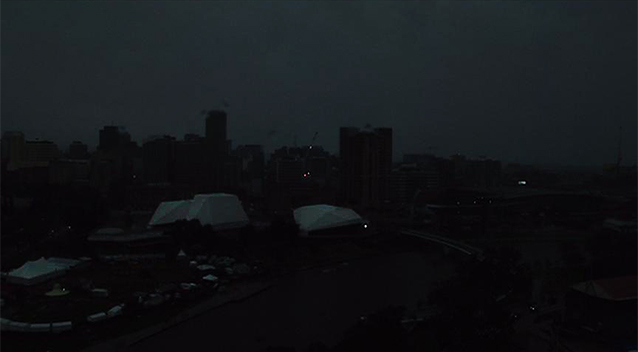
Rudd’s measures accelerated the trend to subsidised wind and solar, the upshot of which became clear in 2016. At that time, the increased market share of difficult-to-control intermittent generation finally forced the departure from the market of two very significant coal generators, the Northern in South Australia and Hazelwood in Victoria. The upshot was first, the collapse of the South Australian electricity supply system, demonstrated the vulnerability of a system that is dependent on renewables, and secondly the doubling of the wholesale costs of electricity.
The wind/solar-driven market collapse is being combatted by expenditures that further add to the subsidies these sources of generation require.
The price increases that the renewables have caused, short of abandoning the subsidies, can only be mitigated by reduced demand. This is presently in place due to COVID-19. To sustain it, we would have to see a continuation of the de-industrialisation higher energy prices have brought about in recent years, with all this means in terms of lower living standards.
Anthony Albanese now says he wants to form a common policy front with the Government in which the ALP would no longer be wedded to the NEG carbon tax or the 50 per cent renewables-by-2030 target. But the apparent change of direction is highly nuanced and is contingent on any future model being “scalable to different emission reduction targets by future governments.” This allows the ALP to neutralise claims that it is supporting a carbon tax while leaving open such a solution as well as more draconian measures to eliminate low cost coal energy.
Moreover, in handing out an ostensible olive branch, Albanese is also calling for the COVID crisis to be the catalyst for further spending on renewable subsidies. Apparently, the solution to a crisis that has reduced national prosperity is to embark in measures that further impoverish us by requiring an accelerated replacement of cheap electricity by expensive, unreliable sources!
Indeed, the controller of Albanese’s Twitter account today Tweeted:
“Renewable energy investment has fallen off a cliff – down 50 percent last year, all before the recession. People want solutions. Businesses need certainty. Because action on climate change can mean lower emissions, lower prices and more jobs.”
This is a Clayton’s change in policy.
Moreover, one condition for backing off on support for a carbon tax includes never supporting nuclear power. Another condition expresses support for carbon capture and storage projects if there is a new funding mechanism for it. This is highly disingenuous.
The so-called Global Carbon Capture and Storage Institute (GCCS) was a Rudd government initiative with an initial grant of $315 million funded in a way that successive governments cannot unwind it. Claiming to be “member-owned”, it is very secretive about its accounting, but mainly involves itself in agitprop, professing that the technology is on the cusp of providing a low-cost solution to CO2 emission-free burning fossil fuels.
GCCS is joined on the taxpayer gravy train by another Commonwealth agency, the CO2CRC, chaired by Martin Ferguson, who, as the former minister, stood with Rudd in launching these programs. Ferguson told us in 2012 the government would be spending $2bn and getting another $4bn from industry and we’d have up to four carbon sequestration plants built by 2017. But the CO2CRC itself puts the cost of a CCS coal plant at $150 to $250 per megawatt-hour, compared with its, somewhat exaggerated, estimate of $65 per megawatt-hour for a new black coal plant. CCS costs do not appear to have fallen in the past decade.
Rather than substituting, more expensive energy for cheaper coal-based sources, Matthew Canavan has proposed additional investment in coal generation. He argues for government guarantees to indemnify any new coal generator against policy measures that would undermine future profits. Such a guarantee was implicit in days gone by, but government measures undermining the economics of coal generators by forcing consumers to subsidise their renewable energy competitors now, sadly, necessitates an explicit guarantee.
For his part, Albanese presents new proposals that are strong on cunning but would actually shift us further away from the competitive low-cost electricity industry we had before renewable subsidies brought a doubling of costs and diminution in reliability.
Spectator Australia
Labor in Australia finally gets a message from the voters and “wants to end climate wars”
Jo Nova Blog
Jo Nova
25 June 2020
Labor dumps a bit of green extremism, but it’s mostly symbolic. Anthony Albanese says “Yes” to Coal (only with Carbon Capture) but still “No” to Nukes. Keeps the same emissions target.
After losing three elections in a row on and with help from SARS-2, the Labor Party have realized they can’t wedge the coalition by being holier-than-all-the-workers that used to vote for them. They can’t be seen as anti-coal. So just in time for a key marginal byelection, Anthony Albanese, leader of the Opposition, offers a token olive leaf.
He’s got his eye on the Queensland election due in October, and all those seats the Labor party lost one year ago.
Anthony Albanese urges Scott Morrison and Coalition to work with Labor on energy policy
Federal Opposition leader Anthony Albanese has urged the Coalition to work with Labor on a bipartisan energy policy…
So Labor will support “development” of Carbon Capture and Sequestration (CCS). This is the impossible idea of stuffing a gas back down the small hole it used to live in, when it was a rock and before it met O2 and grew threefold in weight and 2,000 times in volume.* Everyone in polite society knows it can’t work, but if you have to hate coal and also live with it, CCS is the get-out-of-jail card, where people can pretend that they want to find a low carbon way of burning a fuel made of carbon.
Ultimately the Labor Party are still climate believers with an uncosted zero emission target by 2050.
They probably figure if they get lucky, and the Coalition does create a “scalable” energy plan with them, they can just ramp up the targets on it if they win the election, then say they’re just using the bipartisan plan and “speeding” it up.
It’s not about reducing carbon — it’s about helping the renewables industry
Watch the deck-chairs of Labor desires:
However he said those [CCS] projects should not be funded by the Australian Renewable Energy Agency (ARENA) or the Clean Energy Finance Corporation (CEFC), as recommended by a recent review, arguing support should not be diverted from renewables.
Labor also remains opposed to the Emissions Reduction Fund, which pays organisations to reduce their carbon emissions…
Labor don’t want climate-money paid to friends of the Coalition, meaning farmers or small business owners, it wants money shuffled to renewables companies (friends of Labor). But the farmers and small business owners are reducing carbon at bargain prices compared to multinational Renewable giants.
The Emissions Reductions Fund was Tony Abbott’s direct auction plan, but Big-solar and Big-wind can’t compete with $14 a ton carbon reduction, which is why Albanese wants to funnel the money through other agencies. He says he wants to stop the pork barrelling, but he’d be stopping a successful program in order to send more pork to his friends. Big Renewables need Big Government.
Nukes would be a disaster for the Labor Party, they’d “solve” the climate crisis
Some Coalition MPs have called for the Government to look at establishing a domestic nuclear power industry, but Labor has again made it clear it does not back such a move.
The worst thing for the Labor Party (and the Renewables industry) is if the Coalition managed to get a nuclear plant running in Australia. It would achieve all the carbon reduction that wind, solar, geothermal, biomass and carbon capture could never do.
The National Energy Guarantee — the NEG is dead
The Labor Party has effectively dumped the NEG — which Malcolm Turnbull promoted. It was a hidden carbon tax on electricity generators forcing them to buy international carbon credits – something that suits the Big Bankers and the Big UN. It was designed to be impossible for coal. It was always a Labor preferred plan — improbably endorsed by Labor, but not the Coalition, reminding us of that old cliche, that Turnbull was the best Leader the Labor Party never had.
The Labor plan has no plan
Energy Minister Angus Taylor criticised Mr Albanese’s speech today at the National Press Club, arguing it left a lot of questions unanswered. “They didn’t explain how their energy policies will create a single job,” he said.
“They didn’t explain how they’re going to bring down prices, how they’re going to keep the lights on, they didn’t explain what their targets were and they didn’t explain how they’re going to achieve those targets.”
The most significant change announced here is that Labor is aiming more for the centre, trying to look less extreme-Green. They’re still pandering to the Green vote, but they are trying in a small way to pander to the struggling Australians and blue collar workers too.
The Coronavirus era has meant people like seeing more bipartisan governments — with some agreement, good manners, and less adversarial nit-picking and demonization. Albanese is trying to look statesmanlike and cooperative. But that’s a lot better than trying to present themselves as smug Guru’s opposing corporate Nazi planet wreckers..
Paul Kelly, The Australian: Albanese’s offer one Morrison must refuse:
The Labor leader’s speech and letter to the Prime Minister shows the coronavirus, not the bushfires, is framing climate change policy for Labor — as distinct from the Greens. Albanese is taking Morrison’s success with co-operative politics over COVID-19 and inviting him to achieve “bipartisan agreement” on climate change.
It is a neat but deceptive ploy. There will be no negotiation and no grand bargain. Albanese’s calculation was that if Morrison agreed, that would boost Labor’s “olive branch” credentials; but if Morrison declined, then Labor would have the moral high ground for seeking to repair the great energy policy divide.
Symbolic deck chairs are shaking.
——————————-
*Calculating the expansion of coal to CO2: 1 ton of Coal generates 2.8 tons of CO2. 1 ton coal fills 0.74m3. 1 ton of CO2 fills 556m3. Therefore, 1 ton of coal expands from 0.74 to 1590m3. or about 2148 times.
Jo Nova Blog
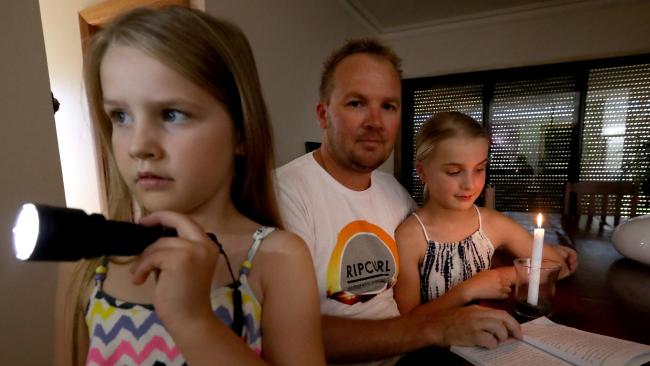
Wind & solar ‘powered’ South Australians know the drill.
via STOP THESE THINGS
July 6, 2020 at 02:30AM



 By Duggan Flanakin ~
 Though physician Dr. Marc Siegal wrote False Alarm: The Truth about the Epidemic of Fear back in 2008, right now Amazon Kindle has the book in heavy promotion. Kindle boasts, “More relevant than ever as the Coronavirus COVID 19 pandemic sweeps the globe, False Alarm reminds readers to look closely at the facts as the media covers the pandemic news and spread of the virus, as well as reinforces the notion that we must arm ourselves against fear tactics….”
 Iowa Climate Science Education