This article ‘in association with the European Commission’ in effect tells us they are running out of ideas on how to progress their obsession with reducing the quantity of the minor trace gas carbon dioxide in Earth’s atmosphere. They forget the main player by far in ‘greenhouse gases’ is known to be water vapour, so focus on CO2 is next to pointless anyway, even if current climate theory was credible.
– – –
The Commission is launching today the first call for proposals under the Innovation Fund, one of the world’s largest programmes for the demonstration of innovative low-carbon technologies, financed by revenues from the auction of emission allowances from the EU’s Emissions Trading System.
The Innovation Fund will finance breakthrough technologies for renewable energy, energy-intensive industries, energy storage, and carbon capture, use and storage, reports The European Sting.
It will provide a boost to the green recovery by creating local future-proof jobs, paving the way to climate neutrality and reinforcing European technological leadership on a global scale.
Executive Vice-President Frans Timmermans said:
“This call for proposals comes at just the right time. The EU will invest €1 billion in promising, market-ready projects such as clean hydrogen or other low-carbon solutions for energy-intensive industries like steel, cement and chemicals. We will also support energy storage, grid solutions, and carbon capture and storage. These large-scale investments will help restart the EU economy and create a green recovery that leads us to climate neutrality in 2050.”
For the period 2020-2030, the Innovation Fund will allocate around €10 billion from the auctioning of allowances under the EU Emissions Trading System, in addition to undisbursed revenues from the Innovation Fund’s predecessor, the NER 300 programme.
The first call will provide grant funding of €1 billion to large-scale projects for clean technologies to help them overcome the risks linked to commercialisation and large-scale demonstration.
This support will help new technologies to reach the market.
Hitching a ride on the Mars Pathfinder mission, the Sojourner rover arrived at the Red Planet on July 4, 1997. The mission was designed to demonstrate a low-cost method for delivering a set of science instruments to Mars, and served as the foundation for the Mars rovers of today.
Pathfinder landed the rover using an air bag landing system and innovative petal design, which have been used since in various incarnations to land other rovers on the Red Planet. Sojourner spent 83 days of a planned seven-day mission exploring the Martian terrain, snapping photographs and taking chemical, atmospheric and other measurements.
The lander, formally named the Carl Sagan Memorial Station following its successful touchdown, and the rover, named after civil rights pioneer Sojourner Truth, both outlived their design lives — the lander by nearly three times, and the rover by 12 times. Mars Pathfinder returned 2.3 billion bits of information, including more than 16,500 images from the lander and 550 images from the rover, as well as more than 15 chemical analyses of rocks and soil and extensive data on winds and other weather factors.
This panoramic view of Pathfinder’s Ares Vallis landing site shows Sojourner rover is the distance. The Mars Pathfinder mission completed the last successful data transmission cycle at 6:23 a.m. EDT on Sept. 27, 1997.
The scale of the environmental havoc caused giant wind and solar farms is out of all proportion to the economic benefits they provide; if any. Apart from the subsidies these so-called ‘industries’ attract, STT can’t think of any.
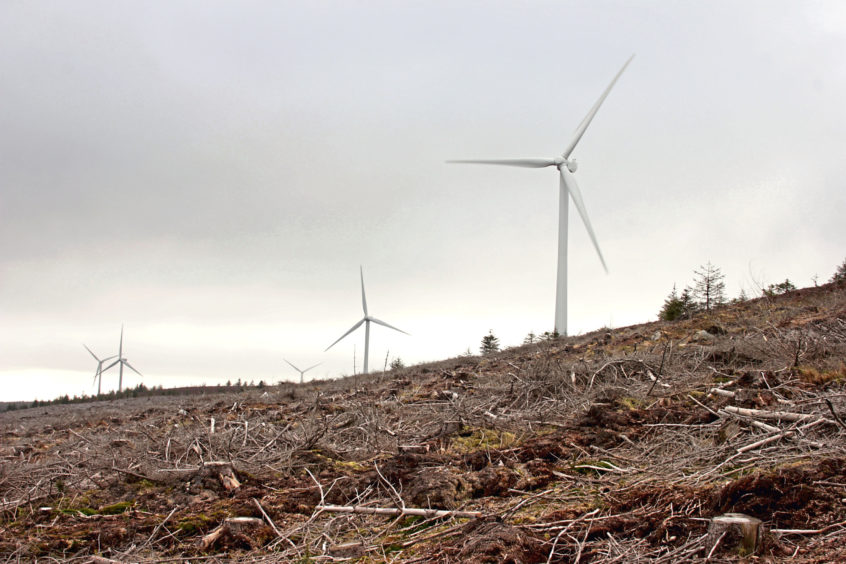
Wiping out entire forest habitats is all part of our ‘inevitable’ transition to a wind powered future. Across Germany, millions of acres of forest have been clear-felled and great swathes cut through others, to allow some 30,000 of these things to be speared across Deutschland.
But the destruction of critical wildlife habitat is only the beginning. Now, environmental researchers are having second thoughts about purportedly ‘planet saving’ wind and solar, launching a detailed study on their effects on the planet’s biodiversity.
Renewable Energy Threatens Thousands Of ‘Globally Important Biodiversity Areas’ – And It’s Worsening
No Tricks Zone
Kenneth Richard
1 June 2020
An “especially worrying” new study finds 2,206 onshore wind, hydropower, and solar PV energy generation facilities have “already encroached on many of the world’s most important places for conserving biodiversity”, degrading 886 protected areas, 749 key biodiversity areas, and 40 distinct wilderness areas.
Even more concerning, the number of active renewable energy facilities inside important conservation areas is poised to increase by ~42% by 2028.
To avert climate climate change, the United Nations demands a 10-fold increase in renewable energy by 2060. This emphasis will especially occur in developing regions like Southeast Asia and sub-Saharan Africa, where the most biodiverse regions in the world are the most threatened.
“[R]enewable energy facilities can be landuse intensive and impact conservation areas, and little attention has been given to whether the aggregated effect of energy transitions poses a substantial threat to global biodiversity. Here, we assess the extent of current and likely future renewable energy infrastructure associated with onshore wind, hydropower and solar photovoltaic generation, within three important conservation areas: protected areas (PAs), Key Biodiversity Areas (KBAs) and Earth’s remaining wilderness. We identified 2,206 fully operational renewable energy facilities within the boundaries of these conservation areas, with another 922 facilities under development. Combined, these facilities span and are degrading 886 PAs, 749 KBAs and 40 distinct wilderness areas.”
“Our results show that renewable energy development has already encroached on many of the world’s most important places for conserving biodiversity, with 2,206 facilities already operational within PAs [protected areas], KBAs [key biodiversity areas] and wilderness areas (Figure S2). Furthermore, the number of active renewable energy facilities inside important conservation areas could increase by ~42% by 2028, suggesting conflicts will likely intensify in the near future.”
“This is especially worrying, when assessments show the growth required to achieve the UN climate targets by 2060 (Bauer et al., 2017; IEA, 2017b) would be an order of magnitude greater than the installed capacity included in our ‘operational’ and ‘under development’ datasets.”
“Our results also show that the spatial distribution of overlaps is moving from developed regions towards more biodiverse developing regions such as Southeast Asia and sub-Saharan Africa, where the consequences for global biodiversity conservation will be more intense.”
It is claimed that wind and solar are the cheapest sources of electricity and these sources should dominate future electricity supply. This paper focuses on known additional costs and subsidies which are not taken into account in the costs of wind and solar put forward by their advocates.
Advocates of wind and solar claim a cost of 62cents/kWh. This is, however, the price at the gate of the supplier. It does not include all the costs of supply necessary to convert this electricity from non-dispatchable electricity supply at the gate to dispatchable electricity supply at the point of supply to the customer. These are in effect direct subsidies to solar and wind suppliers, whereas they should be added as a cost to the renewable energy suppliers.
Renewables, such as hydro, biomass and thermal have different qualities and are not considered in this paper. In any event, Hydro and thermal are not options as they are not available in quantity domestically in South Africa. Gas is another fossil fuel, which at this stage, is not found in significant economic amounts in South Africa. The critical issues are that solar and wind have very low load factors and are variable, intermittent and unpredictable. In other words, they are not dispatchable. In the case of wind, the load factor is an average of 35% or less and solar 26% or less. Their supply is weather dependent, and therefore backup must be available 100% of the time 24/7.
Coal has a load factor on average of approximately 80% and nuclear an average of 90%. Their load factors are affected by predictable maintenance requirements and generally to a lesser extent by unpredictable repair requirements. A reserve margin (or backup) of 20% has traditionally been considered sufficient to cover for both these events. Methodologies and more realistic estimates of the real costs of solar and wind, including back up, can be calculated using the load factor alone. This gives the cost of wind at R1.77/kWh and the cost of solar at R2.38/kWh. These costs must be compared to a coal cost of R1.31/kWh and nuclear at R1.44/kWh. More complex methodologies taking risk and uncertainty of outages into account and using variance or standard deviation as the estimate of risk put the costs of wind at R2.52/kWh, solar at R3.83, coal R1.10/kWh and nuclear R1.33/kWh.
Added to the claimed costs of 62cents/kWh for solar and wind should be the following items:
Additional grid costs: Transmission lines will have to be built, yet used for less than 35% of the time. This low usage suggests that at the minimum grid costs of wind must be at least approximately 3x the grid costs of dispatchable power units if not more. The capital cost per kWh and the running cost per kWh must be approximately 3x that of reliable dispatchable power supply.
Efficiency loss of backup and alternative electricity supply: Due to low utilisation, backup facilities would typically be running approximately 40% below their optimal efficiency. Their efficiency loss is in effect a direct subsidy of the solar and wind.
Excess supply of electricity: Because electricity supply from solar and wind is variable, there will be periods where a surplus of electricity will be generated. In terms of the power purchase agreements (PPA), Eskom must pay the renewable producers for the excess power being produced. All these are additional costs that at present are passed on to the utility (Eskom) or other electricity producers or consumers.
Insufficient electricity supply as a result of technology being unable to close the gap between supply and demand immediately: Because electricity supply from solar and wind is variable, unreliable, unpredictable and intermittent there will be periods where a shortage of electricity supply will exist. The economy will suffer as a result of the Cost Of Unserved Energy (COUE).
High Economic Cost Of Unserved Energy: The IRP estimates the COUE at R87.85/kWh. This is as per the National Energy Regulator of South Africa (NERSA) study. A senior energy expert estimated that load shedding cost South Africa more than R1-trillion over the previous decade or about 1.5% GDP growth per annum.
Insufficient electricity supply as a result of extended periods of weather-related conditions:
The Higher the penetration of low load, high variable intermittent technologies, the higher the Cost Of Unserved Energy: Models invariably are only as good as the assumptions used. Most models assume the certainty of output and do not take into account risk and uncertainty. The fact is that the real world is subject to risk and uncertainty.
Reduction in sales by Eskom as a result of artificially low prices offered by renewable suppliers: Installation of renewable power direct at customers’ or potential customers’ premises of Eskom reflect finally as a lost demand or sales at Eskom
Cost of backup for installation directly supplied by solar and wind: If there is a reduction in such customers’ electricity supply, Eskom is expected to provide immediate backup supply. Eskom must have the necessary substantial backup readily available. This is extremely costly.
Cost of purchasing electricity from customers who have their own renewable installations: The trend is that customers can sell their surplus electricity supply to Eskom. Invariably, there is a commitment to purchase, which in return reduces the perceived backup required. However, this is not true as backup is still necessary for regular backup requirements but also the full installation of the renewable supply at the customer’s premises. Either way, customers are paying for the additional costs involved.
Destruction of industries and political, social-economic impacts: The move to solar and wind as set out in the IRP would result in South Africa’s coal industry shrinking by 46%. Coal mining accounted for 26.7% of the total value of mining production in 2015, making it the most valuable in terms of sales of the 14 primary mining commodities. Several previously prosperous communities in Gauteng and South Africa would become ghost towns with rising unemployment and increasing poverty levels. Social benefits would increase dramatically.
Lack of permanent job creation: Renewable energy sources do not give rise to permanent jobs being created. Most jobs created by solar and wind relate only to the construction phase. Most jobs, mainly skilled jobs, are generated overseas in countries supplying equipment. These countries would primarily be Germany in the case of wind-related equipment and China in the case of solar equipment.
Export of jobs and Loss of energy sovereignty: The move towards solar and wind will mean that South Africa loses it energy sovereignty, primarily to Germany for imports of technology and equipment related to wind and China for equipment related to solar. South Africa will effectively export its skilled jobs overseas and suffer a loss of skills. Instead of South Africa being an energy exporter, it will become an energy importer as a result of losing coal exports and becoming dependent on gas imports. Any current account deficit caused should be factored into the cost of solar and wind.
Creation of a current account deficit and not utilising valuable natural assets: Coal is one of South Africa’s most significant commodity products and the country’s largest export. The importation of gas and loss of coal exports will result in an increasing and substantial current account deficit. Coal mining accounted for approximately 26% of the total value of mining production in 2015, making it the most valuable in terms of sales. Potential uranium reserves are also substantial. The drive for wind would deprive South African citizens of these benefits.
Levelised Cost of Electricity (LCOE) is not a sound methodology to compare highly variable and interruptible electricity technologies with electricity supplied by reliable dispatchable electricity-generating technologies: A report entitled ‘Critical Review of The Levelised Cost of Energy (LCOE) Metric’, by M.D. Sklar-Chik et al., South African Journal of Industrial Engineering December 2016 concludes that “LCOE neglects certain key terms such as inflation, integration costs, and system costs.” The work of Paul Joskow et al. of the Massachusetts Institute of Technology published in February 2011 wrote a paper entitled Comparing The Costs of Intermittent and Dispatchable Electricity Generating Technologies. They note “Many international reports prove that such electricity supply is costly due to its variability, interruptibility, inefficiency and its requirement of 100% backup”.
The test of global reality: There is nothing like the test of global reality. In 2016, the prices paid by industry in Germany were approximately 52% higher than France (nuclear) and 86% higher than Poland (coal). The average estimates discussed above result in costs that are close to this global reality.
The above costs are absorbed by Eskom or other suppliers or directly by customers. They can be measured in R billions /annum and should be added to the costs of solar and wind.
Emerging economies need to focus on those technologies which are efficient and effective. In South Africa, mining, manufacturing and industry need security of supply of electricity at competitive prices. The only two electricity generation sources of Energy available in South Africa that can achieve these objectives in this country are High-Efficiency Low-Emissions (HELE) coal, otherwise called ‘clean’ coal and nuclear.
The country must focus on raising its economic growth rate by ensuring it has a sustainable, secure supply of electricity at the lowest economic and financial cost. Any decision must be accompanied by the necessary supporting condition fostering domestic and foreign investment into its economy. The arguments above show clearly that renewables in the form of solar and wind in particular, almost certainly have substantial additional costs which are not fully accounted for in the current costs being utilised by their advocates. This also means that the so-called least cost optimum mix recommended by them is wrong. As a result, this methodology as currently defined and used is severely flawed. The technique and methodology recommended uses statistical calculations based on variable estimates utilising the variance and mean of each technology to calculate the COUE. Current models do not utilise any such statistical and analytical technique.
The above arguments and estimates lend force to the evidence that solar and wind, in particular, are unaffordable in the current economic situation in the country. The estimates strongly suggest that the least cost methodology is severely flawed and that going forward the renewable technologies of solar and wind should play a marginal role in any future technology mix for the country.
The final nail in the coffin for South Africa is that increased penetration of wind will lead to a rapidly rising import bill for gas imports and the demise of its coal mining industry, if not the entire mining industry. These are catastrophes which could ensure that the future of South Africa will move towards rising unemployment, increasing poverty and increasing social and political instability. South Africa needs to focus its energy plans on HELE or ‘clean’ coal, nuclear, domestic solar and limited gas.
Rob Jeffrey is an independent economic risk consultant. He is the former MD of Econometrix and continues to consult for them. Areas of specialisation and expertise include global and domestic economic trends and strategies to foster economic growth, the development of several vital sectors of the economy, including industry, mining, agriculture, credit and financial services. One of Rob’s significant areas of expertise is the South African electricity and energy requirements of the South African economy. He has been the author or co-author of numerous reports, papers, presentations and articles on matters related to national industrial, Energy-related, economic policy and the carbon tax. He co-authored submitted and presented reports on the economic consequences of introducing the carbon tax to the Davis Tax Committee. Rob has broad practical experience and expertise in the industrial, construction, and engineering sectors. He was MD of Dorbyl Structural Engineering, Chairperson of the Constructional Engineers Association (CEA), the CEA representative on SEIFSA, and an executive member of the Association of Steel Merchant Stockholders. He has sat on numerous councils and advisory panels. Rob graduated with a B.Sc. in Mathematical Statistics and Applied Mathematics at the University of the Witwatersrand and has Masters Degrees in economics from Cambridge University and Business Leadership from the University of South Africa.




 Iowa Climate Science Education