Month: July 2020

City of Sydney Goes Renewable!

By Paul Homewood


h/t Joe Public


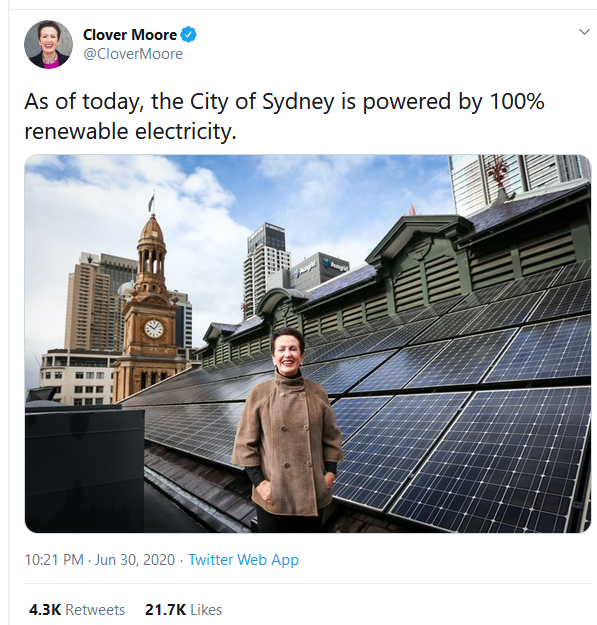
Clover Moore, the Lord Mayor of the City of Sydney, NSW has announced

"As of today, the City of Sydney is powered by 100% renewable electricity.” 

 image

https://twitter.com/CloverMoore/status/1278076256773222402


WOW!!


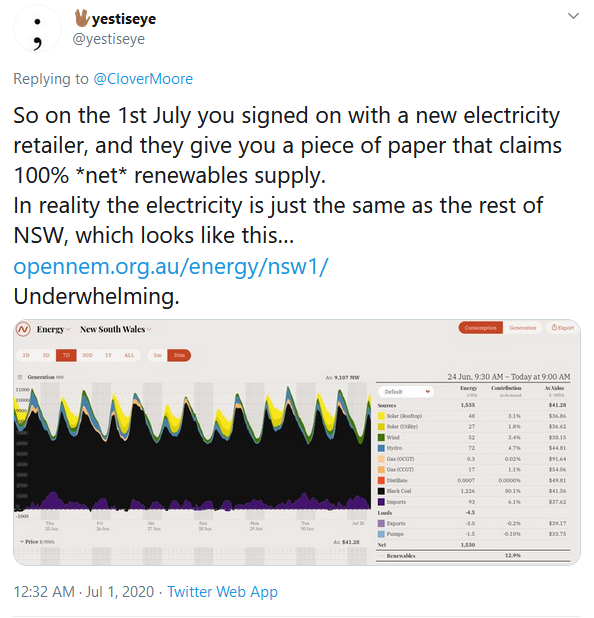
Except for the fact that she was lying through her teeth, as one critic inconveniently pointed out:


 image

https://twitter.com/yestiseye/status/1278109196169306113


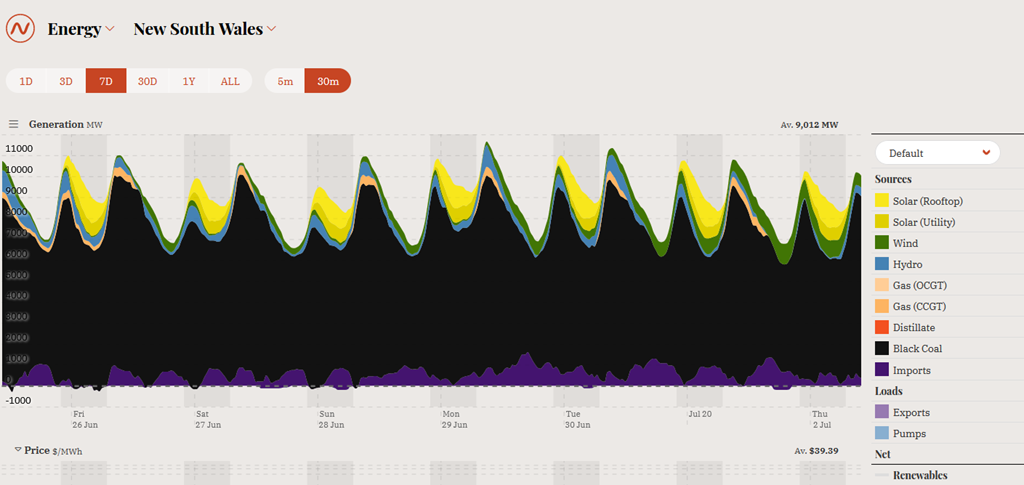
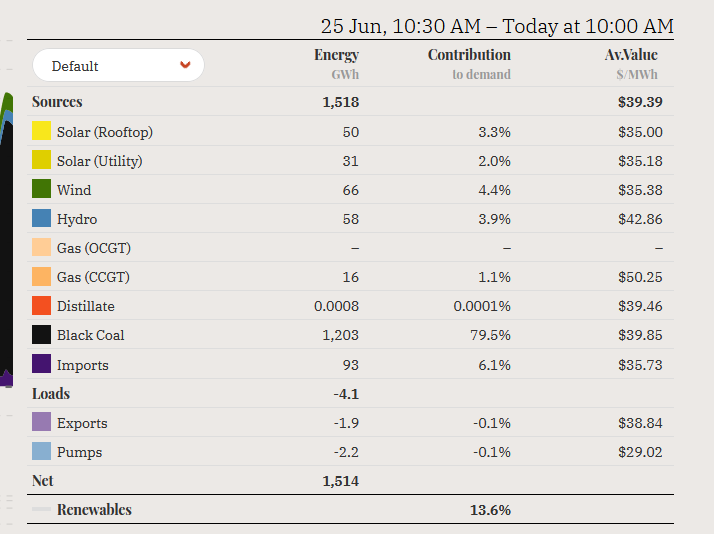
This is the current position:

 image

 image

 https://opennem.org.au/energy/nsw1/

via NOT A LOT OF PEOPLE KNOW THAT

https://ift.tt/3eUmmhA

July 2, 2020 at 04:54AM

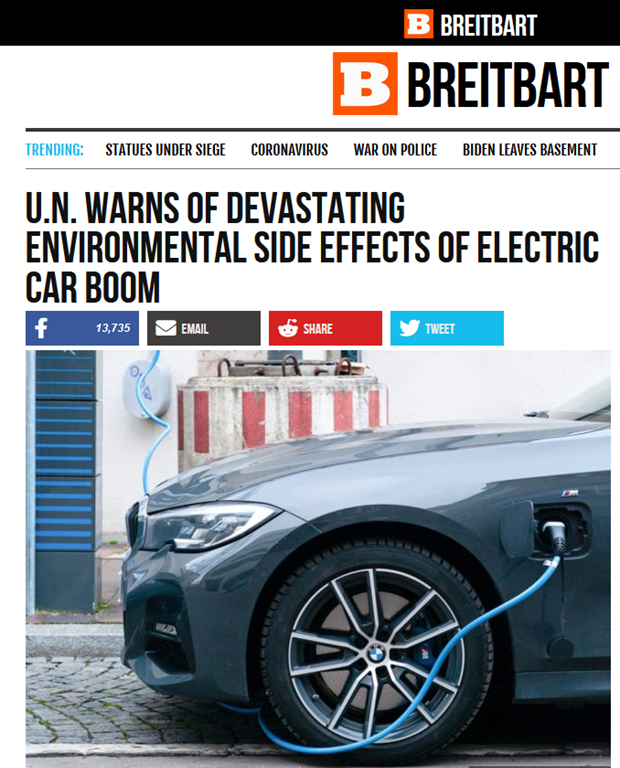
U.N. Warns of Devastating Environmental Side Effects of Electric Car Boom

By Paul Homewood


 image

The United Nations (U.N.) announced Sunday the electric car boom will result in a number of devastating ecological side effects for the planet.

While the shift to electric cars reflects ongoing efforts to reduce the world’s dependence on fossil fuels, the UN warns that the raw materials used to produce electric car batteries are highly concentrated in a small number of countries and their extraction and refinement pose a serious threat to the environment.

The U.N. trade body, UNCTAD, has issued a new report breaking down some of the unintended negative consequences of the shift, which include ecological degradation as well as human rights abuses.

The report notes that metals such as cobalt, lithium, manganese, copper, and minerals like graphite “play a significant role in energy-related technologies such as rechargeable batteries that are used in a variety of applications ranging from electronics to electric vehicles as well as in renewable energies such as nuclear, wind, and solar power.”

Several of these raw materials are quite rare and have few or no substitutes and they come from specific areas of the globe. More than half the world’s supply of lithium, for example, a key component of lithium-ion batteries, comes from beneath the salt flats in the Andean region of Chile, Bolivia, and Argentina.

The production of these raw materials “is often associated with undesirable environmental footprints, poor human rights and worker protection,” the report asserts.

In Chile, for instance, “lithium mining uses nearly 65% of the water in the country’s Salar de Atamaca region, one of the driest desert areas in the world, to pump out brines from drilled wells,” the U.N. notes, because nearly 2 million liters of water are needed to produce a ton of lithium.

This has “contributed to environment degradation, landscape damage and soil contamination, groundwater depletion and pollution,” the U.N. states.

In its report, UNCTAD estimates that some 23 million electric cars will be sold over the coming decade and as a result the market for rechargeable car batteries is forecast to rise by over 700 percent in just four years, from its current level of $7 billion to $58 billion by 2024.

Along with lithium, another key component of electric car batteries is cobalt, and two-thirds of all cobalt production happens in the Democratic Republic of the Congo (DRC), The U.N. observes.

The U.N. Children’s Fund (UNICEF) reports that about 20 percent of cobalt supplied from the DRC comes from artisanal mines, “where human rights abuses have been reported, and up to 40,000 children work in extremely dangerous conditions in the mines for meagre income.”

The U.N. also fears that cobalt-copper mines in DRC may contain sulphur minerals that contribute to Acid mine drainage (AMD), a phenomenon that causes pollution or contamination of surface water, thereby increasing the toxicity of rivers and drinking water.

“The environmental impacts of graphite mining are very similar to those associated with cobalt mining,” the report adds.

Last December, a prominent professor at the Copenhagen Business School said that attempts to rein in global warming by driving electric cars were nothing other than “pointless virtue signaling.”

“It is absurd for middle-class citizens in advanced economies to tell themselves that eating less steak or commuting in a Toyota TM-0.18% Prius will rein in rising temperatures,” stated Bjørn Lomborg, the director of the Copenhagen Consensus Center and author of The Skeptical Environmentalist.

“Although I am a vegetarian and don’t own a car, I believe we need to be honest about what such choices can achieve,” Lomborg declared.

Although electric cars are “branded as environmentally friendly,” the fact is that “generating the electricity they require almost always involves burning fossil fuels,” he stated.

“Moreover, producing energy-intensive batteries for these cars invariably generates significant CO2 emissions,” he wrote, so that electric cars have a huge carbon deficit when they hit the road, and “will start saving emissions only after being driven 60,000 kilometers.”

Even if the percentage of electric cars in the world were to rise to 15 times their present numbers, electric cars would only reduce global CO2 emissions by 1 percent, he declared, citing a report from the International Energy Agency (IEA).

For his part, IEA Executive Director Fatih Birol said that in 2018, electric cars saved 40 million tons of CO2 worldwide, sufficient to reduce global temperatures by a mere 0.000018°C — or a little more than a hundred-thousandth of a degree Celsius — by the end of the century.

“If you think you can save the climate with electric cars, you’re completely wrong,” Birol said.

https://www.breitbart.com/environment/2020/06/29/u-n-warns-of-devastating-environmental-side-effects-of-electric-car-boom-2/

via NOT A LOT OF PEOPLE KNOW THAT

https://ift.tt/2BUQb34

July 2, 2020 at 04:30AM

Is the UK government misleading the public on COVID tests?

By Neil Lock

So, that’s over 9 million COVID tests done in the UK up to June 27th a.m. Sounds pretty impressive, doesn’t it? As of today (July 1st), that count has moved on to 9,426,631 – fourth in the world in total tests! (The UK is also fourth in the world in COVID deaths per million population, and closing in on Andorra for third place; but that’s another story). Now… is that figure believable?

I recently wrote a paper about understanding the published statistics – deaths, cases, tests – on the effects of this virus around the world. It is very long, and a little bit technical – although it does include lots of pretty (and not so pretty) pictures! Those interested in the detail can find it here: https://wattsupwiththat.com/2020/06/20/covid-19-understanding-the-numbers-coronavirus/. I had a bit of a laugh when one commenter at “the world’s most viewed site on global warming and climate change” mentioned me (though, I must say, not totally approvingly) in the same breath as Judith Curry, who is a true climate-science expert!

In the course of writing it, I compared the two primary sources of world-wide statistics on this virus. One is worldometers.info, https://www.worldometers.info/coronavirus/. This is kept updated daily with data provided by the national health systems. The other, far more comprehensive because it includes historical daily data from the beginning of the epidemic, is Our World in Data, https://ourworldindata.org/coronavirus. I used Our World in Data.

I found some interesting discrepancies between the two. One was with the Swedish cases numbers – a political hot potato, because of the lack of lockdown in Sweden. With the help of a Swedish commenter at WattsUpWithThat, I found that the issue seems to arise because the Swedes allocate each positive test to the date the test was done, whereas Our World in Data (whose data, if I understand right, comes via the World Health Organization) allocates each positive test to the date the test was reported, which is often days or even weeks later.

More concerning, though, was the UK’s data on numbers of tests carried out. Now for the UK, new cases and deaths reported by Worldometers and Our World in Data are in sync, with Worldometers always one day ahead. That’s consistent with the idea that Our World in Data gets its feed via a third party. The UK does report tests on a daily basis, but there’s often a gap of three or four days before a particular day’s tests appear at Our World in Data.

So… the daily Twitter update, shown at the head, gives the numbers of new cases and deaths on the day in question as 890 and 100 respectively. I’d expect those two numbers to appear in Our World in Data against the following day, June 28th. And indeed, they do:

But what about those numbers of tests? 4,852,547 is the cumulative total recorded here, against the 9,067,577 stated in the Twitter feed. This means the total reported on the Twitter feed was 87% greater than – i.e. almost twice – the “official” figure which, if I understand right, must have been reported to the WHO. That’s an awful lot of missing test kits!

Is such a discrepancy normal? To answer that question, I compared the UK with other countries. I took the cumulative total numbers of tests per million population reported at Worldometers up to June 23rd, and compared these with the numbers reported at Our World in Data up to June 26th. I had no expectation that the numbers would match anywhere near exactly. Indeed, what I found is that the Worldometers numbers were consistently above the Our World in Data ones, in most cases by between 1% and 18%. This seems reasonable to me, given that testing is still ramping up in many countries, and the Worldometers count will probably include situations such as test kits sent out but not yet returned.

I then plotted the numbers of tests per million from the two data sources on a scatterplot:

The plot thickens! The UK shows by far the biggest discrepancy in absolute terms among all the countries, and as a ratio it is only surpassed by Peru and France (and the French are not providing any meaningful data on tests at all). Of the three other “bad boys,” two, Belgium and Spain, are also among the countries hardest hit by the virus. Exactly the places, where you would expect there to be most political pressure to make the numbers look good!

Even the BBC seem to think all is not well on the subject of COVID testing in the UK: https://www.bbc.co.uk/news/health-51943612. It looks as if one problem is that antibody tests are being counted along with the swab tests, thus making the ratio of positives to tests lower than it ought to be. Also, they are counting test kits that have been sent out, many of which may never be returned. Moreover, the Chairman of the UK Statistics Authority, Sir David Norgrove, wrote to the government a month ago: https://www.statisticsauthority.gov.uk/correspondence/sir-david-norgrove-response-to-matt-hancock-regarding-the-governments-covid-19-testing-data/. He said, among much else: “The aim seems to be to show the largest possible number of tests, even at the expense of understanding.”

And one thing more. As I discovered while writing my article, the UK’s statistics collectors were recently required to move from their original basis of counting people tested to counting tests performed instead. This, obviously, resulted in increases in the headline numbers of tests right through the course of the epidemic. It also, unfortunately, meant that all the daily numbers of tests done in the UK prior to April 26th got wiped. And, while this move did bring the UK more into line with many other countries’ reporting procedures, countries such as Canada, Japan and the Netherlands are still reporting by people tested. So, my guess is that this move (likely both difficult and expensive), the over-reporting of test numbers, and the poor presentation of the data that Sir David criticizes, have all come about because of political pressure from those who want the numbers to look as good as possible. Sigh.

So, is the UK government misleading the public on COVID tests? Sir David Norgrove obviously thinks so; and I agree with him.

Like this:

Like Loading…

Related

via Watts Up With That?

https://ift.tt/3imLG1Q

July 2, 2020 at 04:10AM

Toby Young: We’re Facing A Tsunami Of Censorship

It’s open season on mavericks and dissenters at the moment.

If you publicly challenge any of the sacred nostrums of the social justice left and you work in a school, a college, a university, an arts company, a public broadcasting organisation, a tech company, a charity, a local authority or, indeed, Whitehall, you are at risk of being cancelled. How do I know? Because in February I set up the Free Speech Union to protect those being targeted in this way and in the past month we’ve been contacted by people in all of these fields who have either been fired, suspended or are ‘under investigation’ for having said or done something controversial, usually on Facebook or Twitter.

And by ‘controversial’ I don’t mean they’re guilty of hate speech. One person who asked for help was Mike McCulloch, a maths lecturer at Plymouth University, who was being investigated by his employer for having liked a tweet saying ‘All Lives Matter’. Then again, the definition of ‘hate speech’ is so nebulous and broad that it’s increasingly common for mainstream views to be labelled as such. For instance, another FSU member, the feminist campaigner Posey Parker, started a petition on Change.org asking the Oxford English Dictionary to keep its definition of ‘woman’ as ‘adult female human’, and the moderators took it down on the grounds it was ‘hate speech’. J.K. Rowling knows all about that, of course.The authoritarian tide is rising and every time you think things can’t get any worse, the ground goes out from under you

I thought it was bad when I set up the FSU, and it was. According to the Telegraph, the police in England and Wales have investigated and recorded 120,000 ‘non-crime hate incidents’ in the past five years. That’s more than 65 people a day being interviewed by the authorities for precisely the kind of thing Mike McCulloch was investigated for, e.g. liking a tweet that dissents from fashionable left-wing dogma. Once that’s on your record, it shows up on an enhanced DBS check, which means you might not be able to get a job as a teacher or a carer. But things are worse by an order of magnitude since the explosion of the Black Lives Matter movement. At the FSU, we used to get half a dozen requests for help a week. Now we get half a dozen a day. […]

The pro-free speech forces do win the occasional victory — Plymouth has dropped its investigation of Mike McCulloch. But the authoritarian tide is rising and every time you think things can’t get any worse, the ground goes out from under you. We need the government to defend this age-old liberty, but since when has a Conservative government actually conserved anything?

Full post

The post Toby Young: We’re Facing A Tsunami Of Censorship appeared first on The Global Warming Policy Forum (GWPF).

via The Global Warming Policy Forum (GWPF)

https://ift.tt/2ZvHOmM

July 2, 2020 at 03:43AM