
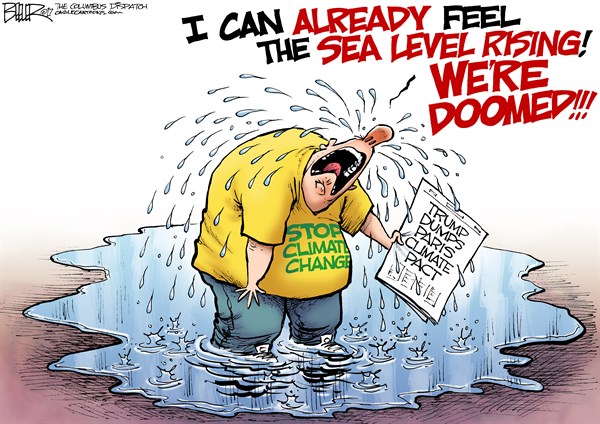
Guest essay by Eric Worrall
According to the Australian ABC, people frequently fail to properly acknowledge or recognise “Climate Grief”, feelings of loss and despair some people experience over events which mostly have not happened yet. Supporters of the idea of climate grief claim the failure of members of the public to validate the climate grief of others leads to “major physical and mental health problems”.
Climate grief expected to be widespread soon but it’s still not openly acknowledged
ABC Health & Wellbeing /
By health reporter Paige CockburnFeeling miserable, anxious, helpless and just generally terrible because the world is becoming less habitable? You’re not alone.
The good news is there are strategies that may help you cope. The bad news is the pandemic we’re now facing may test your passion and enthusiasm for climate action.
For the past 18 months, Canadian scientist Kurtis Baute says he has been dealing with a lot of ‘climate grief’.
“Basically I can’t stop thinking about the fact that millions of people, real people, are dying or will die because of something that is completely unavoidable,” he recently announced on his YouTube channel.
“We can stop using fossil fuels but so far we’ve completely failed to do so…it feels completely out of control and it’s depressing.”
…
The danger of unvalidated grief
Climate grief is often categorised as a form of disenfranchised grief which means it isn’t always publicly or openly acknowledged.
…
“People may feel this isn’t something someone else can help with,” says Dr Snell.
This can then snowball into major physical and mental health problems.
…
The idea of victimhood seems a persistent theme of the climate fear narrative. High profile green campaigner Bill McKibben is almost open about his apparent need to feel like a victim.
The Wannabe Oppressed
By STANLEY KURTZ
October 16, 2013 8:00 AMToday’s college students, climate change, and the cult of victimization
…
In a 1996 piece titled “Job and Matthew,” McKibben describes his arrival at college in 1978 as a liberal-leaning student with a suburban Protestant background. “My leftism grew more righteous in college,” he says, “but still there was something pro forma about it.” The problem? “Being white, male, straight, and of impeccably middle-class background, I could not realistically claim to be a victim of anything.”
At one point, in what he calls a “loony” attempt to claim the mantle of victimhood, McKibben nearly convinced himself that he was part Irish so he could don a black armband as Bobby Sands and fellow members of the Provisional Irish Republican Army died in a hunger strike. Yet even as he failed to persuade himself he was Irish, McKibben continued to enthusiastically support every leftist-approved victim group he could find. Nonetheless, something was missing. None of these causes seemed truly his own. When McKibben almost single-handedly turned global warming into a public issue in 1989, his problem was solved. Now everyone could be a victim
…
Global warming allows the upper-middle-class to join the proletariat, cloaking erstwhile oppressors in the mantle of righteous victimhood.
…
Read more: The Wannabe Oppressed
The demand for societal “acknowledgement” of something as ill defined as climate grief in my opinion verges on abusive.
If you accept someone is a genuine victim, the natural response is to try to help ease their pain. If this idea of climate victimhood sticks, it will be very difficult to refuse demands from climate victims to do whatever is necessary to alleviate their suffering.
I am not rejecting the idea that some climate worriers may suffer from serious psychiatric disorders, and I am certainly keen that people in pain receive the medical treatment they require, even if the source of their anguish is entirely imaginary. But I feel no compulsion to pretend their climate delusions have any objective validity.
Related
via Watts Up With That?
August 25, 2020 at 12:23AM
 Iowa Climate Science Education