
CO2 reached 1980s (352 ppm, average) to 2000s (380 ppm, max) levels 2500-5500 years ago in Japan per stomata records.
Scientists (Wang et al., 2020) have determined stomatal evidence can uncover large short-term CO2 fluxes of 50-100 ppm within a century or less.
Measurements from a forest near Mt. Kurikoma, Japan, reveal minimum to maximum CO2 values ranged between 288 ppm (minimum) to 383 ppm (maximum) between 3,903 to 3,795 cal. yr BP. The region’s sea surface temperatures were 1-2°C warmer (23-24°C) than today (22°C) from about 4,000 to 5,500 years ago.
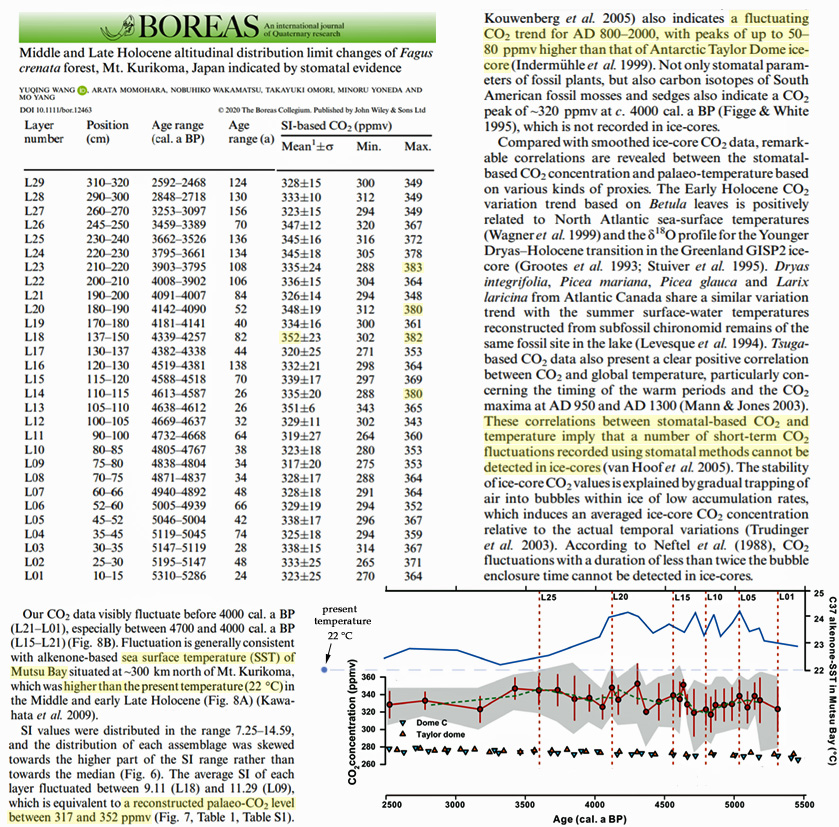
Image Source: Wang et al., 2020
Other reconstructions have also determined CO2 fluctuates far more rapidly in stomatal records than in the records divined from bubbles in old ice. For example, CO2 rose from about 260 to 380 ppm during the century between 1850 and 1950 (Kouwenberg et al, 2005) and declined by 77 ppm in <200 years (Mcelwain et al., 2002) during the Younger Dryas abrupt cooling event per evidence from stomata.
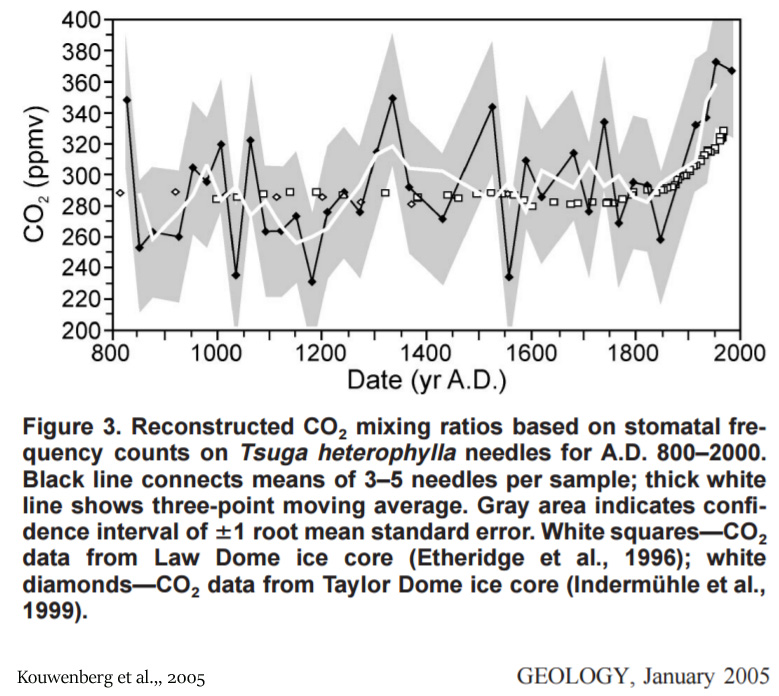
Image Source: Kouwenberg et al, 2005
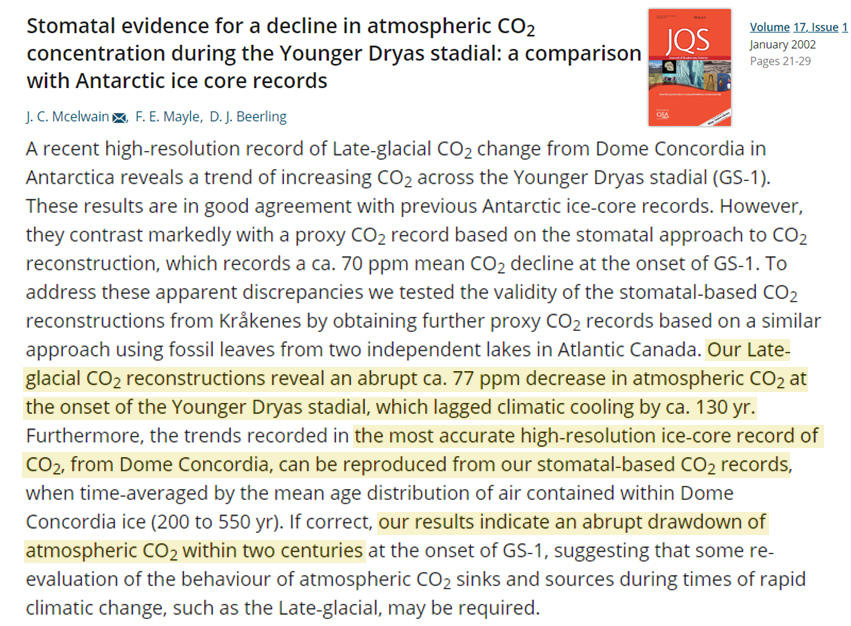
Image Source: Mcelwain et al., 2002
via NoTricksZone
November 23, 2020 at 10:45AM
 Iowa Climate Science Education