
Scientists (Liu et al., 2021) have assessed the Pacific North American (PNA) pattern, “largely a mode of internal variability,” is “an important driver of western Arctic sea variability and trends”.
The heat-redistributing PNA pattern recently shifted from a negative (1980s) to positive (1995-) phase. This internal shift “induced significant increases in poleward heat” transport, explaining 75% of the post-1979 warming and declining sea ice trend in the Western Arctic.
It’s interesting to note that the temperature increase and sea ice decline induced by the positive trend in the PNA was largely observed from 1995 to 2007, but since then the overall trend for both temperature and sea ice changes seems to have plateaued and flattened.
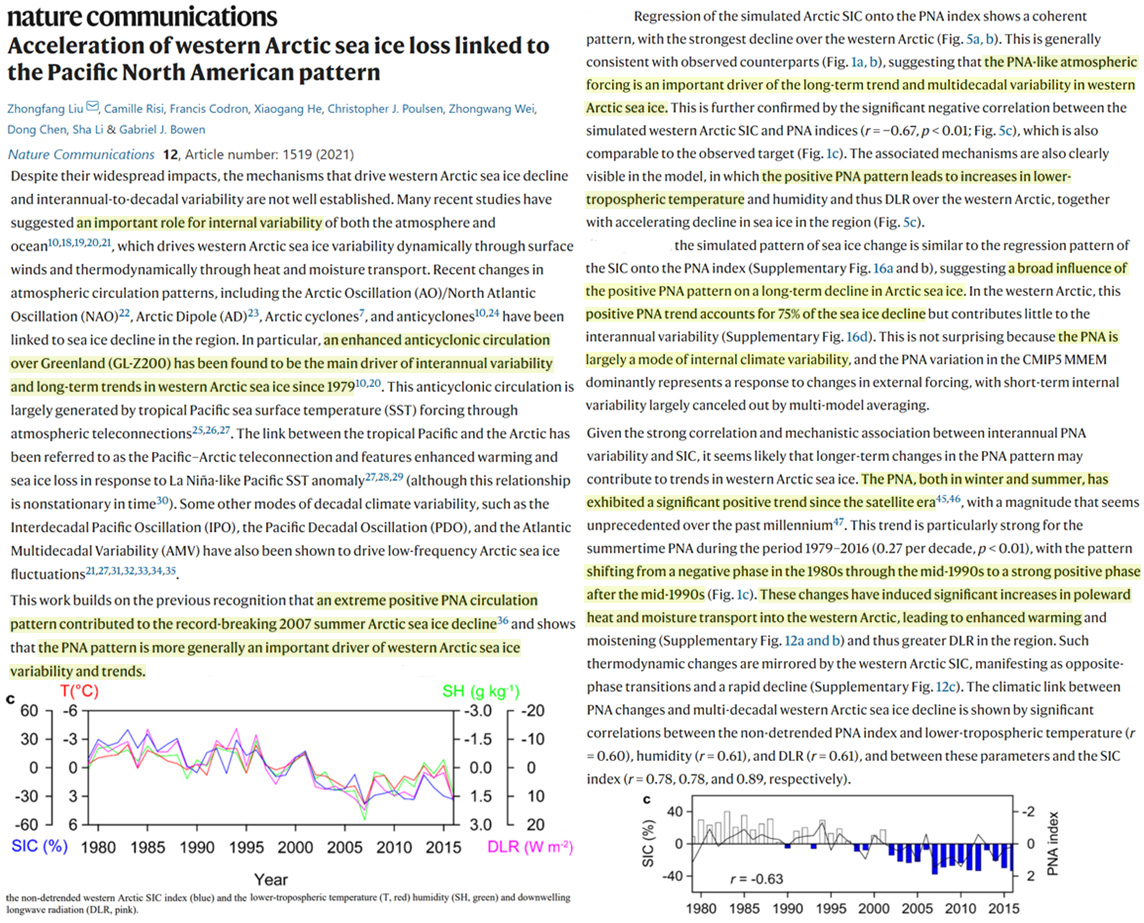
Image Source: Liu et al., 2021
While this 2021 study suggests most (75%) of the temperature and sea ice trends can be attributed to an internal variability pattern, other recent studies had suggested about 50% of the Arctic trends are of anthropogenic origin and 50% are accounted for by “unforced natural variability” (Ding et al., 2014, Kay et al., 2011, Zhang et al., 2015, Ding et al., 2019).
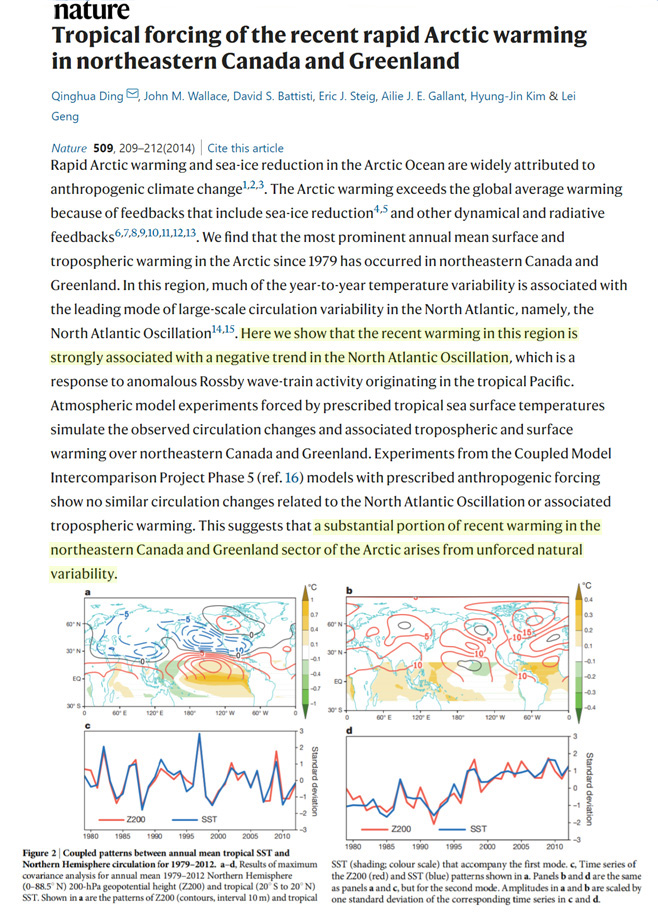
Image Source: Ding et al., 2014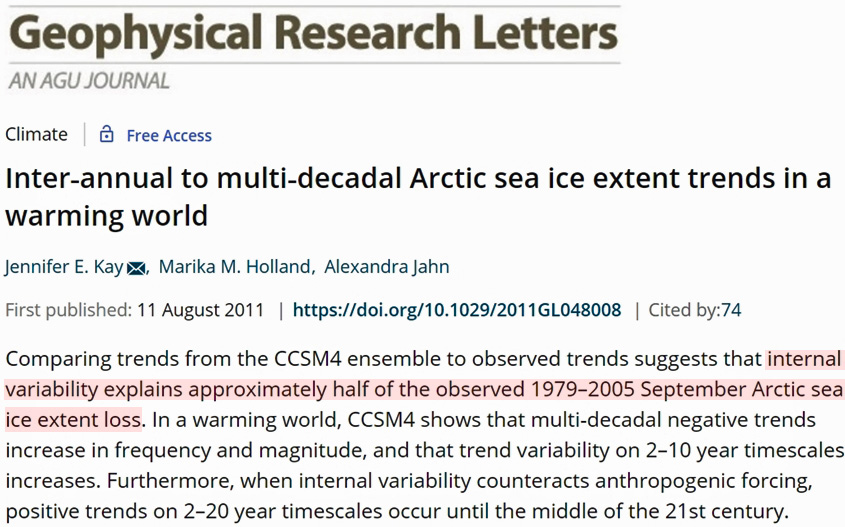
Image Source: Kay et al., 2011
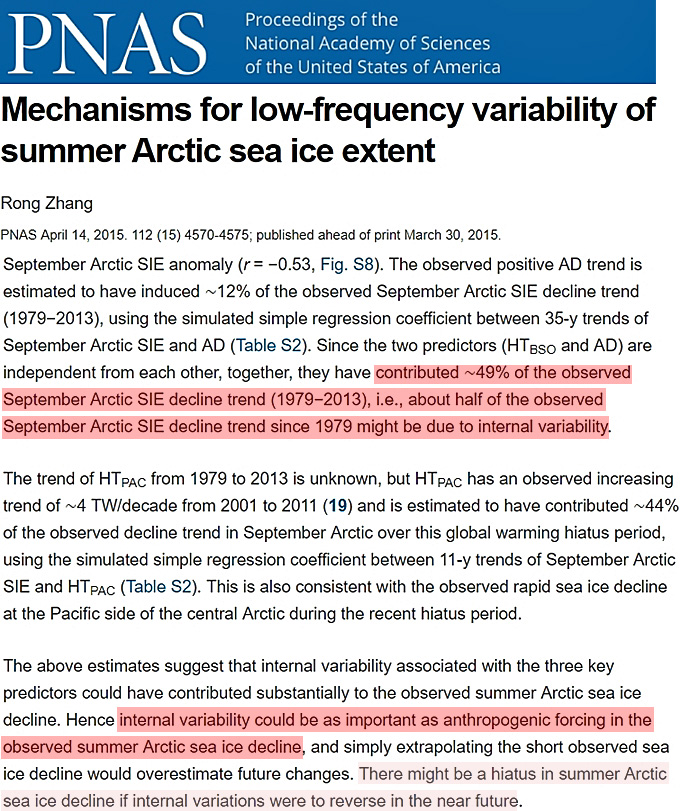
Image Source: Zhang et al., 2015
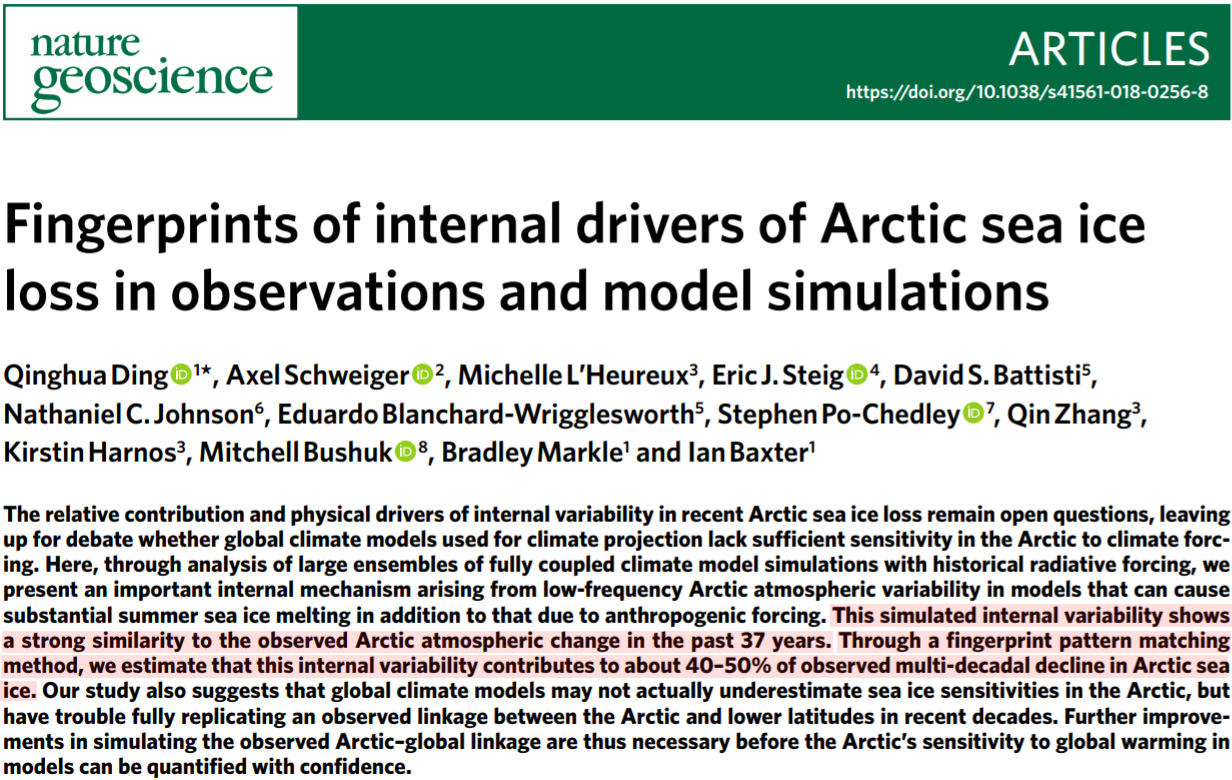
Image Source: Ding et al., 2019
Finally we should note that during the 1500s to 1600s, when CO2 concentrations hovered near 275 ppm, the sea ice in the Western Arctic only persisted about 7 or 8 months per year (Porter et al., 2019, McKay et al., 2008) In recent centuries, however, the Western Arctic has been sea ice covered about 11 months per year despite sharply rising CO2. This strongly suggests there is nothing outside the range of natural variability required to explain the recent decline in this region’s sea ice.
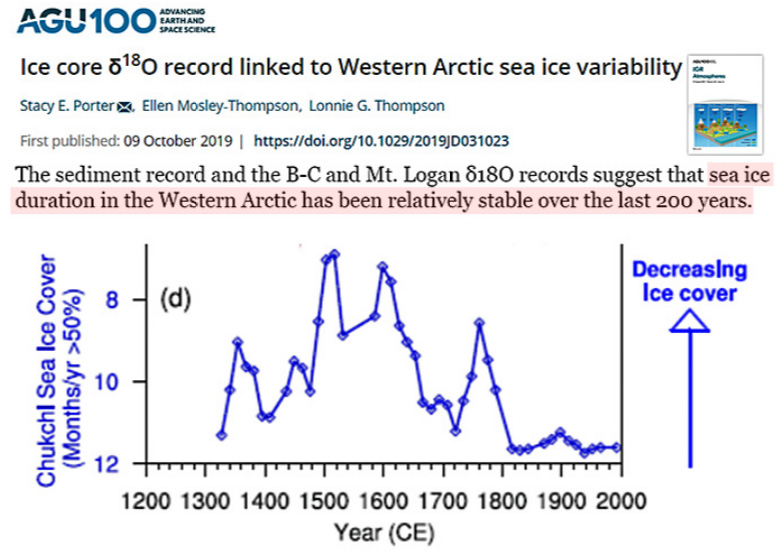
Image Source: Porter et al., 2019
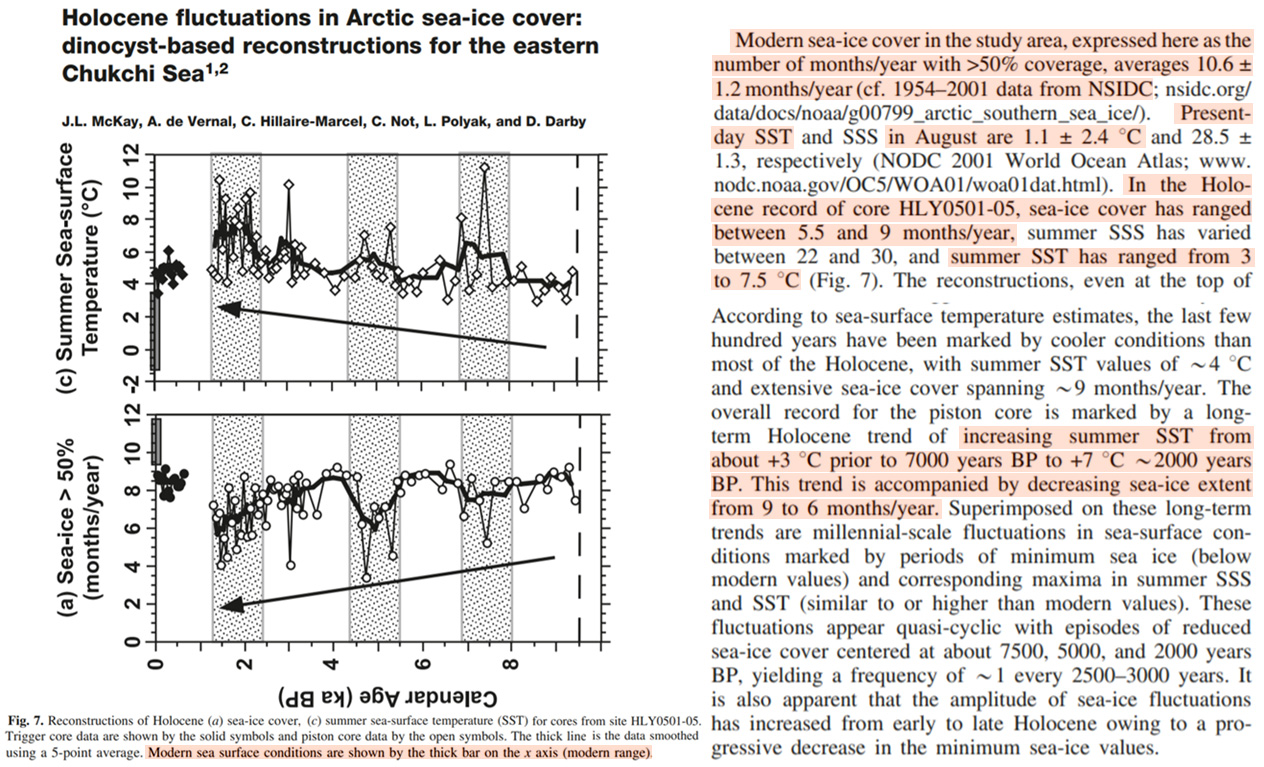
Image Source: McKay et al., 2008
via NoTricksZone
March 18, 2021 at 12:24PM
 Iowa Climate Science Education