
Guest essay by Eric Worrall
After training a computer to look for online climate “misinformation”, John Cook was surprised that people don’t trust the proposed solutions.
Climate change: How machine learning holds a key to combating misinformation
John Cook
Postdoctoral Research Fellow, Monash Climate Change Communication Research Hub“A lie can travel halfway around the world before the truth can get its boots on.”
This quote appears in many forms. In some variants, the quote involves footwear. In other cases, the truth is struggling to get its pants on.
Regardless of the details, the sentiment encapsulates a key challenge of misinformation. By the time the meticulous task of fact-checking is complete and the correction has been disseminated, the misinformation has already spread widely and achieved all sorts of mischief.
Consequently, misinformation researchers speak wistfully of the “holy grail of fact-checking” – automatically detecting and debunking misinformation in one fell swoop. Machine learning offers the potential of both speed and scale – the ability to identify misinformation the instant it appears online, and the technical capacity to distribute solutions at the scale required to match the size of the problem.
But the holy grail quest faces a seemingly insurmountable hurdle. Misinformation evolves and sprouts new forms. How can you detect a myth before you even know what it is or what form it will take?
…
Once we had trained our machine to detect and categorise different misinformation claims, we fed our model 20 years’ worth of climate misinformation – more than 250,000 articles from 20 prominent conservative think-tank websites and 33 blogs. It’s the largest content analysis to date on climate misinformation, making it possible to construct a two-decade history of climate misinformation.
The results weren’t what I expected at all.
The erosion of public trust in climate scientists
During the past 15 years, I’ve been debunking scientific climate misinformation – the type of myths that fell under the categories “it’s not happening”, “it’s not us”, or “it’s not bad”.
It turns out these were the least common forms of climate misinformation. Instead, the largest category of climate misinformation was attacks on scientists and on climate science itself.
Climate misinformation isn’t about providing its own alternative explanation of what’s happening to our climate. Instead, it’s focused on casting doubt on the integrity of climate science, and eroding public trust in climate scientists.
…
But that’s not where misinformation is focused – the focus is on attacking scientists and science itself. There’s a dearth of research into understanding and countering this type of misinformation, let alone public engagement and education campaigns to counter their damage.
…
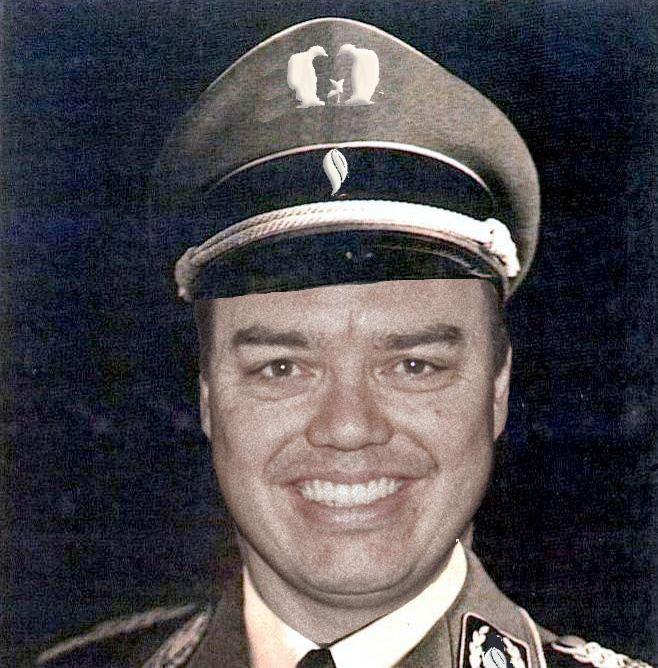
John Cook, we don’t have to provide an alternative explanation. It is enough for us to show that the alarmist model of global climate change is wrong.
Cook has a fascinating track record when it comes to climate communication, he has produced some interesting visual communication pieces in his time (see right and below).
But the one question he is not asking is, is there a legitimate reason for people to be skeptical?
How many predictions of imminent catastrophe have failed? How many “cheaper than coal” renewable energy schemes have instead driven up electricity bills? Why do places like California and Europe have such expensive energy, if renewables are the cheapest option? Why do greens expect people to go on believing them, when so much of what they say is just plain wrong?

Climate communication can only take a movement so far.
In the end, renewable energy advocates have to deliver value. If they can’t deliver, all the AI “misinformation” bots in the world won’t save their precious green revolution, from the gathering spontaneous uprising of ordinary people who are fed up with politicians frittering away their hard earned tax dollars on useless green boondoggles which inflict painful costs on ordinary people.
Related
via Watts Up With That?
December 9, 2021 at 12:27AM
 Iowa Climate Science Education