Month: January 2022

Arctic Fraud From The Biden Administration

NOAA says Arctic sea ice is disappearing and that we have to take action to stop it. “The trends are alarming and undeniable. We face a decisive moment. We must take action to confront the climate crisis.” Arctic Report Card: … Continue reading

via Real Climate Science

https://ift.tt/3f4e606

January 9, 2022 at 07:01AM

Democrats Find A New Way To Traumatize Children

Massachusetts schools are using dogs to detect Covid-19 – CNN

via Real Climate Science

https://ift.tt/3qaP7Po

January 9, 2022 at 06:18AM

NASA’s Webb Telescope Reaches Major Milestone as Mirror Unfolds

From NASA

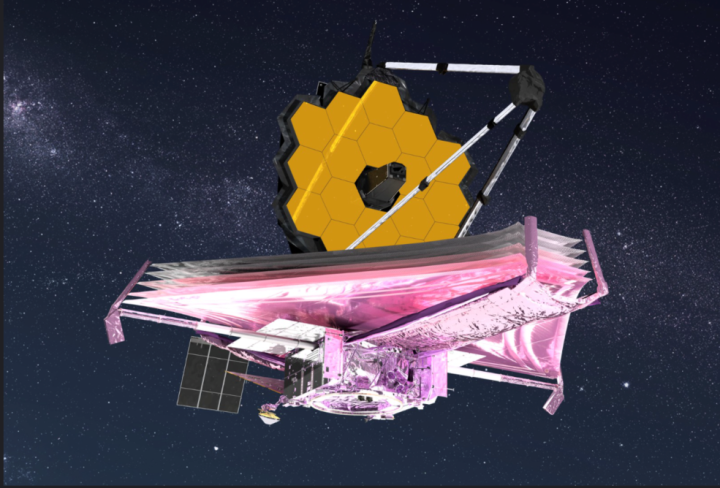
This artist’s conception of the James Webb Space Telescope in space shows all its major elements fully deployed. The telescope was folded to fit into its launch vehicle, and then was slowly unfolded over the course of two weeks after launch. Credits: NASA GSFC/CIL/Adriana Manrique Gutierrez


NASA’s James Webb Space Telescope team fully deployed its 21-foot, gold-coated primary mirror, successfully completing the final stage of all major spacecraft deployments to prepare for science operations.

A joint effort with the European Space Agency (ESA) and Canadian Space Agency, the Webb mission will explore every phase of cosmic history – from within our solar system to the most distant observable galaxies in the early universe.

“Today, NASA achieved another engineering milestone decades in the making. While the journey is not complete, I join the Webb team in breathing a little easier and imagining the future breakthroughs bound to inspire the world,” said NASA Administrator Bill Nelson. “The James Webb Space Telescope is an unprecedented mission that is on the precipice of seeing the light from the first galaxies and discovering the mysteries of our universe. Each feat already achieved and future accomplishment is a testament to the thousands of innovators who poured their life’s passion into this mission.”

The two wings of Webb’s primary mirror had been folded to fit inside the nose cone of an Arianespace Ariane 5 rocket prior to launch. After more than a week of other critical spacecraft deployments, the Webb team began remotely unfolding the hexagonal segments of the primary mirror, the largest ever launched into space. This was a multi-day process, with the first side deployed Jan. 7 and the second Jan. 8.

Mission Operations Center ground control at the Space Telescope Science Institute in Baltimore began deploying the second side panel of the mirror at 8:53 a.m. EST. Once it extended and latched into position at 1:17 p.m. EST, the team declared all major deployments successfully completed.

The world’s largest and most complex space science telescope will now begin moving its 18 primary mirror segments to align the telescope optics. The ground team will command 126 actuators on the backsides of the segments to flex each mirror – an alignment that will take months to complete. Then the team will calibrate the science instruments prior to delivering Webb’s first images this summer.

“I am so proud of the team – spanning continents and decades – that delivered this first-of-its kind achievement,” said Thomas Zurbuchen, associate administrator for the Science Mission Directorate in NASA Headquarters in Washington. “Webb’s successful deployment exemplifies the best of what NASA has to offer: the willingness to attempt bold and challenging things in the name of discoveries still unknown.”

Soon, Webb will also undergo a third mid-course correction burn – one of three planned to place the telescope precisely in orbit around the second Lagrange point, commonly known as L2, nearly 1 million miles from Earth. This is Webb’s final orbital position, where its sunshield will protect it from light from the Sun, Earth, and Moon that could interfere with observations of infrared light. Webb is designed to peer back over 13.5 billion years to capture infrared light from celestial objects, with much higher resolution than ever before, and to study our own solar system as well as distant worlds.

“The successful completion of all of the Webb Space Telescope’s deployments is historic,” said Gregory L. Robinson, Webb program director at NASA Headquarters. “This is the first time a NASA-led mission has ever attempted to complete a complex sequence to unfold an observatory in space – a remarkable feat for our team, NASA, and the world.”

NASA’s Science Mission Directorate oversees the mission. NASA’s Goddard Space Flight Center in Greenbelt, Maryland, manages the project for the agency and oversees the Space Telescope Science Institute, Northrop Grumman, and other mission partners. In addition to Goddard, several NASA centers contributed to the project, including Johnson Space Center in Houston, the Jet Propulsion Laboratory in Pasadena, Marshall Space Flight Center in Huntsville, Alabama, Ames Research Center in Silicon Valley, and others.

For more information about the Webb mission, visit:

https://www.nasa.gov/webb

-end-

via Watts Up With That?

https://ift.tt/3JTfMb0

January 9, 2022 at 04:38AM

Bizarrely low dose Ivermectin still cut infections, hospitalization in half, deaths by 70%

Is your Minister of Health interested in saving lives, stopping infections or reducing the burden on hospitals? Did they ban ivermectin or study it?

A study in a small Brazillian town suggests that half of all hospitalization of Covid cases and 70% of the deaths could be avoided at a cost of 10 cents a week.

How super low dose ivermectin still reduced infections by half

A whole town in Brazil of 220,000 people was invited to take part in an ivermectin study. In Itajaí 159,000 people said “Yes” to taking part in a study of a bizarrely low dose infrequent form of ivermectin to see if it prevented people catching Covid. They were asked to take the 0.2mg/kg/day dose two days in a row but only once every two weeks. Since the half-life of ivermectin in humans is only 12–36 hours, those taking it in the study were effectively left unprotected at least half the time. Our livers convert ivermectin into chemical bits and pieces that have half-lives of three days, so those  downstream metabolites might kick around a bit longer?  More bizarrely, participants were asked not to take ivermectin if they got ill. This study appears to be purely about prevention. Despite all this, it still worked.

Compared to all the other towns in the Santa Catarina State of Brazil, Itajaí has the lowest mortality rate, far below even the second lowest.

The iMask prevention plan by the Frontline Covid-19 Critical Care Alliance suggests using the 0.2mg/dose twice a week long term. Those ICU doctors recommend you double the dose if you think you’ve been exposed for real.

44% lower infection rate

So 113,000 people took ivermectin this way, 45,000 didn’t. The infection rate in the ivermectin users was 3.7% which was quite a lot lower than the non-users, of which 6.6% got infected. Imagine if they’d taken ivermectin two times a week instead? The rates of infection in the ivermectin group might have been much lower.

70% lower death rate

The regular use of ivermectin (albeit, very low and infrequent) still saved a lot of lives. The death rate in the ivermectin group was 0.8% compared to 2.6% of the non-users. They controlled for age, sex and co-morbidities.

56% reduction in hospitalization rate

It wasn’t a randomized study, but most of the biases should underestimate the benefits. Not only was the dose lower than recommended, but the people who signed up to try ivermectin were slightly older and higher risk.  People also weren’t supervised and so if they forgot to take their dose, no one was there to remind them. The reductions in everything could only get better with a more serious approach.

“An important conservative bias was present. Major risk factors for severe COVID-19 and mortality due to COVID-19, including aging, diabetes, and hypertension, were more present among ivermectin users, which may have underestimated the benefits measured Ivermectin was demonstrated to be particularly effective in subjects above 49 years old in terms of reduction of absolute risk, which corresponds to the group at the highest risk for COVID-19. This allows the understanding that prophylactic use of ivermectin can be particularly impactful in older subjects. In addition, ivermectin seemed to reduce the exceeding risk of hypertension, T2D, and other diseases.”

And just in case you were wondering:

“All subjects were recommended not to use ivermectin, nitazoxanide, hydroxychloroquine, spironolactone or any other drug claimed to be effective against COVID-19.”

It’s interesting to see a list that Brazillian researchers think will muck up their results by saving lives inconveniently.

REFERENCE

Kerr, Lucy et al (2022) Ivermectin Prophylaxis Used for COVID-19 Reduces COVID-19 Infection and Mortality Rates: A City-Wide, Prospective Observational Study of 223,128 Subjects Using Propensity Score Matching, Link

Cost of Ivermectin: Random example of Indiamart 100 x 12mg tablets for ₹ 300 = $4US or $6AU and would half the risk of infection for about 100, 65kg-adults each week. Rounded up to 10 cents a week.

0 out of 10 based on 0 rating

via JoNova

https://ift.tt/3q7HJ7e

January 9, 2022 at 01:18AM