Month: January 2022

A ‘mass exodus’ of polar bears from Alaska to Russia has taken place, local residents claim

From Polar Bear Science

Dr. Susan Crockford

An article in a UK newspaper yesterday contains a claim made by local residents that polar bears which used to hang around Utqiagvik (formerly known as Barrow) in western Alaska, are ‘moving to Russia’ (i.e. the Chukchi Sea) in a ‘mass exodus’. It’s certainly possible but if so, it should come as a surprise to no one and is good news for polar bears.
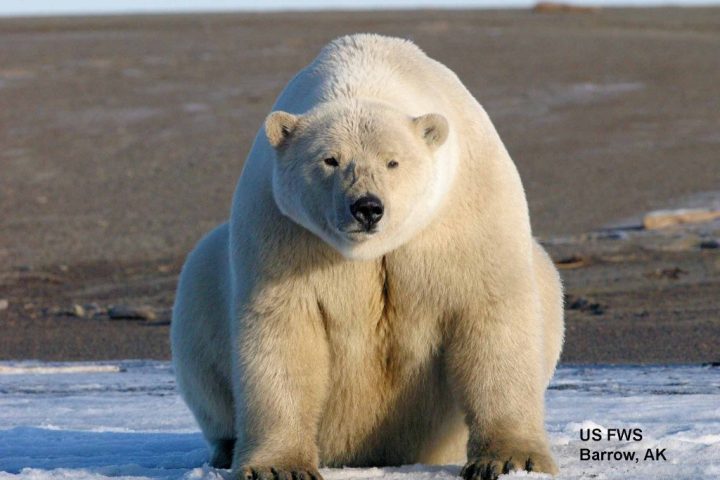
If the allegation is upheld by scientific evidence, polar bears will not have been pushed out of Alaska by lack of summer sea ice (i.e. ‘forced to migrate’) but rather pulled into the Chukchi Sea by abundant food resources that did not exist when summer ice cover was more extensive. It’s a big difference and it speaks to the benefits of less summer sea ice that no one wants to discuss.

Moreover, moving temporarily to where conditions suit them best is what polar bears do all the time: it’s not a new phenomenon, it’s a prominent feature of their biology (Crockford 2019).
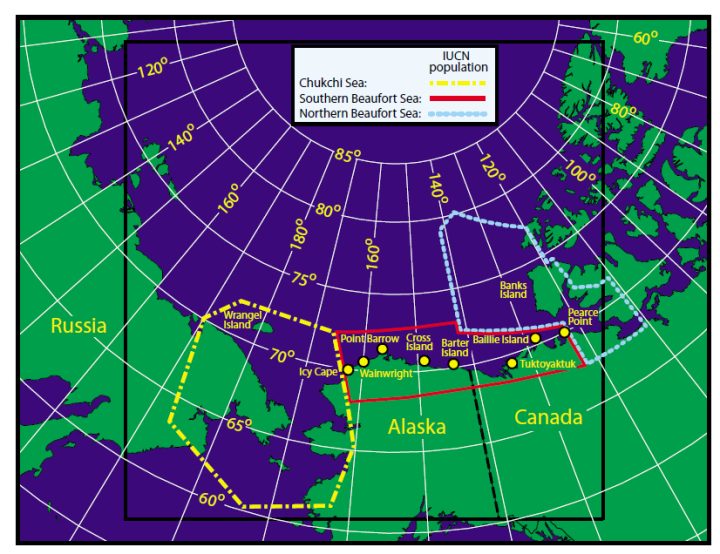
Chukchi Sea vs. Southern Beaufort Sea polar bear subpopulation boundaries, from Amstrup et al. 2005.

The article in question appeared yesterday in the UK Daily Telegraph (1 Jan 2020), “Polar bears forced to migrate from America to Russia because of climate change”. The piece oddly conflates a record high temperature on Boxing Day 2021 in Kodiak (located in the Gulf of Alaska, which is nowhere near the Beaufort Sea and well south of polar bear territory) with lack of summer sea ice much further north [my bold]:

After two days driving through thick snow on America’s most northerly tip, we had seen no sign of polar bears. The beasts, locals warned, are moving to Russia

“It wasn’t always like this,” said Herman Ahsoak, a whaling captain from Utqiagvik, Alaska, who was acting as a guide.

“Back in the late 1990s there were 127 here. I had never seen so many in my life. We had a dedicated patrol team to keep watch and protect the town.

“But when the sea ice really started to retreat, we stopped seeing them so often. I’m sure there is still a healthy population, but they have mostly moved on from here.”

In this part of America, where the average annual temperature has risen by 4.8°C in the last 50 years, one of the most visible signs of global warming is the mass exodus of polar bears.

Global warming has caused sea ice to melt, depriving bears of their homes and hunting grounds…

The problem is immediate: On Boxing Day, temperatures soared to a record 19.4C on the island of Kodiak – the highest December reading ever recorded in Alaska.

Polar bears, with their 42 razor sharp teeth, paws the size of dinner plates and 4 inches of fat under their black skin and white fur are some of the most resilient mammals on the planet. But scientists believe that climate change has driven them away.

Far to the west, on Russia’s Wrangel Island in the neighbouring Chukchi sea, the population has grown significantly, with scientists counting a record 747 bears in 2020, up from 589 in 2017.

The overall number of polar bears in the Chukchi sea has ballooned to 3,000 and they are described as being “in better condition, larger, and appeared to have higher reproductive rates than bears inhabiting the southern Beaufort Sea,” by Dr Karyn Rode, from the Alaska Science Centre.

“What is portrayed in the press and what is promoted by environmental groups creates a lot of stress because it is not an accurate picture,” said Dr Robert Suydam, a senior wildlife biologist for the North Slope Borough, in Utqiagvik.

“So frequently they are estimating that the populations in the Beaufort Sea have declined substantially but they are not taking into account how many bears have moved to other areas.

“Without a doubt, polar bears are struggling and will struggle with the change in ice. They have to adapt and they are. But unfortunately, some of these groups that are promoting that bears are in trouble aren’t giving the bears enough credit for how they can adjust to the change in environment.”

Because the Chukchi waters off Russia are so rich with food, polar bears appear to need less time on the ice.

“Bears can withstand having a shorter time out on the sea ice each year because when they are on the ice, there are plenty of seals to go around to recoup those losses to a point,” said Eric Regehr, a former biologist with the US Fish and Wildlife Service who now works at the University of Washington.

At issue here is the claimed ‘mass exodus’ of bears.

In fact, it’s been known for decades that most of the bears that visit Utqiagvik really belong to the Chukchi Sea subpopulation: virtually all of these visitors have always been Russian bears, not Alaskan (see below from Amstrup et al. 2005; see also Amstrup et al 2001).
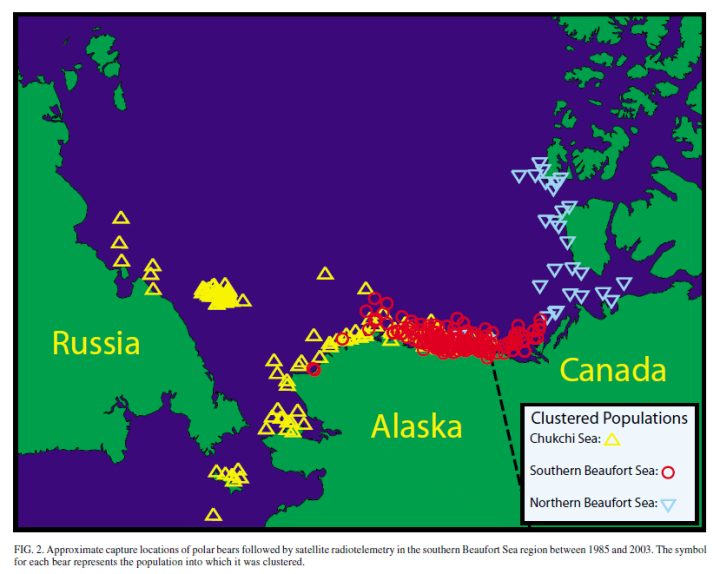
Capture locations of Chukchi and Southern Beaufort Sea polar bears, from Amstrup et al. 2005.

In fact, movement of bears into and out of the Southern Beaufort at both ends has confounded efforts to get an accurate population size estimate (AC SWG 2018; Atwood et al. 2020; Bromaghin et al. 2015; Conn et al. 2021; Rehehr et al. 2018).

Moreover, very few Southern Beaufort or Chukchi Sea bears ever come to land at all: these are subpopulations where most bears remain on the sea ice year-round (Crockford 2018, 2019; Rode et al. 2015).

And while these folks blame lack of sea ice in the Southern Beaufort for driving the bears away, the author of the piece neglects to explicitly state the obvious alternative explanation (although he alludes to it): that abundant food in the Chukchi Sea in recent years caused by greater primary productivity during the longer ice-free seasons has made ice over Russian waters a more attractive place to live for polar bears (Frey et al. 2021; Rode et al. 2014, 2018).

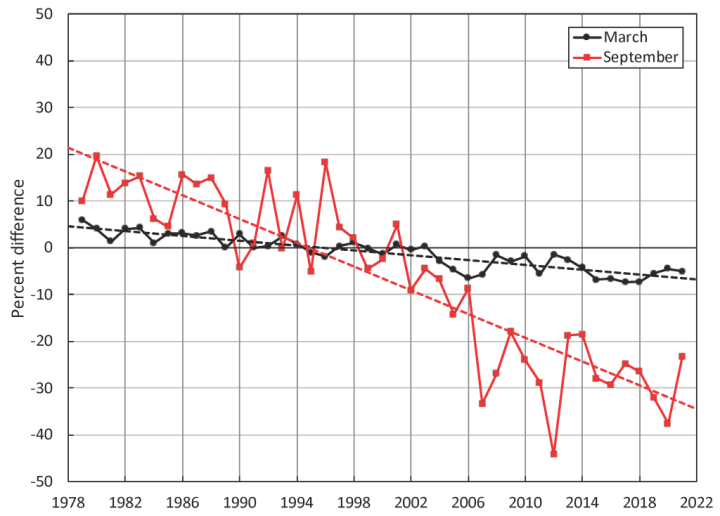
It’s the back-handed way of presenting one of the great benefits of reduced summer sea ice in the Arctic that’s blamed on ‘climate change’ (Crockford 2021). Get used to it: this is something we will likely be seeing more of in the next few years as the predicted summer sea ice ‘decline’ remains stalled (see graph below from Meier et al. 2021).

If it’s indeed true that Chukchi Sea polar bears now seldom visit the area around Point Barrow because the bears have moved to Russia (which is not, by the way, mentioned by biologists in scientific papers as an explanation for the apparent decline in polar bears in the Southern Beaufort or the apparent increase in Chukchi Sea numbers), this resilience to changing conditions would be very much like the situation in the Barents Sea on the other side of the Arctic.

As I’ve discussed previously (with references), the many pregnant polar bear females that used to give birth in the Svalbard archipelago (managed by Norway) have largely shifted east to make their maternity dens on the sea ice or the islands around Franz Josef Land in Russia. However, those that have remained loyal to Norwegian waters are not struggling, but are thriving (Aars et al. 2017).

Quite simply, this flexibility in response to changing conditions in the Arctic has allowed the polar bear to be an evolutionarily successful species and not a symptom of climate change victimhood.

References

Aars, J., Marques,T.A, Lone, K., Anderson, M., Wiig, Ø., Fløystad, I.M.B., Hagen, S.B. and Buckland, S.T. 2017. The number and distribution of polar bears in the western Barents Sea. Polar Research 36:1. 1374125. doi:10.1080/17518369.2017.1374125

AC SWG 2018. Chukchi-Alaska polar bear population demographic parameter estimation. Eric Regehr, Scientific Working Group (SWG. Report of the Proceedings of the 10th meeting of the Russian-American Commission on Polar Bears, 27-28 July 2018), pg. 5. Published 30 July 2018. US Fish and Wildlife Service. https://www.fws.gov/alaska/fisheries/mmm/polarbear/bilateral.htm pdf here.

Amstrup, S. C., McDonald, T. L. and Stirling, I. 2001. Polar bears in the Beaufort Sea: A 30-year mark-recapture case history. Journal of Agricultural, Biological, and Environmental Statistics 6:221-234. http://link.springer.com/article/10.1198/108571101750524562

Amstrup, S.C., Durner, G. M., Stirling, I. and McDonald, T. L. 2005. Allocating harvests among polar bear stocks in the Beaufort Sea. Arctic 58:247-259. http://arctic.journalhosting.ucalgary.ca/arctic/index.php/arctic/article/view/426
Pdf here.

Atwood, T.C., Bromaghin, J.F., Patil, V.P., Durner, G.M., Douglas, D.C., and Simac, K.S., 2020. Analyses on subpopulation abundance and annual number of maternal dens for the U.S. Fish and Wildlife Service on polar bears (Ursus maritimus) in the southern Beaufort Sea, Alaska: U.S. Geological Survey Open-File Report 2020-1087. https://doi.org/10.3133/ofr20201087. pdf here.

Bromaghin, J.F., McDonald, T.L., Stirling, I., Derocher, A.E., Richardson, E.S., Rehehr, E.V., et al. 2015. Polar bear population dynamics in the southern Beaufort Sea during a period of sea ice decline. Ecological Applications 25:634–651.

Conn, P.B., Chernook, V.I., Moreland, E.E., Trukhanova, I.S., Regehr, E.V., Vasiliev, A.N., Wilson, R.R., Belikov, S.E. and Boveng, P.L. 2021. Aerial survey estimates of polar bears and their tracks in the Chukchi Sea. PLoS ONE 16(5): e0251130. https://doi.org/10.1371/journal.pone.0251130 OPEN ACCESS video: https://doi.org/10.1371/journal.pone.0251130.s003

Crockford, S.J. 2018. State of the Polar Bear Report 2017. Global Warming Policy Foundation Report #29. London. pdf here.

Crockford, S.J. 2019The Polar Bear Catastrophe That Never Happened. Global Warming Policy Foundation, London. Available in paperback and ebook formats. Crockford, S.J. 2020. State of the Polar Bear Report 2019. Global Warming Policy Foundation Report 39, London. pdf here.

Crockford, S.J. 2021. The State of the Polar Bear Report 2020. Global Warming Policy Foundation Report 48, London. pdf here.

Frey, K.E., Comiso, J.C., Cooper, L.W., Grebmeier, J.M. and Stock, L.V. 2021. Arctic Ocean primary productivity: the response of marine algae to climate warming and sea ice decline. 2021 NOAA Arctic Report CardDOI: 10.25923/kxhb-dw16

Meier, W.N. et al. 2021. Sea ice. 2021 NOAA Arctic Report CardDOI: 10.25923/y2wd-fn85

Regehr, E.V., Hostetter, N.J., Wilson, R.R., Rode, K.D., St. Martin, M., Converse, S.J. 2018. Integrated population modeling provides the first empirical estimates of vital rates and abundance for polar bears in the Chukchi Sea. Scientific Reports 8 (1) DOI: 10.1038/s41598-018-34824-7  https://www.nature.com/articles/s41598-018-34824-7

Rode, K.D., Regehr, E.V., Douglas, D., Durner, G., Derocher, A.E., Thiemann, G.W., and Budge, S. 2014. Variation in the response of an Arctic top predator experiencing habitat loss: feeding and reproductive ecology of two polar bear populations. Global Change Biology 20(1):76-88. http://onlinelibrary.wiley.com/doi/10.1111/gcb.12339/abstract

Rode, K. D., R. R. Wilson, D. C. Douglas, V. Muhlenbruch, T.C. Atwood, E. V. Regehr, E.S. Richardson, N.W. Pilfold, A.E. Derocher, G.M Durner, I. Stirling, S.C. Amstrup, M. S. Martin, A.M. Pagano, and K. Simac. 2018. Spring fasting behavior in a marine apex predator provides an index of ecosystem productivity. Global Change Biology http://onlinelibrary.wiley.com/doi/10.1111/gcb.13933/full

Rode, K.D., Wilson, R.R., Regehr, E.V., St. Martin, M., Douglas, D.C. & Olson, J. 2015. Increased land use by Chukchi Sea polar bears in relation to changing sea ice conditions. PLoS One 10 e0142213.

via Watts Up With That?

https://ift.tt/3sQ67fm

January 2, 2022 at 08:15PM

2021: The Year the Electric Vehicle Batteries Burned

Guest essay by Eric Worrall

Are electric vehicles inherently unsafe? This is a question more people may be asking, as realisation grows that 2021 was a horror year for battery fire vehicle recalls.

GM heralded this plant as a model for its electric car future. Then its batteries started exploding.

The company had to recall 141,000 Chevrolet Bolt electric vehicles, a microcosm of the challenge GM faces as it aims to shift its production to all-electric

By Faiz SiddiquiDecember 30, 2021 at 6:00 a.m. EST

ORION TOWNSHIP, Mich. — Before General Motors recalled the entire fleet of its most popular electric car because of fire dangers, before her factory was stilled, assembly line worker Carol McConkey stood in the middle of a teeming factory floor and marveled at how seamlessly the Chevrolet Bolt is manufactured.

The crisis involving the Chevrolet Bolt was a painful reminder for the auto industry that despite treating the electric vehicle era as essentially inevitable — a technical fait accompli — significant obstacles to manufacturing the cars, and especially their batteries, continue to threaten that future.

“It’s a terrible thing that has happened,” Tim Grewe, GM’s general director for electrification strategy and cell engineering, said in an interview in September.

It’s the kind of disruption GM can ill afford as it aims to scale up its production of electric vehicles to 1 million units per year by 2025. The company wants to have a global lineup of 30 EVs by that year. And it plans to shift production away from gasoline-powered cars entirely in the next decade and a half.

Carmakers including Volkswagen, Mercedes-Benz and Ford also have announced plans to go all or mostly electric — chasing ambitions similar to GM’s deadline of 2035.

But first, automakers have to show they can manufacture safe and reliablecars — at scale.

Read more: https://www.washingtonpost.com/technology/2021/12/30/chevy-bolt-gm/

GM is far from alone from having battery fire problems. Hyundai recalled thousands of EVs in March 2021.

Don’t park your Hyundai Kona EV inside because it could catch fire

Hyundai is recalling more than 80,000 EVs over battery fire concerns

By Andrew J. Hawkins@andyjayhawk  Mar 29, 2021, 4:33pm EDT

The US National Highway Traffic Safety Administration issued a recall for 2019–2020 Hyundai Kona and 2020 Hyundai Ioniq electric vehicles after over a dozen battery fires were reported. The agency is also warning owners against parking their vehicles near their homes or any flammable structure. 

An electrical short in the Kona’s lithium-ion battery cells increases the risk of fire while parked, charging, and driving, NHTSA said, adding, “The safest place to park them is outside and away from homes and other structures.”

Last month, Hyundai announced that it would recall some 76,000 Kona EVs built between 2018 and 2020 over battery fire concerns. It was the second recall for the Kona but the first one that was global in nature. The automaker also said it would recall some Ioniqs and electric buses that it manufactures. In total, Hyundai said it would recall 82,000 vehicles, which it estimates will cost $900 million.

Read more: https://www.theverge.com/2021/3/29/22357068/hyundai-kona-ev-recall-battery-fire-nhtsa

Germany withdrew electric busses from service, because they kept catching fire. (h/t No Tricks Zone)

Fire hazard: electric buses withdrawn from service

Updated: 04/11/2021 17:26

Because electric buses caught fire, the expensive purchases were withdrawn from use in many cities. 

Hanover – Lower Saxony is actually right at the forefront when it comes to electrical energy in bus transport In June, however, a major fire broke out in a bus depot in Hanover in the Mittelfeld district, in which the fire destroyed nine vehicles belonging to the Üstra transport company. As a result, the bus company Üstra took the electric fleet out of service for the time being. Not only the case in Hanover, it is more and more common that electric vehicles are removed from the timetable in cities, the reasons are often due to one thing in common: fire protection.

In Hanover, however, the 17 electric buses are to be gradually put back into regular service from November 1st. Accordingly, there was no evidence that the electric buses pose an increased risk in operation, for which the transport company had previously spent more than 20 million euros. The approval for the use of the fleet is still given, all vehicles would be checked again in the workshop before being put back into operation. The operation could thus be granted.

Electric buses are being taken out of service in several cities due to the risk of fire

However, not all cities and transport companies come to this point of view. After an electric bus was allegedly responsible for a major fire in a Stuttgart bus depot, the transport company shut down the buses for the time being. 25 vehicles were destroyed in the fire. Other transport companies also took action: The Munich transport company also took eight electric buses out of service. The measure should apply until the cause of the fire has been finally clarified.

Read more (German): https://www.kreiszeitung.de/lokales/niedersachsen/brandgefaehrlich-staedte-ziehen-elektro-busse-aus-dem-verkehr-91066578.html

Tesla managed to avoid bad publicity in 2021 for spontaneous combustion electric vehicles fires, but a large grid scale battery fire in Australia attracted global attention.

Fire at Tesla giant battery project near Geelong was likely caused by coolant leak, investigation finds

By Leanne Wong
Posted Tue 28 Sep 2021 at 11:29amTuesday 28 Sep 2021 at 11:29am, updated Tue 28 Sep 2021 at 4:59pm

Authorities have granted approval for testing to resume at Australia’s largest Tesla battery project this week, after investigations into a July blaze found the likely cause to be a coolant leak.

Key points:

The Energy Safe Victoria investigation says the fire was “most likely” caused by a leak in the Megapack cooling system

It is believed that caused a short circuit in the battery, which led to a fire

Extra safety measures are being taken so testing can resume at the site

Two Tesla Megapacks were engulfed in flames when a fire broke out during initial testing at the Victorian Big Battery site in Moorabool, near Geelong, on July 30. 

The blaze triggered a warning for toxic smoke and it took four days for the site to be deemed under control by firefighters. 

An investigation conducted by Energy Safe Victoria found the “most likely” cause of the fire to be a coolant leak in the Megapack cooling system, which caused a short circuit that led to a fire in an electronic component.

The resulting heating then led to a thermal runaway and fire which spread to a second battery.

Read more: https://www.abc.net.au/news/2021-09-28/fire-at-tesla-giant-battery-project-near-geelong-investigation/100496688

The problem got so embarrassing, the industry organised a global EV battery fire summit in 2021.

Some industry players have claimed they have solved the problem. Chinese companies are pushing hard to convince the world they have a solution.

China’s battery makers burnish their safety image as they grab the lion’s share of the world’s market for powering electric cars

CATL is now the world’s largest EV battery maker, with about 30 per cent of the global market, ahead of LG Energy’s 25 per cent, SNE Research saidChinese brands are fighting an uphill reputational battle against South Korean and Japanese brands, which have the image of being safer

Daniel Ren in Shanghaiand Jodi Xu Klein

Published: 10:00am, 30 Oct, 2021

The biggest drawback of Li-ion batteries is the liquid electrolyte used, which is volatile and flammable when operating at high temperatures. External forces such as a crash can also cause the chemical to leak, and catch fire. Flammable electrolytes are used in all NCM, LFP and NCA batteries, which means they can all catch fire.

CATL, which unveiled the world’s first sodium-ion battery in July, is poised for a game-changing technological breakthrough in using the abundant material to replace its mainstay lithium-ion batteries.

CATL, which also counts Tesla as a customer, is now the world’s largest EV battery maker, with about 30 per cent of the global market, ahead of LG Energy’s 25 per cent, according to SNE Research.

Still, Chinese brands are fighting an uphill reputational battle against South Korean and Japanese brands, which have the image of being safer because they have been in the industry longer.

Read more: https://www.scmp.com/business/companies/article/3154227/chinas-battery-makers-burnish-their-safety-image-they-grab-lions

Regardless of whether you believe Chinese claims, EV fires are a big reputational risk for the entire industry. The fires burn hot, are far more difficult to extinguish than gasoline fires, and emit hideously toxic fumes.

Last year I asked a firefighter how they extinguish EV fires. He said “We can’t. We cordon off the area, play a thin mist of water on the area to try to keep the temperature down, and wait for it to burn itself out”.

I have a friend who owns an EV, and he loves it. He mostly uses it for short trips, and has enough solar panels on his house roof so he can mostly keep it topped up with his own electricity. But his EV is parked outside, away from the house, and he rarely uses a fast charger.

Until the EV industry can shed its hideous reputation for dangerous fires, get the cost down, and solve range issues, in my opinion early adopters like my friend are going to be the exception rather than the norm. In my opinion, it is going to remain an uphill struggle for manufacturers to convince the majority of motorists to switch to EVs.

via Watts Up With That?

https://ift.tt/3EMIVRI

January 2, 2022 at 04:49PM

Colorado’s New Reality

The Colorado Sun says fires and high winds in December are Colorado’s new reality due to climate change. “Marshall Fire shows climate change puts most of Colorado in fire zones … I mean we get wind, but not like that. … Continue reading

via Real Climate Science

https://ift.tt/3EOL67l

January 2, 2022 at 04:03PM

A ‘mass exodus’ of polar bears from Alaska to Russia has taken place, local residents claim

An article in a UK newspaper yesterday contains a claim made by local residents that polar bears which used to hang around Utqiagvik (formerly known as Barrow) in western Alaska, are ‘moving to Russia’ (i.e. the Chukchi Sea) in a ‘mass exodus’. It’s certainly possible but if so, it should come as a surprise to no one and is good news for polar bears.

If the allegation is upheld by scientific evidence, polar bears will not have been pushed out of Alaska by lack of summer sea ice (i.e. ‘forced to migrate’) but rather pulled into the Chukchi Sea by abundant food resources that did not exist when summer ice cover was more extensive. It’s a big difference and it speaks to the benefits of less summer sea ice that no one wants to discuss.

Moreover, moving temporarily to where conditions suit them best is what polar bears do all the time: it’s not a new phenomenon, it’s a prominent feature of their biology (Crockford 2019).

Chukchi Sea vs. Southern Beaufort Sea polar bear subpopulation boundaries, from Amstrup et al. 2005.

The article in question appeared yesterday in the UK Daily Telegraph (1 Jan 2020), “Polar bears forced to migrate from America to Russia because of climate change”. The piece oddly conflates a record high temperature on Boxing Day 2021 in Kodiak (located in the Gulf of Alaska, which is nowhere near the Beaufort Sea and well south of polar bear territory) with lack of summer sea ice much further north [my bold]:

After two days driving through thick snow on America’s most northerly tip, we had seen no sign of polar bears. The beasts, locals warned, are moving to Russia

“It wasn’t always like this,” said Herman Ahsoak, a whaling captain from Utqiagvik, Alaska, who was acting as a guide.

“Back in the late 1990s there were 127 here. I had never seen so many in my life. We had a dedicated patrol team to keep watch and protect the town.

“But when the sea ice really started to retreat, we stopped seeing them so often. I’m sure there is still a healthy population, but they have mostly moved on from here.”

In this part of America, where the average annual temperature has risen by 4.8°C in the last 50 years, one of the most visible signs of global warming is the mass exodus of polar bears.

Global warming has caused sea ice to melt, depriving bears of their homes and hunting grounds…

The problem is immediate: On Boxing Day, temperatures soared to a record 19.4C on the island of Kodiak – the highest December reading ever recorded in Alaska.

Polar bears, with their 42 razor sharp teeth, paws the size of dinner plates and 4 inches of fat under their black skin and white fur are some of the most resilient mammals on the planet. But scientists believe that climate change has driven them away.

Far to the west, on Russia’s Wrangel Island in the neighbouring Chukchi sea, the population has grown significantly, with scientists counting a record 747 bears in 2020, up from 589 in 2017.

The overall number of polar bears in the Chukchi sea has ballooned to 3,000 and they are described as being “in better condition, larger, and appeared to have higher reproductive rates than bears inhabiting the southern Beaufort Sea,” by Dr Karyn Rode, from the Alaska Science Centre.

“What is portrayed in the press and what is promoted by environmental groups creates a lot of stress because it is not an accurate picture,” said Dr Robert Suydam, a senior wildlife biologist for the North Slope Borough, in Utqiagvik.

“So frequently they are estimating that the populations in the Beaufort Sea have declined substantially but they are not taking into account how many bears have moved to other areas.

“Without a doubt, polar bears are struggling and will struggle with the change in ice. They have to adapt and they are. But unfortunately, some of these groups that are promoting that bears are in trouble aren’t giving the bears enough credit for how they can adjust to the change in environment.”

Because the Chukchi waters off Russia are so rich with food, polar bears appear to need less time on the ice.

“Bears can withstand having a shorter time out on the sea ice each year because when they are on the ice, there are plenty of seals to go around to recoup those losses to a point,” said Eric Regehr, a former biologist with the US Fish and Wildlife Service who now works at the University of Washington.

At issue here is the claimed ‘mass exodus’ of bears.

In fact, it’s been known for decades that most of the bears that visit Utqiagvik really belong to the Chukchi Sea subpopulation: virtually all of these visitors have always been Russian bears, not Alaskan (see below from Amstrup et al. 2005; see also Amstrup et al 2001).

Capture locations of Chukchi and Southern Beaufort Sea polar bears, from Amstrup et al. 2005.

In fact, movement of bears into and out of the Southern Beaufort at both ends has confounded efforts to get an accurate population size estimate (AC SWG 2018; Atwood et al. 2020; Bromaghin et al. 2015; Conn et al. 2021; Rehehr et al. 2018).

Moreover, very few Southern Beaufort or Chukchi Sea bears ever come to land at all: these are subpopulations where most bears remain on the sea ice year-round (Crockford 2018, 2019; Rode et al. 2015).

And while these folks blame lack of sea ice in the Southern Beaufort for driving the bears away, the author of the piece neglects to explicitly state the obvious alternative explanation (although he alludes to it): that abundant food in the Chukchi Sea in recent years caused by greater primary productivity during the longer ice-free seasons has made ice over Russian waters a more attractive place to live for polar bears (Frey et al. 2021; Rode et al. 2014, 2018).

It’s the back-handed way of presenting one of the great benefits of reduced summer sea ice in the Arctic that’s blamed on ‘climate change’ (Crockford 2021). Get used to it: this is something we will likely be seeing more of in the next few years as the predicted summer sea ice ‘decline’ remains stalled (see graph below from Meier et al. 2021).
If it’s indeed true that Chukchi Sea polar bears now seldom visit the area around Point Barrow because the bears have moved to Russia (which is not, by the way, mentioned by biologists in scientific papers as an explanation for the apparent decline in polar bears in the Southern Beaufort or the apparent increase in Chukchi Sea numbers), this resilience to changing conditions would be very much like the situation in the Barents Sea on the other side of the Arctic.

As I’ve discussed previously (with references), the many pregnant polar bear females that used to give birth in the Svalbard archipelago (managed by Norway) have largely shifted east to make their maternity dens on the sea ice or the islands around Franz Josef Land in Russia. However, those that have remained loyal to Norwegian waters are not struggling, but are thriving (Aars et al. 2017).

Quite simply, this flexibility in response to changing conditions in the Arctic has allowed the polar bear to be an evolutionarily successful species and not a symptom of climate change victimhood.

References

Aars, J., Marques,T.A, Lone, K., Anderson, M., Wiig, Ø., Fløystad, I.M.B., Hagen, S.B. and Buckland, S.T. 2017. The number and distribution of polar bears in the western Barents Sea. Polar Research 36:1. 1374125. doi:10.1080/17518369.2017.1374125

AC SWG 2018. Chukchi-Alaska polar bear population demographic parameter estimation. Eric Regehr, Scientific Working Group (SWG. Report of the Proceedings of the 10th meeting of the Russian-American Commission on Polar Bears, 27-28 July 2018), pg. 5. Published 30 July 2018. US Fish and Wildlife Service. https://www.fws.gov/alaska/fisheries/mmm/polarbear/bilateral.htm pdf here.

Amstrup, S. C., McDonald, T. L. and Stirling, I. 2001. Polar bears in the Beaufort Sea: A 30-year mark-recapture case history. Journal of Agricultural, Biological, and Environmental Statistics 6:221-234. http://link.springer.com/article/10.1198/108571101750524562

Amstrup, S.C., Durner, G. M., Stirling, I. and McDonald, T. L. 2005. Allocating harvests among polar bear stocks in the Beaufort Sea. Arctic 58:247-259. http://arctic.journalhosting.ucalgary.ca/arctic/index.php/arctic/article/view/426
Pdf here.

Atwood, T.C., Bromaghin, J.F., Patil, V.P., Durner, G.M., Douglas, D.C., and Simac, K.S., 2020. Analyses on subpopulation abundance and annual number of maternal dens for the U.S. Fish and Wildlife Service on polar bears (Ursus maritimus) in the southern Beaufort Sea, Alaska: U.S. Geological Survey Open-File Report 2020-1087. https://doi.org/10.3133/ofr20201087. pdf here.

Bromaghin, J.F., McDonald, T.L., Stirling, I., Derocher, A.E., Richardson, E.S., Rehehr, E.V., et al. 2015. Polar bear population dynamics in the southern Beaufort Sea during a period of sea ice decline. Ecological Applications 25:634–651.

Conn, P.B., Chernook, V.I., Moreland, E.E., Trukhanova, I.S., Regehr, E.V., Vasiliev, A.N., Wilson, R.R., Belikov, S.E. and Boveng, P.L. 2021. Aerial survey estimates of polar bears and their tracks in the Chukchi Sea. PLoS ONE 16(5): e0251130. https://doi.org/10.1371/journal.pone.0251130 OPEN ACCESS video: https://doi.org/10.1371/journal.pone.0251130.s003

Crockford, S.J. 2018. State of the Polar Bear Report 2017. Global Warming Policy Foundation Report #29. London. pdf here.

Crockford, S.J. 2019. The Polar Bear Catastrophe That Never Happened. Global Warming Policy Foundation, London. Available in paperback and ebook formats. Crockford, S.J. 2020. State of the Polar Bear Report 2019. Global Warming Policy Foundation Report 39, London. pdf here.

Crockford, S.J. 2021. The State of the Polar Bear Report 2020. Global Warming Policy Foundation Report 48, London. pdf here.

Frey, K.E., Comiso, J.C., Cooper, L.W., Grebmeier, J.M. and Stock, L.V. 2021. Arctic Ocean primary productivity: the response of marine algae to climate warming and sea ice decline. 2021 NOAA Arctic Report Card, DOI: 10.25923/kxhb-dw16

Meier, W.N. et al. 2021. Sea ice. 2021 NOAA Arctic Report Card, DOI: 10.25923/y2wd-fn85

Regehr, E.V., Hostetter, N.J., Wilson, R.R., Rode, K.D., St. Martin, M., Converse, S.J. 2018. Integrated population modeling provides the first empirical estimates of vital rates and abundance for polar bears in the Chukchi Sea. Scientific Reports 8 (1) DOI: 10.1038/s41598-018-34824-7  https://www.nature.com/articles/s41598-018-34824-7

Rode, K.D., Regehr, E.V., Douglas, D., Durner, G., Derocher, A.E., Thiemann, G.W., and Budge, S. 2014. Variation in the response of an Arctic top predator experiencing habitat loss: feeding and reproductive ecology of two polar bear populations. Global Change Biology 20(1):76-88. http://onlinelibrary.wiley.com/doi/10.1111/gcb.12339/abstract

Rode, K. D., R. R. Wilson, D. C. Douglas, V. Muhlenbruch, T.C. Atwood, E. V. Regehr, E.S. Richardson, N.W. Pilfold, A.E. Derocher, G.M Durner, I. Stirling, S.C. Amstrup, M. S. Martin, A.M. Pagano, and K. Simac. 2018. Spring fasting behavior in a marine apex predator provides an index of ecosystem productivity. Global Change Biology http://onlinelibrary.wiley.com/doi/10.1111/gcb.13933/full

Rode, K.D., Wilson, R.R., Regehr, E.V., St. Martin, M., Douglas, D.C. & Olson, J. 2015. Increased land use by Chukchi Sea polar bears in relation to changing sea ice conditions. PLoS One 10 e0142213.

via polarbearscience

https://ift.tt/3sSE4fk

January 2, 2022 at 02:46PM