
Due to unforeseen trials and tribulations of life, weather, geography, and health, we will be a few weeks late announcing and publishing the essay contest winners. Feel free to use…
via Watts Up With That?
January 31, 2022 at 12:14AM
Due to unforeseen trials and tribulations of life, weather, geography, and health, we will be a few weeks late announcing and publishing the essay contest winners. Feel free to use…
via Watts Up With That?
January 31, 2022 at 12:14AM
By: Marc Morano – Climate DepotJanuary 29, 2022 9:01 AM
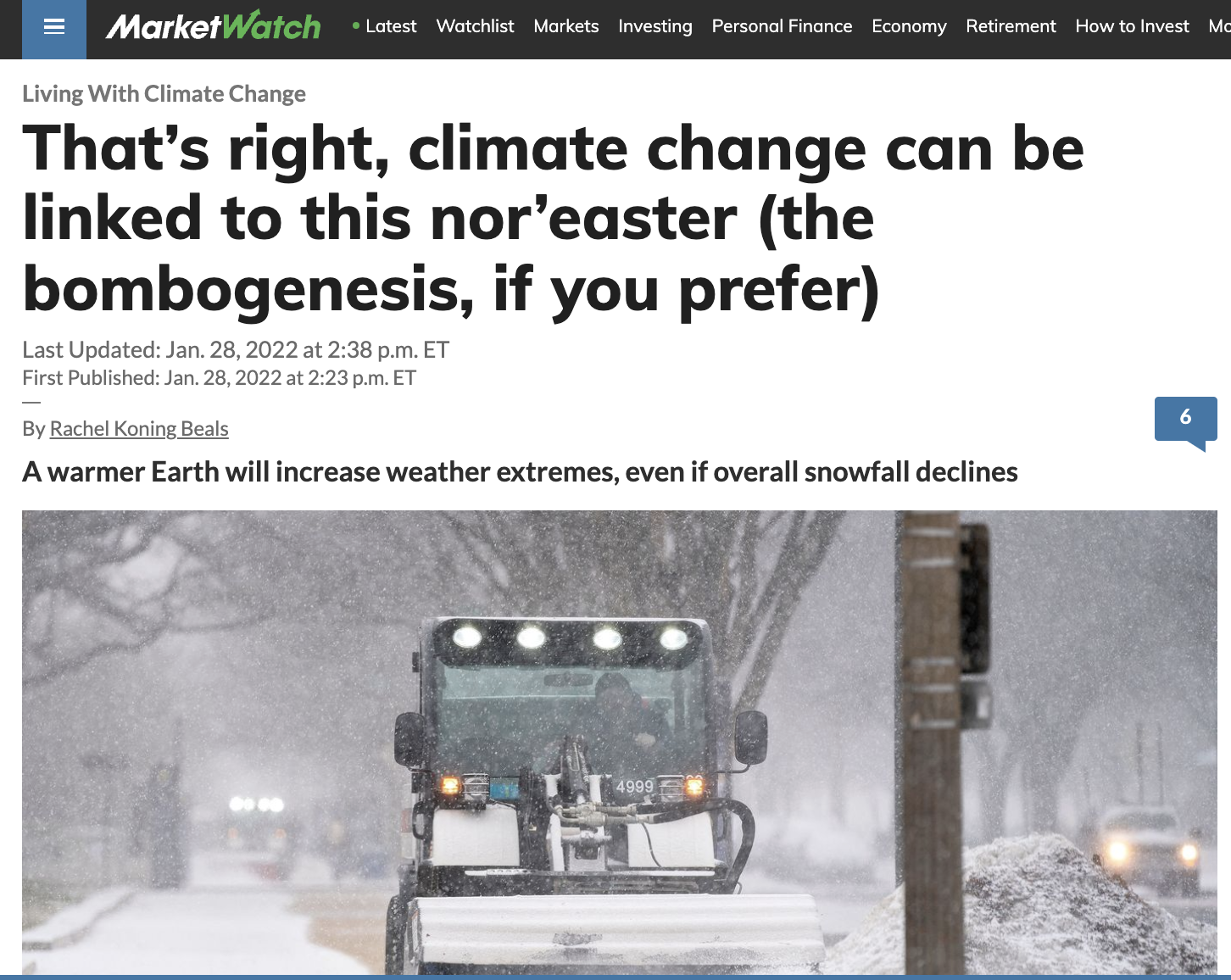
By Rachel Koning Beals
A warmer Earth will increase weather extremes, even if overall snowfall declines … That’s not the sound of a howling wind — it’s thousands of climate-change scientists clapping back at the idea that the nor’easter about to blanket several states refutes global-warming warnings. A powerful winter storm was forecast for the mid-Atlantic and Northeast from Friday night into Saturday, encasing Virginia to Maine in blizzard conditions. Heavy snowfall and its accompanying chilly conditions often spark remarks to the tune of “so much for global warming” or other collective shoulder-shrugging that frustrates environmental groups and the scientific community. Scientists offer some clarity on a blizzards and global warming paradox.
Although climate change is expected to lower the amount of overall snow the U.S. receives on an annual basis, it’s going to increase the number of nor’easters we see annually, according to a recent report from the federally funded National Center for Atmospheric Research’s nonprofit arm, the University Corporation for Atmospheric Research, or UCAR.
#
Reality Check:
Flashback 2021: Climate activists blame record cold/snow on warming! – ‘How global warming also brings colder weather’ – Climate Depot RebuttalReality Check:Record Cold/Snow caused by ‘global warming’?! Climate activists predict both outcomes — more snow, less snow — so they are never wrong – Book excerpt
More climate nonsense from the @nytimes . During the 1970’s, the identical weather patterns were blamed by climate scientists on global cooling and expanding sea ice. We have always had extreme weather and @khayhoe has been consistently wrong about everything. @Revkin pic.twitter.com/pkMHL6lfnM
— Tony Heller (@Tony__Heller) February 16, 2021
Book excerpt from The Politically Incorrect Guide to Climate Change
“Predictions of less snow were ubiquitous by global warming scientists. But once that prediction failed to come true, the opposite of what they predicted instead became—what they expected. How did global warming scientists explain record snow after prediction less snow? Easy. More snow is now caused by global warming. ‘Snow is consistent with global warming, say scientists’ blared a UK Telegraph headline in 2009. The Financial Times tried to explain “Why global warming means…more snow” in 2012…
So no matter what happens, the activists can claim with confidence the event was a predicted consequence of global warming. There is now no way to ever falsify global warming claims.”
Excerpted from the new Amazon ‘best seller’ ‘The Politically Incorrect Guide to Climate Change” By Marc Morano – Regnery Publishing – See: Wash Times front page feature: Morano’s ‘Politically Incorrect Guide to Climate Change’ uses humor to battle alarmists – Available at Amazon & Barnes & Noble & Walmart
Order Your Book Copy Now! ‘The Politically Incorrect Guide to Climate Change’ By Marc Morano
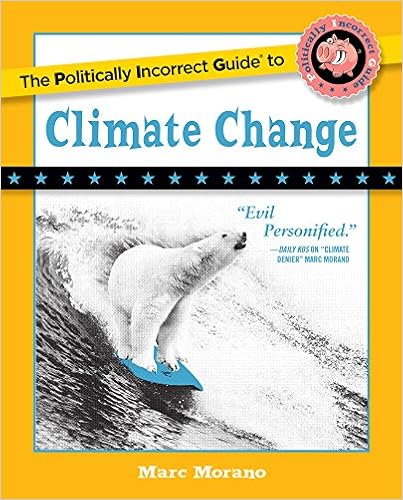
Book Excerpt: Back in 2000, when it was still “global warming,” David Viner, a senior research scientist at the climatic research unit (CRU) of the University of East Anglia (the institution that would be at the epicenter of Climategate), was featured in a news article in the UK newspaper the Independent with the headline, “Snowfalls are now just a thing of the past.” Viner predicted that within a few years winter snowfall would become “a very rare and exciting event. Children just aren’t going to know what snow is.” See: Flashback 2000: ‘Snowfalls are now just a thing of the past’ – ‘Children just aren’t going to know what snow is’ – UK Independent
Another researcher, David Parker, of the UK’s Hadley Centre for Climate Prediction and Research, even went as far as to predict that British children would have only “virtual” experience of snow via films and the Internet.
The predictions of less snow by global warming scientists were ubiquitous—and dead wrong. The current decade, from 2010 forward, is now the snowiest decade ever recorded for the U.S. East Coast, according to meteorologist Joe D’Aleo. Talk about an inconvenient truth.
How did the warmist scientists explain record snow after they had predicted less snow? Easy. More snow is now caused by “climate change.” By 2013, after “global warming” had become “climate change,” snow at unusual times was evidence for the supposed man-made crisis. Senator Barbara Boxer, the chair of the Senate Environment and Public Works Committee claimed. “Yeah, it’s gonna get hot, but you’re also gonna to have snow in the summer in some places.”
Boxer seems to think any weather event can be made to fit the climate change narrative.Environmentalist George Monbiot had already tried to explain away the then record cold and snow in a column titled, “That snow outside is what global warming looks like.” Monbiot did his best to square the circle: “I can already hear the howls of execration: now you’re claiming that this cooling is the result of warming! Well, yes, it could be.” Monbiot asked, “So why wasn’t this predicted by climate scientists? Actually, it was, and we missed it.”
We missed it? Predictions of less snow were ubiquitous by global warming scientists. But once that prediction failed to come true, the opposite of what they predicted instead became—what they expected. How did global warming scientists explain record snow after prediction less snow? Easy. More snow is now caused by global warming.“Snow is consistent with global warming, say scientists” blared a UK Telegraph headline in 2009. The FinancialTimes tried to explain “Why global warming means…more snow” in 2012.
The December 26, 2010, New York Times featured an op-ed with the headline “Bundle Up, It’s Global Warming,” claiming, “Overall warming of the atmosphere is actually creating cold-weather extremes.” Even former Vice President Al Gore, who had claimed in his Oscar-winning film in 2006 that all the snow on Mount Kilimanjaro would melt “within the decade,” got into the act. Never once in An Inconvenient Truth had Gore warned of record cold and increasing snowfalls as a consequence of man-made global warming. As late as 2009, the Environmental News Service was reporting on Gore’s hyping the lack of snow as evidence for man-made global warming: “Gore Reports Snow and Ice Across the World Vanishing Quickly.”
But then, after massive snowstorms hit the United States in 2010, Gore claimed that “increased heavy snowfalls are completely consistent with…man-made global warming.” UN IPCC lead author and Princeton University physicist Michael Oppenheimer had also exploited years of low snowfall totals to drive home the global warming narrative. He was quoted in a 2000 New York Times article: “‘I bought a sled in ’96 for my daughter,’ said Michael Oppenheimer, a scientist at the nonprofit Environmental Defense Fund. ‘It’s been sitting in the stairwell and hasn’t been used. I used to go sledding all the time. It’s one of my most vivid and pleasant memories as a kid, hauling the sled out to Cunningham Park in Queens.’… Dr. Oppenheimer, among other ecologists, points to global warming as perhaps the most significant long-term factor” explaining why, in the words of the New York Times reporter, “Sledding and snowball fights are as out-of-date as hoop-rolling.”
When I confronted Oppenheimer about his sled comment following his appearance at a 2014 Congressional hearing, my interview was cut short. I asked, “In 2000 New York Times, you mentioned you bought your daughter a sled, but she hadn’t been able to use it…”
Oppenheimer’s aide intervened to say, “I’m sorry, but Dr. Oppenheimer has to testify.” ★★★★★He Got the MemoNBC weatherman Al Roker obviously got the “climate change” memo. “This is global warming even though it’s freezing?” Larry King asked Roker in 2015.“Right, well, that’s why I don’t like the phrase ‘Global Warming.’ I like ‘Climate Change,’” the weatherman explained.The message went from global warming causes less snow to climate change causes more snow.“So Boston at this point, is in number two snowiest winter,” Larry King asked just before Boston broke the record for it snowiest winter on record, in 2015. “Is this all part of Climate change?” Roker did not flinch. “I think it is,” he answered.…So no matter what happens, the activists can claim with confidence the event was a predicted consequence of global warming. There is now no way to ever falsify global warming claims. #https://realclimatescience.com/2021/02/washington-post-explains-cold-winters/Tony Heller of Real Climate Science explains:
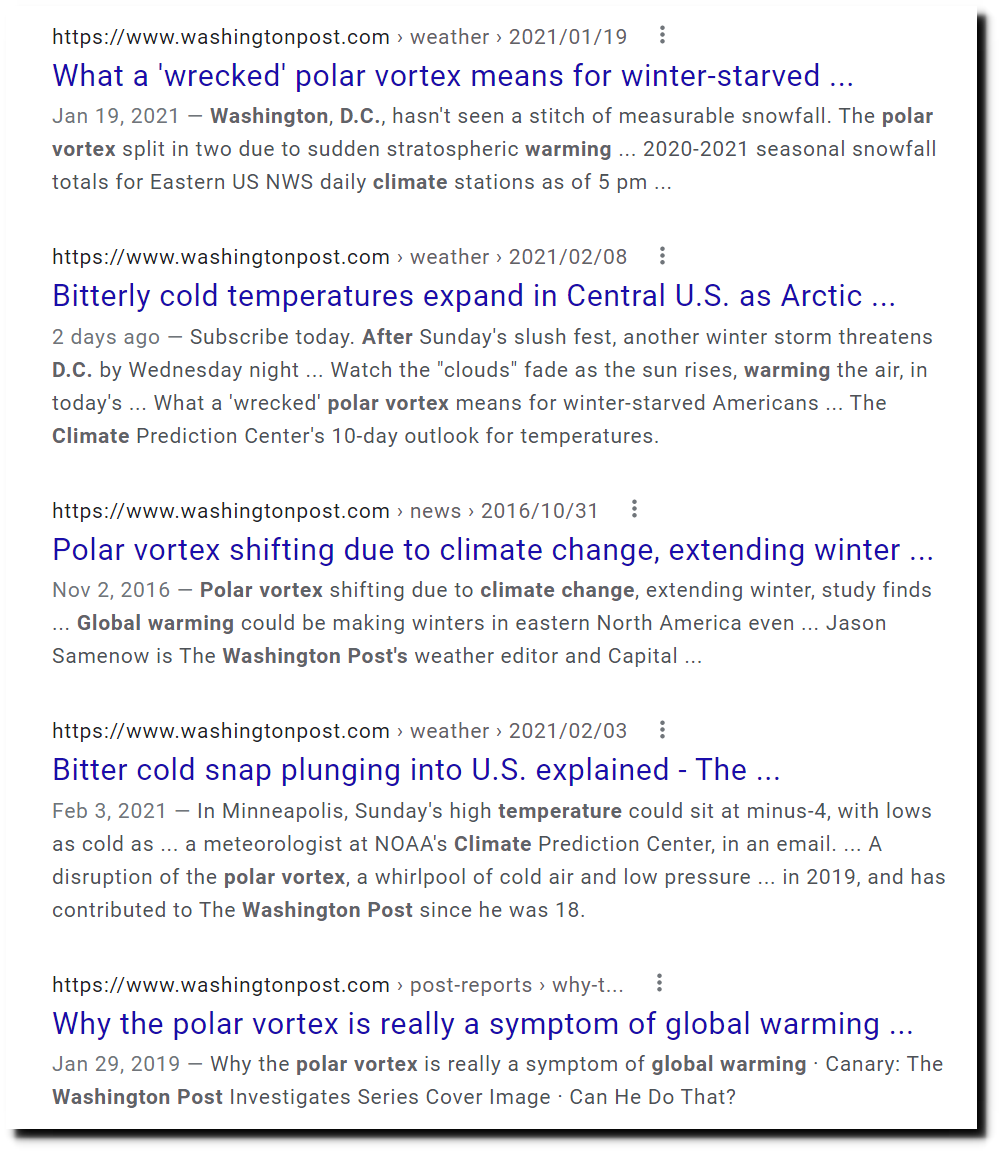
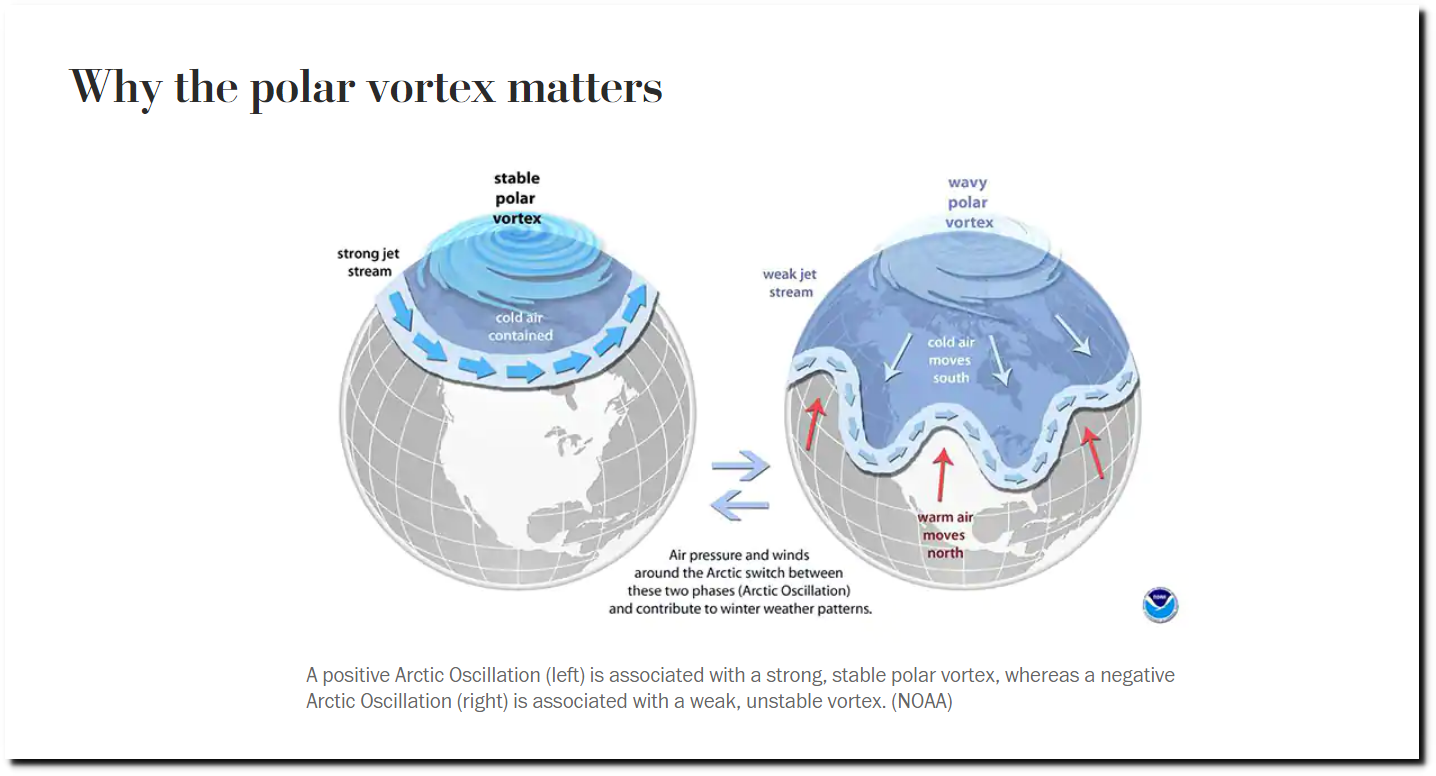
The Washington Post says cold winters are caused by disrupted Polar Vortex, which is caused by global warming. And three weeks ago they said Americans are “winter starved.”
Here is their diagram showing what global warming has done to the Polar Vortex.
What a ‘wrecked’ polar vortex means for winter-starved Americans
Here is the same diagram from Science News in 1975, which showed what global cooling did to the Polar Vortex.

The Washington Post said colder winters indicated a disastrous new ice age which would begin as early as 2021.
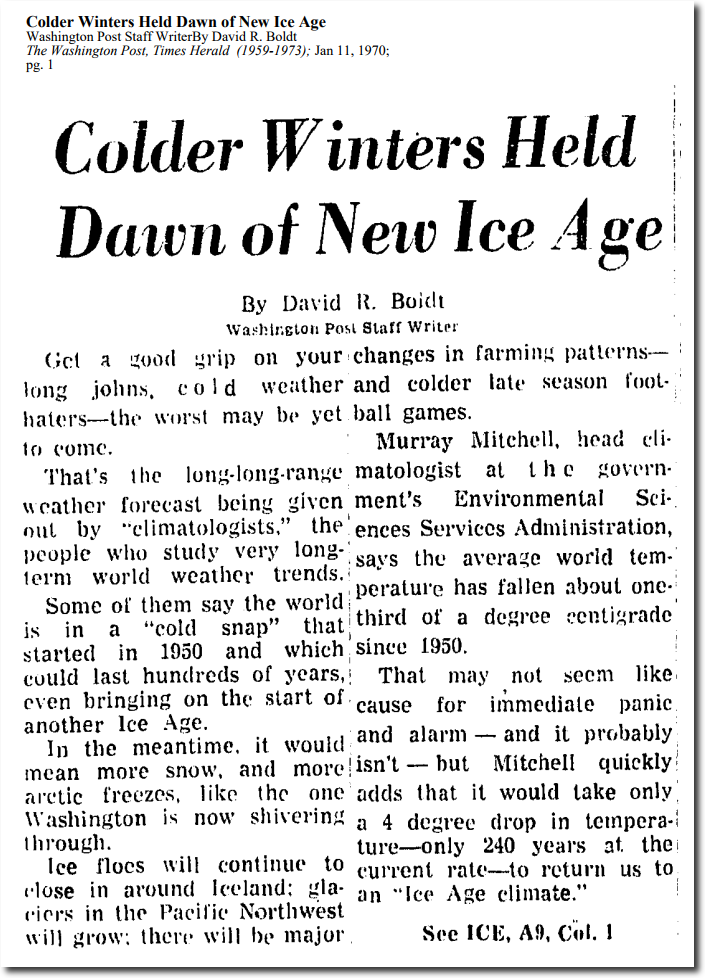
washingtonpost.com – search nation, world, technology and Washington area news archives.
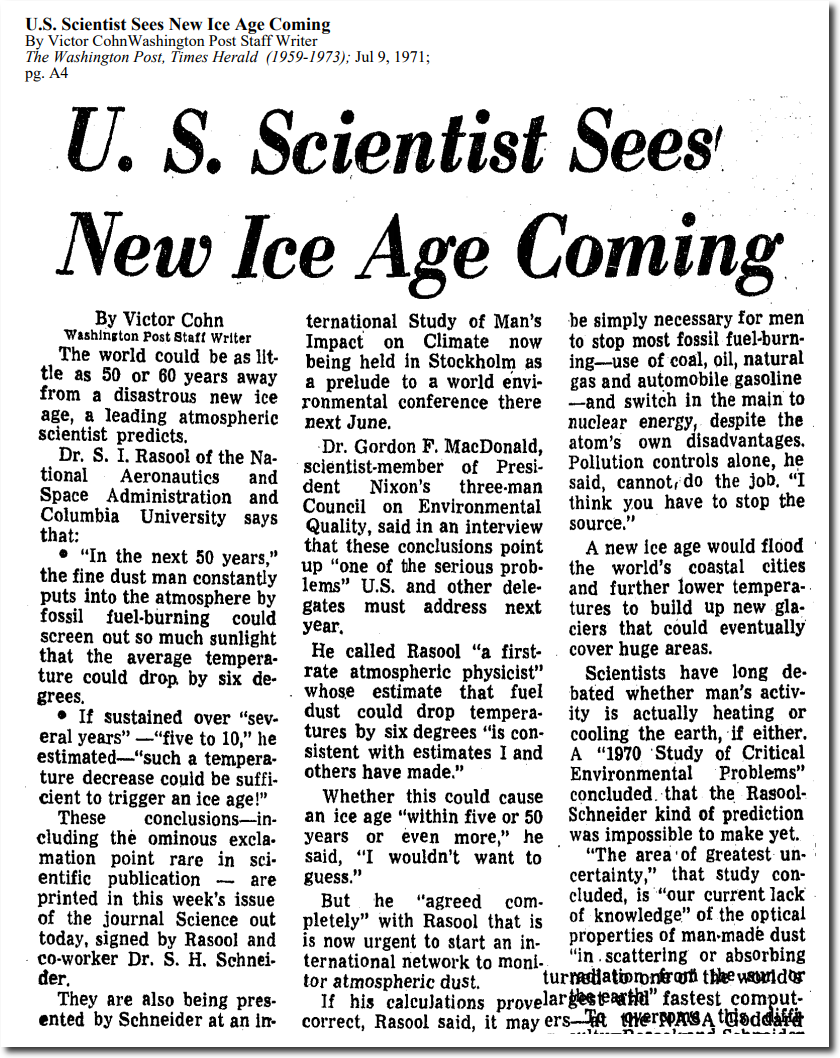
U.S. Scientist Sees New Ice Age Coming
“Winter starved Americans” are facing the coldest February since 1936.
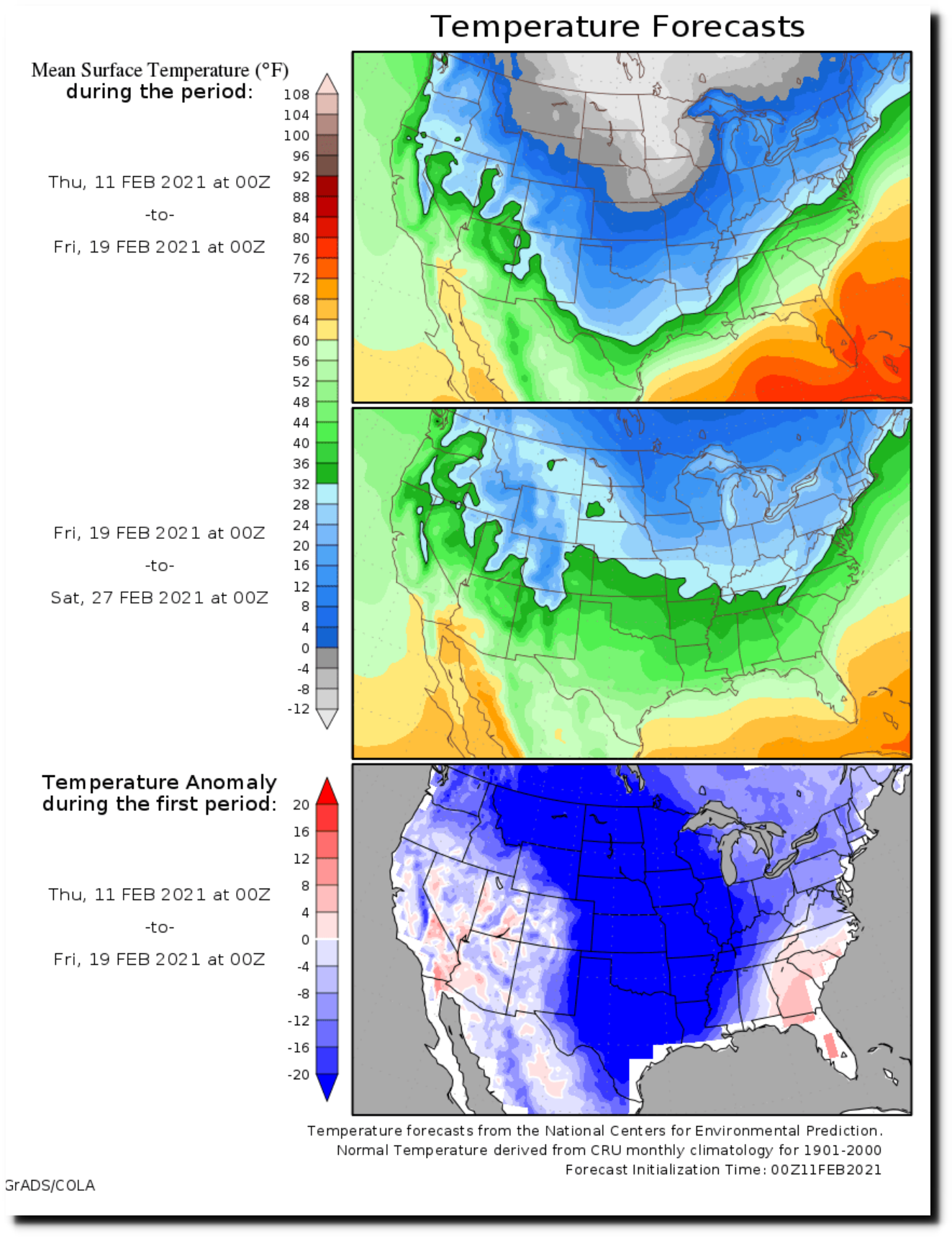
Remember: If the Green New Deal had been implemented when AOC came to Congress in 2019, the snow totals would have be much lower for this snowstorm!
Science!
A top snowfall report of 30.9 inches in Stoughton, Massachusetts. | AccuWeather – https://t.co/BX1GkCEhnb
— Marc Morano (@ClimateDepot) January 30, 2022
via Watts Up With That?
January 30, 2022 at 08:26PM
In previous post, I detailed the contradiction of Belgium wanting to profit from German cheap import while employing the exact same balancing strategy as Germany. I illustrated this by comparing German electricity export and prices on days of the lowest, highest and median output of solar and wind. This showed that when Germany exports its excess electricity, prices are generally low, but at that time Belgium is also busy exporting its excess electricity. And vice versa.
Now you could object that this is not a good representation of the argument of our Green Minister of Energy. Her argument is that nuclear power stands in the way because it can’t modulate its output (enough) to follow the intermittency of solar and wind, sometimes leading to wind power being curtailed and/or exported at times when Germany is exporting abundant and cheap electricity. The goal of the Minister is to get rid of nuclear power generation so Belgium doesn’t need to curtail its own production when it is sunny and windy, while also being ready to profit from cheap electricity from Germany. Ka-ching!
That is true, decommissioning nuclear will allow for more cheap import from Germany, but this will only be temporary and lead to an even bigger problem…
Let me first say that I can understand this reasoning. Nuclear power meets on average about half of our electricity demand. If nuclear isn’t there anymore, this will lead to a big gap that can be filled in with more flexible power sources (natural gas) and import. When there is a lot of solar and wind, natural gas power plants can go out of the way and solar & wind can produce uninterrupted, so no electricity needs to be curtailed or exported. Because nuclear power will only be partly replaced with natural gas, there will still be a deficit that could allow for the import from Germany at pretty low to negative prices. That all is true.
The downside of this is that Belgium will be structurally dependent on import, not only when there is a lot of sun and wind (summer), but worse, also when there isn’t and we need a lot of electricity (winter). Unfortunately, these two will not compensate each other. Remember, the output of solar and wind forms a “skewed” distribution, from plenty of output in summer to a minute output in winter. This is the graph that I recreated based on a similar graph from the Netherlands (annotated with the dates of the lowest and highest production):

In this post, I will focus on both ends of this graph and see what was happening during those two days and I will also see how this will play out when I increase solar and wind capacity to the values expected in 2030.
On the one end, there is November 16 that was the day with the lowest electricity production from solar and wind in the period January 1 until November 30, 2021 in Belgium (and also in the Netherlands). Now I also have access to the December 2021 data: November 16 is still the day with the lowest production in 2021. None of the days in December had a lower production than November 16.
On the other end is May 21, that was the day with the highest electricity production from solar and wind in Belgium in 2021.
I can also make a projection of what the electricity production by solar and wind would be in 2030 in the same situation. It is expected that capacity of solar in 2030 would be 11 GWp, offshore wind 4 GWp and onshore wind 3.5 GWp. That is 2.3x, 1.8x and 1.3x the current capacity. If I multiply the current values with these multipliers and put both days side-by-side, then I get this different view of the “skewness” of solar and wind production:

[For those who want to know the relation between the first and the second graph: the first graph shows the daily production and the second the quarter hourly measurement over the day. If you make the sum of all values of the thick orange line of the second graph, divide that by 4 (quarter hour → hour) and divide again by 1,000 (MW → GW), then you get the values of the first graph (110 GWh for May 21 and 4.7 GWh for November 16).]
This graph shows the huge difference in production between the two days. The production on November 16 came barely loose from the x-axis while production on May 21 met a large chunk of demand. The discrepancy between production and demand is also somewhat visible (the difference would even be greater when the day of highest demand would be a summer day).
Finally and most interestingly for this post, there is a huge difference in projected production when adding the expected output of the capacity expected in 2030. The November 16 scenario shows only barely more production while production on May 21 promptly exceeded demand roughly between 9 AM and 5 PM. This is not hard to understand. Multiply a small number by for example 2 and the result will still be a small number. Multiply a large number by 2 and it will be an even larger number.
On the one hand, when increasing the capacity of solar and wind, production of electricity by solar and wind will evolve into a situation where that production will exceed demand when it is sunny and windy. Therefor loosing the ability to import cheap electricity from abroad rather quickly and ending up where we are now. On the other hand, the gaps will stay large for quite a while and they generally occur at times of higher demand (winter) and therefor Belgium will have to rely more on import of (expensive) electricity from abroad. This at times when the neighbor countries that employ the same strategy will run into the same issues and want to import electricity themselves.
We are screwed…
via Trust, yet verify
January 30, 2022 at 04:40PM
A couple of posts a week ago at this site on the subject of the enormous storage requirements of a fully wind/solar electricity generation system attracted several commenters who confidently asserted that a fully wind/solar energy generation system will prove cheaper than fossil fuels as soon as it is given a real chance. I invited those commenters to provide their own detailed calculations of how much storage it would take to get a fully wind/solar electric generation system through a year without fossil fuel backup with real-world weather conditions, but so far none of them have taken up my invitation. While waiting for to hear from those people, the most serious effort I have seen to estimate the storage requirements and cost of a fully wind/solar/battery electricity system for the United States, with everything electrified, is Ken Gregory’s workup at Friends of Science. Gregory’s estimated cost (rounded) is around $400 trillion.
But meanwhile, the really smart people — or perhaps I should say, the really, really smart people — have a different approach. These people — who, as mentioned, are really, really smart — have figured out a much easier and quicker way to eliminate the use of fossil fuels and get right to the holy grail of “net zero” emissions. That method is to force large corporations, through capital allocations and shareholder votes, to pledge to achieve the “net zero” target.
Leading the charge is a guy named Larry Fink. Have you heard of him? He is the Chairman and CEO of BlackRock, a mutual fund company with some $10 trillion under management. That $10 trillion would appear to put BlackRock in the number one position among U.S. money managers. If you have any retirement savings, as likely as not some or all of them are managed by BlackRock. Oh, and they get to determine how to vote the shares representing your money when it comes time to elect directors or approve various propositions that come before shareholders. Here is a picture of Mr. Fink from BlackRock’s website:

In January 2020 Fink created something of a stir when he sent out simultaneous letters to all public company CEOs and all BlackRock investors announcing a commitment to “sustainable” investment. That commitment included both investing massively in things like the “renewable power infrastructure business, which invests in the private markets in wind and solar power; green bond funds; LEAF, the industry’s first environmental sustainability-focused cash management strategy,” etc., etc. etc.; and also using the power of shareholder votes to force managements to make commitments to “sustainability”:
This year, we will be mapping our engagement priorities to specific UN Sustainable Development Goals, such as Gender Equality and Affordable and Clean Energy.
Fink’s 2022 letter to CEOs, just out, doubles down, making clear that BlackRock expects every company it invests in to get aboard the “net zero” train:
Every company and every industry will be transformed by the transition to a net zero world. The question is, will you lead, or will you be led? . . . Engineers and scientists are working around the clock on how to decarbonize cement, steel, and plastics; shipping, trucking, and aviation; agriculture, energy, and construction. I believe the decarbonizing of the global economy is going to create the greatest investment opportunity of our lifetime. It will also leave behind the companies that don’t adapt, regardless of what industry they are in.
Let me for the moment just pass over the concept of “decarbonized” plastics. (What the hell does Fink think plastics are made of?). But we do know that Fink is really, really smart, and therefore he must know that by “decarbonizing” of these industries, he means converting them all to electric power, with the electricity generated only by the wind and the sun. Does he have any idea how much excess generation capacity and battery storage might be required to make that happen, or how much that might cost? Or how much that might in turn drive up the costs of all of these things? Or whether such vastly increased costs might impact the viability of any of these “sustainable” investments? You won’t find anything on those subject in this letter. Hey, we are dealing here with an existential crisis of the planet that makes the application of critical thinking to any of these matters strictly off limits.
And I don’t mean to suggest that Mr. Fink is alone in his delusions. Look at the websites of any of the other big money managers like Vanguard, Fidelity, JP Morgan, Morgan Stanley, Bank of America, etc., and you will find them all making similar noises (although I think that BlackRock is the farthest-gone of the bunch).
Which brings us to how this all plays out at the upper reaches of the public companies that actually produce and deliver the things we are trying to consume. The Wall Street Journal on January 26 reports on one resolution that just got approved by the shareholders of Costco.
Costco Wholesale Corp. shareholders voted Thursday for a proposal that called on the retailer to set out plans to reach net-zero greenhouse-gas emissions by 2050 or sooner, in line with scientific recommendations to limit global warming to 1.5 degrees Celsius. The resolution included difficult-to-track emissions in Costco’s supply chain, known as Scope 3 emissions, which the company said were the “overwhelming bulk” of its emissions.
You can be quite sure that BlackRock — and probably all those other big money managers, controlling the votes based on everyone’s retirement savings — voted for this. Now, Costco is a merchant that basically buys stuff made by others, transports it into stores or warehouses, and resells it to customers. What exactly are they supposed to do to change the “carbon emissions” content of that frozen chicken or chair or blender or whatever it is you are buying from them? Well, their shareholders, via these genius intermediaries, have now decreed that they had better start figuring it out.
And don’t think it’s just Costco. Further from the same piece in the Journal:
U.S. companies are facing 57 votes on greenhouse-gas emissions this year, . . . Ms. Welsh said. Last year, there were 10 such votes.
But surely the shareholders are smart enough to figure this out and vote this craziness down? No, of course not, because in practice their votes are controlled by the BlackRocks, Vanguards, Fidelities, etc., etc.:
Support for shareholder proposals on greenhouse-gas emissions rose to an average of around 59% last year, compared with 25% in 2017, according to Heidi Welsh, director of the nonprofit Sustainable Investments Institute.
Eventually we will come up against Stein’s Law, propounded by economist Herbert Stein in 1986: “If something cannot go on forever, it will stop.”
via Watts Up With That?
January 30, 2022 at 04:33PM
 Iowa Climate Science Education