
Scientists admit that 3 different Greenland Summit (GISP2) temperature reconstruction “strategies” produce 3 different paleoclimate temperature results. The reconstructions chosen as the most “robust” are therefore the ones that align best with the authors’ presuppositions.
In a new study published in Quaternary Science Reviews scientists (Döring and Luenberger, 2022) report they reject a reconstruction of Greenland Summit temperatures that shows it has cooled ~4°C since Roman times (shown below as the red trend line, extended to 2000 C.E.).
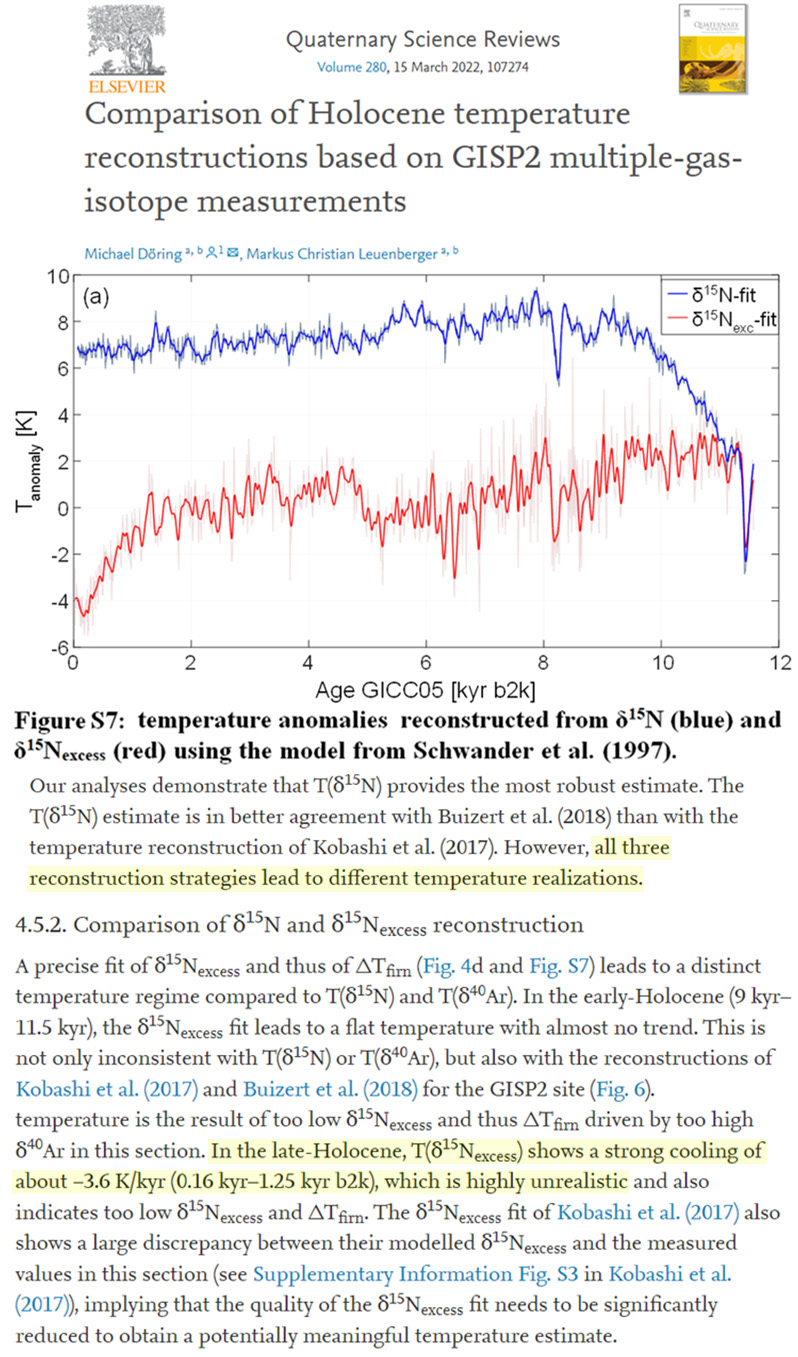
Image Source: Döring and Luenberger, 2022
They claim this temperature reconstruction showing cooling into the recent century is “highly unrealistic”. It doesn’t support the claims of an alarmingly rapid and unprecedented warming of the modern Arctic. It also doesn’t align with two other GISP2 reconstructions that use different model “strategies” and thus produce different temperature results.
Had this reconstruction depicted unusual warming in the last century (to 2000 C.E.), it would likely not have been rejected. This may demonstrate the selection bias inherent in paleoclimate studies. Scientists are not above tendentiously tossing out the data that do not conform to what they believe to be truth.
For example, Neftel et al. (1982) had published a paper in the journal Nature documenting a CO2 rise of about 230 ppm (~190 ppm to 430 ppm) from roughly 12,000 to 10,000 years ago for a Greenland ice core. The CO2 record showed fluctuations of >100 ppm throughout the Holocene. Then, using the very same data from the same ice core a few years later, Neftel et al. (1988) only displayed the CO2 readings that aligned with the narrative that CO2 only fluctuated between 250 and 280 ppm between 12,000 and 5,000 years ago. The 390, 410, and 430 ppm CO2 measurements still existed, but they were not shown in the more recent publication.
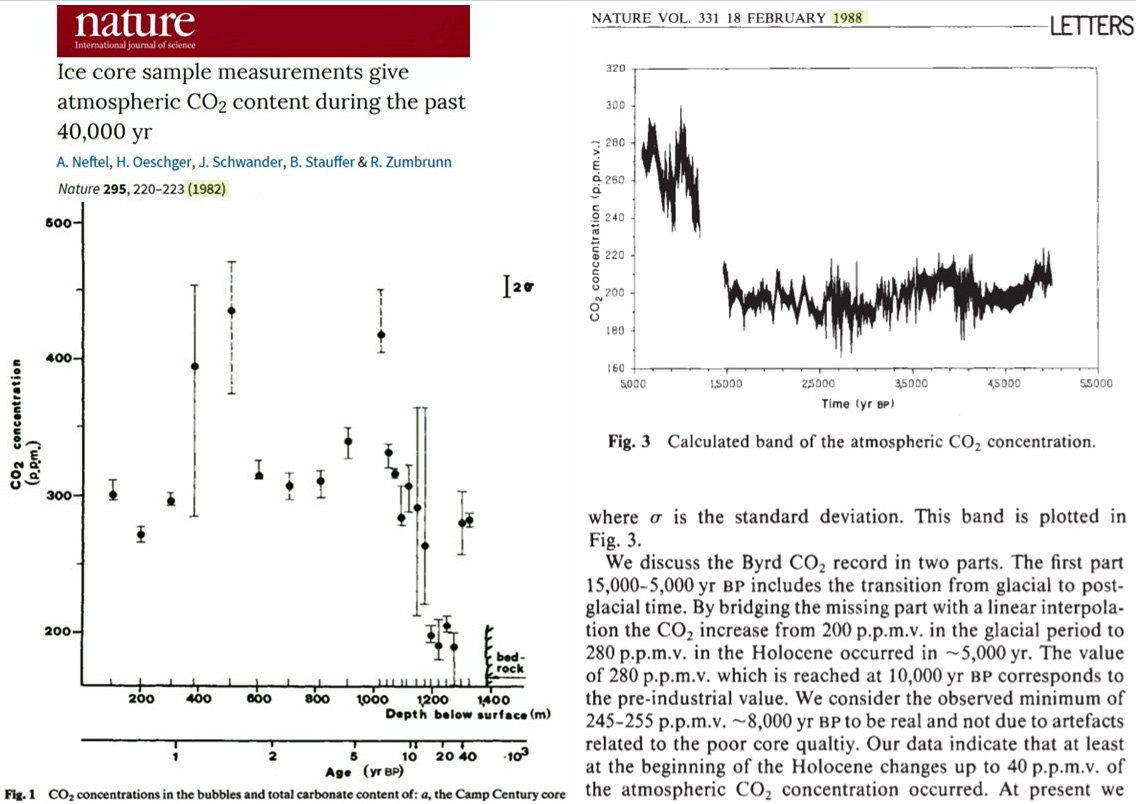
Image Source: Neftel et al. (1982) and Neftel et al. (1988)
The ~4°C Greenland Summit cooling since the Roman Warm Period depicted in the Döring and Luenberger reconstruction is consistent with other reconstructions for this region documenting a conspicuous Late Holocene expansion of Greenland’s ice volume and ice area extending into the modern period (Mikkelsen et al., 2018, Weiser et al., 2021, Nielsen et al., 2018). These reconstructions suggest Mid-Holocene temperatures may have been “more than 5°C above present” across Greenland.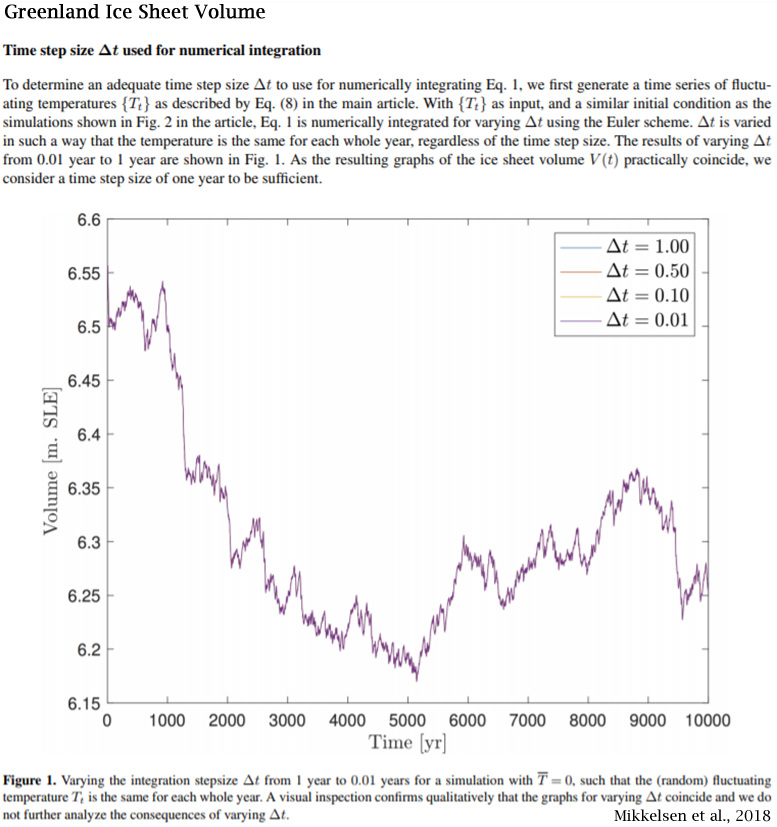
Image Source: Mikkelsen et al., 2018
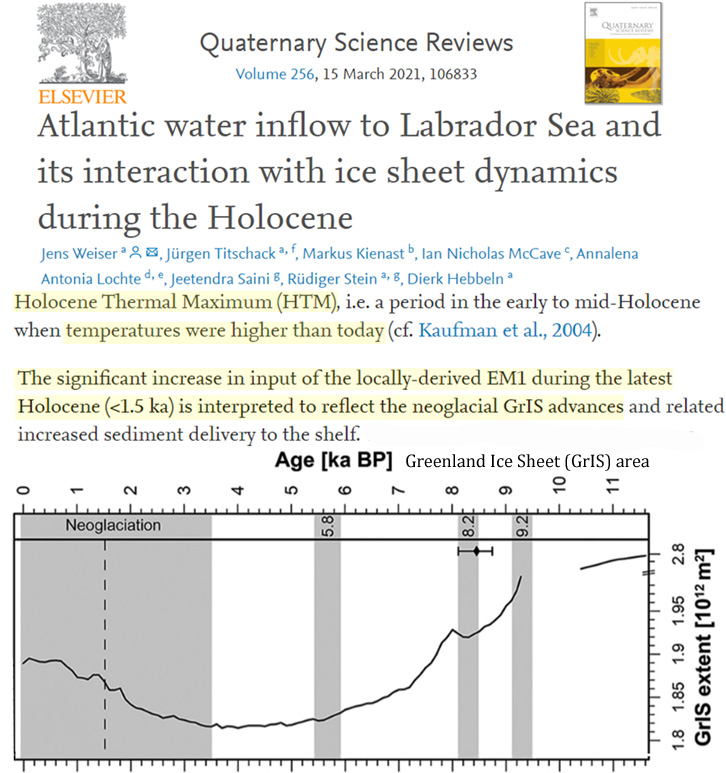
Image Source: Weiser et al., 2021
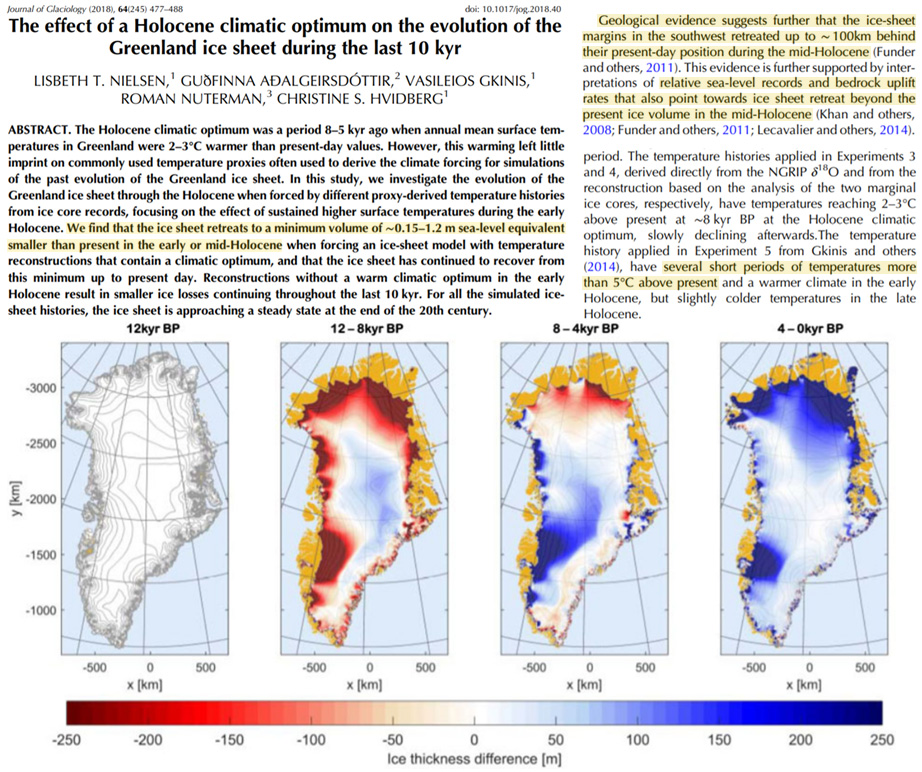
Image Source: Nielsen et al., 2018
Other temperature reconstructions indicate modern Greenland temperatures are 6-8°C colder than they were during the Early and Middle Holocene (Allan et al., 2021), and there were as-warm or warmer temperatures during the 1600s to 1800s (Krawczyk et al., 2021) in southwest Greenland, with a “slightly decreasing trend” in recent decades.
Thus, a progressive cooling for the last 2,000 years continuing into the 21st century may be no less “realistic” than other Greenland temperature reconstructions that depict less modern era cooling.
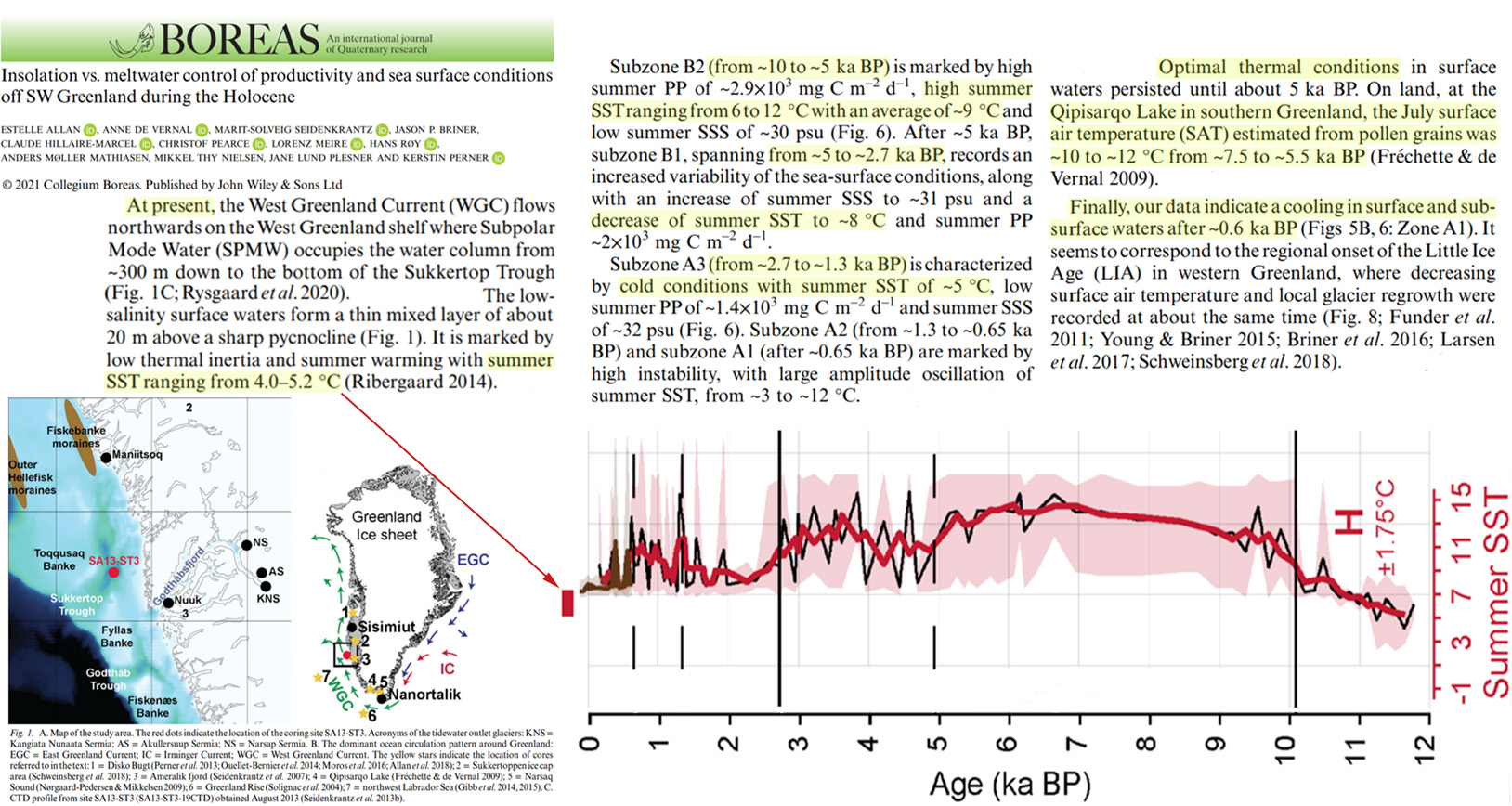
Image Source: Allan et al., 2021
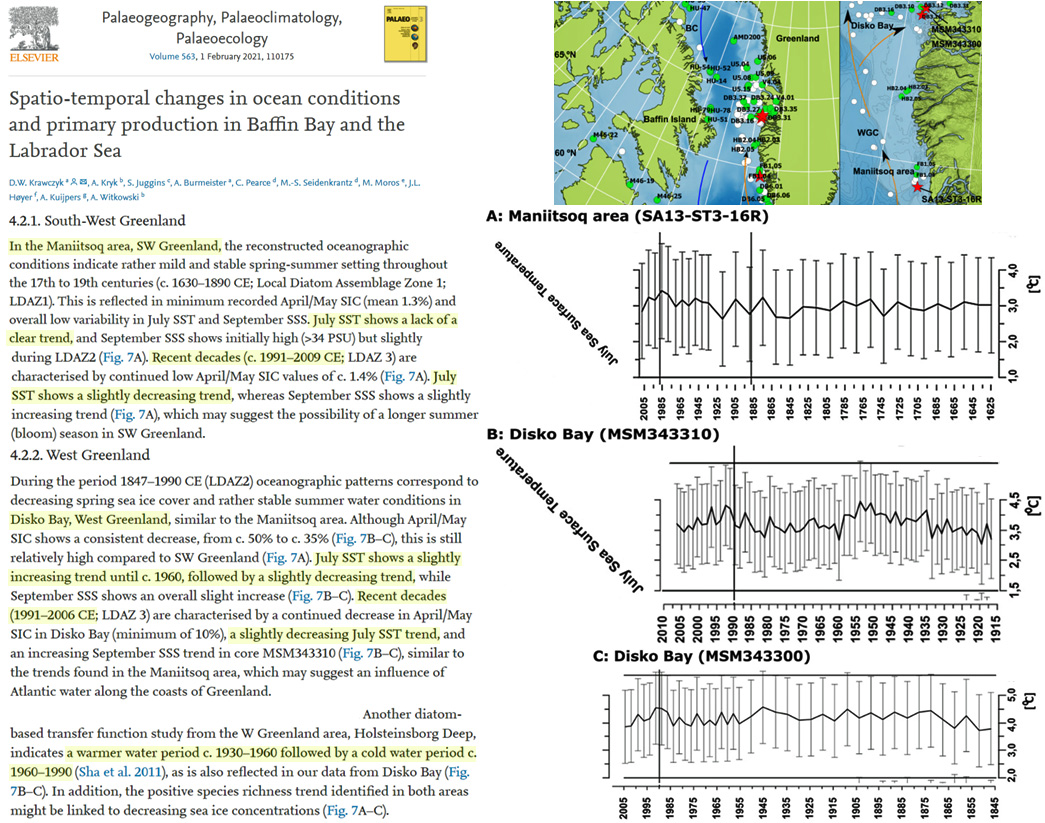
Image Source: Krawczyk et al., 2021
via NoTricksZone
March 17, 2022 at 11:21AM
 Iowa Climate Science Education