Month: April 2022

Energy bills to rise in 2025 to pay for unproven hydrogen gas

By Paul Homewood

.


h/t Ian Magness

.


What’s the definition of insanity?


Screenshot 2022-04-14 102535

Household energy bills will rise in three years to fund the development of unproven hydrogen gas which may only be used in a fraction of homes, despite concerns it could worsen fuel poverty.

Hydrogen, which is made from natural gas and used in heavy industry, can be produced from green electricity or from natural gas or have its emissions captured to make it a cleaner fuel.

The Government wants to produce 10Gw of “low carbon” hydrogen by 2030 as part of its strategy to boost energy independence.

Neighbourhood trials of its use to replace natural gas in homes will start from next year, with households that refuse to take part facing having their gas forcibly turned off.

But experts warn that it is unlikely to be a large-scale solution to decarbonising heating because of the high costs of production and its demand for use in heavy industry.

Run into billions

A previous government strategy has suggested that it could be used to heat just 10 per cent of the country’s homes.

But the Government has said it wants to put the costs of developing hydrogen, which could run into billions, on to energy bills from 2025.

The scheme will be modelled on subsidies that were key to boosting the UK’s offshore wind industry over the past decade, which are levied on electricity bills.

This is despite concerns that it could worsen fuel poverty and may never be used widely in home heating.

The Government has said it will make a decision on hydrogen as a replacement for gas in boilers by 2026.

But energy minister Lord Martin Callanan has said that using hydrogen as a green alternative in boilers is “pretty much impossible” and it was more likely to be used by trains, HGVs and industry.

Need to replace meters

Homes using pure hydrogen will need to replace smart meters, hobs and other infrastructure, with an estimated cost of more than £1,000 per household.

It is unclear what the impact of the levy would be on energy bills. An initial £100 million of funding for green hydrogen production capacity in 2023 will come from general taxation, with the levy applied from 2025.

Energy expert Juliet Phillips, from think tank E3G, said funding hydrogen through a levy on energy bills would be a "serious misjudgment".

“In the middle of a gas crisis which has left millions of families with crippling energy bills, it seems to be totally misreading the mood of the room to consider adding new levies to cover the cost of shiny projects which don’t necessarily represent the most cost-effective way to achieve net zero goals,” she said.

“Hydrogen is expensive to produce and less efficient in most instances than other ways of cutting carbon emissions – for instance through direct electrification, or simple energy saving measures.”

Simon Francis, coordinator of the End Fuel Poverty Coalition, said: "It beggars belief that the Government is trying to cook up new ways to increase energy bills at a time when people are already struggling.

"With even more price rises expected this winter, the Government should be looking at ways of cutting bills, not increasing them.

"And while hydrogen may appear a good idea on paper, we need to be careful. Some hydrogen production uses fossil gas in the process which could only prolong our reliance on volatile gas markets."

https://www.telegraph.co.uk/news/2022/04/12/energy-bills-rise-2025-pay-unproven-hydrogen-gas/

What is interesting here is that all these so-called experts are beginning to wake up to what I and many others have been saying for years – that hydrogen is hugely expensive to produce, will involve spending tens of billions to roll out, and cannot supplant natural gas in bulk.

In particular, the much touted green hydrogen will never be more than a niche operation. Maybe enough to fuel HGVs and industrial needs at best.

If the government really does want to develop hydrogen further, it should have the courage to put the cost onto general taxation, and tell the public which taxes it will raise, or which items of public spending it will cut, in order to fund it.

via NOT A LOT OF PEOPLE KNOW THAT

https://ift.tt/Ncv2aBR

April 14, 2022 at 04:42AM

Webb Telescope’s Coldest Instrument Reaches Operating Temperature

From NASA

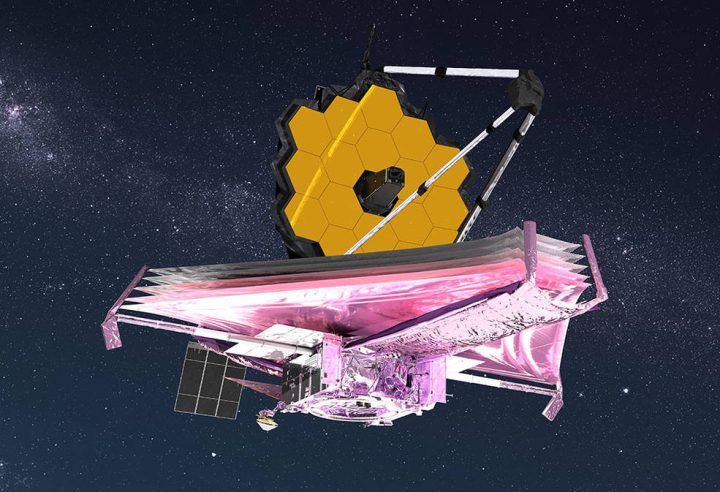
In this illustration, the multilayered sunshield on NASA’s James Webb Space Telescope stretches out beneath the observatory’s honeycomb mirror. The sunshield is the first step in cooling down Webb’s infrared instruments, but the Mid-Infrared Instrument (MIRI) requires additional help to reach its operating temperature. Credits: NASA GSFC/CIL/Adriana Manrique Gutierrez

NASA’s James Webb Space Telescope will see the first galaxies to form after the big bang, but to do that its instruments first need to get cold – really cold. On April 7, Webb’s Mid-Infrared Instrument (MIRI) – a joint development by NASA and ESA (European Space Agency) – reached its final operating temperature below 7 kelvins (minus 447 degrees Fahrenheit, or minus 266 degrees Celsius).

Along with Webb’s three other instruments, MIRI initially cooled off in the shade of Webb’s tennis-court-size sunshield, dropping to about 90 kelvins (minus 298 F, or minus 183 C). But dropping to less than 7 kelvins required an electrically powered cryocooler. Last week, the team passed a particularly challenging milestone called the “pinch point,” when the instrument goes from 15 kelvins (minus 433 F, or minus 258 C) to 6.4 kelvins (minus 448 F, or minus 267 C).

“The MIRI cooler team has poured a lot of hard work into developing the procedure for the pinch point,” said Analyn Schneider, project manager for MIRI at NASA’s Jet Propulsion Laboratory in Southern California. “The team was both excited and nervous going into the critical activity. In the end it was a textbook execution of the procedure, and the cooler performance is even better than expected.”

The low temperature is necessary because all four of Webb’s instruments detect infrared light – wavelengths slightly longer than those that human eyes can see. Distant galaxies, stars hidden in cocoons of dust, and planets outside our solar system all emit infrared light. But so do other warm objects, including Webb’s own electronics and optics hardware. Cooling down the four instruments’ detectors and the surrounding hardware suppresses those infrared emissions. MIRI detects longer infrared wavelengths than the other three instruments, which means it needs to be even colder

Another reason Webb’s detectors need to be cold is to suppress something called dark current, or electric current created by the vibration of atoms in the detectors themselves. Dark current mimics a true signal in the detectors, giving the false impression that they have been hit by light from an external source. Those false signals can drown out the real signals astronomers want to find. Since temperature is a measurement of how fast the atoms in the detector are vibrating, reducing the temperature means less vibration, which in turn means less dark current.

MIRI’s ability to detect longer infrared wavelengths also makes it more sensitive to dark current, so it needs to be colder than the other instruments to fully remove that effect. For every degree the instrument temperature goes up, the dark current goes up by a factor of about 10.

Once MIRI reached a frigid 6.4 kelvins, scientists began a series of checks to make sure the detectors were operating as expected. Like a doctor searching for any sign of illness, the MIRI team looks at data describing the instrument’s health, then gives the instrument a series of commands to see if it can execute tasks correctly. This milestone is the culmination of work by scientists and engineers at multiple institutions in addition to JPL, including Northrop Grumman, which built the cryocooler, and NASA’s Goddard Space Flight Center, which oversaw the integration of MIRI and the cooler to the rest of the observatory.

“We spent years practicing for that moment, running through the commands and the checks that we did on MIRI,” said Mike Ressler, project scientist for MIRI at JPL. “It was kind of like a movie script: Everything we were supposed to do was written down and rehearsed. When the test data rolled in, I was ecstatic to see it looked exactly as expected and that we have a healthy instrument.”

There are still more challenges that the team will have to face before MIRI can start its scientific mission. Now that the instrument is at operating temperature, team members will take test images of stars and other known objects that can be used for calibration and to check the instrument’s operations and functionality. The team will conduct these preparations alongside calibration of the other three instruments, delivering Webb’s first science images this summer.

“I am immensely proud to be part of this group of highly motivated, enthusiastic scientists and engineers drawn from across Europe and the U.S.,” said Alistair Glasse, MIRI instrument scientist at the UK Astronomy Technology Centre (ATC) in Edinburgh, Scotland. “This period is our ‘trial by fire’ but it is already clear to me that the personal bonds and mutual respect that we have built up over the past years is what will get us through the next few months to deliver a fantastic instrument to the worldwide astronomy community.”  

More About the Mission

The James Webb Space Telescope is an international program led by NASA with its partners, ESA and the Canadian Space Agency.

MIRI was developed through a 50-50 partnership between NASA and ESA. JPL leads the U.S. efforts for MIRI, and a multinational consortium of European astronomical institutes contributes for ESA. George Rieke with the University of Arizona is the MIRI science team lead. Gillian Wright is the MIRI European principal investigator.

Laszlo Tamas with UK ATC manages the European Consortium. The MIRI cryocooler development was led and managed by JPL, in collaboration with Northrop Grumman in Redondo Beach, California, and NASA’s Goddard Space Flight Center in Greenbelt, Maryland.

For more information about the Webb mission, visit:

https://www.nasa.gov/webb

via Watts Up With That?

https://ift.tt/eWCKb8L

April 14, 2022 at 04:15AM

‘We’re all in trouble’ – Wind turbine makers selling at a loss

By Paul Homewood


h/t Joe Public


More evidence that low wind prices at auctions are unsustainable:


 image

Raw material and logistics inflation coupled with downward price pressures from auctions have led to an unsustainable situation where wind OEMs are selling at a loss, with the sector unable to deliver Europe’s planned tripling of wind capacity by 2030, industry leaders have warned.

“The state of the supply chain is ultimately unhealthy right now,” GE Renewable Energy chief executive for onshore wind, Sheri Hickok, told a panel at the WindEurope 2022 conference in Bilbao on Tuesday.

“It is unhealthy because we have an inflationary market that is beyond what anybody anticipated even last year. Steel is going up three times.”

Steel for offshore wind towers is currently being purchased at over $2,000 per tonne, Hickok gave as example, adding that the prices of copper, carbon and logistics had also soared.

“It is really ridiculous to think how we can sustain a supply chain in a growing industry with these kind of pressures.”

After hefty price hikes last year in the wake of the Covid-19 pandemic “things were higher but stabilising,” Hickok said, but added that with Russia’s war in Ukraine, the entire system had “unhinched” again in the past eight weeks, making it unsustainable at an unprecedented level of uncertainty.

The GE executive said she is very fearful for the entire wind industry ecosystem.

“Right now, different suppliers within the industry are reducing their footprint, they are reducing jobs in Europe,” she explained.

“If the government thinks that on a dime, this supply chain is going to be able to turn around and meet two to three times the demand, it is not reasonable.”

The European Commission’s recent REPowerEU plan, formulated in response to Russia’s invasion of Ukraine, wants wind power capacity to soar from 190GW today to 480GW by 2030.

Destructive loop

Nordex chief executive José Luis Blanco stressed that even before the Ukraine war, the economics in the wind industry had been destroyed due to price pressures from competitive tenders coupled with a low visibility of wind capacity pipelines due to failed government policies.

“We are investing in volumes in trust in market dynamics, then the volume doesn’t come, then a factory is empty, [and then] it is better [to have] some cash flow than no cash flow — and [consequently] the sector enters into a self-destructive loop.”

Blanco also said if Europe wants to triple its wind power capacity, it needs to better support the independence of the supply chain.

Currently, some 85% of the industry’s components are, however, coming from China, he said.

“The energy independence is supported by a supply-chain dependency policy. This a huge risk.”

Blanco was not only referring to rare earths, but said “normal things” such as metallic shafts in turbines, 95% of which are sourced in China.

All onshore OEMs in trouble

Enercon’s new chief executive Jürgen Zeschky went even further, saying “all European onshore OEMs are in trouble.”

Over the past eight years, cost was the only driver for developments, with low levelised costs of energy and low turbine prices driving the whole business, he told WindEurope 2022.

“We have reached a low cost base, but at the price of outsourcing to low-cost countries,” Zeschky admitted.

“If you look at Europe and Germany, we are constantly losing jobs in industry by relocating to other places.”

But the situation has changed fundamentally, he pointed out.

Due to Russia’s war in Ukraine, “we are faced with a situation, where it is not only about cost, but about an independent, resilient and reliable energy situation in Europe”.

To have sustainable energy generation, Europe needs a sustainable industry, and thus has to overcome being constricted to the lowest cost, he explained.

“That needs to change.”

https://www.rechargenews.com/wind/were-all-in-trouble-wind-turbine-makers-selling-at-a-loss-and-in-a-self-destructive-loop-bosses-admit/2-1-1197217

via NOT A LOT OF PEOPLE KNOW THAT

https://ift.tt/maBrVY5

April 14, 2022 at 04:11AM

America’s LNG export potential

The United States can be the source of energy for the free world.

The post America’s LNG export potential appeared first on CFACT.

via CFACT

https://ift.tt/xAVCHzl

April 14, 2022 at 03:58AM