ESG AND GREEN BUSINESS Giant global asset managers have $82 billion in coal projects, $468 billion in oil and gas PUBLISHED WED, APR 20 2022
Catherine Clifford
Giant global asset managers are still dumping tens of billions of dollars into new coal projects and hundreds of billions of dollars into major oil and gas companies.
That’s according to a report out Wednesday from Reclaim Finance, an organization disclosing financial sector investments in fossil fuels.
The report, titled “The Asset Managers Fueling Climate Chaos,” found that collectively 30 asset managers have $82 billion in companies developing new coal projects and $468 billion in 12 major oil and gas companies.
“Is the asset management industry changing its investment practices in line with climate science, reducing investments in coal, oil, or gas expansion? Unfortunately, the answer is an emphatic ‘no,’” Lara Cuvelier of Reclaim Finance said in a statement released alongside the report. “Leading asset managers are kicking the can down the road without even asking companies to stop worsening the climate crisis.”
“Is the asset management industry changing its investment practices in line with climate science, reducing investments in coal, oil, or gas expansion? Unfortunately, the answer is an emphatic ‘no,’” Lara Cuvelier of Reclaim Finance said in a statement released alongside the report. “Leading asset managers are kicking the can down the road without even asking companies to stop worsening the climate crisis.”
OCTOBER 6, 2021 EIA projects accelerating renewable consumption and steady liquid fuels growth to 2050
Today we released our International Energy Outlook 2021 (IEO2021). In the IEO2021 Reference case, which assumes current laws and regulations, we project that strong economic growth and growing populations will drive increases in global energy-related carbon dioxide emissions and energy consumption through 2050. Much of the increase in energy consumption will be met with liquid fuels and renewable energy sources. Natural gas- and coal-fired generation technologies as well as the emerging use of batteries will also prompt increased consumption.
Some key findings of IEO2021 include:
If current policy and technology trends continue, global energy consumption and energy-related carbon dioxide emissions will increase through 2050 as a result of population and economic growth. The industrial and transportation sectors will largely drive the increase in energy consumption. Electric vehicle sales will grow through 2050, causing the internal combustion engine fleet to peak in 2023 for countries that are members of the Organization for Economic Cooperation and Development (OECD) and in 2038 globally. Despite this projected growth in electric vehicle sales, the continued growth in energy consumption will cause global energy-related carbon dioxide emissions to rise through 2050 according to our IEO2021 Reference case.
Morano: They want to cripple national economies. What is Europe now except energy crippled in the face of Vladimir Putin’s aggression? They’re almost helpless because they shut down their own energy and now we have them shutting down their own food supply. This is bonkers Kara. A to Z bonkers! I don’t know how else to use another word to describe what’s happening globally now because of the climate agenda.”
Tipping Point with Kara McKinney on One America News – OAN – Broadcast April 26, 2022
Selected Highlights:
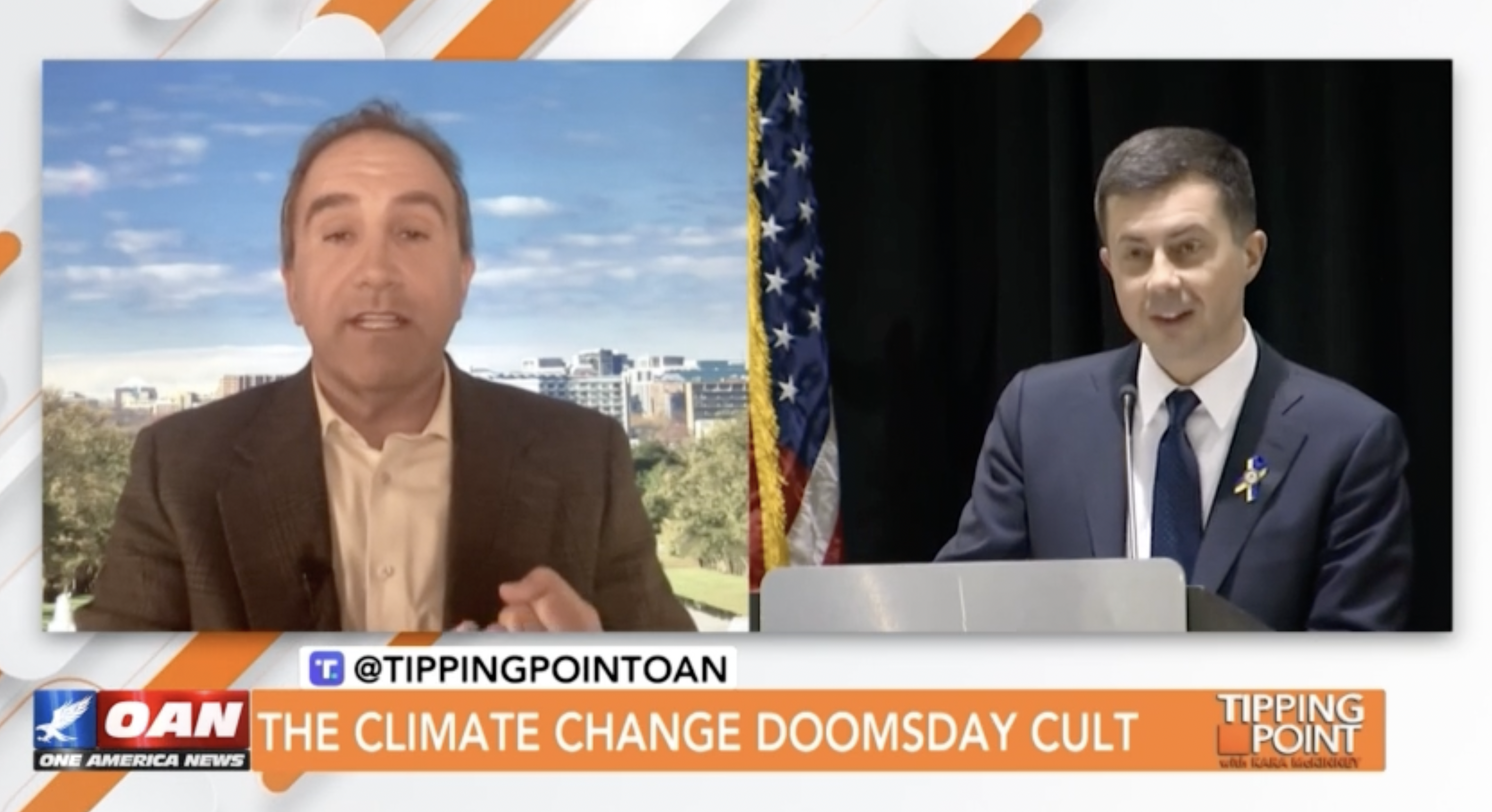
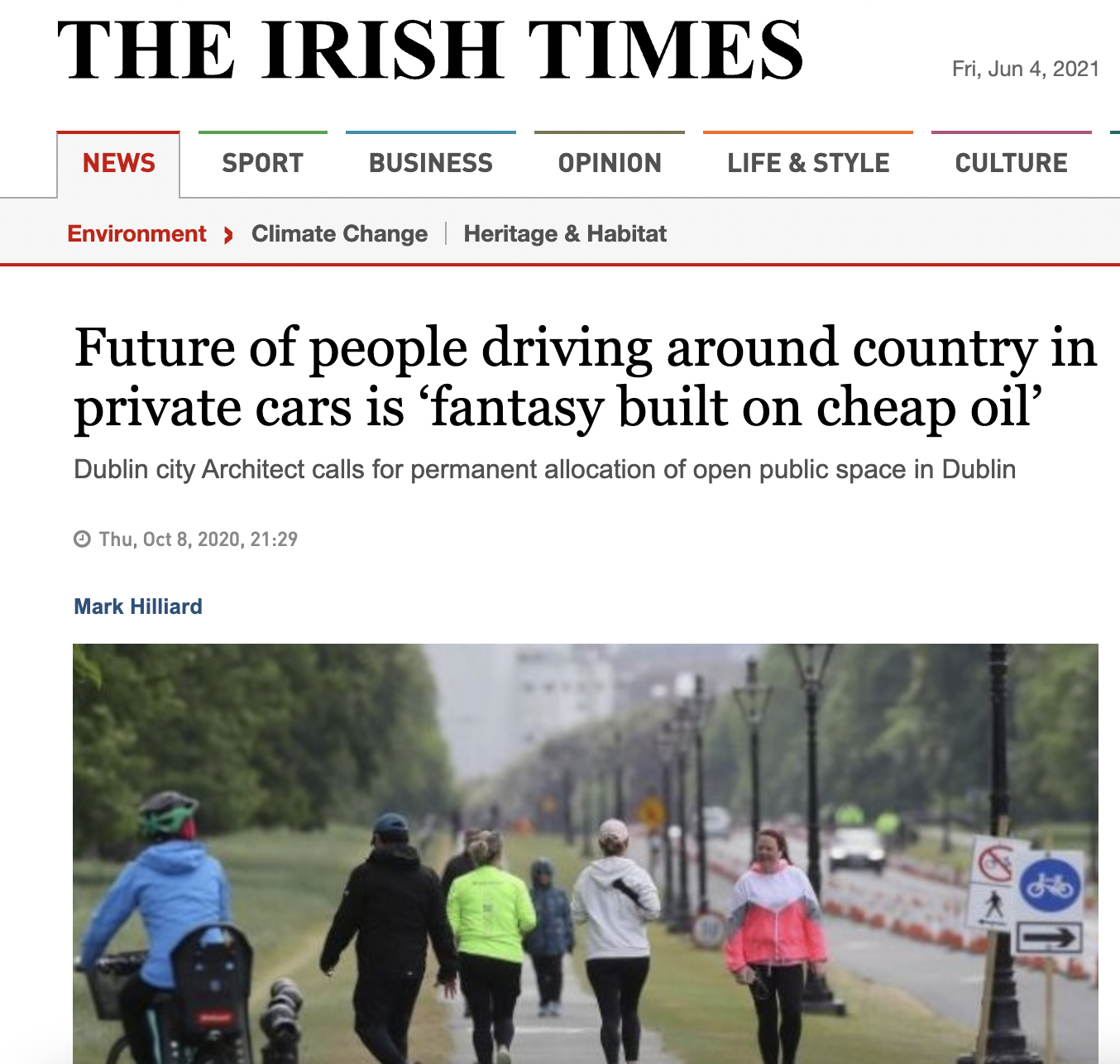
Morano on Buttigieg floating ‘monthly transportation payment’ that ‘covers everything’ to replace monthly car payments: “What Buttigieg is actually up to with this monthly transportation payment that covers everything instead of a car payment — to replace your car payment — it is part of the plan. And I can show you the Irish Times. I can show you multiple reports, the UK government reports, academic reports, the UK transport Secretary, all calling essentially for the end of private car ownership… you’re going to be funding the end of not just the internal combustion engine but the end of private car ownership, which literally, group after group and the climate agenda is saying has to come to an end. Private car ownership has been called 20th-century outdated thinking.
They want to cripple national economies. What is Europe now except energy crippled in the face of Vladimir Putin’s aggression? They’re almost helpless because they shut down their own energy and now we have them shutting down their own food supply. This is bonkers Kara. A to Z bonkers! I don’t know how else to use another word to describe what’s happening globally now because of the climate agenda.”
#
Rough Transcript:
Kara McKinney, host of Tipping Point on OAN asks about man who set himself on fire in front of the Supreme Court: see: Climate Activist Sets Himself On Fire
Marc Morano: Well, this is actually it’s a much bigger part of the agenda. This is not just Pete Buttigieg virtue signaling. The whole climate agenda stripped bare is literally a self-immolation of your national security and your economic security. And that’s what we’re seeing firsthand.
And I can show you the Irish Times. I can show you multiple reports, the UK government reports, academic reports, the UK transport Secretary, all calling essentially for the end of private car ownership.
So what Transporation Sec. Pete Buttigieg is brainstorming here, with his Star Trek references and everything else, he’s coming up with a plan that people are going to pay into this system and if you’re a good steward, you ride your bike a lot, you take the public transit, wear your mask and do all the things right, you’re going to get benefits — you’re going to get lower payments, you might even get dividends. (See: Buttigieg floats ‘monthly transportation payment’ that ‘covers everything’ to replace monthly car payments)
The whole gist of this is you’re going to be funding solar, wind, electric cars, you’re gonna be funding the end of not just the internal combustion engine but the end of private car ownership, which literally, group after group and the climate agenda is saying has to come to an end. Private car ownership has been called 20th-century outdated thinking.
Kara McKinney: And also looking at the Supreme Court situation where that man, sadly tragically set himself on fire. Those injuries ended up being fatal and it breaks my heart and I just can’t wrap my head around the idea that people still work themselves up into that sort of a frenzy, even when we’ve seen It’s been decades now this point of doomsday predictions that have never come true. And also at the same time, the world’s biggest climate hysterics. They’re the ones who are all living on the oceans. They all own beachfront properties. They all have multimillion-dollar mansions on the very same property that they say will be underwater in a couple of years. And so I can’t take any of those people seriously and yet sadly, we still see people getting really worked up about it. Why do you think we still see such almost a religious seal about this?
Marc Morano: Well, a couple of things. First of all, you’re absolutely right. It’s a very bad image for people like President Obama and John Kerry and Al Gore to have seaside homes, multiple homes, doing everything they preach against and they’re obviously not worried about sea-level rise.
But this is very sad. The man who committed suicide in front of the Supreme Court was a climate activist and on his Facebook page, he had referred people to this online climate course he had taken with none other than Climategate professor and former UN scientist, Michael Mann. This is one of the media’s favorite go-to scientists. This was who influenced the man who killed himself.
It doesn’t end there because what they’ve done is — in The Hill newspaper — a professor from the University of Nebraska in Omaha is saying get ready to see more climate terrorism responding to the man who killed himself. ‘The increasing infuriation of climate activists is warranted.’
So what they’ve done is they’ve literally got people convinced that the government isn’t doing enough and that we’re all going to die in some climate, emergency, or catastrophe, and that they need to do everything possible. As you mentioned, the Buddhist monks in Vietnam who self-immolated in protest. Climate activists want to draw attention, and now they’re willing to do this too.
Marc Morano: This is where you mentioned self-immolating their economy. The original Green New Deal actually used the words ‘farting cows’ in the original green New Deal release that they sent out and then they quickly like pulled it and tried to change it.
They want to cripple national economies. What is Europe now except energy crippled in the face of Vladimir Putin’s aggression? They’re almost helpless because they shut down their own energy and now we have them shutting down their own food supply. This is bonkers Kara. A to Z bonkers! I don’t know how else to use another word to describe what’s happening globally now because of the climate agenda.
Kara McKinney: I’m right there with you. Buttigieg, we’re talking about flying cars in the future. And I’m thinking No, it’s just gonna be living in the pod eating the bugs as you were saying it’s gonna mess the future.
Marc Morano: We don’t have a Jetson’s future. We have a Flintstone future with candles in foot-powered cars. That’s where we’re headed.
Kara McKinney: Exactly. That’s exactly where we hare headed with all this green craziness. Marc, thanks so much for joining us tonight.
President Joe Biden came into office with more aggressive plans to fight what he called the “existential threat” of climate change than any of his predecessors. Three months into his presidency, he vowed to cut the carbon emissions of the world’s second-largest emitter in half by 2030, a pledge that helped re-establish American climate leadership on the global stage.
One year on, that signature climate goal is all but dead.
Political allies are now acknowledging what scientists who analyze U.S. policy options have confirmed: There’s virtually no viable path to slashing U.S. emissions in line with Biden’s 2030 target—at least not without major legislation that appears increasingly remote. “I am certainly grateful for the improvements we’ve seen under this administration, but it hasn’t gotten nearly far enough to be considered on track to address the climate crisis,” says Rep. Jared Huffman, a California Democrat who is a leading progressive in the House of Representatives.
At the center of this setback is an evenly split U.S. Senate that puts West Virginia’s Joe Manchin, a Democrat from a coal- and gas-rich state with a personal fortune tied to fossil fuel, in a position to make or break legislation. A proposal championed by the White House to spend around $555 billion on climate and clean-energy measures have stalled, and the approaching midterm elections make passage unlikely.
Without that half-trillion dollars in new spending, the scientists who study pathways for cutting U.S. emissions can’t see a way to deliver on Biden’s promise. “Congress has to act, and they have to act in a pretty substantial way,” says Mike O’Boyle, director of electricity policy at Energy Innovation, an energy and climate think tank in San Francisco. Otherwise, he says, “there is no way.”
Biden campaigned on creating a 100% clean electrical grid across the country by 2035. But the U.S. burned roughly 25% more coal to keep the lights on in Biden’s first year in White House than in the year prior under the openly pro-coal leadership of President Donald Trump. Output of greenhouse gas in 2021 also surged by an estimated 6% from 2020 levels as the economy recovered from the Covid-19 pandemic, according to the Rhodium Group, an independent research firm.
The simple reality is that making these bold promises is one thing. But carrying them out is another thing entirely. Even the $555bn bill mentioned would have been chicken feed, after having been stripped down to the bone.
Despite the billions already thrown at renewables during Obama’s days, wind and solar have barely made a dent in overall electricity generation, accounting for just 13% last year.
Although coal power has declined, it has mainly been replaced by gas. Coal and gas together still supply 60% of US electricity, down from 69% in 2010.
A “100% clean grid” by 2035 is a pipedream, no matter how much money Biden throws at renewables. The grid would simply implode without the dispatchable power provided by fossil fuels and nuclear (itself being phased out).
As we have learnt here, hardly anybody wants to buy useless EVs, even when heavily subsidised. Similarly, homeowners and industry are not going to give up oil and gas voluntarily.
Whereas sales of conventional cars and gas boilers (probably) will be banned shortly, there is no chance such policies would be passed by Congress. Or that they would survive legal challenge, as I suspect they would be regarded as being a State concern, not a Federal one.
Without such compulsion, the Americans are not going to give up their cars.
For those who don’t follow US political affairs, Joe Biden is at record levels of unpopularity, as bad as Jimmy Carter’s. The mid-term elections in November are expected to be a landslide for the GOP, which would put an end to any meaningful climate legislation for at least two years, and probably much longer.
Whereas we have centralised government in this country, and all three parties are signed up to the same ruinous Net Zero policies, in the US the President has little power on his own. He has to carry both the House and the Senate with him, and it is rare that one party controls all three.
Even then laws can fall foul of the courts. For instance, Obama’s Clean Air Act, designed specifically to cut GHGs at power plants, still has not got off the ground, because of legal challenges, Currently it is before the Supreme Court.
Americans are suffering from record high petrol prices and 40 year high inflation, both largely the direct result of Biden’s policies. They certainly are not going to vote for Net Zero policies that make both much worse.
Where this leaves US climate policy is anybody’s guess. But I suspect US emissions in 2030 will be much the same as they are now.
FOOTNOTE
It is interesting that the US public widely recognise the link between high Federal spending, money printing and inflation, in a way that we don’t here in the UK. They blame Biden’s massive spending bills and increased borrowing in 2021 for much of the current inflation.
My latest at the Daily Caller. Energy independence and security are basic requirements for a stable economy and national security in the modern world. Americans learned that lesson the hard way in the 1970s — even, presumably, President Joe Biden. Yet since Biden has been president, he has done everything in his power to wreck … Continue reading The Ultimate Energy Wrecking Ball — Joe Biden





 Iowa Climate Science Education