Month: April 2022

Weaponized Claims of Disinformation

Adam Ellwanger raises a good question and provides some clarity in his American Mind article Why Do You Know That?  Excerpts in italics with my bolds and added images.  The scope of his analysis is suggested by the subtitle:

Misinformation, disinformation, and the 1619 Project

The Current Drive to Curate (Control) Information

Earlier this year, Joe Biden asked social media companies to engage in more censorship in an effort to divert attention from the wholesale failure of his administration to “shut down the virus.” In a televised speech, he said “I make a special appeal to social media companies and media outlets: please deal with the misinformation and disinformation that’s on your shows. It has to stop.”

More recently, CNN denounced “misinformation” that blamed high gas prices and inflation on the Biden administration. Media outlets have accused Joe Rogan of “spreading disinformation” about Covid-19 and the vaccine because… he dared to ask scientific experts questions on these topics. Other examples of ideas that the legacy media has alternately labelled as “misinformation” and “disinformation” include assertions that Covid-19 escaped from a lab in Wuhan, China; the idea that there was some orchestrated manipulation of procedures to favor Biden in the 2020 election; that Hunter Biden’s laptop offered evidence that the Biden family had been enriched by various forms of international corruption; and that powerful NGOs and world governments are leveraging the pandemic to facilitate a “Great Reset” of the global economy.
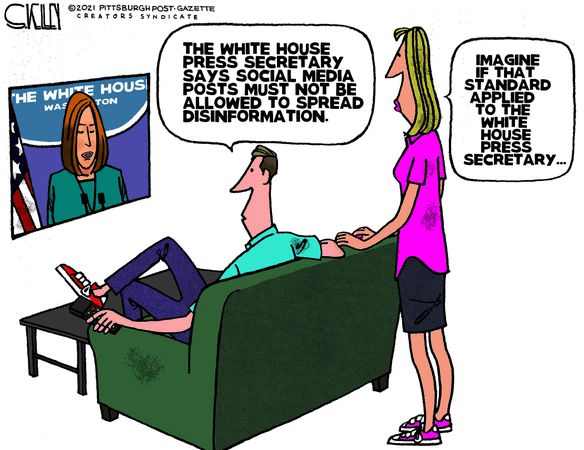
The campaign to ban these claims – most which are demonstrably true – indicates not a dangerous spread of “disinformation,” but a dangerous weaponization of the concept of disinformation in order to insulate the institutional left from criticism and opposition.

It is no accident that virtually every claim that is consistently labelled as disinformation is one that threatens the policy agenda of the Democratic party (or parts of their agenda that they are too embarrassed to state publicly). “Disinformation” is no longer a concept used to separate truth from falsehood. In the past few years, it has been rhetorically intensified to circumvent the question of truth entirely. It is a means to annex the public’s role in assessing the validity of reporting, placing this authority solely in the hands of “experts” who have the exclusive right to say what is “true.” Understanding the differences between “misinformation” and “disinformation” and observing the ways these concepts are arbitrarily applied is crucial to grasping how our media and other institutions undermine genuine public deliberation—a prerequisite for any functioning democracy.

Meanings Matter

Since the rise of Trump and the media’s waning ability to control the terms of public debate in the information age, legacy and government-adjacent outlets have been in a sustained panic about misinformation and disinformation. Misinformation is information that is simply wrong or incorrect, while disinformation is the deliberate spread of false information. In other words, whereas the misinformer doesn’t know that what they are saying is false, the disinformer does know.
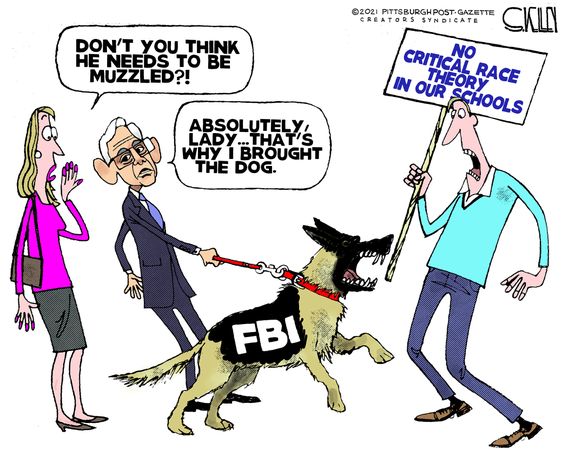
Despite these differences, the terms are used interchangeably by the media at large. This is important. Is the left accusing Joe Rogan spreading “misinformation” or “disinformation”? Answering this question is difficult: it requires some knowledge of what Rogan knows and what he doesn’t. If he doesn’t know that what he says is (allegedly) false, then he’s not a bad guy—he just needs to be informed of the truth. But if he knows what is (allegedly) true and decides to ignore those truths in order to advance his agenda, this is something more nefarious.

The line between misinformation and disinformation is deliberately obscured to ensure that people who are disseminating information that is inconvenient for those in power can be smeared as a malevolent threat to (the catchphrase runs) “our democracy”. The motives of the populists must always be characterized as nefarious – to acknowledge that they engage the dialogue in good faith would require those in power to enter the sphere of debate.

That process of debate is what they are trying to silence and avoid:
you can’t lose a debate that never occurs.

Disinformation and the 1619 Grift

The 1619 Project’s central claim is that protecting slavery was the true impetus for the formation of the American republic, and therefore that our national “narrative” and identity should be viewed primarily through the lens of slavery. The project is named “1619” because that was the year that the first ship of African slaves arrived on the American coast— an event that 1619 proponents cite as the “true” founding of our nation (instead of 1776, and preceding even 1620). The claims of the 1619 Project have been definitively debunked by the leading historical experts on America’s founding: thus, Hannah-Jones has little authority to talk about “history” and “truth.”

When I learned of her talk, I immediately reserved my spot: I knew the affair would be tightly managed to ensure that no one on campus could disrupt the celebration of the 1619 fictions. Her presentation lasted 75 minutes. Over that period, I observed almost every hallmark of disinformation. In other words, it was evident that Hannah-Jones was spouting falsehoods, that she knew they were false, and that she was presenting those falsehoods as true in an effort to manipulate the public perception of reality.
Hannah-Jones never substantively responded to the volume of evidence marshalled by these experts against her account—instead she simply said she would have taken them more seriously had they contacted her or the New York Times before publishing the letter. Thus, she missed an opportunity to give a revised, more truthful account of history. Instead, she continues to rehearse the same falsehoods. This is the definition of disinformation, and she aggressively spread it at her talk.

An indicator of disinformation is the absence of important contextual information that would mitigate the truth status of a speaker’s claims. The so-called “fact-checkers” of the mainstream media understand this: they often label assertions “false” on the grounds of “missing context.” Yet the fact-checkers are uninterested in Hannah-Jones’ disregard of important contextual factors that would limit the force of her argument. The 1619 Project argues that anti-black racism is “in the DNA” of our country – as if slavery is unique to America. Hannah-Jones studiously avoids the global history of slavery – an institution that has existed all over the world, subjugating peoples of every race, color, and creed, since the beginning of civilization.

Further, the 1619 Project is silent about how widespread slave ownership was in antebellum America. The large majority of free people in the antebellum south never owned a single slave. This is not at all to deny the specific inhumanity that African slaves endured in America, but to deflate the claims that all white Americans held, and hold, collective race culpability for the institution and that anti-black racism is in the American “DNA.” Finally, of course, the 1619 Project ignores the role that Africans had in facilitating and maintaining the slave trade, a fact that undermines the idea that American slavery was an atrocity perpetrated exclusively by white people. This contextual information is left out of the racialist account of American history precisely because it would diminish the rhetorical power of that account: a telling feature of disinformation.

Disinformation can often be recognized when you see its purveyors shifting standards when it comes to verification. Truth is critical for historical work – it matters what actually happened.

In short, Hannah-Jones frames her project as a truth-telling exercise that aims to displace untruths. And yet, when experts on the history of our country contest the claims of Hannah-Jones’ claims by demonstrating that they are factually false, she retreats to the concept of “narrativity,” which implies that all historiography is just storytelling and that no story can be wrong. From this perspective, all history is merely subjective interpretation. . . Attacking the traditional understanding of our history as false while hawking a historical fiction as truth is a tactic that defines disinformation campaigns.

A final sign of disinformation is an adamant refusal to engage with ideas and claims that are at odds with the propaganda effort.  During her talk, Hannah-Jones dodged the scholarly attacks on her project by saying that they are driven by “credentialism” – suggesting that somehow the scholars have rejected her work because, as experts, they feel entitled to be the arbiters of history and are jealous that a journalist took on the task of writing history.

But her scholarly critics have taken issue only with her presentation of historical facts,
not with her professional status
.

The Disinformation Campaign About Disinformation

Hannah-Jones’ work is only one of innumerable examples of disinformation on the left. Yet the term is applied exclusively for dialogue that comes from the political right. The left’s interchangeable usage of misinformation and disinformation is part of an effort to make these concepts more malleable, so that they can be effectively applied to any undesirable information that gets past the censors. In short, this means that the media’s constant cautioning about disinformation is in fact a disinformation campaign in itself. The application of these labels allows them to propagate the idea that only their political opponents traffic in falsehoods. By strategically accusing their enemies of spreading misinformation and disinformation, they paradoxically insinuate that average Americans are both too dumb to discern the truth for themselves, and evil enough to actively conceal or distort what they know to be true.
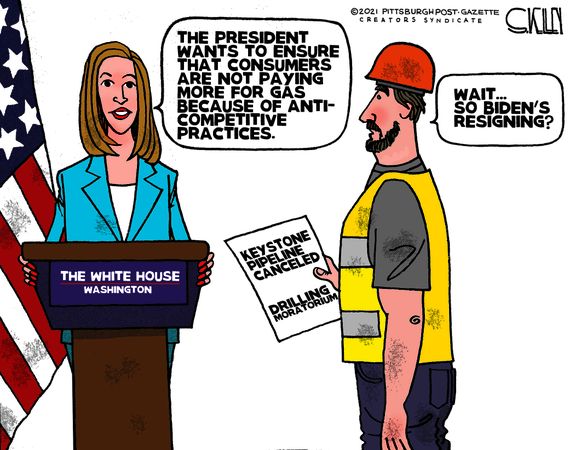
The weaponization of the concept of disinformation to achieve political ends is a greater threat to whatever’s left of American democracy than any isolated pieces of actual disinformation could ever be. Democracy is built on the assumption that typical citizens can discern the truth, and that they have the capacities necessary to develop and implement situations to the problems they face. The elite disinformation campaign on disinformation implies not only that regular Americans should not play any meaningful role in governance, administration, or deliberation—it insinuates that they don’t have the cognitive ability to learn the truth and to know it when they see it.

It doesn’t get more anti-democratic than that.


via Science Matters

https://ift.tt/MYhcCmz

April 7, 2022 at 01:40PM

The Many Benefits of Rising Atmospheric CO2 — An Introduction

From MasterResource

By Craig D. Idso — April 6, 2022

Dr. Craig Idso, Chairman of the Center for the Study of Carbon Dioxide and Global Change, and a new principal at MasterResource, invites readers to join him in a new series of articles discussing the many ways in which rising atmospheric carbon dioxide benefits humanity and nature.

Atmospheric carbon dioxide: you can’t see, hear, smell or taste it. But it’s there—all around us—and it’s crucial for life. Composed of one carbon and two oxygen atoms, this simple molecule serves as the primary raw material out of which plants construct their tissues, which in turn provide the materials out of which animals construct theirs. Knowledge of the key life-giving and life-sustaining role played by carbon dioxide, or CO2, is so well established, in fact, that humans—and all the rest of the biosphere—are described in the most basic of terms as carbon-based lifeforms. We simply could not and would not exist without it.

Ironically, far too many demonize and falsely label this important atmospheric trace gas a pollutant. Nothing could be further from the truth. Instead of being shunned like the plague, the ongoing rise in CO2 should be welcomed with open arms.

How do I know this?

During the past three decades of my professional career I have performed countless hours of research, conducted multiple experiments, published a series of professional journal articles, written several books, created videos and feature-length documentaries, and authored thousands of commentary articles exploring the effects of CO2 on the biosphere (much of that work can be found at my CO2 Science website, www.co2science.org). In all those activities I have come to know that, far from being a pollutant, this colorless, odorless, tasteless and invisible gas benefits the biosphere in a multitude of ways. And I want to share that knowledge with you!

To accomplish this objective, over the next several months I will be publishing a series of articles describing several key benefits atmospheric CO2 enrichment provides to both humanity and nature. The articles will explore topics such as the effects of CO2 on plant growth and water use efficiency, a CO2-induced greening of the planet, the monetary benefits of rising CO2 on crop yields, and much, much more. Look for the postings at a rate of about two per month.

Sadly, most of the population remains woefully unaware of the many positive impacts of CO2 on the biosphere. This is no surprise, considering the constant and steady stream of misinformation our society endures from sources dedicated to demeaning and defaming CO2. What is more, world governments, non-governmental organizations, international agencies, societal think tanks, and even respectable scientific organizations attempting to assess the potential consequences of increasing atmospheric CO2 concentrations have spent hundreds of millions of dollars writing and promoting large reports about it.

Yet, these endeavors have failed miserably because they have neglected to evaluate or even acknowledge the manifold real and measurable benefits of the ongoing rise in the air’s CO2 content.  As a result, many important and positive impacts of atmospheric CO2 enrichment remain underappreciated and largely ignored in the debate over what to do, or not do, about anthropogenic CO2 emissions. And that omission does not bode well for policy decisions.

I hope you will join me on this informative journey as we explore the many benefits of CO2 and I hope you will share what you read and learn with others. Societal change occurs as individuals become informed one by one. Together we can help make that happen!

-Dr. Craig Idso

—————————————————————————————————————-

CRAIG D. IDSO is the founder, former president, and currently chairman of the Center for the Study of Carbon Dioxide and Global Change. The Center was founded in 1998 as a non-profit public charity dedicated to discovering and disseminating scientific information pertaining to the effects of atmospheric carbon dioxide enrichment on climate and the biosphere. The Center produces the online newsletter, CO2 Science, and maintains a massive online collection of editorials on and reviews of peer-reviewed scientific journal articles relating to global climate change.

Dr. Idso’s research has appeared many times in peer-reviewed journals, including Geophysical Research LettersEnvironmental and Experimental BotanyForest Ecology and ManagementJournal of ClimatePhysical GeographyAtmospheric EnvironmentTechnologyThe Quarterly Review of BiologyEnergy & Environment, and the Journal of the Arizona-Nevada Academy of Science.

Dr. Idso is the author or coauthor of several books, including The Many Benefits of Atmospheric CO2 Enrichment (Vales Lake Publishing, LLC, 2011), CO2, Global Warming and Species Extinctions (Vales Lake Publishing, LLC, 2009), CO2, Global Warming and Coral Reefs (Vales Lake Publishing, LLC, 2009); Enhanced or Impaired? Human Health in a CO2-Enriched Warmer World (Center for the Study of Carbon Dioxide and Global Change, 2003); and The Specter of Species Extinction: Will Global Warming Decimate Earth’s Biosphere? (George C. Marshall Institute, 2003). He contributed chapters to McKittrick, R. (Ed.), Critical Topics in Global Warming (Fraser Institute, 2009) and Encyclopedia of Soil Science (Marcel Dekker, 2002). Dr. Idso has also produced several short video works and three feature-length documentariesCarbon Dioxide and the Climate Crisis: Reality or Illusion? (2008), Carbon Dioxide and the Climate Crisis: Avoiding Plant and Animal Extinctions (2008), and Carbon Dioxide and the Climate Crisis: Doing the Right Thing (2008).

In 2009, Dr. Idso became the lead author and editor for the Nongovernmental International Panel on Climate Change (NIPCC), overseeing a team of internationally renowned scientists in the production of several major reports on climate change. Those reports include Climate Change Reconsidered: The 2009 Report of the Nongovernmental International Panel on Climate Change (NIPCC)Climate Change Reconsidered: 2011 Interim ReportClimate Change Reconsidered II: Physical Science, and Climate Change Reconsidered II: Biological Impacts. His most recent work with NIPCC is encapsulated in its 2019 report, Climate Change Reconsidered II: Fossil Fuels, where he contributed as a lead or contributing author on several chapters.

Dr. Idso received a B.S. in Geography from Arizona State University, an M.S. in Agronomy from the University of Nebraska – Lincoln, and a Ph.D. in Geography from Arizona State University, where he also studied as one of a small group of University Graduate Scholars. Prior work positions have included Director of Environmental Science at Peabody Energy in St. Louis, Missouri; faculty researcher in the Office of Climatology at Arizona State University; and lecturer in Meteorology at Arizona State University.

Dr. Idso’s professional associations have included membership in the American Association for the Advancement of Science, American Geophysical Union, American Meteorological Society, Arizona-Nevada Academy of Sciences, Association of American Geographers, Ecological Society of America, Geological Society of America, and The Honor Society of Phi Kappa Phi. Dr. Idso has also served as an adjunct scholar for the Cato Institute and he is presently a policy advisor for the CO2 Coalition, the Heartland Institute, and the Committee For A Constructive Tomorrow.

via Watts Up With That?

https://ift.tt/EnSNJwj

April 7, 2022 at 12:24PM

Government accused of being in denial of energy cost crisis

By Paul Homewood


From NZW:


Net Zero Watch has branded the government’s energy security strategy an exercise in magical thinking and accused Boris Johnson of being in denial of the severity of the energy cost crisis.


Net Zero Watch director, Benny Peiser, said:

What the government has published today is essentially a wish list of things they want to do in the next 5-25 years – but which has absolutely zero effect on the energy cost and the cost of living crisis.

To make matters worse, most of the projects on their wish list will have to be subsidised by tens of billions of pounds, making energy bills even more expensive in years to come.”

Instead of easing the pain by cutting taxes and green levies on energy bills, which would have an immediate effect, the government is in denial of the dramatic cost crisis faced by millions of households.

Mr Johnson’s strategy, like Tony Blair’s before it, is an incoherent muddle of unrealistic targets and uncosted projects that helps nobody other than vested interests looking for multi-billion subsidies.

Anyone hoping for a practical, affordable and secure policy response to the energy cost crisis will be bitterly disappointed. Consumers have been let down in the short term, and the frankly absurd targets for more wind and solar set the stage for another wasted decade of failure and rocketing cost.

via NOT A LOT OF PEOPLE KNOW THAT

https://ift.tt/kAOXvVY

April 7, 2022 at 11:45AM

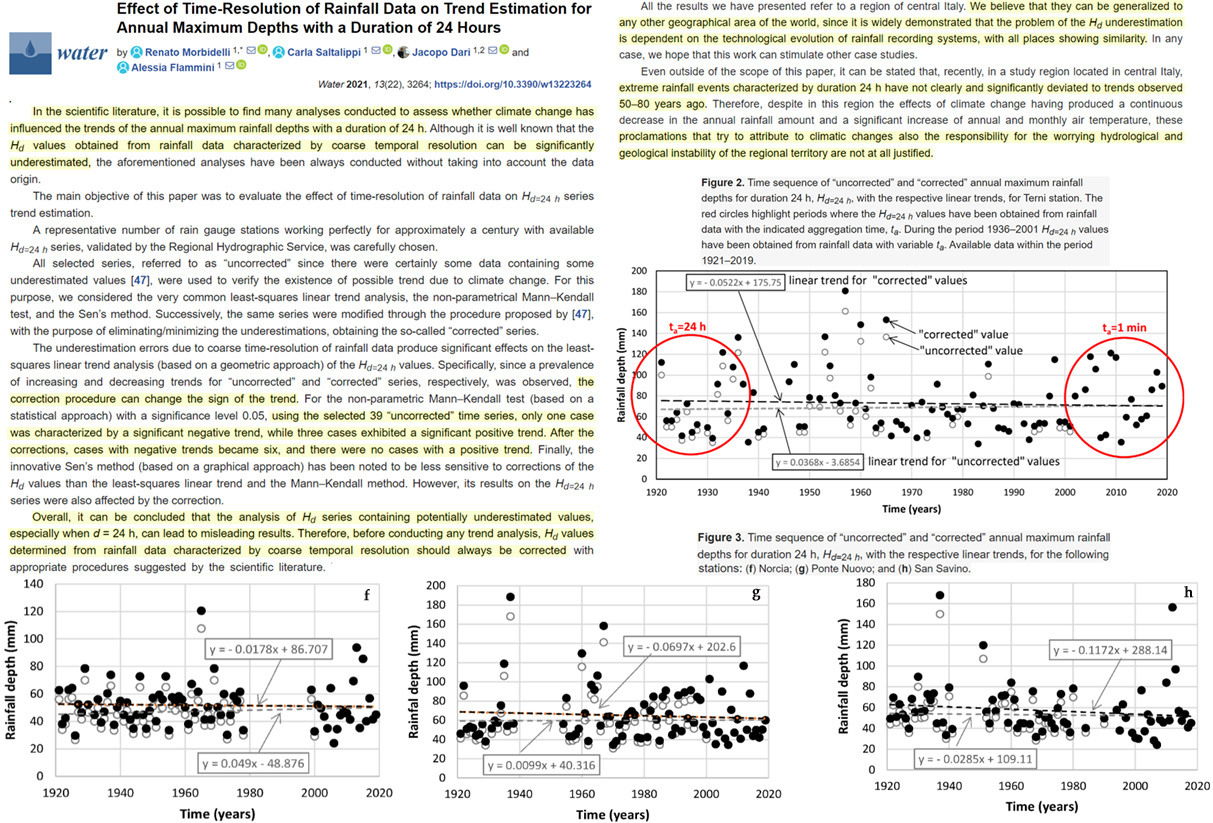
New Study Finds Claims Of A Human-Induced Increase In Extreme Daily Rainfall Are Flawed And False

Failure to correct the “coarse temporal resolution” of  pre-1970s maximum daily rainfall data changes the sign of trend analysis from slightly positive to solidly negative in the last century (1921-2020).

Those who ascribe to the position that humans can control the weather by engaging in fossil-fuel related activities (such as using planetary-heating smartphones) literally believe humans significantly determine how much rain falls in a 24-hour period at a specific location. Humans-can-control-the-weather proponents consequently expect trends in extreme daily rainfall to rise as humans heat the planet with cheeseburgers.

It is common knowledge that when looking for data to confirm one’s hypotheses, the confirmation bias often wins. When we expect to find humans exert significant control over weather patterns, the data we expect to find emerges and the data that do not support our expectations is glossed over – or ignored altogether.

Image Source: Morbidelli et al., 2022

Per a new study (Morbidelli et al., 2022), it is “well known” that the annual maximum rainfall that accrues over 24-hour period time frames can be “significantly underestimated” due to less precise reporting methodologies in older precipitation records relative to recent decades.

Consequently, the precipitation data from the pre-satellite era often lack the necessary resolution to directly compare the long-term past to the recent without properly correcting the older records first.

The authors – strong proponents of anthropogenic global warming – found that correcting the coarse resolution in data from the pre-satellite era has a significant, sign-changing impact in extreme precipitation trends over the last century.

For example, when using the uncorrected time series, there were 3 cases of significantly rising trends and only one case of a significantly negative trend in extreme precipitation from 1921-2020 in the region studied (central Italy).

Upon correcting the coarse resolution from the past, the positive trends disappeared from 3 to zero and the significant negative trends in extreme daily precipitation increased from one to 6.

Per the authors, these results “can be generalized to any other geographic area of the world” since it is “widely demonstrated” that the problem of underestimating past extreme daily rainfall is fundamentally associated with the lower-resolution recording methods.

Even without the corrections, Morbidelli and colleagues point out that “extreme rainfall events characterized by duration 24 h have not clearly and significantly deviated to trends observed 50-80 years ago.”

And with corrections to the older data, this is their conclusion:

“[P]roclamations that try to attribute to climate change…the responsibility for the worrying hydrological and geological instability of the regional territory are not at all justified.”

via NoTricksZone

https://ift.tt/jBtAbNn

April 7, 2022 at 11:31AM