
Yet another new study documents the lack of regional cooperation with the “global” warming narrative.
Since 1979 there has been no net warming in the South China Sea and no evidence of a hiatus or “growth discontinuity” in this region’s coral development (Tan et al., 2022). Natural ENSO variation leads changes in the sea surface temperature by about 5-6 months.
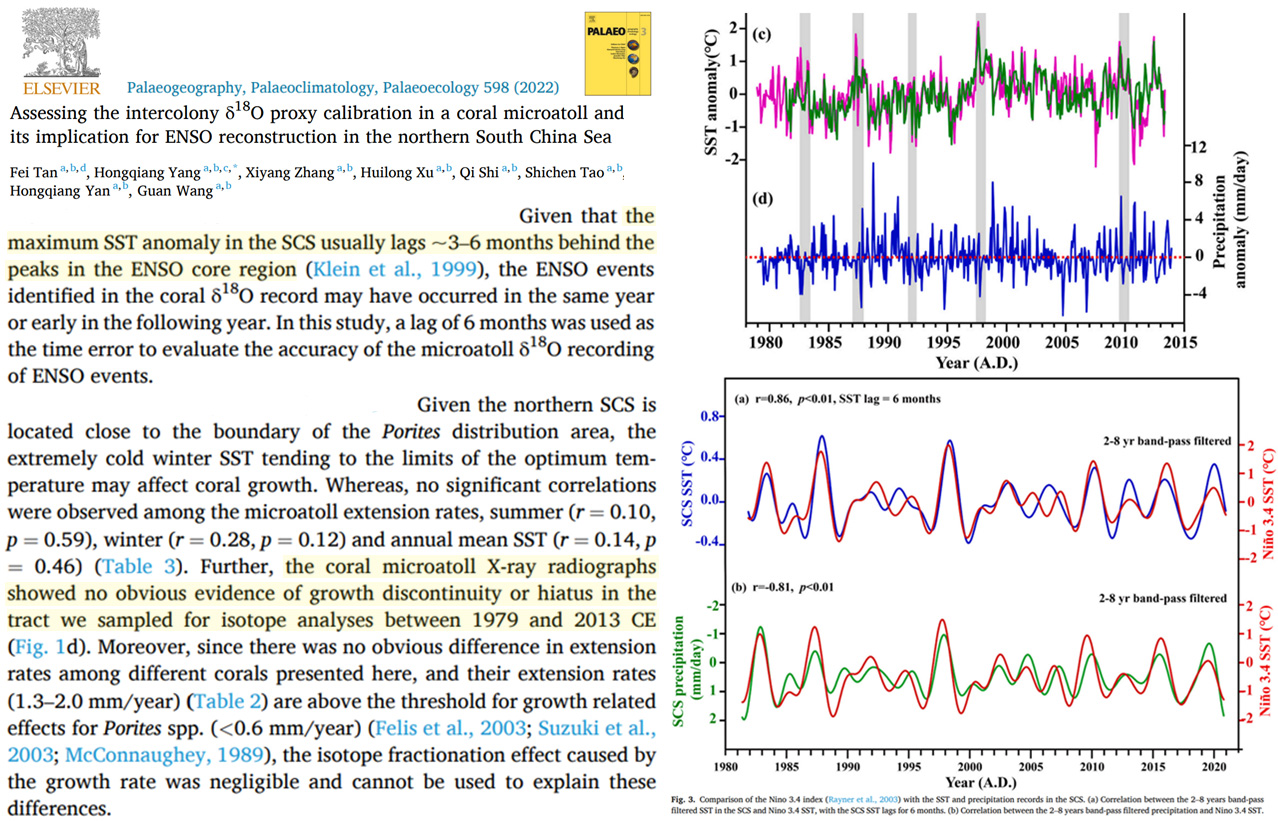
Image Source: Tan et al., 2022
Other recent South China Sea (SCS) studies also find temperature records that do not align with the narrative that humans drive sea surface temperature variations.
Liao et al. (2020) report cooling by 2-3°C in recent decades (“from 19.3°C to 16.5°C after 1982 AD”) relative to the mid-20th century.
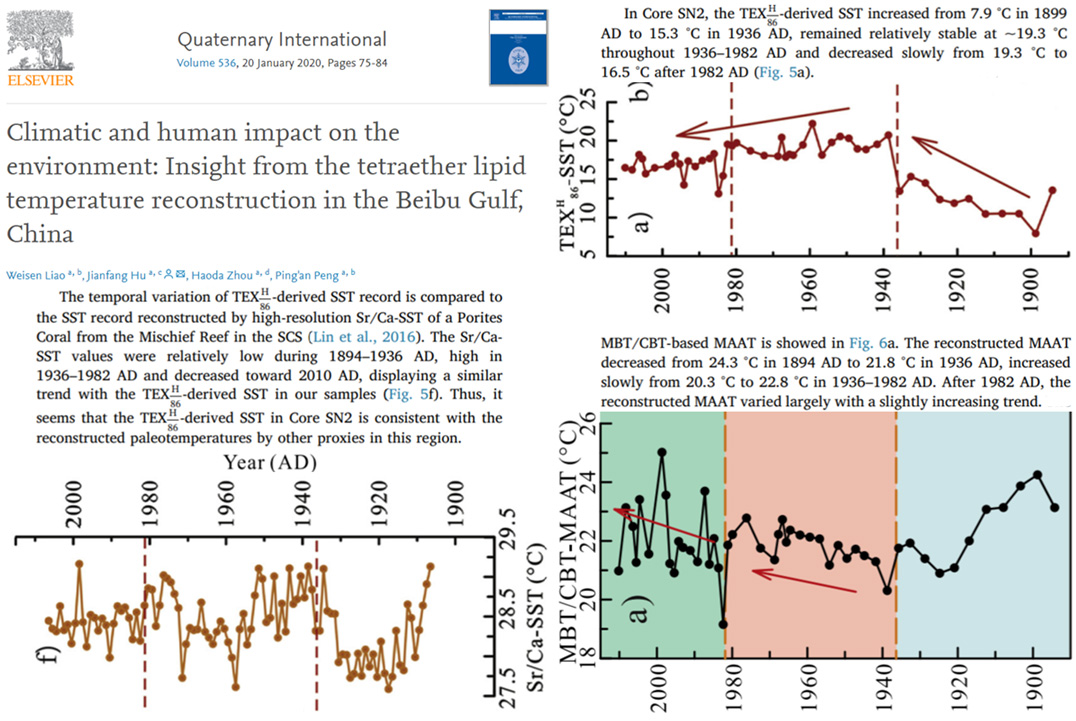
Image Source: Liao et al., 2020
Jiang et al. (2021) also report no net warming in the northern SCS since 1979. They suggest El Niño and La Niña (ENSO) variability have been driving sea surface temperature changes in the SCS since Medieval times, and “internal dynamics of the climate system play a prominent role in modulating ENSO variability.”
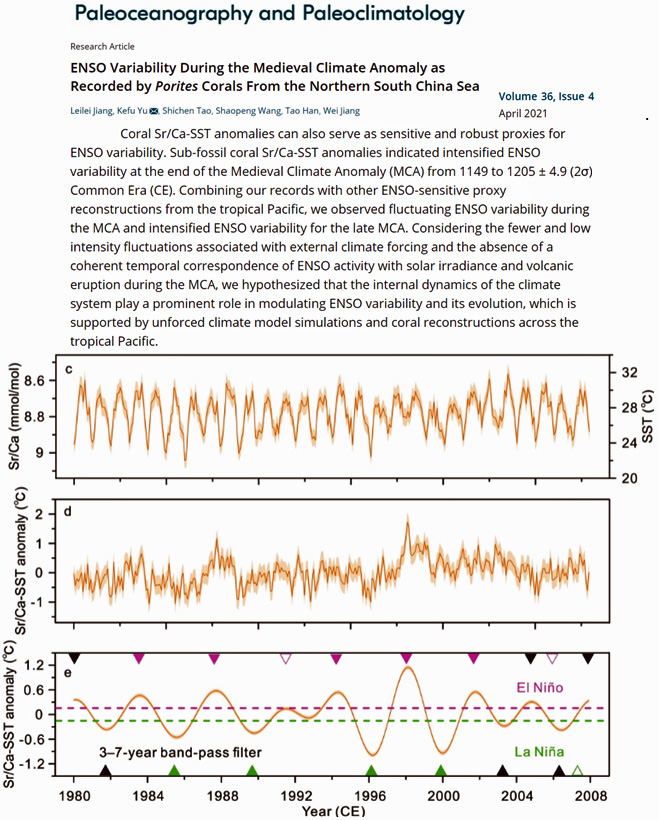
Image Source: Jiang et al., 2021
And for a longer-term perspective, Zhou and colleagues (2022) report the SCS was several degrees warmer than today throughout all of the last 6000 years, as the 1994-2004 temperatures (the green square in the chart below) are the coldest of the Holocene.
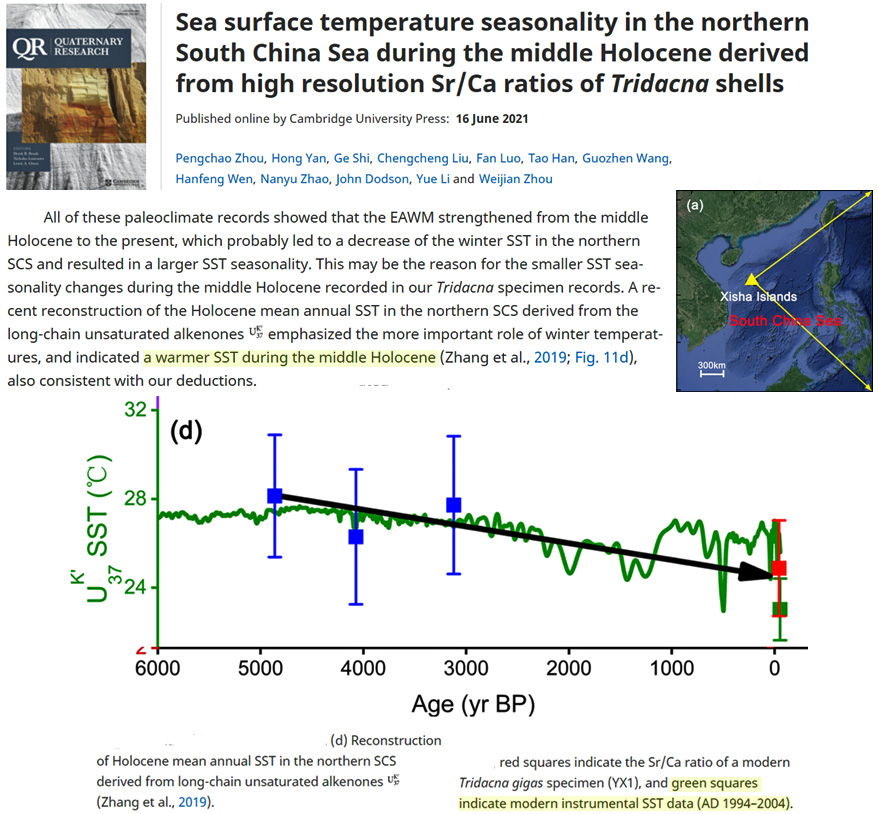
Image Source: Zhou et al., 2022
via NoTricksZone
September 15, 2022 at 09:52AM
 Iowa Climate Science Education