

That the nuclear-powered French pay prices around half that suffered by their wind and solar-obsessed German neighbours is the kind of barebones fact the wind and sun cult absolutely hate.
The French set the benchmark for generating clean, safe and reliable nuclear power; they’ve been doing so for nearly 60 years and still get over 75% of their electricity from their nuclear plants, and export large volumes of what they generate to power-starved Germans and Brits.
The French put paid to the lie that nuclear power is expensive; the French power consumer pays around half what wind and solar-powered Danes and Germans do (see above). Since Vladimir Putin’s adventure in Ukraine, German power prices have rocketed, further still, recently hitting a record 40 US cents per kWh.
And the French don’t suffer the indignity of routine power rationing and blackouts like their German neighbours, when the sun sets and/or calm weather sets in. Indeed, it’s nuclear power from France and coal-fired power from Poland that keeps Germany’s near-terminal power grid from total collapse.
Following on from yesterday’s post, setting out Nationals MPs David Gillespie’s call for the introduction of SMRs in Australia, here’s a report on Adi Paterson calling for precisely the same solution to this country’s self-inflicted power pricing and supply calamity.
Wise up on benefits of nuclear power, Anthony Albanese told
The Australian
Greg Brown
23 November 2022
The former head of Australia’s nuclear science agency has urged Anthony Albanese to become “fully informed” about nuclear energy generation, warning against placing too much emphasis on intermittent renewables to transition to a zero emissions electricity sector.
Adi Paterson, appointed chief executive of the Australian Nuclear Science and Technology Organisation by the Rudd government in 2009, will on Thursday moderate a nuclear energy forum in Parliament House in Canberra attended by MPs, industry experts, engineers and scientists.
In a letter to the Prime Minister, obtained by The Australian, Dr Paterson says small modular reactors “are the lowest carbon, safe and reliable source of energy”.
“We believe the government is not fully informed in relation to the best science, engineering, and economic cost. Indeed, it is currently potentially misled on this aspect of energy policy,” he wrote.
“Recent reviews and published refereed research have accelerated moves to mitigate, and reverse, the effects of high penetration dilute intermittent sources of electricity, and their impact on markets and consumers.
“We hope you have received considered and thorough briefings in this regard.
“However, we cannot see any evidence of this in your most recent public remarks or those of your senior cabinet colleagues.”
Dr Paterson said a growing number of engineers and scientists were “deeply concerned about the current activities and plans for deep penetration of intermittent renewable sources in the eastern grid”.
“To achieve a low carbon future, we seek to offer a positive alternative to the current plans,” he said.
“It is demonstrably true that successive federal and state governments have been badly advised in relation to our critical national infrastructure, that is deep reliance on non-dispatchable wind and solar.
“The near-term and future impact on millions of consumers, industry and essential public services is being locked in with this flawed approach.”
The Albanese government has ruled out lifting the ban in nuclear energy generation, while the Coalition is likely to back nuclear power ahead of the next election.
Labor is justifying its opposition to lifting the ban using a report by the CSIRO that the prospect of nuclear generation being realised in Australia this decade was low, “given the technology’s commercial immaturity and high cost”.
“Future cost reductions are possible but depend on its successful commercial deployment overseas,” the CSIRO report said.
Opposition energy spokesman Ted O’Brien has rejected the modelling in the CSIRO’s July report.
“I personally do not accept it,” he said. “We have 32 countries in the world right now that are nuclear countries; for them, the economics stack up.
“We’ve got 50 other countries that are embarking on nuclear programs, seriously assessing it; for them the economics stack up.”
Writing in The Australian, Nationals MP David Gillespie, who is organising the two-day energy conference, says SMRs could be used to replace retiring coal and gas plants.
“Like all nuclear generation, SMRs have incredibly low carbon emissions, as good or better than wind and solar,” he writes.
“Our economy will not be dependent on the weather or on solar panels and wind turbines, 95 per cent of which are made offshore.
“Having a civil nuclear industry would increase our sovereign independence, with additional long-term benefits to the AUKUS initiatives.
“Britain, France, Estonia, Poland, the Czech Republic, Sweden, Romania and Japan have announced plans for new SMRs,” Mr Gillespie writes.
The Australian
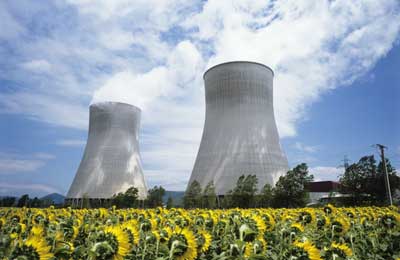
The French Method: cheap, safe and reliable.
via STOP THESE THINGS
December 14, 2022 at 12:33AM
 Iowa Climate Science Education