By Christopher Monckton of Brenchley
Douglas Pollock will be known to many readers here as a regular and popular speaker at Heartland conferences. After several years researching the effect of unreliables on electricity grids the world over, Douglas has discovered a truly fascinating scientific result.
He had been looking at nations such as Britain, whose government has gone further towards reducing the economy to third-world status by its unhinged nut-zero policies than any other. As a direct result of this fatuity, Britain now suffers the costliest electricity prices in the world.
The manufacturing industries in which we once led the world have died or gone overseas to Communist-led China, India and Russia. Manufacturing now accounts for just 8% of Britain’s already-imploding GDP. The workshop of the world has become its workhouse.
Industries large and small are going to the wall at a record rate, wrecked by the endless hikes in electricity prices whose root cause is the enforced and pointless shuttering of long-amortized and perfectly viable coal-fired power stations that used to produce electricity at only $30 per MWh, and their replacement with wind and solar subsidy farms producing intermittent and unreliable electrical power at anything up to $11,500 per MWh.
What is more, this disastrous industrial and economic collapse has been deliberately precipitated by a once-Conservative “government” that has long abandoned the no-nonsense economic realism and free-market ideals of Margaret Thatcher and Ronald Reagan.
Curiously, though, the crazed infliction of pig-ugly, wildlife-wrecking, landscape-lacerating windmills on the British people is not reducing our electricity-driven CO2 emissions.
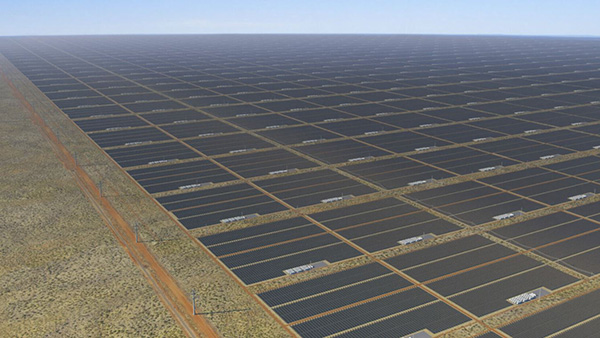
More and more windmills and solar panels are industrializing and destroying our formerly green and pleasant land. Yet the fraction of the nation’s electrical power contributed by unreliables stubbornly remains at just below 25%. Douglas Pollock wondered why.
He consulted widely among the ranking experts on grid management, but no one had any idea why grids such as Germany and the UK, whose installed unreliables capacity is so much greater than 25% of total generation, are incapable of getting their mean annual contribution from wind power, in particular, above 25%. True, on some days wind can generate about two-thirds of Britain’s electricity. But on average – a la larga, as they say in the casinos of Puerto Rico – the contribution of wind and solar is stuck at 25% of total grid generation.
So Douglas scratched his head and thought about it. After a good deal of research and a lot more thinking, he discovered what was wrong. It was a subtle but devastating error that none of the whinnying enviro-zomb advocates of unreliables had noticed.
Douglas’ argument is a beautifully simple and simply beautiful instance of the logical application of mathematical principles to derive a crucially-important but unexpected and hitherto wholly overlooked result. Read it slowly and carefully. Admire its elegant and irrefutable simplicity.
Let Hbe the mean hourly demand met by a given electricity grid, in MWh/h, Let Rbe the average fraction of nameplate capacity actually generated by renewables – their mean capacity factor. Then the minimum installed nameplate capacity C of renewables that would be required to meet the hourly demand His equal to H/ R.
It follows that the minimum installed nameplate capacity N < C of renewables required to generate the fraction fof total grid generation actually contributed by renewables – the renewables fraction – is equal to f C, which is also f H / R ex ante.
Now here comes the magic. The renewables fraction f, of course, reaches its maximum fmax where hourly demand His equal to N. In that event, Nis equal to H ex hypothesi and also to fmax H/ R ex ante, whereupon H is equal to fmax H/ R.
Since dividing both sides by Hshows fmax / R is equal to 1, fmax is necessarily equal to R.
And that’s it. In plain English, the maximum possible fraction of total grid generation contributable by unreliables turns out to be equal to the average fraction of the nameplate capacity of those reliables that is realistically achievable under real-world conditions.
For onshore wind, that capacity factor R is a depressingly low 25%. For offshore wind, one might get 30%. The reason is that a lot of the time the wind is not blowing at all, and some of the time the wind is blowing too much to allow safe rotation of the turbines.
What Douglas Pollock’s brilliant and, at first blush, unexpected result means is that the miserably low capacity factor R is in fact also the fundamental limit fmax on the contribution that unreliables can make to the grid without prohibitively expensive and logistically unachievable large-scale static-battery backup.
That means that wind and solar power cannot contribute more than about a quarter of total electricity demand on the grid, unless there is battery backup. However, as Professor Michaux’ 1000-page paper of 2021 for the Finnish geological survey has established, there are nothing like enough techno-metals to provide battery backup of the entire grid worldwide.
Just for the first 15-year generation of static-battery backup for the global grid, the Professor calculates that one would need the equivalent of 67,000 years’ total current annual production of vanadium, to name but one of the scarce techno-metals that would be required in prodigious quantities. In another 15 years, another 67,000 years’ production will be needed, for batteries are short-lived, as anyone with a cell-phone knows to his cost. So battery backup is simply not an option on a global scale, even if it were affordable.
Now consider just how devastating is Douglas Pollock’s brilliant result for the climate-Communist narrative. First, it is simple. Even a zitty teenager in high school can understand it. Secondly, it shows that even if global warming were a problem rather than a net benefit there is absolutely nothing we can realistically do about it, except sit back and enjoy the sunshine. Thirdly, it shows that the climate Communists, in placing all their eggs in the electricity basket, have a basket-case on their hands.
For the imminent, enforced replacement of gasoline-powered autos by electric buggies will not only impose an enormous extra loading on the grid – for which most grids are wholly unprepared – but, since the batteries add 30% to the weight of the typical buggy compared with a real auto, the entire transport sector will be squandering 30% more energy than it does now. And that energy is supposed to come from the already overloaded grid, powered by unreliables that can only deliver a quarter of total grid capacity in any event.
It gets worse. In the UK, the “government”, in its final thrust to destroy the British economy, is ordering every household with a perfectly good oil-fired boiler to tear it out in two years’ time and replace it with a ground-source or air-source heat pump, which will deliver far less heat at far greater cost. And where is the electricity for the heat pumps going to come from? From the grid, that’s where.
The bottom line is that, because vastly more electricity than now would be needed to achieve nut zero, and because the Pollock limit means only about a quarter of grid electricity can be delivered by unreliables, the net effect of attempts at nut zero will be to increase global emissions significantly, because, as Douglas has decisively proven, nut zero – even if it were at all desirable, which it is not – is impossible.
Nut zero, then, is a striking instance of Monckton’s Law, which states that any attempt by governments to interfere in the free market in pursuit of some political objective or another will tend to bring about a result that is precisely the opposite of that which was – however piously – intended.