Month: January 2023

Coming Soon: Menu Climate Warnings

Baylen Linnekin writes at Reason Public Health Researchers Float Idea of Climate-Change Warnings on Menu Items.  Excerpts in italics with my bolds and added images.

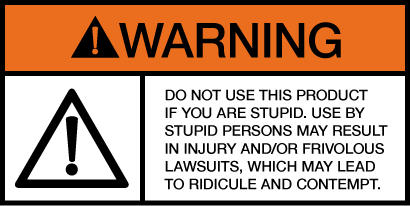
Warning diners that red meat is bad for the environment is yet another attempt
to socially engineer food choices.

A study released last week suggests that fast-food menus that feature labels urging diners not to order red meat off those same menus due to the “climate impact” of those food items can help convince customers to swap out red meat for what the researchers argue are more climate-friendly foods—from fruits and vegetables to poultry and seafood. The study, published in Jama Network Open and led by researchers from Johns Hopkins University, concludes that “climate impact menu labels may be an effective strategy to promote more sustainable restaurant food choices and that labels highlighting high-climate impact items may be most effective.”

The study’s data comes from more than 5,000 Americans who took part in a nationwide online survey last year. Study participants were instructed to “imagine they were in a restaurant and about to order dinner” from an accurately priced sample menu containing a variety of choices, including hamburgers, chicken sandwiches, plant-based burgers, and salads.

The study asked participants to “order” different foods after viewing one of three types of sample menus online. Outside of a control group, the study presented web users with choices that either disparaged the sustainability of red-meat dishes or touted the sustainability of dishes not containing red meat. Based on the results, which showed people who were more likely to avoid red meat if it had a red warning label and more likely to order other menu items if they featured a green health halo, the authors conclude that “climate impact menu labels [a]re effective” and “that labeling red meat items with negatively framed, red high-climate impact labels was more effective at increasing sustainable selections than labeling non-red meat items with positively framed, green low-climate impact labels.”\

The study has spurred some news outlets to suggest governments around the world
may—or should—operationalize its findings.

“Policymakers have been debating how to get people to make less carbon-heavy food choices,” the Guardian recounted in a recent report on the study, “In April, the Intergovernmental Panel on Climate Change (IPCC) report urged world leaders, especially those in developed countries, to support a transition to sustainable, healthy, low-emissions diets.”

“Unfortunately, consumers have been resistant to change and many wish to continue eating meat,” a Phys.org report on the study laments.\

Worse still, though the study itself does not suggest that it should be used to form the basis of any government policies, its lead author, Prof. Julia Wolfson of the Johns Hopkins Bloomberg School of Public Health, told CNN last week that “legislation or regulation may be necessary” to force restaurants to add climate warnings to their menus.

Let’s pump the brakes—for a couple of reasons.

Data from the study itself and, more generally, on the effectiveness of government-mandated menu labeling suggests the authors may wish to dial down their perception of the effectiveness of the labels they tested. For example, after completing their respective orders, the survey asked participants if they “notice[d] any labels” on the menu. As the study data reveal, only around 4 out of every 10 participants even noticed any climate-related labeling. While that’s a low percentage, in the real world—in an actual fast-food restaurant setting rather than in an online survey—the percentage would likely be far lower. That’s because, as I’ve explained time and again, study after study has shown that few people pay attention to mandated menu labels (except to choose which food or foods to order), and even fewer use that information.

The premise of the study itself also may rest on shaky ground.

Some critics have pushed back against the notion that some chicken or seafood is more sustainable than all red meat. As the Guardian report on the study notes, “intensively produced chicken has been found to be damaging for the environment, as has some farmed and trawled fish.” Others disagree with the very notion that red meat is an inherently unsustainable food. While it’s become popular in recent years to argue that eating less red meat is better for the environment, that argument has received a good amount of pushback, with critics charging that swapping out meat for plants could be inefficient and ineffective, harm human health, and have unintended consequences for the developing world.

Even if I were to accept arguments that eating less meat is better for the environment, the choice to eat meat (or not) ultimately is and should be an individual’s to make. So it’s not “unfortunate” that consumers “wish to continue eating meat,” as Phys.org posits. And that wish isn’t a cry for government intervention, as Wolfson, the study’s lead author, argues. Rather, it’s a cry for freedom of choice.

If some restaurants competing in the marketplace care to attempt to skew their customers’ choices away from meat and towards vegetarian and/or vegan foods, by all means, they should do so. But the jury is out on whether that would improve the sustainability of those restaurants. What’s more, any restaurant that wants to make such a change should do so on its own accord, without the government’s prompting, backing, or mandate.
 

via Science Matters

https://ift.tt/RhV1ksn

January 7, 2023 at 02:26PM

Shifting Sands

Yesterday the Guardian claimed an exclusive for the story that “Bude in Cornwall awarded £2m to fight climate threat”.

The Money

Apparently the National Lottery “is distributing £100m over 10 years across the UK to local climate action groups”. One of those local climate action groups is the Bude Climate Partnership, whose website tagline is “Working on positive climate-change projects to future-proof the Bude area”. The problem is, on looking at the projects they refer to, we find that they are almost all about education and reducing greenhouse gas emissions in the locality – things like a community carbon audit; transport study; sustainable tourism audit; climate impact study; climate-resilient catchments project; reaching older generations study; the library of things; the physical hub project; a community climate change festival; and connecting with our community (“to succeed in our mission of becoming carbon neutral by 2030”).

There’s a small problem with all this. Auditing the emissions of the Bude area, holding festivals, lending and borrowing things instead of buying them, trying to make tourism (on which Bude depends heavily) “sustainable”, asking older people to educate younger people as to how to live a simpler less carbon-intensive life, etc, will make absolutely no difference whatsoever to the climate, or to the alleged climate change from which Bude is supposedly suffering (‘We’re the UK’s Maldives: idyllic and beautiful, but facing an existential and imminent threat to our way of life due to climate change’ according to the Guardian, quoting Robert Uhlig, the founder and programme director of the Bude Climate Partnership). Even if every locale and organisation in the UK reduced its emissions to zero, it would make no meaningful difference to global emissions, and no difference to the climate. For that to happen, as a minimum, the rest of the world would have to follow suit, but it isn’t. This sort of thing is hubris of the highest order (as well as being a waste of National Lottery money, and let’s not forget that the National Lottery represents a voluntary indirect tax on the poorest in society, since they tend to be the people who are sufficiently desparate as to spend quite a lot of money on the lottery in the misguided hope that it is the answer to their financial problems).

We aren’t supplied with a detailed breakdown regarding the £2M grant made to Bude and eleven surrounding parishes, but we are told that £750,000 of it “is being targeted at making tourism more sustainable within Bude”. Given that the grant has apparently been awarded “to adapt to and mitigate the impacts of climate change”, that sounds to me like a misuse of the funds, since using the money in that way will make no difference to Bude’s climate (mitigation) nor will it provide adaptation in the face of “the intense heat this summer to flooding, and tidal changes” (sic).

Tidal changes

No evidence was provided in the article to back up the claim that Bude is under threat from tidal changes, though I accept that it may be, since sea levels are indeed rising. However, in order for that to be the result of climate change, an accelerating trend of sea level rise would have to be demonstrated, and in the area round Bude I have found no such evidence. Unfortunately I haven’t found any long-term tidal data for Bude, but data is available for other places along the Cornish coast and around the Severn Estuary.

The National Tidal and Sea Level Facility offers up the ten highest tides recorded at various sites (but regrettably ceasing in December 2012, for some reason), such as Newlyn and Ilfracombe. In the case of Newlyn, it is difficult to discern a rising trend, never mind an accelerating one, with 2012 tides featuring in fifth and ninth place, while top spot goes to 2004, second place being in 1985, and even 1948 featuring in fourth place. As for Ilfracombe, a similar picture emerges, with 2012 tides featuring in sixth and tenth places, the winner being 1985, second place going to 1997, and third place being 1989.

However, it must be conceded that this data doesn’t cover the last ten years. To try to rectify that lacuna, I turned instead to the website of the National Oceanography Centre Permanent Service For Mean Sea Level. This also offers up tidal information for Ilfracombe, and this appears to show – if anything – a decline in sea level since 2012. Unfortunately the detailed graph for a newish station at Port Isaac ceases in 2015, but it doesn’t appear to show any increasing trend. As for Newlyn the sea level is clearly rising, but it is difficult to discern an accelerating trend.

There are other stations in the general area. St Mary’s, in the Scilly Isles, seems to have peaked around 2002 and to be declining since then. Devonport doesn’t seem to be showing higher sea levels than back in the late 1980s, and on the other side of the Severn Estuary from Bude, Mumbles (regrettably ending in 2014) doesn’t seem to show any discernible trend.

The Tower

In order to spice up the story, the Guardian refers us to the awful story of the tower – “Bude’s 186-year old storm tower, which sits on the edge of a crumbling coastline, is one of the first structures in the UK that is being moved because of the impacts of climate change.”

Helpfully the Guardian links to the local newspaper website which provided this dramatic story. The irony here is that the story provides evidence, not of recent man-made climate change, but of cliffs that have been eroding for some considerable time. What we learn, on reading as far as the Devon Live sub-heading, is that this is the second time that the tower has had to be moved to protect it from “climate change” and coastal erosion. When was the first time? Surely it must have been fairly recently, given that the “climate crisis” is itself a recent phenomenon? Well, not exactly – last time was 142 years ago, in 1881, just 45 years after it was first constructed at Compass Point.

A slightly different sequence of events is told at the Folly Flaneuse website, but not so different as to affect the basic point:

Overlooking the sea at Bude, in Cornwall, stands an elegant little tower. It was first built in the 1830s, but after being battered by the elements it was rebuilt a little inland fifty years later.

In other words, nice try Guardian, but this story doesn’t begin to back up claims of Bude being affected by a new “climate crisis” involving coastal erosion – rather the coast is continuing to erode just as it has done for a long time. It is also difficult to see that the National Lottery money is going to make much difference to anything. Perhaps there are some practical mitigation projects that I have overlooked, but the bulk of the projects appear to me to be little more than yet more net zero propaganda and ineffectual hand-wringing.

via Climate Scepticism

https://ift.tt/2tWpnv7

January 7, 2023 at 02:15PM

YouTube Bans Heartland Institute’s Channel Just Before Live-stream with Climate Scientist Judith Curry

Note: this is the backstory to what happened yesterday while I was moderating the live interview. We discovered while we were live that the YouTube stream was blocked, now we know why. – Anthony

By Jim Lakely

Originally published January 6, 2023 at Heartland.org

The censors at YouTube justified striking down Heartland’s channel because we supposedly uttered “misinformation” about the 2020 Election. We did not. And that is very suspicious timing.

Every Friday at Noon CT, The Heartland Institute hosts a live program we call Climate Change Roundtable. It’s a timely discussion of the latest news on environment and energy policy that differs from the alarmist perspective that echoes throughout the “mainstream” media. On Friday, January 6, 2023, we were excited to have Dr. Judith Curry as our special guest for the program.

Dr. Curry is of the most well-known and popular climate scientists in America — especially because she holds views that differ from the likes of Michael Mann and other alarmists. Dr. Curry is not a “climate denier,” as Mann calls her. She’s an esteemed scientist who has looked at the data, sees a warming world, but not an impending climate catastrophe that is all the fault of human activity. For that, she is vilified by many, and feared by even more — including, apparently, the folks who decide what to ban and when on YouTube.

Heartland live-streams every show on YouTube, Facebook, and Rumble. But the vast majority of our audience — both those who participate in the chat during the live-stream and those who view it later — watch it on YouTube. Like it or not, it’s the most-popular video streaming app in the world. Freedom-oriented sites like Rumble and BitChute have a very long way to go to catch up.

Anyway, just as we were finishing our show-prep for the episode with Dr. Curry, we got a notice in the back end of our YouTube channel that we had earned a “strike” for spreading “election misinformation” in a previous video.

So, with literally just minutes to go before we were live with Dr. Curry and undoubtedly our biggest live audience yet, YouTube shut down our channel and prevented anyone from watching it there.

The previous “offending” video was an episode of Heartland’s In the Tank podcast, episode 293, which was streamed in early May 2021 — 20 months ago. YouTube did not specify what was said that violated the terms of service and the ban on “election misinformation.” And it also did not notice for nearly two years that a live-stream that almost no one has looked at since May 2021 (and would be nearly impossible to find in a general search on YouTube) was in violation of the terms of service … until just before a live-stream with a non-alarmist climate scientist was about to begin.

It is hard to believe this was just a coincidence — that the algorithm just happened to get around to catching this supposed violation by us — and it’s just our awful luck that it happened mere minutes before we were going live with Dr. Curry.

A better explanation is this: The the name “Judith Curry” was noticed by someone at YouTube — or maybe Michael Mann, who is sensitive to such things, especially regarding Dr. Curry, and he reported the stream to YouTube — and then a human being at YouTube decided that a live-stream from a “climate realist” scientist not be allowed to happen. So, the pretext of Heartland supposedly spreading “election misinformation” was invented, the strike issued, the stream stopped, and high fives all around for a job well done by the the leftist censors at Alphabet/Google/YouTube.

But, as the character of “Mr. Universe” said in the movie Serenity: “You can’t stop the signal, Mal.” And we weren’t stopped, either. You can still view our program with Dr. Curry. We don’t just broadcast live to YouTube, but also simultaneously to Rumble and Facebook. I’ve embedded the Rumble version of the program below. [NOTE: When you click the player below, if it says “blocked by an extension” and/or “loading,” just give it a minute. It might look “broken” for a bit, and then play. If you can’t watch it below at all, watch it on Rumble.]https://ift.tt/MniTp3V

Heartland is now banned from uploading any videos or live-streaming from our channel for a week — presumably until Friday, January 13 at around noon CT. We will report back if our appeal is heard and what YouTube says.

Oh, and as for Heartland violating YouTube’s terms of service by spreading “election misinformation” on that long-ago live-stream? Why don’t you watch and judge for yourself. While the YouTube video has been sent to the Great Digital Beyond somewhere, the Rumble version still exists. Don’t worry if you’re pressed for time. You don’t have to watch for very long. We talk about it at the top of the show and then move on to another topic after about 15 minutes.https://ift.tt/L3SzaYM

We didn’t talk about the results of the 2020 election, nor expressed any skepticism of the results. Why? Because a year earlier we discussed the infamous Time Magazine article titled “The Secret History of the Shadow Campaign That Saved the 2020 Election.” That story reported, in the most-positive way possible, on how the 2020 election was “fortified” by hundreds of millions of secret dollars by Facebook Founder Mark Zuckerberg and other big Democrat donors. Merely reading on the podcast what Time Magazine reported — essential if you’re going to talk about it — was enough to get a previous video banned, as absurd as that seems.

In this latest supposed “misinformation” live-stream podcast from May 2021 that YouTube just now noticed, we had to explain why Donald Trump was banned permanently from Facebook. Even if questioning the results of the election is an offense worthy of being banned, we did not do that. We talked about whether banning people for expressing views that are not crimes are worthy of having your ability to speak on a social media ended.

To help us battle Big Tech censorship, subscribe to Heartland’s YouTube channel, as well as our Stopping Socialism TV channel where we live-stream our In the Tank podcast every Thursday at noon CT. We are also post regular videos on Rumble, BitChute, and Facebook — so click those links to follow us there. And if you want to make sure to never miss our audio content, subscribe to the Heartland Daily Podcast wherever you get your podcasts.

PS: I realize that today is Jan. 6. I know it’s like 9/11 and Pearl Harbor Day times 100 to the unhinged left and their “mainstream” media. So maybe they cranked up the algorithm to flag any and all vids on the platform that they might have missed over the last year or two and make sure those were flagged and removed on this “special” day. But I haven’t seen any other complaints on social media about others getting the treatment Heartland got from YouTube today.

And, again: We did not question the outcome of the 2020 Election on the “offending” podcast. We said that if Trump should be banned for what he says about the 2020 election, then it should be fair game to ban Hillary Clinton for questioning the 2016 Election and Stacey Abrams saying her election for governor of Georgia was stolen. That’s it. We did not violate YouTube’s rule.

via Watts Up With That?

https://ift.tt/41rz63o

January 7, 2023 at 01:51PM

Biden the Job Slayer: Keystone Pipeline Would have Created 10s of Thousands of Jobs

Essay by Eric Worrall

h/t rhs; A congressionally mandated report has revealed the hit on Montana’s economy and the lost jobs and income caused by President Biden canceling the Keystone Pipeline.

Biden admin quietly admits canceling Keystone XL Pipeline cost thousands of jobs, billions of dollars

President Biden’s decision to revoke pipeline’s permits hurt ‘working families,’ Montana senator says

By Thomas Catenacci | Fox News
January 5, 2023 2:39pm EST

The Biden administration published a congressionally mandated report highlighting the positive economic benefits the Keystone XL Pipeline would have had if President Biden didn’t revoke its federal permits.

The report, which the Department of Energy (DOE) completed in late December without any public announcement, says the Keystone XL project would have created between 16,149 and 59,000 jobs and would have had a positive economic impact of between $3.4-9.6 billion, citing various studies. A previous report from the federal government published in 2014 determined 3,900 direct jobs and 21,050 total jobs would be created during construction which was expected to take two years.

But immediately after taking office in January 2021, Biden canceled the pipeline’s permits, effectively shutting the project down.

“The Biden administration finally owned up to what we have known all along — killing the Keystone XL Pipeline cost good-paying jobs, hurt Montana’s economy and was the first step in the Biden administration’s war on oil and gas production in the United States,” Sen. Steve Daines. R-Mont., said Thursday in a statement. “Unfortunately, the administration continues to pursue energy production anywhere but the United States.” 

…

Read more: https://www.foxnews.com/politics/biden-admin-quietly-admits-canceling-keystone-xl-pipeline-cost-thousands-jobs-billions-dollars

The report is available here.

From the report;

… The 2014 Final SEIS estimated that about 42,100 total jobs, or 21,050 jobs annually, would be created if construction were to take two years (direct, indirect, and induced), as well as $2.05 billion in earnings in the United States. About 3,900 of these jobs would be direct construction jobs in Montana, South Dakota, Nebraska, and Kansas. The project was expected to support 50 jobs during the operation. The SEIS estimated that the construction of the KXL pipeline would contribute $3.4 Billion (or 0.02 percent) to the United States Gross Domestic Product.

At the time the KXL was cancelled, TC Energy announced that approximately 1,000 workers “on both sides of the border” were impacted. To the extent that some U.S. employment had already occurred, the numbers of jobs lost as a consequence of KXL’s cancellation would likely be less than these job estimates as they cover the total projected employment from the construction and operation of KXL. …

Read more: https://www.daines.senate.gov/wp-content/uploads/2023/01/12.23.22-KXL-Pipeline-Job-Loss-and-Impacts-on-Consumer-Energy-Costs-001245.pdf

The consequences go far beyond financial losses and lost jobs. The cancellation sent a message to the industry, that petroleum investment is not welcome in Biden’s America.

Every day Americans pay for that lack of petroleum investment, through inflated gasoline pump prices.

via Watts Up With That?

https://ift.tt/WhdIKw2

January 7, 2023 at 12:50PM