
The Elephant in the EV sales room that no one wants to talk about is the limited amount of electricity available to charge EV batteries.
The post Where’s the electricity? appeared first on CFACT.
via CFACT
January 17, 2023 at 08:54AM
The Elephant in the EV sales room that no one wants to talk about is the limited amount of electricity available to charge EV batteries.
The post Where’s the electricity? appeared first on CFACT.
via CFACT
January 17, 2023 at 08:54AM
By Paul Homewood
So much for all those green jobs promised:

UK battery start-up Britishvolt has collapsed into administration, with the majority of its 300 staff made redundant with immediate effect.
Employees were told the news at an all-staff meeting on Tuesday morning.
The firm had planned to build a giant factory to make electric car batteries in Northumberland and was part a long-term vision to boost UK manufacturing.
But its board is believed to have decided on Monday that there were no viable bids to keep the company afloat.
Industry experts say the UK will need several battery factories to support the future of UK car making as petrol and diesel engines are phased out over the next decade.
The UK currently only has one Chinese-owned plant next to the Nissan factory in Sunderland, while 35 plants are planned or already under construction in the EU.
https://www.bbc.co.uk/news/business-64303149
The root cause of this collapse is that the factory would have run at a loss for several years, until the EV market was mature enough to provide a full order book. Investors simply were not prepared to accept this.
Meanwhile our car manufacturers will soon have to start running down their engine plants, as 2030 approaches, with the inevitable job losses.
This whole saga is a reminder that you don’t create jobs through government diktat. Promises of hundreds of thousands of green jobs are simply a mirage.
via NOT A LOT OF PEOPLE KNOW THAT
January 17, 2023 at 08:47AM
 Matthew Lau writes at Financial post When climate policy is all error, doing nothing could be good. Excerpts in italics with my bolds and added images.
It may not be a bad thing for Canadians that Pierre Poilievre
has been largely quiet on climate and environmental policy
Conservative leader Pierre Poilievre has not proposed much in the way of climate and environmental policy beyond scrapping the carbon tax, but if he is searching for policy ideas, one place he best not look — except for examples of what not to do — is across the pond to the U.K.’s Conservative government. Its environmental agenda is a shambolic mishmash of impoverishing energy policies, climate alarmism, excess spending, and virtue-signalling regulations that afflict consumers and businesses without any compensating environmental benefit.
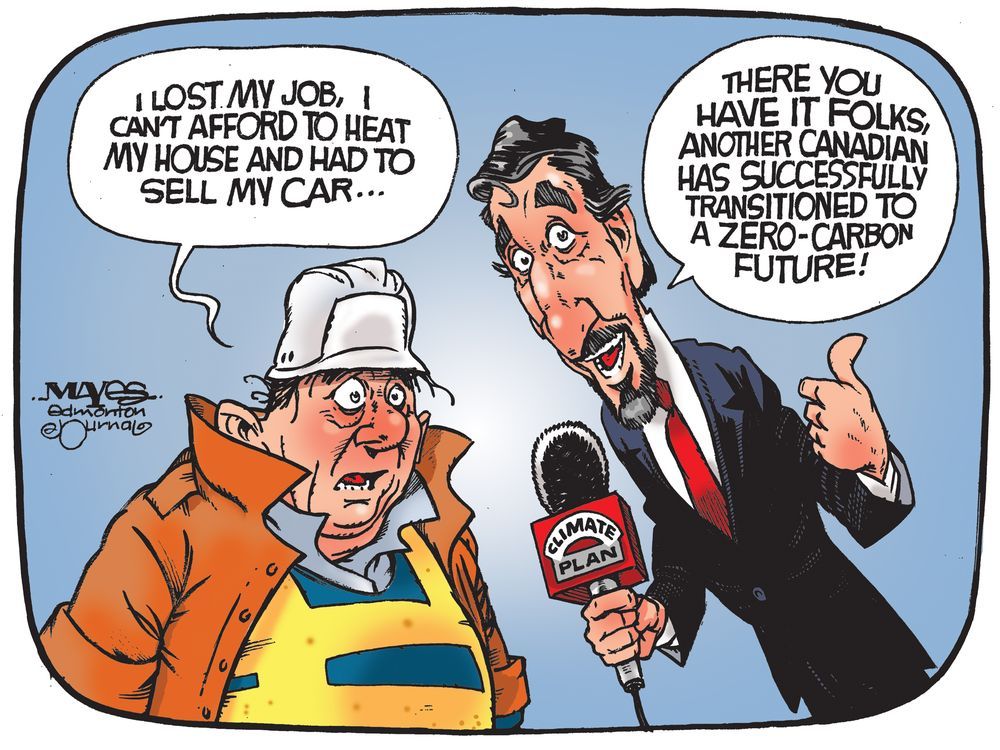
If all this sounds familiar, it is because Canadians are already suffering
from the same policy agenda under the Liberals.
The British government’s latest regulatory effort is a ban on plastic utensils, plates and cups. It follows a 2020 ban on plastic straws, stir sticks and cotton swabs. The latest ban applies only to restaurants and cafes, as the government is planning a separate policy for grocery store sales of the same products next year. It is a little inconsistent that people can still buy bulk packages of plastic forks at the grocery store while not being allowed to access a single fork at a restaurant, where they might actually want to use it. But having two sets of policies implemented a year apart lets the government maximize bureaucrat-hours and so keep the public sector happy.

The problems with plastic bans are well documented.
First, plastic pollution is overwhelmingly caused by waste management problems, primarily in Asia, not single-use products in developed countries. As reported in Reason, the U.K. accounts for only 0.05 per cent of global marine plastic waste.
Second, the alternatives to single-use plastics are more expensive and of lower quality.
Third, despite decomposing more quickly, the alternatives are also often worse for the environment overall. A 2018 Danish Environmental Protection Agency study found that in order to be better for the environment than a plastic bag a conventional cotton bag would have to be re-used 7,100 times.
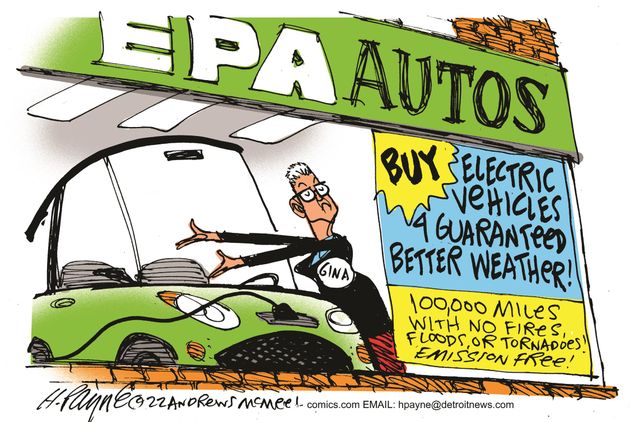
The environmental policy madness pursued by the U.K. Conservatives and similarly hopeless governments, like the Liberals in Canada, extends past the war on plastic to the war on gasoline-powered cars. In Canada, the federal government plans to mandate that at least 60 per cent of new vehicles sold must be electric by 2030, and by 2035 the sale of all new gasoline-powered vehicles will be banned. The U.K.’s mandate is even worse, as in 2020 then-prime minister Boris Johnson, for reasons unknown, decided to advance the date for banning gasoline-powered cars from 2035 (the year selected by the EU) to 2030. Hybrids will be banned by 2035.
As the Telegraph reports, government enthusiasm for switching to electric vehicles is not matched by consumer enthusiasm: higher price tags and rising electricity prices have flattened demand. A green energy group that three months ago forecast 360,000 electric vehicles would be manufactured in the U.K. by 2025 has just slashed its estimate to 280,000. Unfortunately, consumer reluctance has not stopped the government from trying to control motorists’ behaviour in order to achieve its climate ambitions. A report earlier this month from the U.K. Parliament’s Environmental Audit Committee on accelerating the transition away from fossil fuels proposed such measures as a public information campaign to lecture motorists on driving more efficiently, cutting speed limits, imposing “car-free Sundays” in large cities and car-sharing.
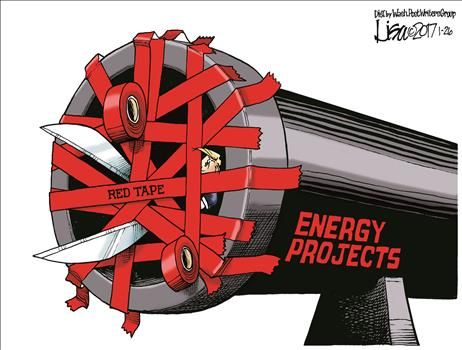
Philip Dunne, the Conservative MP who chairs the committee, declared the U.K. needs “a national war effort” to cut greenhouse gas emissions. Thus, in addition to the hassling of motorists there will be many more billions in spending, “green mortgages,” a call for all housing developers to fit solar panels on new houses as standard and other governmental interventions, all in pursuit of the “guiding star” of net-zero emissions by 2050. The 99-page report is not entirely bereft of reason, but as National Review’s Andrew Stuttaford concludes, it appears to be written by people who learned too little “from the economic and geopolitical disaster that Europe’s climate policy-makers have done so much to enable” and its overall direction is to push Britain faster down the path of more poverty and less freedom.

In view of all this, it may not be a bad thing for Canadians that Pierre Poilievre has been largely quiet on climate and environmental policy. A children’s book of Winnie-the-Pooh-inspired wisdom once offered the suggestion, “Don’t underestimate the value of doing nothing.”
Given the climate-policy disasters of governments of all stripes in Europe, the U.K., and Canada seeking to do something, doing nothing may not be bad advice.
via Science Matters
January 17, 2023 at 08:16AM
Guest Essay by Kip Hansen — 17 January 2023
What are the chances, huh? Have you ever heard anyone say that? I sure have. Of course, they often ask because they haven’t a clue about what “chance” is or how to arrive at a practical idea of “what the chances are”.
Most of us understand that flipping a coin has a 50/50 chance of coming up heads. It also has a 50/50 chance of coming up tails. We understand that our individual chance of getting hit by lightning is extremely small. Despite the truth of that, I have a close relative that has been hit by lightning twice – and survived both times. What are the chances of that?!
[Struck by Lightning: Estimates vary widely, but in the United States: “According to the National Weather Service, a person has a 1-in-15,300 chance of getting struck by lightning in their lifetime, defined as an 80-year span.” And “The odds of being struck in a given year are closer to that one-in-a-million mark, though: 1 in 1,222,000.”]
When we speak of “chances”, we really mean probability, which is a subject so wide and wild, that the statistician William Briggs has written a 237 page book as an introduction to the subject.
Regular readers will know that I am a die-hard pragmatist — a practical person. If it isn’t true when I stub my toe on it, then I don’t care much. This means I lean towards working engineers and away from academics of all sorts when the subject is something I can see and touch.
My favorite professional statistician is William M. Briggs. We share a background that includes such divergent topics as cryptology and stage magic. He occasionally publishes something of mine.
He introduced the multiplication of uncertainties in a blog post last June titled: “Why You Don’t Have To Worry About Climate Change: Multiplication Of Uncertainties”. He has given me permission to extensively quote that post.
Briggs wrote of what happens with probability when several uncertain things have to happen at the same time. But what we often have to consider is daisy-chained uncertainties.
What are daisy-chained probabilities? Something like this: If my black cat, who has a fifty/fifty chance of coming home tonight, does come home and then encounters my son’s dog, who has a 1-in-four chance of being unexpectedly dropped off for me to dog-sit overnight, and given that the dog is totally intolerant of the cat on one-out-of-every-five days, what is the chance that there will be a chaotic dog-and-cat fight in my home this evening?
This type of scenario can be stated: “If this, and then this, and then if this then that.” The events have to take place in a specified order, each one having its own probability.
[There is only a 2.5% chance of chaos. I would be willing to take the chance (and suitable precautions). Surprised?]
Of course, Briggs does not use such a “householder’s” example.
Briggs says this:
“While it is logically possible that slight changes in the average weather will cause only misery, and do no good whatsoever, it is scarcely likely. Indeed, it is absurd and proves “climate change” is part superstition, part scam, part bad science.”
“Our archetype statement has three parts: 1) the threat of “climate change”, 2) the bad event, and 3) the promise of “solutions”. We are meant to take the thing as a whole, as if the whole were as certain as the most certain part. Rather, as more certain than the most certain part.”
The key is “that we are meant to take…[it] as if the whole three part proposition is as certain as the most certain part.”
Here’s recent news sample:
“Phil Trathan: Emperor penguins breeze through the Antarctic winter, and they need sea ice as a stable platform, so they really depend upon the sea freezing and forming a firm base. And as temperatures increase in the Antarctic, then we will see the sea ice disappear. And that means then the Emperors will have no place to breed.“
Take a deep breath…yes, I know that is absurd. But it is an example of a CliSci-madness daisy-chain statement: IF “temperatures increase in the Antarctic” then IF “sea ice disappears” Then “Emperors will have no place to breed”.
“If temperatures increase in the Antarctic” means temperatures getting high enough to threaten winter sea ice formation:
The highest Maximum Temperature Temperature (monthly average) recorded at either Vostok or the South Pole is minus 26 centigrade. Antarctic experts know that sea ice is always present in the southern winter, when Emperor penguins must come ashore to lay eggs raise chicks. Emperor penguins do not nest on ephemeral sea ice, they nest on the solid fast ice and or inshore the ice-covered rock of Antarctica. They do, however, often need land-fast sea ice to leave the water and get up on to the land, depending on the configuration of the shoreline.
That’s an example of how bad the propaganda can get, but let’s see Briggs’ examples:
Below, Briggs is referring to this statement: “Our archetype statement has three parts: 1) the threat of “climate change”, 2) the bad event, and 3) the promise of “solutions”.” … “But that certainty adds is impossible. As is not possible.
All three parts of the statement have their own uncertainties attached to them. If we consider the statement as a whole, then these uncertainties must be multiplied, more or less, resulting in a whole that is vastly more uncertain than any individual part.”
Now he introduces an everyday example: [some emphasis mine – kh]
“This coin will come up heads, [then] I’ll roll greater than a 3 on this die, and [then] draw an eight of hearts from this deck.”
Never forget! All probabilities are conditional, meaning we have to supply evidence from which to calculate them. Here, I’ve chosen common evidence sets. We have to assume these for each of the three parts of this scenario. For the coin flip, we’ll use “Here is an object which when flipped can show only heads or tails”. From that we deduce the chance of heads is 1/2.
And so on for the others. We get 1/2 for the flip, 1/2 for the die roll, and 1/52 for the card draw, all assuming standard evidence. For the entire scenario to be true, we need get all three. The probabilities multiply: 1/2 x 1/2 x 1/52 = 1/208, which is about 0.005.” [the more precise value is 0.0048076923076923, about ½ of 1% ]
Briggs started with a news story (“There’s a Study!”) which he summarizes as “Because of the climate crisis, coffee production in Africa will decrease, which is why our political solutions need to be put in place.”
I picked these examples because I think they’re in the same ballpark as our coffee “climate change” scenario, though the evidence sets are trickier. Let’s step through each of the parts of the scenario to see how statements like this should be tackled.
1) The threat of “climate change”. I take this to mean Expert models predicting “large” “climate change” are accurate or the climate changes on its own, for reasons (at least in part) other than encoded by Experts in their models. Given Experts have been predicting weather doom since the 1970s, first that it would be too cold, then that it would be too hot, then that it would just be too different, and they’ve been wrong every time so far, I’m not too keen on Expert models. But I also figure that the earth’s climate has been both hotter and cooler, wetter and drier, sunnier and cloudier in the past, so it can be so again.
There is no numerical value for the probability that can be deduced from this evidence. It is too vague. But that doesn’t mean it is not useful. If pressed for a number, it is not too far, in my mind based on this evidence, from 50-50.
2) The bad event. Maybe coffee production in Africa would decrease under changed weather, or maybe it wouldn’t. Saying it will decrease is the result of another model by Experts. Who haven’t done at all well with agriculture forecasts.
Again, no numerical probability can be deduced. But I’m feeling generous, so call it 50-50 again. (Really, I believe it’s less, but I don’t want to change our example.)
3) The promise of “solutions”. Expert “solutions” here would be twofold: stopping the climate from changing, and ameliorating reductions in coffee production given the climate has changed in a direction to harm production.
This one is even trickier because some of the same evidence is used in (3) and in (1); namely, that about Experts’ climate models. This makes the multiplication trick strictly wrong.However, it’s not too far off, either, especially because Expert “solutions” for complex situations stink, stank, stunk. That one in fifty two is being generous.
[The resulting chance of the daisy-chain for coffee doom, as calculated above is about 0.005 – or 1/2 of 1%.]
The end result is I’m not worried about “climate change”, not nearly as worried as I’d be about adopting Expert “solutions”, which in my estimation would only make things worse, or much worse.”
My opinion, which I share with Briggs (more or less), all of the CliSci predicted Bad Effects share these types of daisy-chain dependencies and probabilities.
Think of it in terms of the “IPCC likelihood” scale:
As we can see, something that is stated to be “Likely” is between 66% and 90% ‘probability’ — converted to decimal fractions as 0.66 to 0.9.[Wherein the probabilities have not been calculated but determined by polling the expert opinions of those serving on the on the IPCC committee overseeing the chapter of IPCC reports on the issue – and many times changed, I understand, by the various National Representatives that must approve each likelihood statement.]
What happens when just two (2) such “Likely” statements are daisy-chained by dependency.
I’ll use the two differing point within the range of “Likely” – 0.70 and 0.85:
If “Likely #1: then if “Likely #2” then Result (in likelihood)
0.70 x 0.85 = 0.595
Daisy-chained likely events depending on one another almost break into the “Likely” range – if we rounded up, they’d make it.
But look what happens when we need three Likely outcomes to happen simultaneously:
0.75 x 0.80 x 0.85 = 0.51
Basically 50-50 in the About as Likely as Not range
The two categories, About as Likely as Not and More Likely Than Not overlap – the lower category being “33-66% probability” and the higher being “> 50% probability”.
Once things events drop into the “About as Likely as Not” range, three daisy-chaining events produce “Unlikely” outcomes.
0.4 x 0.5 x 0.6 = 0.12
Three daisy-chained events at the lower end of “About as Likely as Not”:
0.35 x 0.35 x 0.35 = 0.043
“Extremely Unlikely”
Bottom Line:
1) All of the probabilities of CliSci future disasters suffer from the failure to calculate the probabilities through multiplying their necessary component’s fractional probabilities. [Multiplying produces an approximation, good enough for pragmatists.]
2) Note that the probability of some disaster decreases substantially when multiple conditions (if this) must take place in a particular temporal order — as in If First This then If Next This then Maybe This. The above examples just cover probabilities that all the conditions will happen, without regard to order. Introducing a new condition – temporal order – necessarily decreases probability.
3) This means, that for Climate Science, IPCC-style predictions, based on climate models that have very wide spreads (think: models predicting future global average temperature) where is no stated probabilities assigned, just a wide interval of possible values, we have to re-think all of the IPCC predicted outcomes. Why? The probabilities of all the predicted consequences must have their probabilities at least roughly calculated by multiplying the probabilities of the conditions that lead to those consequences.
4) We can ignore all press release or statements that present a predicted disaster that begin with “If temperatures continue to rise….”. This idiocy invariably means “If the Global Mean Surface Temperature continues to rise….” — but that is not the same as “if temperatures continue to rise here” …“If the temperature above 6000 feet at Mount Hood rises high enough to prevent snowfall…” (see this essay).
# # # # #
Author’s Comment:
Uncertainty is tricky, it is uncertain, it can be complex, it can be complicated and it can be chaotic (as a cause or an effect). There are those who think we can safely corral uncertainty with the fences of statistics. But this idea is used as a pacifier to keep us from facing the real uncertainty of the world around us.
Statistical approaches are alluring – they act to lull us into feeling that we have it all under our control bringing in a sense certainty in the place of uncertainty. Given the world-as-it-is, this may be necessary for our sanity.
This, I fear, is but another version of something akin to Propter Nomen — if we can label it “uncertainty bars” or “standard deviations” or “error bars” or, and I like this one, “confidence interval” (which implies that it isn’t that nasty uncertainty, but rather we are confident about it), then we are no longer uncertain. All of those “uncertainty” substitutes are simply corrals into which we hope we have confined all the uncertain parts of our problem.
There is and will always be some uncertainty in measurements and calculations. The more different measurements and calculations involved, the greater the uncertainty becomes.
Thanks for reading.
# # # # #
via Watts Up With That?
January 17, 2023 at 08:11AM

