
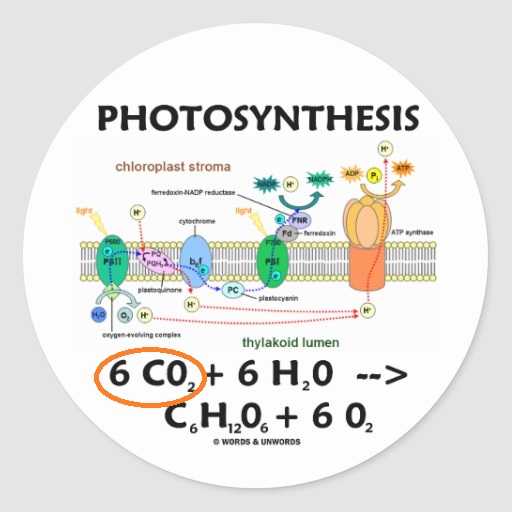
CO2 is not pollution
More climate gobbledygook from miserablists who want to impose their obsessive and negative ideas on everyone else, by insisting that tiny amounts of the essential trace gas CO2 are an enormous problem leading the world to their imaginary catastrophe.
– – –
The emission reductions in the 11 high-income countries that have “decoupled” CO2 emissions from Gross Domestic Product (GDP) fall far short of the reductions that are necessary to limit global warming to 1.5°C or even just to “well below 2°C” and comply with international fairness principles, as required by the Paris Agreement, according to a paper published in The Lancet Planetary Health journal.
Politicians and media have been celebrating recent decoupling achievements of high-income countries as “green growth” — claiming this could reconcile economic growth with climate targets, says Phys.org.
To investigate this claim, the new study compared carbon emission reductions in these countries with the reductions required under the Paris Agreement.
“There is nothing green about economic growth in high-income countries,” says lead author of the study, Jefim Vogel, from the Sustainability Research Institute at the University of Leeds, UK.
“It is a recipe for climate breakdown and further climate injustice. Calling such highly insufficient emission reductions ‘green growth’ is misleading, it is essentially greenwashing. For growth to be legitimately considered ‘green,’ it must be consistent with the climate targets and fairness principles of the Paris Agreement—but high-income countries have not achieved anything close to this, and are highly unlikely to achieve it in the future.”
“Continued economic growth in high-income countries is at odds with the twin goal of averting catastrophic climate breakdown and upholding fairness principles that protect development prospects in lower-income countries. In other words, further economic growth in high-income countries is harmful, dangerous, and unjust.”
The study identified 11 high-income countries that achieved “absolute decoupling” (defined as decreasing CO2 emissions alongside increasing GDP) between 2013 and 2019, which were Australia, Austria, Belgium, Canada, Denmark, France, Germany, Luxembourg, the Netherlands, Sweden, and the United Kingdom.
For each country, it compares “business-as-usual” future emission reduction rates to the “Paris-compliant” rates needed to comply with the country’s “fair-share” (or population-proportionate share) of the respective global carbon budget that must not be exceeded if we are to limit global warming to 1.5°C (the aspirational Paris target) or even just to 1.7°C (reflecting the lower-ambition Paris target of “well below 2°C”).
None of the high-income countries who have “decoupled” emissions from growth have achieved emission reductions anywhere near fast enough to be Paris-compliant.
At current rates, these countries would on average take over 200 years to get their emissions close to zero, and would emit more than 27 times their fair share of the global carbon budget for 1.5°C.
Full article here.
via Tallbloke’s Talkshop
September 5, 2023 at 05:36AM
 Iowa Climate Science Education