Month: September 2023

Book Review: Green Breakdown

‘Green Breakdown: The Coming Renewable Energy Failure’ by Steve Goreham, New Lenox Books (IL, USA), 2023. A review by Michael J Kelly FRS FREng

This is simply the best book I have read on the specific current set of global issues around climate change mitigation and energy policy.   It is simply a must for everyone to read, and especially for those who advocate the green agenda.   In my opinion, the latter have time now to repent their sins and to escape the worst of great retribution that will inevitably come when things go badly wrong.

To date more than $15 trillion has been wasted in efforts to switch to zero-carbon processes with little gained in energy-system performance, reliability or reduction in real pollution.

The earlier chapters of this book summarise the gains made for humanity by the abundance of cheap energy over the last two hundred years, the problems posed by alleged future climate change, leading to the current war on hydrocarbons and the nirvana of 100% renewables.  The next chapters start to throw up the immense problems associated with domestic energy (I much prefer cooking with gas than electricity), electric vehicles in winter and cold climates, and our reliance on shipping and aviation for many of our essentials in life.   Global heavy industry simply cannot survive on renewables or/and hydrogen.

Until now the book follows a familiar story, but it has two strong advantages over the competition: (i) the best ever collection of relevant hard data and trends on the all the topics and (ii) truly comical inserts drawn from the media, such as the report on the last page from Fox News that a New York Times essay says “You Should Mate with Short People to Save the Planet”!

The highly distinctive part of the book is the last two chapters, entitled ominously “Energy Crisis and the Seeds of Failure” and “Green Breakdown and the Future”.   The former contains a detailed analysis of the 2022 global energy crisis, caused by widespread weather extremes and greatly exacerbated by consequences of the Russian attack on Ukraine.   Europe got through this crisis by the thinnest of margins.   One box entitled “The Destruction of European Industry” shows cascading effects whereby the low level of the Danube prevented coal barges from restocking coal-fired power stations, and the consequential forced load-shedding of vital industries.

The last chapter shows how, when we are further down the track of renewables without dispatchable back-up for electricity, a repeat of 2022 will be truly catastrophic for humankind, visiting on us now with certainty what the climate alarmists are promising in the great distant future, namely a global societal breakdown, likely before 2040 if the same collection of problems coalesce again – severe weather, international conflict and a global energy system on the brink of instability.

I can only add the speculation that, when the time comes, we will need the equivalent of the Nuremburg trials to apportion blame and secure damages for those hardest hit: the poor round the world.

via Net Zero Watch

https://ift.tt/GdaPuS2

September 25, 2023 at 03:17AM

Subsea cable failures could derail offshore wind ambitions – insurance costs ‘becoming prohibitive’

Image credit: nawindpower.com

Another blow for net-zero dogmatists. More evidence that cheap offshore wind power doesn’t exist and nobody can control its costs, or be sure of a good level of reliability.
– – –
Global Underwater Hub (GUH) is leading the charge to tackle failures in underwater cables which could derail global offshore wind ambitions, says AGCC.

The trade body, which champions the UK’s £8billion underwater industry, says that reliability of subsea cables is “paramount” to the success of offshore wind and the energy transition.

But failure of these cables is all too common, to the point that the cost of insuring them is becoming prohibitive.

GUH chief executive, Neil Gordon, said: “It’s estimated that around 85% of the total value of offshore wind insurance claims relate to subsea cables. Insurers are losing money underwriting cables with the average settlement claim in the region of £9million. Brokers have warned that the high number of cable claims is affecting capacity and coverage and the cost of repairs typically runs into millions, with warranties rarely covering the high cost of business interruption.

“If these critical components become uninsurable, offshore wind projects around the world will be derailed, making global 2050 net zero targets completely unachievable.”

Globally, over £620billion of investment in offshore windfarms is anticipated by 2030 and, for the world to hit net-zero emissions by 2050, the generating capacity from offshore wind must increase by a staggering 1,120 GW. The subsea cable sector for offshore wind has been estimated at £100billion over the next ten years.

Mr Gordon added: “This scale of expansion and opportunity can only be achieved by installing and maintaining thousands of miles of reliable cables under the seabed.

“There is an urgent need for a holistic approach to finding solutions which can be implemented as offshore wind increases in scale and technical capability with higher voltages and dynamic elements.”
. . .
Mr Gordon explained: “With the shift from fixed to floating offshore wind, where the dynamic nature of floating cables is even more challenging, the critical issue of their reliability must be addressed as a matter of urgency.

“It’s clear there are inherent issues affecting the performance and reliability of subsea cables that are within the industry’s control. Failures can stem from any stage in the cable lifecycle – from design to manufacture, handling and installation, through to operation and maintenance.”

Full article here.

via Tallbloke’s Talkshop

https://ift.tt/4vK2BCU

September 25, 2023 at 03:12AM

Giant Australian retirement funds are being corporate Climate Bullies with your money

Dark Money, power, retirement funds, GFANZ, Bankers.

By Jo Nova

Unguarded Big-Money works like acid against democracy

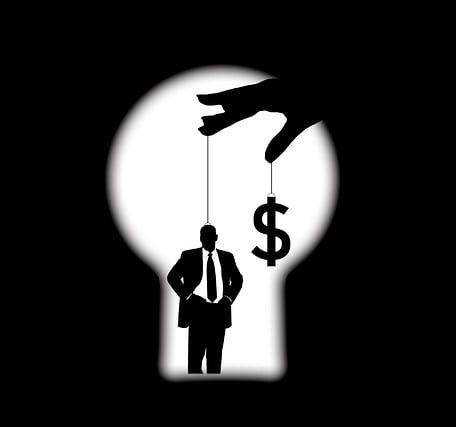
Just like everywhere in the West, the money Australian’s earn may be quietly used against them to push policies they don’t want. The Australian Retirement Trust (ART) and HESTA are using their voting rights on corporate boards to push for climate action and gender diversity. They aren’t polling their members to find out if this is what they want. They are just following The BlackRock and GFANZ banker cartel modus operandi. It is coercion, done with the illusion of “good intentions”, but in reality, aggressively self-serving behaviour. The management of HESTA and ART couldn’t care less what the owners of the money want.

ART is a $260 billion fund (Australia’s second largest) with 2.2 million members. HESTA is a $76 billion fund with nearly 1 million members who are mostly working in health and community service. Just as with the US Funds, there surely is a question of fiduciary duty. Are these funds maximizing the return for investors or are they using their money to achieve political ends that result in lower income for retirees? Environmental investors lost 22% last year when energy investors made 54%.

So for directors on a corporate board, what’s the best way to hold off the climate police and the femo-activists from voting you out? You must publicly endorse “Net Zero” and women’s rights, even if you think they are witchcraft, against the company’s interests, bad for the nation, and bad for women. Imagine what happens to board members if they dare speak their mind?

The Paris Agreement, remember, appeared to be nearly worthless at the time, yet here it is years later, being foisted in reality in corporate boardrooms. A more detailed look at boardroom politics finds that global giants BlackRock and Vanguard are voting against Australian company directors that don’t serve the multinational globalist agenda.

We all know exactly how much BlackRock and Vanguard care about Australian jobs or the energy bills Australians are paying.

This is how the wheels of evil grind:

Super fund ART plans to pressure companies to slash emissions and sets a new net-zero road map

By Paulina Duran, The Australian

Australian Retirement Trust has committed to pressuring 88 companies to slash their carbon footprint, setting a new “net zero” road map to cut emissions in its portfolio of equities, infrastructure and real estate investments by 43 per cent by 2030.

Australia’s second-largest super fund said that it would start voting on all climate-related shareholder proposals in the Australian market and would link the remuneration of its own investment team to climate change performance.

HESTA to use voting rights to push for climate action, gender diversity and decent work

By Paulina Duran, The Australian

Super fund HESTA has warned the largest listed companies it intends to vote against male directors of boards with low female representation. In letters sent last week to the chairs and chief executives of the largest 292 ASX-listed companies it invests in, the $76bn fund said it would seek to engage on four “active ownership themes” ahead of the upcoming annual general meeting season. This includes influencing corporate policies on climate, “decent work” and biodiversity loss.

Thus HESTA are the climate police:

HESTA is also asking executives and board directors to work towards a goal of halving greenhouse gas emissions by 2030 and achieving net zero greenhouse gas emissions by 2050, in line with the goals of the Paris Agreement.

It wants ASX300 companies to accelerate investment in the electrification and decarbonisation of the economy, and its voting at this year’s AGMs will “consider progress in these areas and whether board skills and composition demonstrate preparedness for the low carbon transition,” it said.

This is a rapidly accelerating phenomenon in Australia

Super funds are getting bigger, thanks to Big-Government forced rules taking even more from the workers and handing their money to the control of small management boards that hardly anyone pays attention too. These toxic funds are increasing their ownership and influence and using their voting rights more often:

By Matt Bell, The Australian

Companies are under increasing pressure to consider the views of super funds, which held assets worth $3.5 trillion as of March. And funds are getting bigger with the compulsory super guarantee rate set to reach 12 per cent in 2025, up from 9.5 per cent in 2020.

Super funds’ ownership of the 10 largest companies listed on the ASX has more than doubled in the past 12 months to $60bn.

Super funds now own 6.3 per cent of Woodside, compared to 0.5 per cent in September 2022, with investments surging after a rally in global oil prices. Ownership of BHP, CSL, Wesfarmers and Westpac has almost doubled.

“It’s become more and more common for super funds and fund managers to use their votes at AGMs as an opportunity for investors to promote good governance and to endorse the actions of companies … or express concern over poor practices.


Vested Interests, Climate change, Shadow of money on the landscape, Art, Jo Nova.

There are $3.5 trillion dollars unguarded in Australian Super funds

For Australians wondering where their money would be safe, the answer is not obvious. They may not even realize their funds are held with ART, which was only formed a year ago from the combination of Sunsuper and QSuper and the Australia Post Superannuation Scheme (APSS). The Chairman used to be a Labor politician in Queensland.

The news is not all bad. The largest fund in Australia — called AustralianSuper — was accused two weeks ago of protecting a Woodside board member that climate activists wanted to get rid of. The Guardian was unhappy:

Australia’s biggest superannuation fund helped Woodside Energy fend off a shareholder revolt over its climate policies, nullifying concerns raised by global investors, according to new analysis.

Activist group Market Forces said AustralianSuper recently voted for the re-election of Ian Macfarlane, a senior Woodside director and longtime sustainability committee member at the oil and gas giant.

BlackRock

The activist group noted the money pushing to get rid of Macfarlane included votes from BlackRock and Vanguard:

Market Forces said it paired its investment analysis with share voting data to identify how large shareholders voted. It found that major global investor BlackRock voted against the re-election of Macfarlane, as did several funds run by investment manager Vanguard.

So when Australian corporations or “The Business Council of Australia” speak about climate action, womens rights or Voting Yes for racist voices, (HESTA was the first fund to do so) they may merely be doing the bidding of foreign banker cartels. Who knows?

So if your retirements funds are in a politically toxic fund, where can you move them?

Even though AustralianSuper appears better than ART or HESTA, bear in mind that until March it had a large climate report and “Net Zero” factsheet on its website. It apparently deleted them (like many other funds) once regulators started promising to check whether funds green claims were really correct.  Maybe that’s a good sign, but we could all hope to find a retirement fund that cares about our actual retirement first and foremost.

If readers want to help it would be very useful to compile a list of Australian Super Funds that had outspoken Woke policies (so we can avoid them) and a counter list that don’t play political games with your money. Naively, the climate activist group called Market Forces, and the Australian Conservation Foundation have done some work, but they are the financial simpletons that think investors just need to pull money out of fossil fuels and put it into renewable wizard magic to change the world. They don’t seem to realize that selling out is an old hat one-off protest. Activist funds now realize they have more influence by buying up shares and threatening to vote out Directors in order to change the corporate culture and sabotage companies from within.

We need those lists!

*For foreign readers, Australian pension accounts are called “Superannuation Funds”, like US 401k accounts.

Puppet image by Gerd Altmann, and cogs image by Pavlo and BlackRock photo by Jim.henderson


0 out of 10 based on 0 rating

via JoNova

https://ift.tt/zB2MhPs

September 25, 2023 at 02:39AM

Net Zero Experiment Built on Intermittent Wind & Solar – Doomed to Failure

A decade from now we’ll be talking about the transition to wind and solar that never happened. Right now, though, rent seekers and their enabling politicos are making claims, fast and furious about reaching net-zero carbon dioxide gas emissions targets using nothing but sunshine and breezes.

No country has ever run itself entirely on wind and solar; no country ever will. But that doesn’t stop the myth makers from pretending that the grand transition is just a giant battery or two away.

With all the substance of a Soviet 5-year plan, Australia’s Green/Labor Alliance has laid out a path that, as John Cameron explains below, looks more like a Highway to Hell.

The Incoherent Roadmap to Net Zero
Quadrant
John Cameron
3 September 2023

In 2021 we were confidently told that it would cost $78 billion to rewire the grid for renewables and that the average annual household electricity bill would fall by $275 under Labor because, as Anthony Albanese explained, ‘we have done the modelling’ [2].

Despite the Prime Minister’s assurances, the cost of transforming the grid by 2030 is estimated to be $1,500 billion (not $78 billion) and the full cost to 2060 is up to $9,000 billion[1]. Also, retail prices in Victoria are to increase by 25 per cent from July 2023, and more pain is in store for households and business when the hedging and contracts roll over and the doubling of wholesale electricity prices fully impact retail prices. As Nick Cater wrote “renewables vision is blind to the cost of calamity”[2].

It is time the Victorian public are made fully aware of the enormous cost of a reckless transition to renewables and the huge amount of land (up to 12 million ha) to become renewable infrastructure.

The Victorian default offer (DFO) price is set by an independent regulator to provide a simple, trusted and reasonably priced electricity option, for consumers who don’t engage in the market to find a competitive retail market offer. All electricity retailers in Victoria must offer residential or small business customers the option to take up the current Victorian Default Offer.

The DFO is expected to deliver households a $354 per year increase on 2022-23, or a 25% year on year increase, assuming there are no further increases in 2023-24. Further increases cannot be discounted, as while retail prices are up 25 per cent, wholesale prices are up 100%. Average households now face an annual electricity bill of $1,756 per year (Table 1).[3]

Note that the generation of electricity (wholesale component) only accounts for about a third of the cost and that network costs account for about another third of the total. Reaching Net Zero requires considerable investment in the two largest components of the cost of getting electricity to your home – wholesale costs and network costs. Unlike solar panels on the roof, which are ‘behind the meter’, utility scale solar and wind power in particular require a huge investment in new transmission networks.

Comparisons of renewables against existing coal- and gas-fired power typically ignore the new transmission costs for the renewables while also simplistically assuming costs for completely new coal- or gas-fired power stations, rather than the lower cost of continuing to operate the existing power stations.

Victorian wholesale electricity prices have more than doubled, from an average of $40/MWh (1999-2015) to $88/MWh (2016-23) under the Andrews Government, even after some impact from COVID lockdowns in 2020-21 (Figure 1). South Australia, the most advanced in the transition to renewables, is the canary in the coal mine as its wholesale electricity prices have consistently been Australia’s highest.

Victorian wholesale spot electricity prices by financial year

The latest Net Zero Mobilisation Report[4] modelled linear reductions to net zero by 2050 for domestic emissions and 2060 for fossil fuel energy export emissions. Six scenarios were modelled – Reference, Rapid Electrification, Slower Electrification, Full Renewables Rollout, Constrained Renewables Rollout and On-shoring (domestic iron and aluminium).

The Reference scenario [4] has no emissions objective. All other scenarios track in a straight line to net zero emissions by 2050 (domestic) and 2060 (export). None of the scenarios are forecasts, suggesting considerable uncertainty of outcomes. As Emeritus Professor Robin Batterham, Chair of the Net Zero Australia Steering Committee, has said “There are too many uncertainties to map a single path to net zero”.

The Net Zero Mobilisation Report [4] highlights what actions Australia must complete by 2030 to reach net zero by 2050. The Mobilisation Report does not consider whether we should reach net zero, nor critique past or proposed actions by governments or companies, nor express preferences. However, the Net Zero Mobilisation Report does express one preference by explicitly excluding nuclear power.

The final Net Zero Modelling Report released in April 2023 illustrates the immense scale, extreme complexity, and breakneck speed required to transition to net zero by 2050. Net Zeros predict capital investment of up to $9 trillion ($9,000 billion) on the transition in the next 37 years to 2060[4].

Funding that transition cost of $9,000 billion over 37 years requires spending $243 billion per year. To put this in perspective, it represents 36 per cent of the entire federal government budgeted expenditure for 2023-24 of $684 billion and roughly equates to the annual federal government spend on social security and welfare of $250 billion per year and more than twice the federal government expenditure of $107 billion pa on health. Have those waiting months and years for critical surgery been told this.

Spending $243 billion per year on energy transition is equivalent to spending 17 per cent of Australia’s GDP, and so far without a business case nor final investment decision report.

According to Net Zero, the transition will be among the largest and fastest economic transformations in history, with major new infrastructure required, however, progress is slower than modelled and Net Zero call for accelerated action [4]. We also have a call for accelerated action for those awaiting critical surgery!

Nick Cater[5] described the enormity of the challenge as “the irrational pursuit of renewable energy as the antidote to planetary pain must eventually confront the immutable laws of physics and the scarcity of land”.

The report by Net Zero calls for a huge list of expensive strategic actions as follows (with my comments in italic):

♦ Accelerate all options that could make a material contribution to decarbonisation.
There is no rigorous cost benefit analysis, nor analysis of the opportunity costs, nor the risks of a reckless rapid transition.

♦ Clean energy and clean processed minerals should be pursued as export opportunities.
Australia’s electricity costs are now well above world parity such that Australia is unlikely to be internationally competitive processing of iron ore into steel and bauxite into aluminium.

♦ Considerable land use change will be essential and requires proactive management, particularly for indigenous communities and farming communities.
Up to 12 million ha of land may be required, equivalent to half of Victoria or 77 per cent of private land in Victoria. Many rural communities face acquisitions and easements, loss of scale economies in food and fibre production, and a plethora of ugly new transmission lines, wind turbines and utility solar panels.

♦ Benefit sharing must be prioritised based on principles of partnership, inclusion, and net gain.
Most households are more concerned about how the costs are to be shared.

♦ Net gain for environments and biodiversity should be pursued in parallel with net zero.
This suggests degrading the environment is OK provided it is in pursuit of the ideal of net zero.

♦ Minimising public impacts requires orderly asset closures, supported by multiple policy mechanisms.
Government has already locked in the exit of fossil fuel generated power, prior to development of a plan for orderly asset closures and the so-called policy mechanisms are not yet supported by rigorous strategies, feasibility studies, business cases and investment decisions.

♦ Low-income households and fossil fuel regions will need support to mitigate impacts.
The government will need to throw billions of everyone’s hard-earned taxes at income support and worker transition. This approach has so far failed in the Latrobe Valley where despite the Andrews Government spending hundreds of millions of your taxes, the number of jobs in the Latrobe local government area are down 8 per cent over the last decade.

♦ Private sector investment risk will be too high in many cases, unless mitigated by government.
This means that net zero can only be achieved by 2050 with huge government subsidies accompanied by huge opportunity costs – we will have to forego opportunities to fix our failing health, social housing, emergency services, triple 0 and education systems.

♦ Net zero supply chains require certain, large, and a long investment pipeline.
Unfortunately the current supply chain mostly traces to overseas, particularly to China where things like solar panels are made, using power derived from fossil fuels including huge imports of coal, gas and oil from Russia. Chinese imports of fossil fuels from Russia tripled immediately after the invasion of Ukraine. The reckless haste with the transition is just exporting or offshoring jobs and emissions. We need time to gear up for greater Australian domestic content of renewable components.

Options to achieve net zero
The Net Zero Mobilisation Report essentially calls for the development of wide ranging options including a couple of sensible options (that may not garner support from idealistic and powerful activists), such as gas-fired peaking generation and carbon capture, utilisation and storage4:

  • Strengthen deployment drivers of renewables, transmission, and electricity storage.
  • Build a large fleet of gas-fired peaking generation to help accelerate renewable growth.
  • Plan and develop clean hydrogen infrastructure, including hydrogen storage.
  • Determine whether bioenergy has a serious role to play through research.
  • Ambitious energy productivity standards for new buildings, and incentives for retrofits.
  • Decide the future of gas distribution to household and commercial customers.
  • Develop plans and mechanisms for industrial decarbonisation.
  • Implement mandatory emissions standards for all road vehicles, and support EV charging.
  • Prepare carbon capture, utilisation and storage (CCUS) networks and basins for large-scale use. Private investment in a CCUS industry will require targeted government support.
  • Research, develop, and scale up land sector abatement pathways, policies and technologies.
  • Do not factor nuclear power into renewable, storage, and firming targets.

Recent analysis shows that investment in utility solar and onshore wind has slowed, and the current pipeline of projects risks falling short of the Net Zero required build rate. Offshore wind has the most uncertain pipeline and faces the highest barriers, due to the need for large subsidies and long lead times to develop initial projects, establish supply chains and provide grid access [4].

The Net Zero Mobilisation Report does not present a pre-feasibility analysis, nor feasibility reports, nor business cases nor final investment decision (FID) reports. Governments have locked in the transition timeline without completing all of these critical aspects that are vital in ensuring that your hard earned tax dollars are invested optimally, and without huge ‘opportunity costs’ – such as underspending on health, social housing, education, emergency services etc.

Australia is undertaking a gigantic socioeconomic and environmental experiment on a scale that is unprecedented, and cannot be justified given the many unknowns, the uncertainty, and considerable risk associated with the total costs and benefits. Australia’s reckless transition is unwarranted given our miniscule impact on global climate. This is particularly the case while large consumers of fossil fuels such as China, India and Russia pursue only token transitions.

As Mark Lawson puts it in his book, Dark Ages, “In order to avoid a climate crisis that never seems to arrive, activists and governments are about to plunge us all into a very real power crisis”[6].
Quadrant

[1] Net Zero Australia (2023). Mobilisation Report, July 2023.

[2] Nick Cater 2023. Renewables Vision blind to the cost of calamity, Australian, 17 July 2023.

[3] Source: AER; AEMO 2023. Annual flat tariff bill for domestic customers assuming an annual usage of 4,000 kWh.

[4] Net Zero Australia (2023), How to make net zero happen – Mobilisation Report July 2023. The Mobilisation Report has been prepared by academics at the University of Melbourne, The University of Queensland, Princeton University, and management consultancy Nous Group. Net Zero Australia is funded by gifts and grants from its sponsors: Worley, Dow, Future Fuels Cooperative Research Centre, Future Energy Exports (FEnEx) Cooperative Research Centre, APA Group and Minderoo Foundation).

[5] Nick Cater (2023). Victoria’s energy policy is all at sea. Menzies Research Centre Report, 29 March 2023

[6] Mark Lawson (2023). Dark ages, the looming destruction of the Australian power grid. Connor Court Publishing.
Quadrant

via STOP THESE THINGS

https://ift.tt/jmR6cVH

September 25, 2023 at 02:37AM