
 A war against farmers has emerged, threatening to push them off the land they’ve farmed for generations. As small and mid-sized farms close their doors, governments and corporate entities can scoop up the land. Those in control of the land control the food supply and, along with it, the people.
In Canada, Trudeau’s Liberals have announced a goal of a 50 percent reduction in emissions from fertilizer, a major producer of nitrous oxide, over the next seven years.
“Fertilizer Canada slammed the government’s short-sighted approach, arguing that reducing nitrogen fertilizer use “will have considerable impact on Canadian farmers’ incomes and reduce overall Canadian exports and GDP.”
They may as well slam their heads against a barn door. When it comes to Canada’s re-invention as a socialist state, nothing will knock the communist ship off its course.
“A report compiled by Meyers Norris Penny suggests that regulated fertilizer reduction could cost Canadian farmers $48 billion by 2030 and reduce crop sizes.”
Justin Trudeau has waged war against his own country since the day he became PM in 2015. This man doesn’t like our country very much, and in particular, maintains an innate hatred toward working class Canadians. Perhaps it’s because he has never been one. Then again, it could be part of a larger plot unfolding within society.
It was destined to roll around eventually: an attack on Canadian farmers under that gloriously green, climate emergency banner. This recent Trudeau move involves limiting the usage of fertilizer — a substance, when delivered in its most smelly, natural form, reminds us of what the federal Liberals have long shoveled upon Alberta.
Cutting the bull and arriving at the meat, so to speak: the government intends to effectively reduce farmers’ use of fertilizer by 50 per cent — in scientific terms by limiting the use of the key ingredient nitrous oxide — as part of its bid to severely reduce carbon emissions and thereby fight accelerating climate change.
Farmers, instead, want any fertilizer reductions measured by how much food is produced compared to the amount of fertilizer used, something western growers are striving for already, as growing more for less saves them money in addition to curbing emissions.
Now, when there’s a global food emergency looming due to the ongoing war in Ukraine, such a practical step would seem eminently sensible. But no, Trudeau is demanding an absolute reduction in usage, which will naturally result in less food being produced.
Contributing to global starvation has now become
part of current Canadian public policy.
This latest stupidity was undoubtedly spawned when our prime minister — always looking to one-up any country competing in the green-morality sweepstakes — learned the Dutch government intended such a move.
In the Netherlands that immediately resulted in mass protests by furious farmers, who closed highways with tractors, brought cows to the capital, threatening to slaughter them on parliamentary steps, while blocking vital food distribution centres.
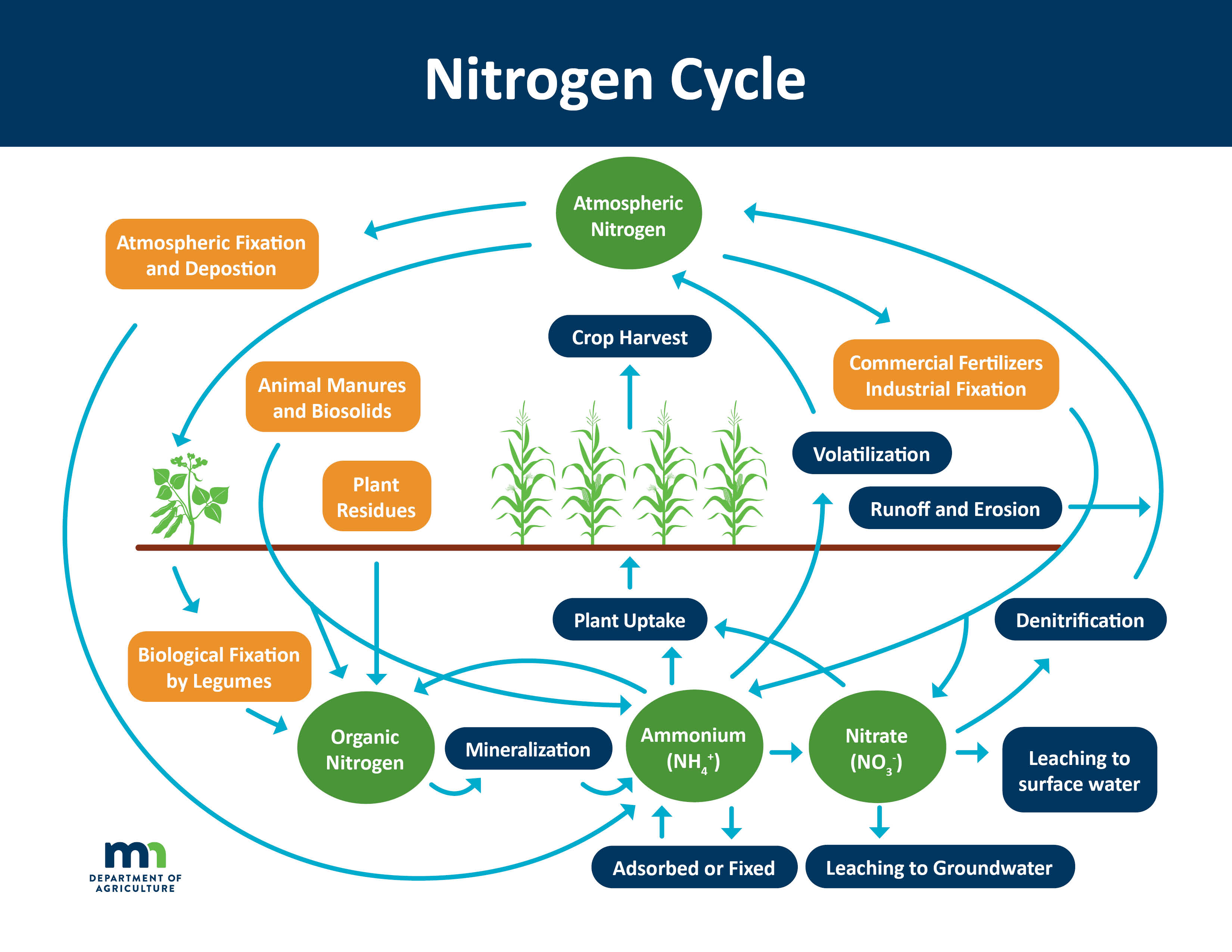
Is the Nitrogen Crisis Real?
“In 2021, the European Union’s Natura 2000 network released a map of areas in the Netherlands that are now protected against nitrogen emissions. Any Dutch farmer who operates their farm within 5 kilometers of a Natura 2000 protected area would now need to severely curtail their nitrogen output, which in turn would limit their production”
Dutch dairy farmer Nynke Koopmans with the Forum for Democracy believes the nitrogen problem is made up. “It’s one big lie,” she says. “The nitrogen has nothing to do with environmental. It’s just getting rid of farmers.” Another farmer said if new nitrogen rules go into effect, he’d have to reduce his herd of 58 milking cows down to six.
Nitrogen scientist Jaap C. Hanekamp was working for a government committee to study nitrogen, tasked with analyzing the government’s nitrogen model. He told Balmakov:8
“The whole policy is based on the deposition model about how to deal with nitrogen emissions on nature areas. And I looked at the validation studies and show that the model is actually crap. It doesn’t work. And doesn’t matter. They still continue using it, which is, in a sense, unsettling. I mean, really, can we do such a thing in terms of policy? Use a model which doesn’t work? It’s never about innovation, it’s always about getting rid of farmers.”
Nitrous Oxide and Climate
Paper by C. A. de Lange, J. D. Ferguson, W. Happer, and W. A. van Wijngaarden. Excerpts in italics with my bolds.
Higher concentrations of atmospheric nitrous oxide (N2O) are expected to slightly warm Earth’s surface because of increases in radiative forcing. Radiative forcing is the difference in the net upward thermal radiation flux from the Earth through a transparent atmosphere and radiation through an otherwise identical atmosphere with greenhouse gases. Radiative forcing, normally measured in Wm−2, depends on latitude, longitude and altitude, but it is often quoted for the tropopause, about 11 km of altitude for temperate latitudes, or for the top of the atmosphere at around 90 km.
For current concentrations of greenhouse gases, the radiative forcing per added N2O molecule is about 230 times larger than the forcing per added carbon dioxide (CO2) molecule. This is due to the heavy saturation of the absorption band of the relatively abundant greenhouse gas, CO2, compared to the much smaller saturation of the absorption bands of the trace greenhouse gas N2O.
But the rate of increase of CO2 molecules, about 2.5 ppm/year (ppm = part per million by mole), is about 3000 times larger than increase of N2O molecules, which has held steady at around 0.00085 ppm/year since the year 1985. So, the contribution of nitrous oxide to the annual increase in forcing is 230/3000 or about 1/13 that of CO2. If the main greenhouse gases, CO2, CH4 and N2O have contributed about 0.1 C/decade of the warming observed over the past few decades, this would correspond to about 0.00064 K per year or 0.064 K per century of warming from N2O.
Proposals to place harsh restrictions on nitrous oxide emissions
because of warming fears are not justified by these facts.
Restrictions would cause serious harm;
for example, by jeopardizing world food supplies.
Resource: Flawed Science Behind Nitrogen “Crisis” (Briggs and Hanekamp)
via Science Matters
November 15, 2023 at 06:41PM
 Iowa Climate Science Education