
By Paul Homewood
As I reported at the time of the storm, rainfall from Storm Henk was typically around 30mm for the two days of the storm in southern and central England. This has since been confirmed by the BBC:


https://www.bbc.co.uk/news/uk-england-hampshire-67893694
.
Amounts like these are certainly not unusual in England. At Oxford, for instance, daily rainfalls of 30mm and above have been commonplace throughout the record since 1827. Note as well the exceptional totals in the 1950s and 60s, and the obvious absence of any sort of a trend:

https://climexp.knmi.nl/gdcnprcp.cgi
.
Most of the higher daily totals occur in summer, but the chart below plots all days above 30mm between September and April. This shows more clearly that daily amounts of 30mm and more occur regularly, about once every two years on average. Again there is no trend.

https://climexp.knmi.nl/data/pgdcnUK000056225.dat
Plainly therefore the rainfall during Storm Henk was in no way exceptional in southern England.
But to what extent was the cumulative rainfall in previous weeks and months a factor?
December was certainly wetter than normal, but not unprecedently so. Indeed, it is clear that much more extreme months have occurred in the distant past:
.
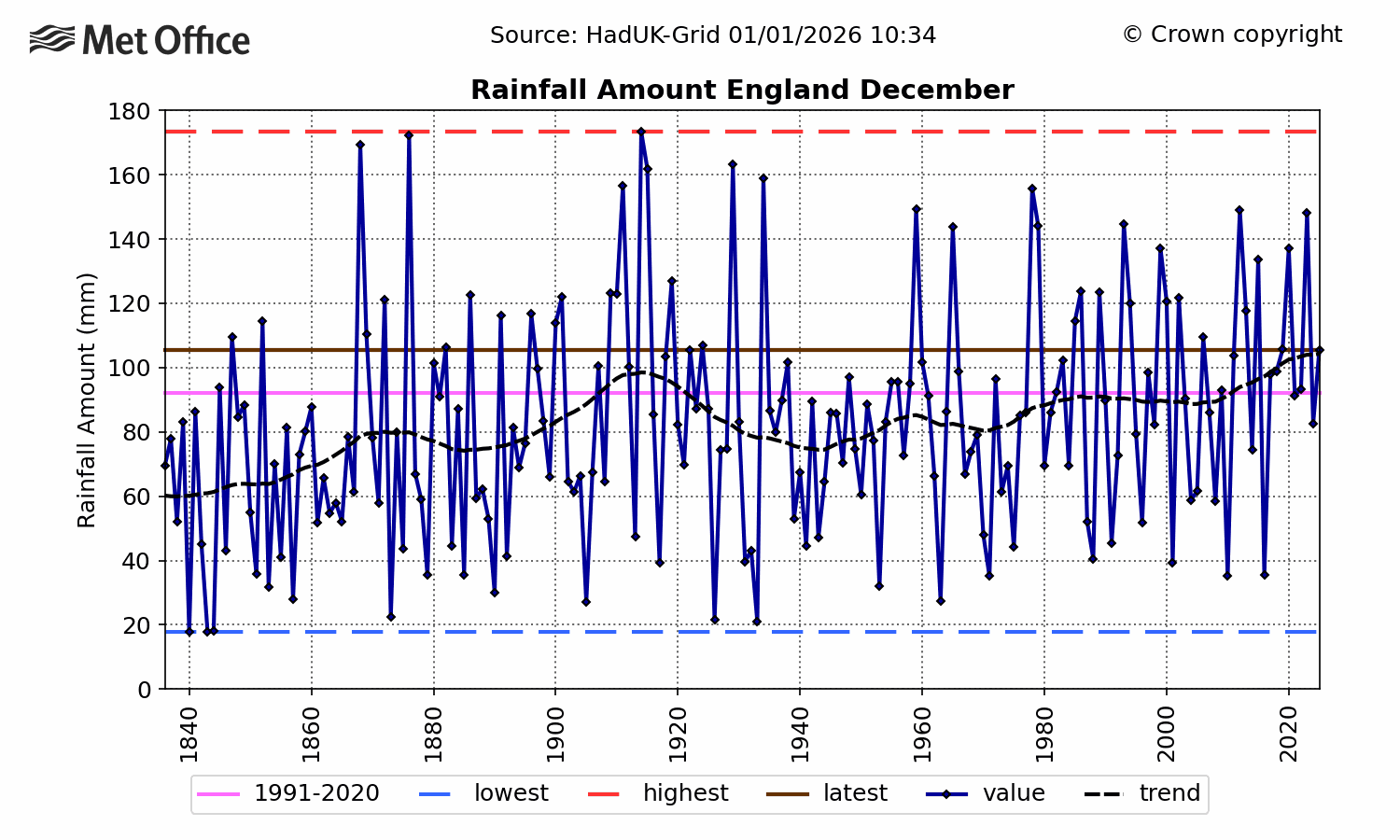
Looking at cumulative rainfall since October however sheds a bit more light, with 403mm being the third highest on record, behind 2000 and 1929. That certainly had the effect of leaving the ground saturated. But again there is no evidence this is part of any long term trend, much less caused by climate change.

https://www.metoffice.gov.uk/pub/data/weather/uk/climate/datasets/Rainfall/date/England.txt
Despite claims to the contrary, there is no evidence that climate change had any impact on last week’s flooding, either in terms of Storm Henk itself, or the weather in recent weeks.
via NOT A LOT OF PEOPLE KNOW THAT
January 10, 2024 at 08:21AM
 Iowa Climate Science Education