

A sign of the times
Resourcful Finance Pro reported a pivot away from DEI by Price WaterhouseCoopers (PwC) Big 4 accounting firm pulls plug on DEI quotas. Excerpts in italics with my bolds.
The second-largest accounting firm in the U.S. decided to revamp its hiring policies rather than face class-action lawsuits or an investigation by the Equal Employment Opportunity Commission. This is just the latest example of a private-sector company adjusting in response to the Supreme Court ruling against Harvard University last year.
PricewaterhouseCoopers (PwC), one of the vaunted Big 4 accounting firms, is eliminating diversity, equity and inclusion (DEI) targets for its internship and scholarship programs. The company will also drop a commitment to earmark at least 40% of its procurement budget toward minority-owned suppliers.
America First Legal (AFL) sent a cease-and-desist letter to PwC in recent weeks warning of future litigation against it unless it ended its racial quotas. AFL described PwC as “one of the worst offenders when it comes to implementing racially discriminatory practices.”
Changes at PwC will include “ending race-based eligibility criteria for a student internship program and for scholarships to help candidates prepare for professional accounting exams, two initiatives that were designed to increase the diversity of the firm’s employee base,” according to the Financial Times. PwC reported it hired 3,500 people in fiscal year (FY) 2023, of whom “56% were racially/ethnically diverse.”
The percentage of white new hires at PwC dropped from 58% in FY 2021 to 51% in 2023. Many students say the costs of going to college and sitting for the certified public accountant exam are too high, leading to an exodus from the profession.

CNN Worried about Business Losing Faith
DEI efforts are under siege. Here’s what experts say is at stake. Excerpts in italics with my bolds and added images.
When the murder of George Floyd by Minneapolis police set off a wave of racial unrest across the country in 2020, corporate America responded swiftly with renewed and public commitments to diversity, equity and inclusion (DEI).
Major companies created new DEI positions or expanded teams dedicated to DEI and the phrase became a buzzword across the business landscape. Many corporate leaders pledged to hire more people of color, removed branding perceived to be racist and invested in historically Black colleges. At the time, the efforts were largely met with public support, amid a so-called “racial reckoning” that laid bare a slew of systemic inequities in American society, including the workplace.
But nearly four years later, the very public ousting of Harvard’s first Black woman president earlier this week has led to a new firestorm of debate about DEI efforts in corporate America and beyond.
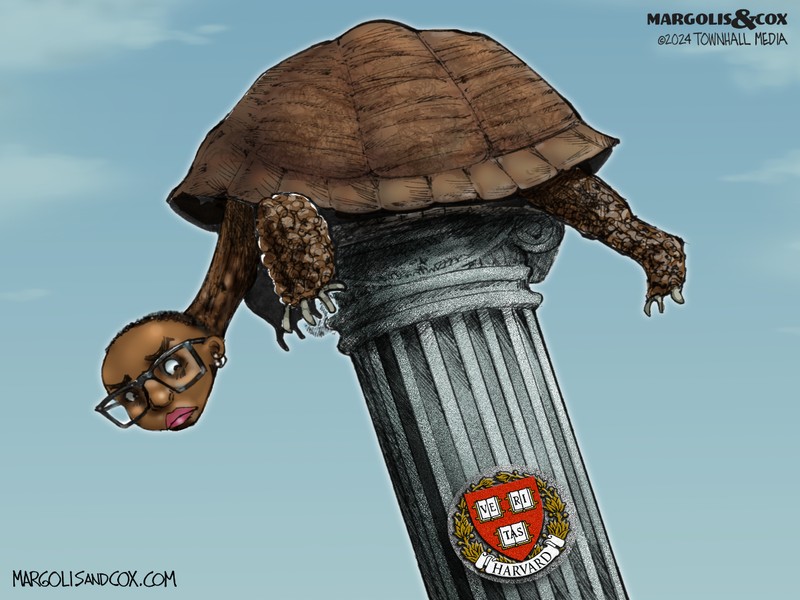
While Claudine Gay’s resignation from Harvard was linked to a plagiarism scandal and ongoing controversy over a congressional hearing on antisemitism last month, her departure inspired some critics to take aim at what they perceive as a broader failing of DEI efforts.
Among the most vocal of these critics pushing back against DEI is billionaire investor Bill Ackman, who in the wake of Gay’s departure posted a 4,000-word opus on X, the platform formerly known as Twitter, that blasted DEI as “inherently a racist and illegal movement in its implementation even if it purports to work on behalf of the so-called oppressed.”
Ackman’s lengthy thesis was later retweeted by billionaire Tesla and SpaceX CEO Elon Musk, who now owns the social media platform.
“DEI is just another word for racism. Shame on anyone who uses it,” Musk wrote in his post sharing Ackman’s screed on Wednesday. In a follow-up post, the world’s wealthiest person doubled down, adding,
“DEI, because it discriminates on the basis of race, gender and
many other factors, is not merely immoral, it is also illegal.”
A pendulum swing
After a DEI hiring spree that began in late 2020, data suggests some businesses are now in fact reversing course on their efforts.
The most recent data on hiring from the job site Indeed shared with CNN Friday illustrates a pendulum swing in postings for DEI-related roles on the site.
After a more than 29% uptick in job postings with DEI in the title or description between November 2020 and November 2021, the data shows a more than 23% decline in the amount of job postings with “DEI” in the title or description between November 2022 and November 2023.

The Tide is Turning Away from Woke Activism in Business
An analysis from Intellectual Takeout A Turning Tide: Nearly 300 Corporations Lost Their Perfect Woke Ranking in 2023. Excerpts in italics with my bolds and added images.
The Corporate Equality Index (CEI) is America’s premiere benchmarking tool used to measure companies’ adherence to LBGT orthodoxy. An initiative of the misleadingly named Human Rights Campaign (HRC), the CEI has recently published its 2023 report—and the news is less-than-glittery for hundreds of corporations that have lost their perfect score since 2022.
In 2022, the number of companies to achieve a perfect score was 842.
In 2023, only 545 made the cut: a drop of 297 businesses in just 12 months.
Incredibly, among the companies to lose the prized badge were also those to suffer the most self-inflicted damage through 2023 woke overreach. These companies included Target and Bud Light’s parent company Anheuser-Busch, which slid 5 and 30 points respectively on CEI’s 100-point scale.

If you ever wanted proof that no amount of pandering will ever please our culture’s self-appointed moral overlords, here it is. CVS, United Airlines, BP, and Hewlett Packard all likewise lost their perfect scores in 2023 for failing to provide enough LGBT training, incentives, or “outreach.”
In fact, over half of the brands that had been ranked on the index previously
achieved a lower score in 2023—and among them were 85 Fortune 500 companies.
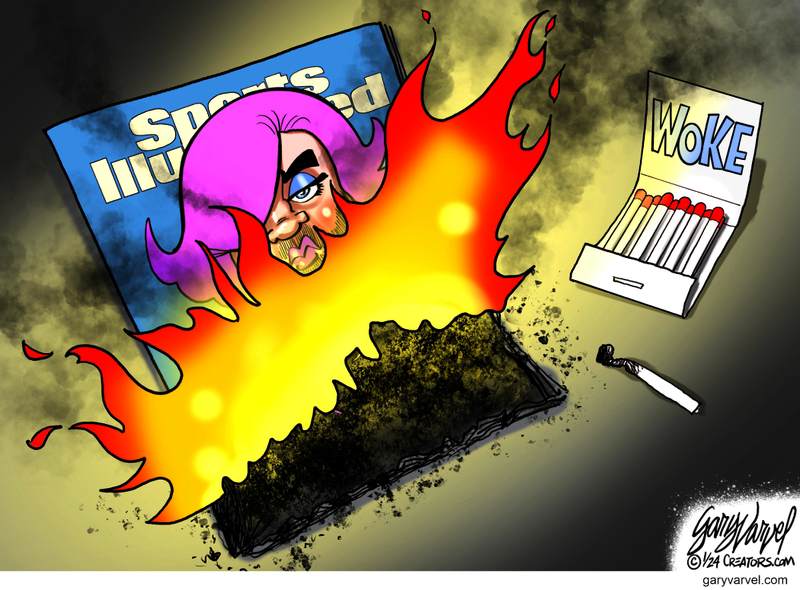
President of the 1792 Exchange (an organization opposing left-wing bias in corporate America) Paul Fitzpatrick was optimistic about the 2023 CEI results, as reported by The Washington Stand:
It’s good to see 300 fewer companies bending the knee to this controversial, activist organization. But public companies cannot fulfill their duty to their shareholders while allowing HRC to dictate their operations, messaging, policy engagement, and charitable giving. HRC’s annually escalating manipulation and extortion must be rejected. It’s time for businesses to get back to business.
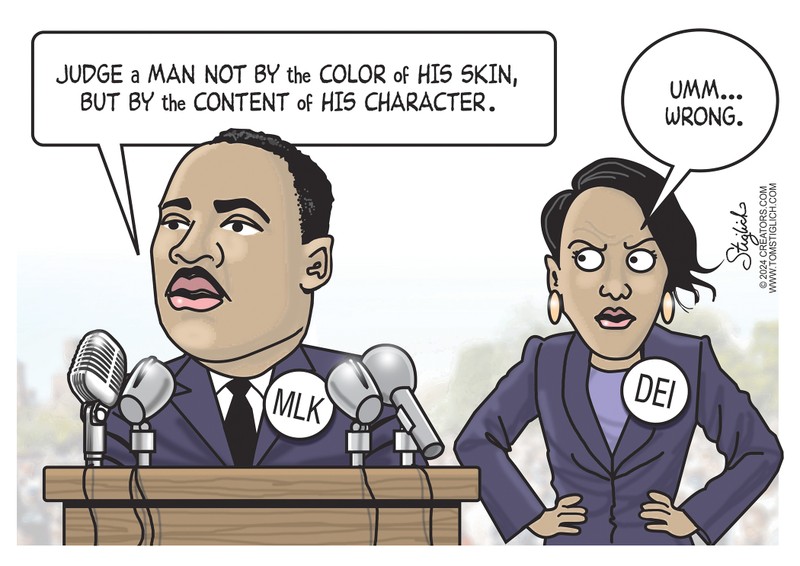
Several days ago, over the Martin Luther King Jr holiday weekend in the US, the big four accounting firm PwC announced that it would be dropping some of its diversity targets in the US. Race-based criteria would no longer be used for awarding scholarships or places on an internship programme.
It was odd timing for the announcement, perhaps, but it reflected a broader American trend. Since the Supreme Court’s decision last June to reverse affirmative action, many companies are rethinking their DEI — or diversity, equity and inclusion — strategies.
Let’s be clear: nobody doubts the fundamental benefits of a diverse workforce. There’s a large body of long-term research showing that when it’s higher, particularly in executive teams, companies are more profitable. That’s a no brainer. If your staff reflects an increasingly diverse customer and supplier base, your organisation will do better in the marketplace. The problem is that in recent years, DEI has often become too politicised and performative, particularly in America.
Over the past decade, following the emergence of the Black Lives Matter movement and then accelerating in the wake of the 2020 murder of George Floyd by a police officer in Minneapolis, companies “jumped on the DEI bandwagon”, as Diana Scott, head of the Human Capital Center at the Conference Board, puts it.
Business spent hundreds of millions on big diversity initiatives, unconscious bias training and PR campaigns linked to identity politics. “But they didn’t think things through very well,” Scott says. “What does all this really mean? What’s the business case? Can we quantify it?” Now, say Scott and other DEI experts, not only are the same conservative activists who pushed back on so-called campus “woke-ness” filing legal suits against companies’ DEI programmes, but “boards are asking for the results of these programmes — and in many cases, companies can’t quantify them”.
This reflects something that has become endemic in many workplaces over the past few years — an uncritical attitude towards inclusion without clear, fact-based communication about the metrics that really matter: engagement, retention, promotional strategies, leadership pipelines and, crucially, clarity on how this all relates to the core business objectives of the company. Another email from HR about happy hour to celebrate a particular identity day is not enough. Things are about to change.
Not only has the legal landscape in the US shifted, but the cultural winds are changing direction too. The ousting at the beginning of January of Claudine Gay, the first black Harvard University president, amid concerns about antisemitism on campus and plagiarism allegations, was a significant moment. Her support of DEI policies had also fuelled much of the criticism from the right.
What’s more, the current economic volatility and uncertainty has business leaders thinking more about ROI (return on investment) than DEI. That’s predictable — when chief executives sense the possibility of slowdown, they tend to focus on their core business propositions. While this doesn’t mean companies are dumping their diversity programmes altogether (not a single respondent in a recent Conference Board study said they were scaling back DEI in 2024), they are clearly changing their approach.
Quotas — always contentious and now legally dubious — are out. Clear board-ready metrics are in. This could actually be good for inclusion in the long run. One of the things that will be front and centre as companies continue to grapple with inflation is how to get and keep the best talent in a very tight labour market. That will in turn force them to move on from merely performative activity and do some real soul searching about how to deliver diversity.
Scott remembers a company she worked with long ago that was shocked to discover it systemically ranked women employees higher than men on performance, but lower on potential. Why? Because, it turned out, male bosses tended to assume that women of child-bearing age or with families wouldn’t want to be considered for certain types of positions — client-facing jobs with lots of travel, say. As a result they failed to ask if they wanted to apply for them, or think about how to make such jobs work for a broader group of employees. Talk about cognitive bias.
Then there’s the question of what diversity even is, or will be, particularly in a country like the US, which could be “majority minority” by 2045. Or how global companies that have operations in countries with many different definitions of diversity should think about it. Should they use the definition that is politically popular in a given location? It’s easy to see how slippery the conversation can quickly become.
That’s why I think that just as the Supreme Court’s rejection of affirmative action presented a silver lining for universities to think more deeply and honestly about identity and inclusion, so this will be a good moment for companies to do so as well. They should focus on the core truth, which is that smart companies make themselves attractive to the broadest number of talented people not by virtue signalling, but by creating real opportunity for the many. Doing so is good not just for inclusion, but for business.
via Science Matters
January 26, 2024 at 11:58AM
 Iowa Climate Science Education