
The research came up with ‘relatively modest temperature changes’. One NASA atmospheric scientist commented: “To me, this is another example of why geoengineering via stratospheric aerosol injection is a long, long way from being a viable option.” (Here’s another one). Climate alarmists can imagine doing some things, but so can Hollywood scriptwriters.
– – –
New research suggests that sunlight-blocking particles from an extreme eruption would not cool surface temperatures on Earth as severely as previously estimated, says Phys.org.
Some 74,000 years ago, the Toba volcano in Indonesia exploded with a force 1,000 times more powerful than the 1980 eruption of Mount St. Helens. The mystery is what happened after that—namely, to what degree that extreme explosion might have cooled global temperatures.
When it comes to the most powerful volcanoes, researchers have long speculated how post-eruption global cooling—sometimes called volcanic winter—could potentially pose a threat to humanity.
Previous studies agreed that some planet-wide cooling would occur but diverged on how much. Estimates have ranged from 3.6°F to 14°F (2°C to 8°C).
In a new study published in the Journal of Climate, a team from NASA’s Goddard Institute for Space Studies (GISS) and Columbia University in New York used advanced computer modeling to simulate super-eruptions like the Toba event. They found that post-eruption cooling would probably not exceed 2.7°F (1.5°C) for even the most powerful blasts.
“The relatively modest temperature changes we found most compatible with the evidence could explain why no single super-eruption has produced firm evidence of global-scale catastrophe for humans or ecosystems,” said lead author Zachary McGraw, a researcher at NASA GISS and Columbia University.
To qualify as a super eruption, a volcano must release more than 240 cubic miles (1,000 cubic kilometers) of magma. These eruptions are extremely powerful—and rare. The most recent super-eruption occurred more than 22,000 years ago in New Zealand.
The best-known example may be the eruption that blasted Yellowstone Crater in Wyoming about 2 million years ago.
Full article here.
– – –
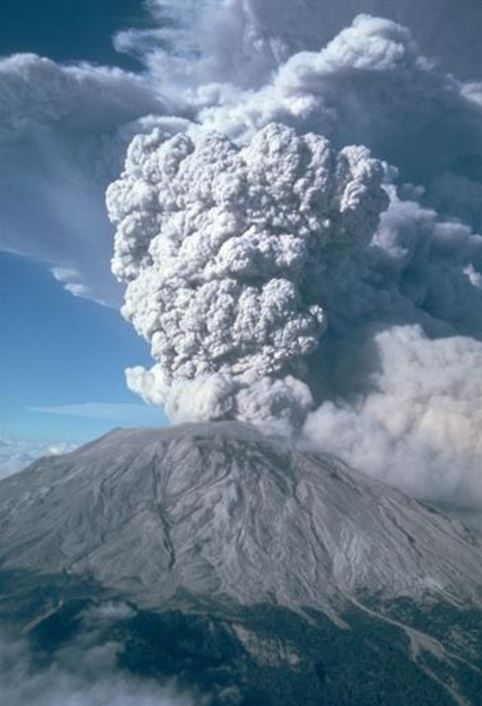
Image: Volcanic eruption.
via Tallbloke’s Talkshop
March 4, 2024 at 10:41AM
 Iowa Climate Science Education