Month: March 2024

CFACT blasts offshore wind multiple-site assessment as ridiculous

From CFACT

David Wojick

CFACT has long called for an environmental assessment of the combined impact of the clusters of huge offshore wind facilities being pushed by the Feds. Each facility is being separately assessed even when they share a boundary.

In many cases, it is clear that the adverse impacts will overlap and compound the harm to marine life. An obvious example is the incredibly loud and potentially harmful noise of pile driving. This noise carries over fifty miles, so if two sites are pile driving within a few miles of each other, the noise has to be much worse when the impacts combine.

The Federal Bureau of Ocean Energy Management is supposed to do environmental assessment of offshore wind (even though their mandate is to get it built). They finally produced a combined assessment for six facilities off of New York and New Jersey. It is grandly called a Programmatic Environmental Impact Assessment (PEIS) of the New York Bight.

CFACT’s official comments on this assessment are pretty clear: it is junk. Here are some telling excerpts:

“Most of the 800 or so pages are nothing more than an academic discussion of the general environment, the sorts of impacts that might or might not occur, and what might or might not be done about them. There is basically nothing about this specific combination of projects.”

“In short, the academic acoustic case considered in the PEIS tells us absolutely nothing about the potentially huge noise impact of the six projects supposedly being assessed. There is literally no environmental impact assessment here. This vacuum seems to hold for pretty much the entire PEIS, with no real assessment of the six projects. There is certainly nothing of substance on noise.”

“As environmental impact statements go, this one is ridiculous.”

A number of important adverse impacts are not even considered, especially the lifetime operational impacts that go on for decades.

First, there is the combined operational noise of these six big facilities, some of which are actually contiguous. In addition to the endless turbine noise, there is the noise from the fleet of boats servicing these turbines.

Then there is the massive plume of reduced energy air created by the energy-sucking turbines. There is a large scientific literature on the potentially damaging effects of this plume on ocean life, especially reduced productivity in the food chain.

There is also the threat of a deleterious plume of suspended sediments created by air and water turbulence at each turbine tower. This smothering plume also reduces productivity.

I discuss these so-called wake effects in this article.

So the PEIS only looks at construction and basically tells us nothing about the adverse impacts of that. Ridiculous is right.

Note that NOAA shares the blame for this travesty of assessment. They are the experts on the adverse impact of noise on the marine life that they are supposed to protect. For example, the combined adverse effects of all these wind facilities the Feds are rushing into being could exterminate the North Atlantic Right Whale and other endangered critters.

Make no mistake, there is here a clear violation of the National Environmental Protection Act, the Endangered Species Act, the Marine Mammal Protection Act, and no doubt other laws. Something must be done.

Read CFACT’s official submission here

via Watts Up With That?

https://ift.tt/6fjgcGu

March 10, 2024 at 08:07AM

Climate chief told staff to ‘kill’ negative net zero story

By Paul Homewood


h/t Doug Brodie


 image

The head of the Government’s climate watchdog told officials to “kill” a negative news story with “technical language”, The Telegraph can disclose.

Chris Stark, chief executive of the Climate Change Committee (CCC), drafted the response when asked for clarity over claims of a “mistake” made by the body.

“How’s this – kill it with some technical language,” he told his team.

The exchange was revealed in a Freedom of Information request submitted by The Telegraph after apparent obfuscation by the climate watchdog over a story published by The Telegraph in January.

It raises questions about the transparency of the committee, which has been pushing the Government to impose more radical net zero targets.

Mr Stark, a senior public servant whose pay package amounts to more than £170,000 per year, is bound by the Nolan Principles of Public Life, which require “openness” and “accountability”.

David Jones, a Tory member of the Commons public administration committee and former Cabinet minister, said: “Chris Stark steps down as chief executive of the CCC next month. Before he goes, he has some serious questions to answer.

“On the face of it, urging colleagues to ‘kill’ a reasonable request for information with technical language looks very much like an attempt at obfuscation.

“Mr Stark will undoubtedly understand the crucial importance of academic integrity when addressing such an important issue as climate change. A full and immediate explanation is called for.”

On-the-record denials removed

Jacob Rees-Mogg, the former business and energy secretary, said: “This seems outrageous – a public servant seeking directly to obfuscate. At least Sir Humphrey did it subtly.”

Mr Stark’s comments were made in private emails exchanged within the CCC after The Telegraph contacted the body for a response to a planned article in January.

The article reported a claim by Sir Chris Llewellyn Smith, who led a recent Royal Society study on future energy supply, that the CCC had privately admitted that it made a “mistake” when it only “looked at a single year” of data showing the number of windy days in a year when it made pronouncements on the extent to which the UK could rely on wind and solar farms to meet net zero targets.

Referring to The Telegraph’s initial query about Sir Chris’s comments on Thursday, Jan 18, Mr Stark told staff: “I’m happy with a short response. If you need more, here’s what I suggest. But it may just feed the beast – so less may be more here.”

He added that the Royal Society would be “very embarrassed about this”, and one of his officials contacted the body to alert them.

An unnamed individual – apparently a representative of the Royal Society – stated that Sir Chris “says the comments about privately conceding a mistake were made to him by Chris Stark”.

In the internal emails, Mr Stark insisted to staff that “we absolutely have not conceded that there’s a ‘mistake’ in our work”.

But, despite repeated questions from The Telegraph about whether he did make the comments described by Sir Chris, Mr Stark removed suggested on-the-record denials from the body’s response, telling staff: “No need to fuel a fight.”

‘We stand by the analysis’

In emails to The Telegraph, the CCC said Sir Chris’s comments, in a presentation given in a personal capacity in October, following the publication of his review, related solely to a particular report it published last year on how to deliver “a reliable decarbonised power system”.

But The Telegraph pointed out that its original recommendations in 2019 about the feasibility of meeting the 2050 net zero target were also based on just one year’s worth of weather data. The recommendations were heavily relied on by ministers when Theresa May enshrined the 2050 target into law.

The Telegraph put several questions to the CCC, including asking to what extent the 2019 recommendations – and the predicted cost of the 2050 target – would have been different had they relied on a greater amount of weather data.

In response, an official suggested to Mr Stark that the CCC simply reply stating that “we stand by the analysis” of its 2019 recommendations, adding of Sir Chris’s comments: “We welcome Sir Chris’s work, which considers other aspects of the energy challenge in 2050, under different assumptions about the future energy mix.”

But Mr Stark replied: “How’s this – kill it with some technical language.”

He suggested an extra sentence, which was then issued as the CCC’s official response to The Telegraph, stating: “Our recent report modelled Britain’s power system in 2035 using hourly energy demand across that year and real weather data from a low-wind year, stress-tested with a 30-day wind drought.”

Sir Chris’s report for the Royal Society, published in September, concluded that a vast network of hydrogen-filled caves was needed to guard against the risk of blackouts under the shift to wind and solar generation, which the Royal Society described as “volatile” because it depends on wind and sun to produce energy.

‘Informal language between colleagues’

The report was one of the starkest warnings to date of the risks faced when relying on intermittent weather-dependent energy sources without sufficient backup.

It stated: “The UK’s need for long-term energy storage has been seriously underestimated… Studies that do not consider long sequences of years underestimate the need for long-term storage. Studies of single years cannot cast light directly on the need for storage lasting over 12 months and overestimate the need for other supplies.”

In a presentation delivered on Oct 31 2023, Sir Chris said: “By looking at one year you underestimate storage and you grossly overestimate the need for everything else. That’s exactly what the Committee on Climate Change have done.”

He added: “The Committee on Climate Change, as I already said, looked at a single year and they have conceded privately that that was a mistake. But they are still saying they don’t differ that much from us. Well, that’s not quite true.”

https://www.msn.com/en-us/news/technology/climate-chief-told-staff-to-kill-negative-net-zero-story/ar-BB1jC6Qd

via NOT A LOT OF PEOPLE KNOW THAT

https://ift.tt/Uh1qBFR

March 10, 2024 at 07:06AM

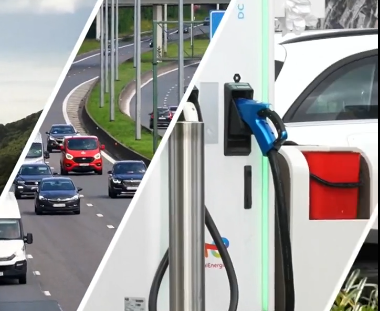
Sobering Up? EU May Scrap Its Plans To Ban Internal Combustion Engines By 2035

After vote in Brussels last Monday evening, a majority of the European Parliament favored a Commission proposal that would no longer automatically classify electric cars as climate-neutral vehicles.

Image cropped here.

In the proposal, the CO2 emissions of electric cars would depend on the electricity mix used to charge the car, meaning electric cars would not necessarily be classified as “electric only”.

The EU plans to reassess the phase-out of combustion engines, based on the latest data and developments.

So what has brought on this sudden episode of political sobriety in Brussels? Probably a good dose of reality. Here are 4 possible reasons behind the EU’s new position:

1. China

The automotive industry and many EU states warn of the economic and social consequences of a ban on combustion engines.

Electric car production in Europe cannot compete with the far lower costs in China. Europe’s car production would move overseas, and thus result hundreds of thousands of lost jobs –  and lots of social unrest.

Currently Europe is already gripped by social unrest as farmers and truckers protest in the streets against radical green policies.

2. E-car emissions cheating

Currently, electric cars in the EU are given a CO2 emission rating of zero grams! This zero emissions claim is a lie in most cases as the calculation doesn’t take true electricity generation mix into account. Fossil fuels are still widely used in Europe to produce the electric power.

A true accounting would include the CO2 emissions of the electricity used to charge electric cars and make them look less attractive.

3. Climate-neutral fuels (e-fuels):

Efforts are being made to run combustion engines on climate-neutral fuels (e-fuels), which are produced from renewable energies and are thus CO2-neutral.

The EU Commission wants to examine whether newly registered vehicles with combustion engines that run on e-fuels can be registered from 2035. This would effectively suspend the ban on combustion engines, as e-fuels can be used emissions-free in practice.

4. The 2024 European Parliament election

It is scheduled to be held on 6 to 9 June 2024. So now is not the time to upset voters with unpopular legislation. The Brussels bureaucrats probably just want citizens to think they are being pragmatic and will not take a radical course after all.

In summary, the EU may be realizing that banning internal combustion engines, and replacing them with e-cars, is going to cause a lot more damage than good.

Donate – choose an amount

via NoTricksZone

https://ift.tt/yKQDzYH

March 10, 2024 at 06:11AM

Indisputable Global Cooling – 1979

“LAWRENCE JOURNAL-WORLD Sunday, March 11, 1979 Page 8A DENVER (AP) — The Midwest is buried under unusually heavy snows. California goes through two winters of extreme drought, then is inundated by rain. The South shivers with unaccustomed cold. Recurrent drought … Continue reading

via Real Climate Science

https://ift.tt/2JXeR3j

March 10, 2024 at 05:10AM