

China and India are building coal-fired and nuclear power plants, hand over fist. Their rapid economic development hinges on access to reliable and cheap power to industry. Meanwhile, the West maintains its positively suicidal obsession with subsidised wind and solar. Whereas China profits handsomely – selling millions of solar panels made by Uighur slaves and wind turbines that will be clapped out 10 or 15 years from now – industries, businesses and households in the West are being pounded with ever-increasing power bills and routine power rationing.
The same bureaucrats and boffins that claim will soon be running on nothing but sunshine and breezes, also reckon that the proles can’t wait to get their hands on an all-electric vehicle. However, as Chris Mitchell explains below, the great unwashed have altogether different ideas.
China cleans up on energy, and Australia pays the price
The Australian
Chris Mitchell
25 February 2024
Some environment journalists are blind to what’s really happening globally in fossil fuel use and the renewable energy transition.
This certainly seems to suit Climate Change and Energy Minister Chris Bowen, who is failing to meet his government’s commitments on the electricity network rollout and power price reductions.
On almost every energy issue, Bowen and his media cheer squad ignore setbacks in the northern hemisphere where coal and gas are being burned at record levels, the US is winding back EV mandates, two of Europe’s biggest carmakers, Volvo and Renault, are reducing EV investment and the EU looks likely to start to unravel its commitment to achieve net zero by 2050.
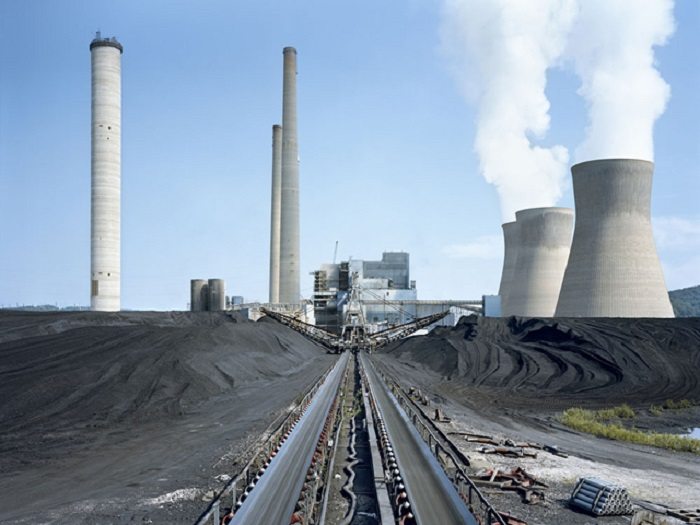
Thermal coal use globally reached an all-time record in 2023. Global coal exports topped one billion tonnes and coal-fired electricity generation between October 2022 and October 2023 was up 1 per cent to 8295 terawatt hours. Emissions from coal-fired power last year topped 7.85 billion tonnes of CO2, up 67 million tonnes.
While coal use fell in Europe and North America, that was more than offset by coal burnt in Asia. Indonesia was the world’s biggest exporter of thermal coal last year at 505.4 million tonnes and Australia number two at 198 million tonnes, up 7 per cent in the year.
Use of gas globally rose 0.5 per cent last year as China emerged from lockdowns. That growth is expected to increase to 3.5 per cent this year.
Renewables use globally rose 507GW in 2023 but wind and solar accounted for only 12 per cent of all power used. Hydro-electric generation and biofuels, which can count as renewable energy, exceeded wind and solar in the renewables ledger.
The Doomberg energy news letter that publishes on Substack went through the latest International Energy Agency coal numbers. It points out China now uses 55 per cent of the world’s coal, and coal makes up 70 per cent of China’s CO2 emissions. More than 95 per cent of new global coal capacity last year opened in China. Even the Guardian now acknowledges China is approving new coal power projects at the rate of two a week.
Yet in much of the Australian media, China is regularly described as a green superpower. Sure, it exports wind and solar components made in China with coal-fired electricity!
Writes Doomberg, China is “more than happy to profit from countries willing to sacrifice themselves at the Altar of the Church of Carbon and even happier to recycle those profits into securing coal at prices lower than they would otherwise be if so much international demand hadn’t been voluntarily removed from the market”.
India, the number three CO2 emitter, pledges to hit net zero in 2070 – “the functional equivalent of never”, Doomberg says. India has announced an extra 88GW of capacity by 2032, up 63 per cent from the projections released in May.
The world has little chance of meeting net zero by 2050: figures released in December at COP28 in Dubai showed CO2 emissions up 1.1 per cent last year despite a fall of 419 million metric tonnes outside China and India. China’s emissions rose 458 million tonnes and India’s 233 million.
Predictions EVs will conquer the motoring world are proving just as inaccurate as peak coal forecasts. Both Porsche and the EU are pushing for delays to Europe’s commitment to phase out internal combustion engine (ICE) cars.
Porsche chief financial officer Lutz Meschke told Bloomberg last month he believed the EU’s 2035 deadline for stopping ICE manufacture could be delayed. Politico reported on January 18 that the manifesto of the European People’s Party, the continent’s largest conservative political force, wanted the unwinding of the 2035 ICE ban.
Volvo, which has been telling the world it is moving to electric only, last month said it would no longer provide financial support to the loss-making Polestar electric vehicle maker and would look at selling its 48 per cent stake to Chinese parent company Geely.
French giant Renault has “scrapped the separate listing of its EV unit Ampere”, according to London’s The Daily Telegraph on February 2. Toyota, which environmentalists last year were criticising for being a laggard on EVs, again looks to have made the right call on continuing to invest in hybrid technology.
And, while Bowen in early February announced new fuel standards designed to penalise drivers of large dual-cab utes – once considered Labor voters – in the US, President Joe Biden last week decided that in an election year he needs to soften EV mandates as buyers steadfastly refuse to be drawn in by manufacturer discounts.
All of this is proving that what this newspaper argued on renewable energy and government mandates before the 2007 election was correct. That year both prime minister John Howard and opposition leader Kevin Rudd went to the polls with cap-and-trade carbon reduction schemes.
This paper believed a market mechanism that ensured the lowest possible abatement price was sensible. But it argued doing too much here, with only about 1 per cent of global emissions, would simply drive Australian industries offshore to countries with much lower environmental standards.
That is exactly what happened here and is happening across Europe. And voters don’t approve. German and American car workers don’t want to see their entire car industry move to China.
The British Labour Party is paring back its $54bn annual green investment pledge to about $29bn. Germany is backtracking on green spending as its finances crumble and heavy industry leaves the industrial heartland of Europe. It is turning back to coal.
Europe’s farmers too are protesting about penalties proposed for agricultural emissions. German farmers in January protested against government plans to end tax breaks on diesel farm vehicles and introduce other levies on farm vehicles. EU President Ursula von der Leyen pledged at the EU Summit in Brussels on February 1 to listen to farmers who had taken to the streets of Belgium.
In Australia, our own farmers last week were worried about Labor’s proposal for large businesses and fund managers to account for climate risk. The pastoral sector was concerned Health Minister Mark Butler, Labor’s former environment spokesman, had accepted a plan by the National Health and Medical Research Council to account for environmental sustainability in official government dietary guidelines.
The workers of the world who know China, India, Indonesia, Russia, and Brazil are not reducing fossil fuel use will not be turkeys voting for Christmas.
When investment giants walk away from global corporate ESG (environmental, sustainable, governance) commitments, it should be clear even the bankers who have been making the most money from green investment can now see the electoral writing on the wall. The Wall Street Journal on February 16 reported JP Morgan, BlackRock and State Street Global were all leaving the Climate Action 100+ investor compact “because they don’t want the political and legal liability”.
Surely someone in Bowen’s office is watching.
The Australian
via STOP THESE THINGS
March 8, 2024 at 12:31AM


 Iowa Climate Science Education