Month: March 2024

The Anthropocene?   Not or Maybe Not

News Brief by Kip Hansen — 5 March 2024 — 600 words/3minutes

BREAKING NEWS:  Raymond Zhong, journalist for the NY Times, has a story claiming to have seen “an internal announcement of the voting results” of a subcommission of the International Union of Geological Sciences:

“A committee of roughly two dozen scholars has, by a large majority, voted down a proposal to declare the start of the Anthropocene, a newly created epoch of geologic time, according to an internal announcement of the voting results seen by The New York Times.”  [ quotes in this typeface are from the NY Times here ]

The vote is reported by Zhong to have been:

“12 to four, with two abstentions. (Another three committee members neither voted nor formally abstained.)

This looks to be a fairly substantial majority – even if all five non-voting members had voted to support the declaration of the Anthropocene, that view still would not have carried the day; the vote would have been 12 Against and 9 For.   Formally, a vote requires 60%. 

Does this mean that the issue is, after more than a decade and a half, finally settled?

No, or at least, only maybe.

“Even so, it was unclear Tuesday morning whether the results stood as a conclusive rejection or whether they might still be challenged or appealed. In an email to The Times, the committee’s chair, Jan A. Zalasiewicz, said there were “some procedural issues to consider” but declined to discuss them further. Dr. Zalasiewicz, a geologist at the University of Leicester, has expressed support for canonizing the Anthropocene.”  ….

“Still, to qualify for its own entry on the geologic time scale, the Anthropocene would have to be defined in a very particular way, one that would meet the needs of geologists and not necessarily those of the anthropologists, artists and others who are already using the term.”

When did all this Anthropocene-ism idea get its start?

“The Anthropocene proposal got its start in 2009, when a working group was convened to investigate whether recent planetary changes merited a place on the geologic timeline. After years of deliberation, the group, which came to include Dr. McCarthy, Dr. Ellis and some three dozen others, decided that they did. The group also decided that the best start date for the new period was around 1950.”

“Last fall, the working group submitted its Anthropocene proposal to the first of three governing committees under the International Union of Geological Sciences. ….  The members of the first one, the Subcommission on Quaternary Stratigraphy, submitted their votes starting in early February. [these are the results reported here] ….  Even if the subcommission’s vote is upheld and the Anthropocene proposal is rebuffed, the new epoch could still be added to the timeline at some later point. It would, however, have to go through the whole process of discussion and voting all over again.”

It seems that there are two more sub-committees that will have a vote on the mater, as this one, the Subcommission on Quaternary Stratigraphy, appears to be “the first of three governing committees”. 

So, maybe. 

At this moment,  the Anthropocene is one of the following:  1) Dead, 2) Postponed, or 3) Pending.

Long Live the Anthropocene.

# # # # #

Author’s Comment:

The Anthropocene is, at its very best, a propaganda term invented by the environmental movement.  It is always used to imply the negative consequences of the rise of Humans and their civilizations.

I am heartened that The Geologists, even if for the wrong reasons, have rejected, so far, enshrining this basically anti-human propaganda term in the Geological History of the planet. 

There is no doubt that humans have become a or the major biological force on Earth, altering their environments to their liking and their own purposes.  Humans have certainly been successful.  Darwin might have said this means humans are “the fittest”. 

Philosophers would have different ideas and opinions.

Thanks for reading.

# # # # #

via Watts Up With That?

https://ift.tt/EPDk9sh

March 5, 2024 at 08:06PM

The Continuing Albedo Change Warms the Earth More Than Twice as Much as CO2

Gabriel Oxenstierna

All life on Earth (somehow) originates from the Sun’s heat.
But how much of the solar irradiation reaches us Earthlings?
The question is highly relevant, as the amount of reflected sunlight displays a remarkable decreasing trend over time. As will be shown, this trend alone explains most of the warming we’ve had in recent decades.

The Earth’s reflectivity is measured by albedo (a latin word meaning ‘whiteness’). Albedo measures the proportion of solar irradiation that is reflected back to space, either by the ground or in the atmosphere. If albedo is 100 percent, all light is reflected, and 0 percent means no light is reflected. Albedo is very different for different materials: pure snow can be as high as >90%, dirty snow can be as low as 20%. Water has albedo <10% (depending on the angle of reflection, see figure 1).[1] Clouds vary greatly and are between 30% and 80% depending on the type of cloud. The Earth’s albedo averages 28%.

Figure 1. What reflects more sunlight, clouds, snow, ice, or water?

If we start from the top, we have a pretty much constant solar irradiance. As soon as the radiation enters the atmosphere, photons begin to be reflected by ozone in the stratosphere, by clouds, water vapor and aerosol microparticles. Of the remaining solar irradiation that reaches the Earth’s surface, an additional part will be reflected away. The amount that is reflected varies greatly and depends on numerous factors such as the geographical location, ground conditions (land/sea/rural/urban), which season we’re in, temperature, altitude, and not least the weather at the location.

On a global scale, all that local randomness evens out, and we have a stable irradiation on a monthly basis. Figure 2 shows how much net solar irradiation that flows in, as a global average, per square meter: it is solar irradiation at the top of the atmosphere, about 340 W/m2, minus reflected shortwave irradiation of about 98 W/m2. Net approximately 242 W/m2.

Figure 2. Net solar irradiation that reaches Earth, watts/m2, calculated as incoming solar radiation minus reflected shortwave radiation. Seasonally adjusted monthly averages for each of the hemispheres. Thick lines are Loess smooths, March 2000 – September 2023. Data: Ceres Ebaf4.

There is a significant positive trend during the period 2000–2023. The increasing amount of solar irradiation reaching Earth is due to a trendwise decrease in reflected shortwave irradiation by 1.5 W/m2. On the other hand, solar irradiation decreased by approximately 0.2 W/m2 during the same period due to the solar cycle becoming less active.

We have thus had an increase in net solar radiation over the period of approximately 1.3 W/m2 according to the Ceres data. The long-term positive trend in shortwave radiation has been confirmed to exist since 1983 (with other satellite data).[2] That there is an established trend for 40 years makes it climatologically significant.

Figure 3. The trend of increase in shortwave radiation from 1983-2001. Copy of figure 1 in [2].

Albedo change explains the increase in net solar irradiation

Albedo is highly variable in time and space. Nevertheless, there is a great deal of stability on a global scale. In Figure 4, the development is shown separately for the Northern Hemisphere (NH) and the Southern Hemisphere (SH). They are very close to each other; the difference is stable and mostly less than 0.5 percentage points. SH has the slightly lower level, which is explained by the fact that it is dominated by sea (with ~80 percent of the surface area, compared to the NH’s ~60 percent). If we’re looking only at the nature of the Earth’s surface, the difference would be significantly higher due to the land/sea ratio – but the reflection from the clouds acts to even out the hemispherical differences.

Figure 4. Albedo for the period March 2000 – September 2023, calculated as reflected shortwave radiation measured at the TOA relative to incoming solar radiation. Seasonally adjusted monthly averages. Thick lines are Loess smooths. Data: Ceres Ebaf.

We have a continuing, and significant negative trend. This means that more solar irradiation enters and warms the Earth. That the albedo trend is negative is well established, and has been demonstrated with different methods: Ceres satellite data, and also by measuring the Earth’s back-radiation towards the Moon.[3][4][5]

What causes the albedo decrease? Several factors contribute: a decreasing cloud cover (both its extent and optical depth) has been shown to be the primary factor [3][4]; increasing vegetation (‘global greening’) is also a well-established secular trend of significant importance. Decreasing amounts of aerosols are of less importance. This can be imputed from the stable difference between NH and SH in figure 4, as aerosols have a local, short-term effect that mainly affects the NH.[6]

The climate is very sensitive to a reduced albedo. Scientists at NASA claim that a reduction in albedo of 1 percentage point produces a warming effect equal to a doubling of CO2 in the atmosphere.[7] Accordingly, the albedo decrease we have had in the last 24 years corresponds to almost 2.0 W/m². The increase in CO2 corresponds to only 0.7 W/m². See calculations below.

Conclusion: The ongoing, longterm reduction in albedo has produced more than twice as much warming effect in recent decades as the radiative forcing from CO2.

Calculations

1. Forcing from CO2

The IPCC states 3.9 W/m2 increased forcing from a doubling of CO2.[8] Mathematically, we search a factor that gives 3.9 from a doubling, expressed as a logarithm, ln(2/1). That factor is 5.63:

3.9 = x * ln(2/1)  è x = 5.63

We can now insert start and end values for CO2 instead of the numbers ‘2’ and ‘1’. In March 2000 we had about 370 ppm and in September 2023 about 420 ppm. The theoretical forcing from CO2 for the period would then be:

5.63 *ln(420/370) = 0.71 W/m²

2. Forcing from albedo decrease

a. Using the data. Estimating the global albedo decrease from March 2000 to September 2023 with OLS yields a negative slope of -0.0019 percentage points (pp) per month, and the total decline for the period is 0.54 pp.

Assuming a linear relationship during the period, a reduced albedo of 0.54 pp gives an increased solar irradiation of:
0.0054 * 340 W/m2 = 1.84 W/m2

b. Using the NASA rule of thumb. Alternatively, calculated according to the NASA researchers’ claimed relationship of the warming effect of a 1 percent albedo reduction mentioned above, and using IPCC:s value for forcing from CO2 of 3.9 W/m2, the theoretical forcing of the global albedo reduction for the 24 years is: [7]

3.9 * 0.0054/0.01 = 2.1 W/m²

In both variants a. and b., the resulting figure is more than 2.5 as large as the forcing from CO2. The calculations have not taken into account the slightly decreasing solar radiation over time, but this affects the result only marginally.

References

[1] The albedo of water is calculated according to the Fresnel relationships, see e.g.:
https://en.wikipedia.org/wiki/Albedo#Water https://en.wikipedia.org/wiki/Fresnel_equations

[2] Do Satellites Detect Trends in Surface Solar Radiation?, Pinker and 2 co-authors, Science 2005, https://doi.org/10.1126/science.1103159 .

[3] The albedo of Earth, Stephens and 5 co-authors, 2015, https://doi:10.1002/2014RG000449

[4] The changing nature of Earth’s reflected sunlight, Stephens and 8 co-authors, 2022, https://doi.org/10.1098/rspa.2022.0053

[5] Earth’s Albedo 1998–2017 as Measured from Earthshine, Goode and 5 co-authors, 2021, https://doi.org/10.1029/2021GL094888

[6] Divergent global-scale temperature effects from identical aerosols emitted in different regions, Persad and Caldeira, Nature 2018, https://doi.org/10.1038/s41467-018-05838-6

[7] Changes in Earth’s Albedo Measured by Satellite, Wielicki and 5 co-authors, Science 2005, https://doi.org/10.1126/science.1106484

[8] IPCC 2021, AR6 WG1, chapter 7, p. 925

Technical note

In order to create the diagrams, I first downloaded data from Ceres (NetCDF4 format). The data were then preprocessed in the program CDO (Climate Data Operators) in Linux (in my case Ubuntu under Windows). All the time series data were calculated as surface-weighted monthly values in CDO. After that, the resulting data files were read into R/Rstudio where the figures were created with GGplot. All data and software are free to use/open source.

Gabriel Oxenstierna is a PhD at Stockholm University and one of the Clintel signatories.

via Watts Up With That?

https://ift.tt/XIt5Znq

March 5, 2024 at 04:14PM

French built a reactor in 7 years in 1976, but modern Australia needs “decades”

French built a reactor in 7 years in 1976, but modern Australia needs “decades”

By Jo Nova

It’s like the West has forgotten how to build things…

The nuclear debate in Australia is 100 years behind the rest of Western Civilization. Like children, we banned nuclear power before we even built one. We could afford to strut in our anti-nuke super-cape because we were swimming in 300 years worth of coal. (Now we want to ban that too.)

Somehow, despite the burden of all that coal, the idea of nuclear has grown legs, but the rest of the world must be laughing at us. The US built the first reactor way back in 1957, and 50 years ago the French built 56 reactors in just 15 years and most of the reactors were built in 6-8 years.

But our experts in the CSIRO  think it will take us 14 years to even build a small one.

Even if the nuclear ban was lifted tomorrow and a decision immediately taken to commission a nuclear reactor, CSIRO estimates the first SMR would not be in full operation before 2038, ruling it out of “any major role” in reaching net zero emissions by 2050.

Today we have computer aided design and supercomputers with AI, but we can’t even build a 50 year old copy of a French plant as fast as the French could in an era when homes still had slide rules.

If we ask President Macron nicely, perhaps he’ll even give us the old plans?

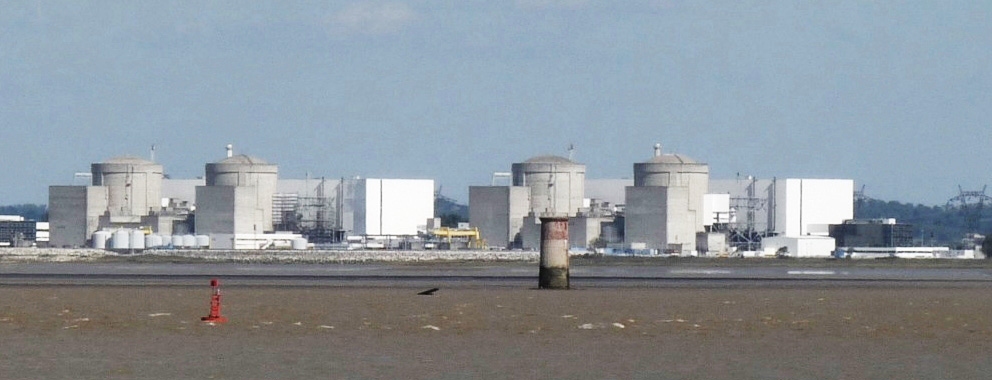
The first 910 MW reactor at Blayais Nuclear Power Plant was built from 1976 to 1981 and is still operating today. The three other turbines were finished by 1983. So the ancient 1970s French industry could build a 4GW nuclear plant in 7 years.

Nuclear Power Plant

It produces about 26,000GWh of electricitie each year with a capacity factor of about 75%.

Brown coal power is still cheaper.


10 out of 10 based on 1 rating

via JoNova

https://ift.tt/K8F7v60

March 5, 2024 at 01:44PM

How to Falsify Weather Station Data

News Brief by Kip Hansen — 5 March 2024 — 600 words/3 minutes

This is a true story. 

Two guys in Colorado took advantage of certain type of crop insurance, as explained by U.S. Attorney Cole Finegan:  ”One way the United States Department of Agriculture supports farmers and ranchers is by providing federal funding for crop insurance programs that pay indemnities when there is less than the usual amount of precipitation.” [ source ]

BBS news reports:

“The scheme was designed to benefit Jagers [and a fellow named Esch] through his crop insurance, the Rainfall Index Annual Forage Insurance Plan, which is one of several agriculture subsidies administered by the U.S. Department of Agriculture’s Federal Crop Insurance Program

Federal crop insurance is typically sold through private insurance companies who are subsequently reimbursed by the federal government. The Rainfall Index plan covers annual crops and “is focused on the amount of precipitation, not on actual crop production,” as described by prosecutors in a case document. “This means that a farmer can receive a payment when precipitation is below the historical normal level even if the relevant farmland suffers no loss in productivity.”

In Colorado, this deals with “forage” — as in Annual Forage Insurance Program : “Historically, the term forage has meant only plants eaten by the animals directly as pasture, crop residue, or immature cereal crops, but it is also used more loosely to include similar plants cut for fodder and carried to the animals, especially as hay or silage. [ wiki ]

Paying indemnities means the US government pays farmers if it doesn’t rain enough – rainfall below average – based on the local rain gauges at Automated Surface Observing System stations regardless of actual crop yields.  For these ranchers, if there is less rain, there will be less forage for their cattle, which means less growth, which means less weight when sold, which means less profit.  At least that’s the idea.

It is as hard to make it rain less as it is to make it rain more.

But it was apparently easy to make it look like it rained less.  Just jigger the rain gauges at the local ASOS.

“The group allegedly damaged rain gauges located in Springfield, Ordway, La Junta, Walsh, and Ellicott, Colorado, and others in Syracuse, Coolidge, and Elkhart, Kansas. Wires were cut, funnels to rain collectors were filled with silicone, holes drilled or punched in collectors, parts of collectors were disassembled, and objects such as cake pans or pie tins were placed over the gauges during rainstorms.” [ CBSNews ]

The US Attorney’s Office gives this version:

“The conspirators used various means and methods to tamper with the rain gauges. Mr. Esch covered gauges in southeastern Colorado with agricultural equipment and used other means as well, such as filling gauges with silicone to prevent them from collecting moisture, cutting wires on the gauges, or detaching and then tipping over the bucket that collected precipitation. Mr. Jagers typically used an agricultural disc blade to cover up a rain gauge in Lamar, Colorado. This tampering created false records making it appear that less rain had fallen than was the case.” [ source ]

To you and I, this might seem like a lot of work for a bit of crop insurance money – not so, the two were sentenced to sentenced to “pay a combined $3.1 million in restitution”.

Bottom Line:

Those are some real climate crooks.

# # # # #

Author’s Comment:

Any time the government gives away money, there are some people out there who figure out a scam to get some of that money illegally.

“An Associated Press analysis found that fraudsters potentially stole more than $280 billion in COVID-19 relief funding.” [ source ]

And yes, that means that the climate data, at least for precipitation in those areas, is not reliable for that specific time period. 

Thanks for reading.

# # # # #

via Watts Up With That?

https://ift.tt/gvrzP3x

March 5, 2024 at 12:03PM