
On March 20, the Biden EPA issued a vehicle tailpipe rule which amounts to a coerced 70% phaseout of gasoline-powered cars by 2032.
via CFACT
March 28, 2024 at 03:41AM
On March 20, the Biden EPA issued a vehicle tailpipe rule which amounts to a coerced 70% phaseout of gasoline-powered cars by 2032.
via CFACT
March 28, 2024 at 03:41AM
Campaign group Net Zero Watch has welcomed the announcement by the Scottish Government that they are considering legislating to water down their Net Zero targets.
Net Zero Secretary Mairi McAllan told Holyrood that, having set themselves a legally binding target of cutting carbon emissions by 75% by 2030, she and her officials were now considering a variety of options to address the impossibility of actually delivering, including legislation.
Welcoming the move, Net Zero Watch director Andrew Montford said: "Politicians across the world have set ruinous, utopian targets that are impossible to deliver. Ms McAllan is the first to publicly face up to reality, but she won’t be the last. We have reached the high water mark for Net Zero."
Ms McAllan’s humiliating climbdown came after a damning report from the Climate Change Committee (CCC) said that the 2030 targets are now "beyond what is credible" to be achieved. Chris Stark, the CCC chief executive added that "there is no plan to hit it".
via climate science
March 28, 2024 at 02:43AM

The ‘green’ neo-Marxist loves a grand sweeping narrative, and none better than the myth that we’ll all soon be running on nothing but sunshine and breezes. How one ‘feels’ about an issue always gets precedence over pesky rules, like the laws of physics and economics.
Not one State or Nation has ever run itself entirely on wind and solar; no State or nation ever will. The former proposition is a fact that the media simply suppresses; the second is a proposition that the media simply avoids.
Not that the media works alone. As Robert Bryce details below, there are numerous lobbyists and special pleading groups (which never reveal their funding sources) that work overtime to maintain the narrative, not least by howling down anybody who, like Bryce, have the temerity to present the facts unvarnished.
These 10 Charts Caused An NGO Hissy Fit At NARUC
Substack
Robert Bryce
7 March 2024
On February 26, I delivered a keynote speech at the winter meeting of the National Association of Regulatory Utility Commissioners. I was delighted to be invited to speak at the event, which brings together regulators from across the country.
It was a standing-room-only crowd with about 1,500 people in the ballroom of the Westin Downtown in Washington, DC. My speech wasn’t unusual. I do a lot of public speaking. I’m good at it. It’s how I make my living. Last year, I did about 40 engagements. I spoke to electric cooperatives, public power entities, investor-owned utilities, college students, oil producers, battery makers, accountants, and insurers. (I already have 26 speeches on my 2024 calendar).
My remarks at NARUC focused on many of the themes I write about here on Substack, including media spin about the “energy transition,” the enduring role of coal in the Asian power sector, land-use conflicts around wind and solar projects, high-voltage transmission constraints, China’s dominance of the alt-energy supply chain, and why, if we are serious about decarbonization, we need to embrace N2N, natural gas to nuclear. I also stressed the importance of grid reliability, and how that issue isn’t getting the attention it deserves. Throughout my presentation, I reminded the crowd that I wasn’t presenting my numbers, I was presenting the numbers.
After I finished, about two dozen people (most of them were state regulators) came forward to say they appreciated my talk and that they’d never heard many of the points I’d made. One utility commissioner told me that the regulators who attend NARUC’s meetings are “not used to having anybody tell the whole story.” I also received several dozen emails from people who said NARUC had never had anyone like me give a speech.
I provide that background because a few conference attendees took to Twitter to complain that I’d been allowed to speak at NARUC. One person in particular, a lawyer who works for Earthjustice, the San Francisco-based NGO that is funded by dark money, had a sphincter-puckered snit on Twitter, saying that I presented “nonsense.”
Earthjustice had $151 million in revenue in 2023 and employs more than 200 lawyers in 15 U.S. cities. Another attendee, who works for San Francisco-based Energy Innovation LLC, which doesn’t reveal its donors, got his NARUC knickers in a twist. On Twitter, he claimed I provided so many “falsehoods” that he “couldn’t keep up.” It’s funny, though, that he didn’t name a single falsehood or refute even one of my points.
I ignore critics. I don’t argue on Twitter. I subscribe to that old line: don’t wrestle with pigs. You get muddy, and the pig likes it. I’m not going to waste my time arguing. But the hissy fit the NGOs had in reaction to my presentation at NARUC was another indicator of the lack of serious discussions about energy policy in America. Rather than allow a range of voices, the climate NGOs want to stifle debate. (For more on this, see Doomberg’s latest piece, “Climate Newspeak,” on the Center for Countering Digital Hate’s effort to prohibit any criticism of climate change policy or renewable energy. Like Earthjustice, CCDH is a dark money NGO that doesn’t reveal its donors.)
Thus, rather than shrink from the debate, here are 10 slides from my NARUC presentation. These are the ones that caused the most consternation among the climatists. The first shows how the use of the phrase “energy transition” has boomed during Joe Biden’s presidency. The surge in usage of the term indicates a clear and aggressive marketing campaign is afoot.
Figure 1

I also presented this slide, which I’ve published here on Substack.
Figure 2

Figure 3
And this one, which I’ve published here.

Figure 4
This chart should be familiar to you if you are a subscriber. Wind and solar projects are marketed as “green,” “clean,” and “renewable,” but all across rural America, local communities are rejecting them.

Figure 5

Figure 6
Then, I pointed out that the North American Electric Reliability Corporation is naming policy as a reliability risk factor.

Figure 7

The following two slides really irritated the dark money NGOs, and Earthjustice in particular. I explained that Bloomberg Philanthropies wants to shut down 40% of all the power generation in the U.S. in just five years. That’s about 1,800 terawatt-hours per year, or roughly the electricity used by nine states. I said something to the effect of “Imagine if Osama bin Laden or a terrorist organization said it wanted to shut down 40% of the U.S. electric grid in five years. They’d be treated as a national security threat. Instead, because it came from one of the richest people in the world, the big media outlets ignored it.”
Figure 8

As I noted in these pages in October, in “Michael Bloomberg’s $1 Billion Assault On The Grid,” three big climate NGOs, League of Conservation Voters, Sierra Club, and Earthjustice, will likely get tens of millions of dollars from Bloomberg Philanthropies. In September, the Bloomberg group announced it was donating an additional $500 million to the Beyond Carbon campaign. The campaign aims to shutter all of America’s remaining coal plants and half of our gas-fired power plants, and that effort will be spearheaded by Sierra Club and Earthjustice. I explained:
A more radical agenda is difficult to conjure. The coal and gas plants that Bloomberg and his allies in the anti-industry industry want to shutter produced about 40% of all the electricity used in the U.S. last year. Here are the numbers: In 2022, according to the Statistical Review of World Energy, U.S. electricity generation totaled about 4,550 terawatt-hours (TWh). About 904 TWh came from coal-fired power plants, and 1,817 TWh was generated by burning natural gas…Put another way, the 1,813 TWh/year of electricity that Bloomberg wants to eliminate equals the combined annual electricity use of nine states: Texas, Florida, California, Ohio, Pennsylvania, New York, Georgia, North Carolina, and Illinois.
Figure 9

It’s no wonder an Earthjustice lawyer was caterwauling on Twitter about my NARUC speech. His paycheck depends, in part, anyway, on Bloomberg’s money. As I noted on November 25 in “Bone-Chilling,” the climate NGOs are already causing reliability problems. I explained that PJM Interconnection, the nation’s largest grid operator, is warning about grid reliability due to the looming closure of the Brandon Shores coal plant in Maryland. PJM cautioned that:
The premature shutdown of Maryland’s largest coal plant, Brandon Shores, will hurt grid reliability. As Fox News Digital reported earlier this week, an analysis by PJM “showed that the deactivation of the Brandon Shores units would cause severe voltage drop and thermal violations across seven PJM zones, which could lead to a widespread reliability risk in Baltimore and the immediate surrounding areas.” Why is Brandon Shores closing? The short answer: in 2020, the plant’s owner, Talen Energy, agreed to shutter it as part of a deal it made with, wait for it…the Sierra Club. The punchline here is obvious: America’s critical energy networks are nearing catastrophic breaking points due to underinvestment in reliable sources of fuel and generation, and by that, I mean pipelines, nuclear plants, and coal- and gas-fired power plants.
Figure 10
That led to my final slide, in which I underscored the reliability issue.

It’s not just PJM that’s warning about reliability. On February 22, the Midcontinent Independent System Operator (MISO) issued a report that put the danger facing America’s electric grid in stark terms. In an introduction, MISO’s CEO, John Bear, said, “There are immediate and serious challenges to the reliability of our region’s electric grid.” His remarks must be quoted at length:
The transition that is underway to get to a decarbonized end state is posing material, adverse challenges to electric reliability. A key risk is that many existing “dispatchable” resources that can be turned on and off and adjusted as needed are being replaced with weather-dependent resources such as wind and solar that have materially different characteristics and capabilities. While wind and solar produce needed clean energy, they lack certain key reliability attributes that are needed to keep the grid reliable every hour of the year. Although several emerging technologies may someday change that calculus, they are not yet proven at grid scale. Meanwhile, efforts to build new dispatchable resources face headwinds from government regulations and policies, as well as prevailing investment criteria for financing new energy projects. Until new technologies become viable, we will continue to need dispatchable resources for reliability purposes. (Emphasis in the original.)
Despite these warnings from some of the biggest grid operators in America, groups like Earthjustice and Sierra Club, which are being bankrolled by billionaires like Bloomberg, are waging lawfare against the owners of coal-fired power plants, and in doing so, they are posing a real risk to our energy security and therefore, our national security.
Regulators at NARUC and elsewhere must understand, as Bear put it, the “immediate and serious challenges” that we are facing. We ignore the fragility and reliability of the electric grid at our extreme peril.
Substack

via STOP THESE THINGS
March 28, 2024 at 01:30AM
“Thank you Hawaii Electric for providing this outstanding example of applied renewables. My state of South Carolina and neighboring states are planning similar renewables plus battery storage. Your experiences are helpful.”
President Biden is reported to be considering having the EPA accelerate the shut down of coal plants across the U.S. and force the demise of Internal Combustion Engine. This is about as Un-American as anything I have ever heard or read.
On the issue of shutting down coal plants and replacing with renewables, Hawaii comes to mind as an outstanding experiment. In 2020 I wrote how this would be a “Glimpse Into the Future of the ‘Green New Deal’.” Well, now we are there. The last coal plant in Hawaii was shut down, they installed much generation capacity in renewables and added the largest or at least, one of the largest Battery Storage Systems in the world. How has it worked out? Here is an update of my June 2020 Blog.
——————
“Huge Kapolei Battery Plant Replaces Coal at Hawaii Electric“
That is the headline of the Canary Media in December 2023. Here is the background as reported in the American Civil Engineering Society article, by Jay Landers:
Among U.S. states, Hawaii has some of the most ambitious mandates for shifting from fossil fuels to renewable energy sources to generate electricity. To achieve these mandates, the state aims to rely heavily on battery energy storage systems to provide backup power when intermittent sources such as solar and wind are insufficient or unavailable. On the Hawaiian island of Oahu, a large and sophisticated battery energy storage system recently came online, marking a key point in the state’s efforts to move toward a future of 100% renewable energy.
Situated on eight acres of industrial land, the Kapolei Energy Storage project comprises 158 Tesla Megapack 2 XL lithium iron phosphate batteries, which are about the size of a shipping container. All told, the KES project provides 185 MW of total rated power capacity, or the largest possible instantaneous discharge, and 565 MWh of energy capacity, or the maximum amount of stored energy.
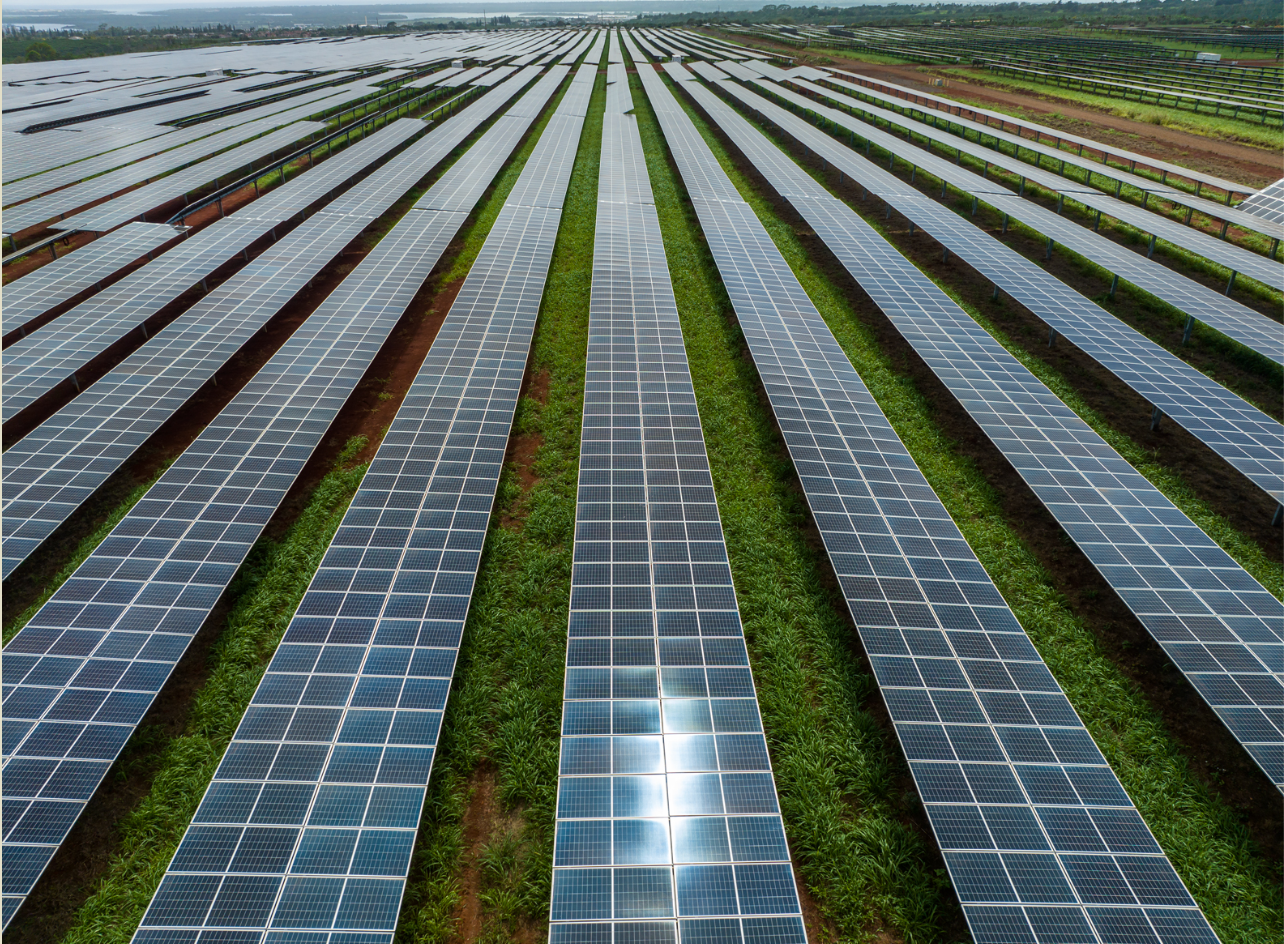
The system can meet 17% of Oahu’s electricity demand for three hours at peak load or six hours at half load, Brandon Keefe, the executive chair of Plus Power — the company that developed the project — told USA Today. Plus Power “develops, owns, and operates standalone battery energy storage systems that provide capacity, energy, and ancillary services, enabling the rapid integration of renewable generation resources,” according to the company’s Jan. 11 news release announcing the start of operations at its KES facility.
As a percentage of the electricity system that it serves, the KES project is larger than any other battery storage project in the world, Colton Ching, the senior vice president of planning and technology for the Hawaiian Electric Co. Inc., told USA Today that Hawaiian Electric serves 95% of Hawaii’s 1.4 million residents on the islands of Hawaii, Lanai, Maui, Molokai, and Oahu. Each of the islands has its own independent power grid. On Oahu, Hawaiian Electric serves approximately 307,000 customers.
Back in mid-2020 I wrote…
Hawaii is a model of the impact of applying carbon free electricity generation policies before storage technology catches up. “Green Policies” do not necessarily result in “Green Power” as I will close with the actual power generation in real time. As an engineer specializing in efficient and clean coal power generation for five decades, whenever a coal plant shutdown is in the news, it catches my attention. So, when I read about the plans to shut down the 180 MW, AES Barbers Point Coal Plant near Honolulu, it caught my eye.
The title of the article in the Honolulu newspaper sums it up nicely: “Our Cheapest Power Is About to Go Away……. In 2016, HECO paid AES Hawaii an average of 5 cents per kilowatt hour. During the same period, wind was about 20 cents per kilowatt hour, solar about 21 to 23 cents.”
Hawaii is a perfect laboratory to show the effect of implementing extreme green policies on electric generation. Why? Because as islands, they are not connected to the US Grid. Therefore, the policies as implemented will create a fairly swift impact on electricity prices. According to the EIA, the highest retail electricity price in the U.S.A.: Hawaii at $0.3099/kWh.
I continued:
Digging a little deeper the plans for the future are for 52% Renewables by 2021 and 100% Renewables by 2045. As the Democrats in congress push for the new Green Deal, Hawaii offers an example of the adverse impact on electricity prices. Later, when Barbers Point is shut down, reliability could also become an issue.
If you are interested in the fuel mix for generation on the island of Oahu, here is a link for the real time power generation. As this is written (3/24/2020), I checked and 86% of the power was Fossil Fuels and of the 14% Renewables, they include 9% from the thermal waste to energy facility, 5% wind and because it was early morning, 0% solar.
I have always advocated a “Balanced Portfolio of Generation”. A plan to include LNG, Coal, Renewables, Oil and Waste to Energy would have been wiser, in my opinion.
Update!
Here is the update on electric rates by the EIA, Residential rate, $0.416/kWh, a one-third increase. Yes, Hawaii Electric remains the highest cost electricity provider in the U.S. This did not need to happen to Hawaii and there is time to stop the Climate Policy madness for the rest of the states.
Many of my knowledgeable friends have suggested that if the U.S. was to try to apply 100% Renewables, it would be a very good idea to first apply this to one electric supply system, rather than force green energy on all of the states. Well, here we have a completed experiment. Hawaii has passed the test of being the first experiment of applying the “Green New Deal”. Thank you Hawaii Electric for providing this outstanding example of applied renewables. My state of South Carolina and neighboring states are planning similar renewables plus battery storage. Your experiences are helpful.
———————————–
References
Power generation expert Richard “Dick” Storm writes at Thoughts on Energy, Education, Prosperity & Environment. He describes his career as follows:
God Blessed me with good health to work a long career in power generation. I was fortunate to work all around the world in both Developed and Developing Countries. Over the years I gained an interest in the importance of energy and electricity and the affect that reasonable cost, abundant and reliable electricity has on any society. Thus, after retiring from full time work my main passion is to share my knowledge and experiences with others and to do my best to help educate all of the non energy trained people that I can, to teach in classrooms and lecture halls and spread the true facts on energy and power generation.
I had about 57+ years of total experience in electric power generation with coal power after graduating from Williamson in 1962. My first exposure to large coal plants was experience as a B&W Results Engineer, 1965-1969, Service engineer with Riley Stoker Corp., 1969-1972, Senior Engineer, Principal Engineer and Operations Supt. at Carolina Power and Light Company, 1973-1977. Began the Technical Services Group at Flame Refractories, Inc. 1977 -1992. This group specialized in applied solutions to improve large high pressure boiler performance, reliability and reduced emissions. Founded Storm Engineering and Associates, Inc. and Storm Technologies, Inc. 1992 and 1994.
Over the years I have written articles for POWER Magazine, published numerous technical papers, and given presentations based on my experiences.
The post Hawaii’s Energy Transition: Solar-for-Coal, One-third Rate Jump appeared first on Master Resource.
via Master Resource
March 28, 2024 at 01:11AM
 Iowa Climate Science Education