
The science of climate is right in front of us, and ignored by alarmists.
via CFACT
March 27, 2024 at 04:08AM
The science of climate is right in front of us, and ignored by alarmists.
via CFACT
March 27, 2024 at 04:08AM
From NOT A LOT OF PEOPLE KNOW THAT
By Paul Homewood
h/t Ian Magness
Today’s silly climate scare from the BBC:

Climate change threatens to “call time” on the great British pint.
But scientists are working with the brewing industry to help save it.
Hops give bitter its taste but the plant doesn’t like the hotter, drier conditions we’ve experienced in recent decades and production has plummeted.
Researchers in Kent are isolating hop genes in the hope of producing more climate-change resilient varieties.
They also want to produce more intense flavours that are now becoming popular.
“Without it, the British pint is going to die off,” Danielle Whelan of the Shepherd Neame brewery said of the work.
“We are just going to be importing beer and we won’t have the culture that goes with it anymore.”
Warmer, drier conditions have also affected the trademark bitter flavour hops gives beer. And the worry is that because of climate change, the problem is only going to get worse. Eddie Gadd, the head brewer at Ramsgate Brewery said that it was already having an impact.
“Climate change is very relevant to me,” he said.
“I buy most of my hops from Kent and I’ve seen the harvests over the past 10 or 12 years going up and down. It has been a real rollercoaster.
“The growers have been feeling the impact and the search for drought-resistant genes is going to be exceptionally important.”
https://www.bbc.co.uk/news/science-environment-68636451
As usual, the facts are the opposite of the BBC’s concocted story.
Over the last decade, both hop outputs and yields have proven to be remarkably stable, in comparison to earlier decades.

https://www.fao.org/faostat/en/#compare
As for the idea that a slightly warmer climate will destroy the hop industry, the south of England marks the northern edge of climate suitable for commercial hop production.
If hops can be successfully grown places like Central Europe, which have much hotter summers, they certainly won’t have any problems in Kent!


via Watts Up With That?
March 27, 2024 at 04:04AM
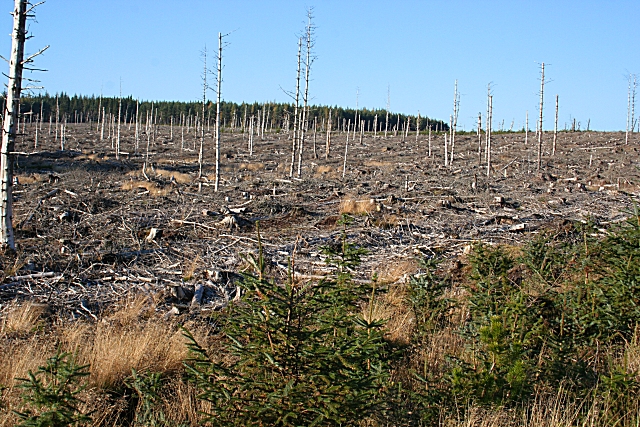
The cult demonises coal for the CO2 it releases, but without a hint of irony reckons that the CO2 released from wood is a completely different molecule. Adding the term ‘biomass’ to the millions of tonnes of timber stripped from the forests of the northern hemisphere apparently makes all the difference. Whereas the term ‘dirty’ is employed with a certain kind of venom, whenever coal is mentioned.
Clear-felling forests and burning them in power stations is, we are told, clean, green and perfectly renewable, don’t you see – as if showering in the ash from incinerated pine trees will leave you feeling fresh as a daisy.
Slashing and burning modern forests, and merrily wiping out entire ecosystems and healthy habitats for critters, large and small, doesn’t rate a mention. This is all about reducing human generated carbon dioxide gas, right?
In the Carboniferous period, a couple of hundred million years ago, the world was awash with CO2 and, believe it or not, covered from top to bottom in swathes of forests and swamps.
In the blink of a geological eye, those vast tracts of forest were subsumed by swamps and, over time, vast seams of coal were deposited, layer upon layer into the Earth’s crust. But that’s to speak of what’s become a pure and natural evil.
However, those looking to flaunt their green credentials in the so-called ‘modern age’, don’t hesitate in jumping ahead of the queue and torching whole forests, before geology and time can turn them into the stuff that’s been dug up and used to great effect, for centuries.
The irony and hypocrisy is not lost on John Hinderaker.
Burn those Trees
Powerline
John Hinderaker
2 March 2024
We have written a couple of times about biomass, which is a fancy term for burning wood. If you thought using wood fires for energy was out of date–it has been, actually, for a century and a half–you are behind the times. Wood burning is considered “green,” a wholly political concept, and therefore is heavily subsidized in Europe. Millions of trees in the U.S. and Canada suffer the consequences.
The latest from the United Kingdom:
Wood, the fuel that British industry thought it had left behind more than a century ago, is staging a comeback.
Powering the resurgence is Drax Group, owner of the controversial Drax power station that recently posted a 10-fold increase in its latest yearly profits.
Its plant in Yorkshire, Britain’s largest and most controversial power station, generated around 6pc of the country’s electricity in 2023 by burning 6.4 million tonnes of wood. In context, it is the equivalent of 27 million trees.
27 million trees! The same Telegraph article points out that the New Forest only has 46 million trees, less than two years’ worth. So where does the wood come from?
Last year alone Drax imported 4.6 million tonnes of wood from the US and another 760,000 tonnes from Canada, with further deliveries coming from Brazil, Latvia and Russia.
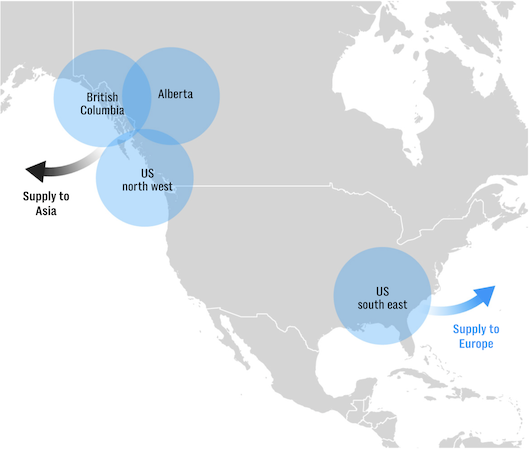
You might think that cutting down trees in the southern U.S., thus preventing them from absorbing CO2 from the atmosphere–do they still teach junior high kids about photosynthesis?–shipping them to Europe on diesel-powered ships, and then burning them, releasing carbon into the atmosphere in the form of CO2, must be the dumbest possible way of generating electricity. And, while it is appallingly stupid, and not “green” in any coherent sense, it is arguably not as dumb as wind and solar:
[Drax chief executive Will Gardiner says], “We have created a business which plays an essential role in supporting energy security, providing dispatchable, renewable power for millions of homes and businesses, particularly during periods of peak demand when there is low wind and solar power.”
Yes: burning wood on an industrial scale is idiotic, but at least it works in the dark and when the wind isn’t blowing.
Finally, why does such a foolish way of generating electricity exist? Mandates and subsidies, of course:
Sir Peter’s reference to cost relates to the taxpayer subsidies that Drax receives for producing green energy, which amounted to £617m in 2022 and £587m in 2023.
Meanwhile, China is humming along with more than 1,000 coal-fired power plants, and more coming on line constantly.
Powerline

via STOP THESE THINGS
March 27, 2024 at 01:30AM
“There is a strong intellectual case against the view that ExxonMobil ‘knew’ that CO2 was a threat to human betterment versus the continuous growth of consumer-desired, taxpayer-neutral oil and natural gas. In fact, Enron, not Exxon, was the bigger culprit in the climate-change-and-business saga.”
Geoscientist Lindsey Gulden speaks for the Climate Industrial Complex, not the average person who depends on oil and gas every minute of every day, when she portrays herself as a martyr for the cause of climate alarmism/forced energy transformation.
It is not easy to get fired by ExxonMobil, but there are underperformers and just bad apples in every batch. Lindsey Gulden appears to be one. On social media, she tells of just this experience, invoking climate alarmism.
But she does note one thing of interest: the company’s overhyped political play of carbon capture and storage, which is correct. But it is climate exaggeration that has created the political winds to allow ExxonMobil to get its piece of the taxpayer-subsidy pie. Dialing back politics would right-size the very technology she decries.
Her Story
“It may not be advisable to talk on LinkedIn about the time I was fired by #ExxonMobil,” she begins. “But here goes.”
I am a #climate scientist…. I started out as Ms Rebecca Grekin, a climate scientist who earnestly, naively believed that the ExxonMobil of today is a trustworthy actor in the energy transition. I spent more than a decade working for ExxonMobil, occasionally (but not often enough) advocating for combatting #climatechange .
In 2020, I was fired—yes, fired—by ExxonMobil because I reported what amounted to a $10 billion fraud. To put it mildly, that experience fundamentally altered my opinion of whether present-day ExxonMobil can be considered an honest broker in anything, but most especially in the realm of the energy transition, which is a far-greater-than-$10-billion threat to the Exxon’s bottom line….
What is good for oil and gas re ExxonMobil is good for energy consumers worldwide. And the less climate politics, the better. But Gulden will have none of this.
Despite what smooth-talking spokespeople will tell you, ExxonMobil continues to fund and be an active member of organizations that are—today—working to decrease political support for government action to curb climate change and decrease the public’s access to and trust in readily available replacements for #oilandgas.
They fund PhDs and national labs to burnish their reputation and influence what questions researchers address.
Then a very good point is made by Gulden: the rent-seeking and greenwashing of ExxonMobil with carbon capture and storage, a mistake in the making.
#industry lobbyists have convinced large swaths of the public (and most of their own well-meaning employees) that technologies like carbon capture and storage are legitimate recipients of billions of taxpayer dollars earmarked for combatting climate change.
Those taxpayer dollars are urgently needed for existing, proven, ready-right-now solutions but instead are funding a massive campaign to enhance oil recovery. Carbon capture and storage is, at its core, a technology for producing more oil. It requires more carbon to be expended to inject #co2 at pressure than it keeps out of the atmosphere. It is not and will not be a viable solution to climate change.
She blames herself with her half-truth conscience.
ExxonMobil executives can continue this deception in large part because so many useful idiots, myself included, willingly lend their personal reputations to the propping up of a lie. They can continue this deception because they make an example of people like me (I’m not the only one) to ensure that their employees are afraid to truly challenge the ethics of the company line.
She concludes:
I wish I could tell my younger self that the cynical Mr Yannai Kashtan is right. That idealism and/or a paycheck can lull you into trusting those who say one thing and do another. That we must stop allowing ourselves to be used by a few people who care more about their reserve shares than about doing the right thing. And, most important, that we must, without delay, find the unflinching political will to turn off the #fossilfuels tap as fast as we possibly can.
Social injustice and carnage on a global, massive scale, Ms. Gulden? If she is in turmoil about her time at ExxonMobil and the way forward, a fundamental rethink is in order. Whole new ideas to quell ‘climate anxiety’ as the world’s energy needs continue to be met, increasingly so, by oil, natural gas, and coal.
Exxon and ExxonMobil: The Road Not Taken
More fundamentally, Exxon and (after 1997) ExxonMobil abandoned the moral high ground when it substituted appeasement for principle, which began around the time of President Obama’s election in 2008.
There is a strong intellectual case against the view that Exxon – ExxonMobil “knew” that CO2 was a threat to human betterment. Just the opposite, the company smartly understood that continued growth of consumer-desired, taxpayer-neutral oil and natural gas was good business and morally imperative. (“Big Oil, Exxon Not Guilty as Charged” offers a six-part rebuttal to the simplistic, errant arguments of the ExxonKnew legal campaign.)
In fact, Enron, not Exxon, was the bigger culprit in the climate-change-and-business saga. Read and laugh (or cry) at Enron’s Kyoto memo of 1997 in terms of green-as-in-money.
What about employees at ExxonMobil whose take is opposite of that of Lindsey Gulden? Glen Lyons offers an opposite take:
Here’s my two cents on the general concept of “What Exxon Knew” as a retired employee with more than 36 years of experience there.
First, Exxon doesn’t “know” anything. It’s a collection of people and just like any other organization with many people, there are many views and understandings on almost every topic imaginable. I worked with Republicans, Democrats, Socialists, and Libertarians.
I worked with people who believed 25 years ago that climate change was a concern and I worked with people who still don’t believe that climate change is a concern. One of the great features about working at ExxonMobil is that it gives employees a fair amount of latitude to think “outside the box” by studying and proposing ideas that their management may not agree with.
There was always disagreement and tension among talented people. Lyons continues:
I did plenty of that during my career, and sometimes it was well received by my management and sometimes not. Just because I made a presentation on a particular topic of my choosing doesn’t mean that my management was fully aligned on the front end or after the fact.
One thing is very true about ExxonMobil – the company has a long history of hiring brilliant people who are original and creative thinkers. Sometimes the output of these people finds broad support among management and sometimes it doesn’t. No one who knows ExxonMobil is surprised to learn that some employees were studying the link between CO2 emissions and global temperatures. However, that does NOT mean that his/her management agreed with the findings.
Perhaps, just perhaps, Glen Lyons has a maturity and open-mindedness that a Lindsey Gulden does not.
The post Climate Alarmist as ExxonMobil Whistleblower appeared first on Master Resource.
via Master Resource
March 27, 2024 at 01:06AM
 Iowa Climate Science Education