
It may be time for the Saffir Simpson Scale to go.
via CFACT
March 19, 2024 at 04:01AM
It may be time for the Saffir Simpson Scale to go.
via CFACT
March 19, 2024 at 04:01AM
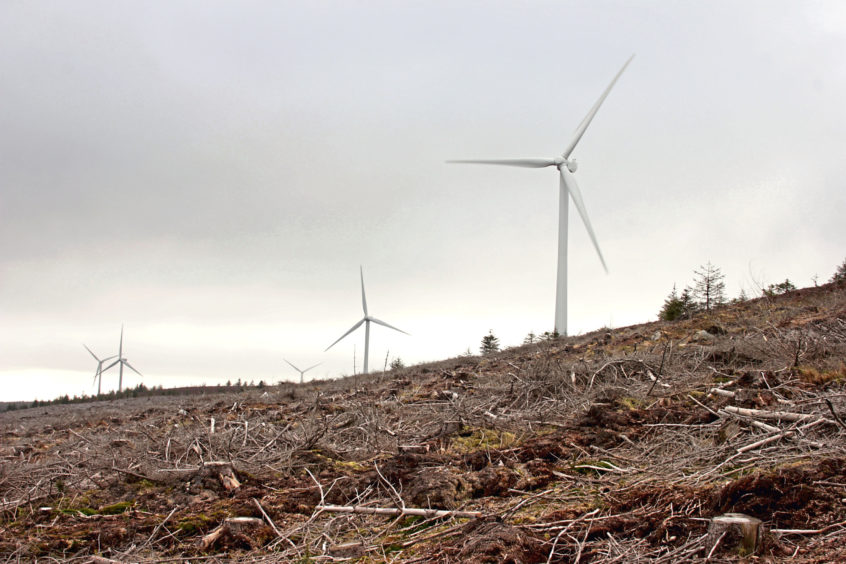
By December 2019, British wind power outfits had already collected over £650,000,000 in “constraint payments” for doing nothing at all; the cost to power consumers was almost £1 billion over the last five years and that figure is expected to soar. By 2030, wind power outfits across the UK (principally in Scotland) are predicted to pocket £3 billion a year for simply doing nothing.
The “constraint payment” is governement-mandated means by which taxpayers and/or power consumers are forced to literally pay wind power outfits to not produce electricity. [Note to Ed: getting paid for doing nothing is good work if you can get it!]
In Scotland, which has been overrun by these things in the last decade, power consumers are (unwittingly) being slugged for tens of £millions each year.
In this piece, Keith Findlay provides a league table on the amounts bank pocketed by Scottish wind power outfits as part of Britain’s great wind power fraud. The results are simply staggering.
Households pay after Highland wind farms earn £68 million for nothing
Press and Journal
Keith Findlay
4 March 2024
Static wind turbines in the Highlands cost consumers nearly £68 million in 2023.
They accounted for more than one-quarter of all Scottish wind farms receiving “constraint” payments for zero energy output, new figures show.
According to the Renewable Energy Foundation (REF), a lion’s share of such payments to UK wind energy suppliers found its way north of the border last year.
Of the £307.2m total for the whole of Britain, the National Grid Electricity System Operator (National Grid ESO) paid a record £275.3m to a total of 86 Scottish generators.

The Highlands led the pay-out league in terms of wind farm numbers, with 22 sites across the region getting payments totalling £67.8m.
Top of the constraint payments league table in the area is SSE Renewables’ 66-turbine Stronelairg wind farm, near Fort Augustus, which received nearly £11.6m.
But the two biggest earners in Scotland were both offshore.
Moray East wind farm, a 100-turbine development in the Cromarty Firth, received nearly £43m for machines delivering no energy.
And the 114-turbine Seagreen scheme off the coast of Angus earned constraint payments totalling nearly £40m.
An onshore wind farm, Clyde, near Abington in South Lanarkshire, comes in third at nearly £16.9m.
Stronelairg raked in the fourth highest total last year.
Meanwhile, Dorenell, in Moray, and offshore development Beatrice earned £9.3m and £9.1m respectively.
Other multi-million-pound earners include Griffin, near Aberfeldy, Perthshire, which received nearly £4.6m.
Mid Hill, a 33-turbine development in Fetteresso Forest south-west of Aberdeen, was paid £2.3m.
Argyll and Bute wind farms Beinn an Turc and Carraig Gheal earned nearly £1.6m and about £1.3m respectively.

Wind farms are entitled to constraint payments whenever they are asked to reduce output due to electricity grid congestion or high winds.
The electricity cannot be stored and demand for it fluctuates.
Ultimately, households end up paying for constraint payments though “network costs”.
‘Scandal’
REF has called the system a “national scandal”.
More than a year ago the sustainable development-focused charity estimated the cost to UK consumers since constraint payments started in 2010 to be “well over” £1 billion.
And with many new wind farms planned onshore and in the North Sea, network bottlenecks are likely to get worse.
Unsurprisingly, anti-wind farm campaigners are aghast about the huge sums of money being paid for turbines deliberately left idle.
Graham Lang, of pressure group Scotland Against Spin, said: “It has been known for some years that the Scottish Government has been consenting onshore wind farms far beyond local demand for electricity.
“The latest data shows Scotland has 15.3 gigawatts (GW) of operational, under construction and consented wind farms. There’s another 7.5GW currently seeking consent – total 22.8GW – yet Scotland only consumes on average 3.6GW of electricity.”
Excess power is sent to other parts of the UK but the transmission network lacks capacity.
Mr Lang added: “Wind farms have to be turned off, resulting in constraint payments.
“More than a quarter of wind farms in receipt of those payments are in the Highlands. Areas with low demand and weak grid connectivity can encourage operators to take advantage of constraint payments by constructing more wind farms.
“It is the consumer who is paying for constraint payments via higher electricity prices.
“The latest estimate is that it is costing every homeowner £40 per year to turn off wind farms in Scotland.
“It is a ridiculous waste of money. It makes no sense at all for the Scottish Government to keep awarding consent for more wind farms.”
According to Mr Lang, wind farm operators can also save cash by hitting the off switch.
He continued: “They need less maintenance and repair if they’re not turning and idle. Maintenance is very costly. Better to get paid for doing nothing.”
“Constrained” wind farm operators may also continue to sell energy to the National Grid via battery energy storage systems, Mr Lang said.
He added: “It is a bloated subsidy system, being farmed by developers and operators.”
Electricity system operator insists it is ‘keeping costs as low as possible’
A spokesman for National Grid ESO told The Press and Journal the UK’s electricity system operator keeps power flowing to homes and businesses “in the most cost-effective way for the consumer, keeping costs as low as possible”.
He added: “Like many system operators across the world, we make constraint payments when it is more cost-effective to temporarily reduce wind output, for example, than build expensive new network infrastructure that would add more money to everyone’s energy bills.
Press and Journal

via STOP THESE THINGS
March 19, 2024 at 01:31AM
“The House bill [H.R. 6544] would also extend the Price-Anderson federal accident insurance subsidy, first enacted in 1957 and renewed seven times since then. The program expires at the end of 2025. It isn’t clear why this federal subsidy for nuclear in still needed when the industry insists its new, advanced reactor designs are ‘inherently’ walk-away safe.”
The U.S. nuclear industry in recent days has hit three cherries on the federal money-and-policy slot machine. The open question is whether the largess (some might call it pork) will have the intended results: revitalizing a moribund industry by hitching its wagon to the feverish fear of climate change and long-run animosity toward nuclear rivals China and Russia.
First, the money–the most tangible of the goodies Congress and the White House have doled out. On March 5, the ranking members of the House and Senate appropriations committees rolled out a consensus on six money balls, including the Energy and Water Development and Related Agencies bill funding all government nuclear programs for fiscal year 2024. Passage is almost certainly a done deal.
For nuclear, the bill includes the following radioactive goodies:
House Legislation Passed (H.R. 6544)
The above Treasury payments followed policy victories for the nukes, including legislation and a new regulatory program.
On February 28, the House by an overwhelming 365-36 bipartisan margin passed H.R. 6544, designed to streamline safety reviews by the Nuclear Regulatory Commission and give the Department of Energy some authority to buy electricity through purchase power agreements from commercial nuclear power purveyors.
In some respects, the legislation is a return to the approach of the now-defunct Atomic Energy Commission in the early days of atomic energy. In 1974, Congress abolished the AEC, and the all-power congressional Joint Committee on Atomic Energy, in large part because the AEC viewed reactor safety as a poor cousin to promotion the atom.
The language in the House bill, as described by the Hogan Lovells law firm, would require the NRC to revise it mission statement
to ensure that, while upholding the policies of the Atomic Energy Act of 1954 (AEA), the licensing and regulation of nuclear activities are carried out efficiently without unduly restricting the potential of nuclear energy and to improve the general welfare and the benefits of nuclear technology to society.”
Some observers have suggested this hortatory language is unlikely to survive in the Senate. Senators are trying to combine House provisions with a separate bipartisan bill that passed last year as part of the National Defense Authorization Act but was later axed.
The legislation would also create a cadre of up to 210 Supergrade nuclear ninjas, possibly paid more than NRC commissioners in some cases. According to the bill language, under some circumstances, the NRC chairman Chairman “may, during any period when such a certification is in effect, fix the compensation for such employees or other personnel serving in a covered position without regard to any provision of title 5, United States Code, governing General Schedule classification and pay rates.” These alleged experts appear to have the power to second-guess the Senate-confirmed commissioners.
The House bill would also extend the Price-Anderson federal accident insurance subsidy, first enacted in 1957 and renewed seven times since then. The program expires at the end of 2025. It isn’t clear why this federal subsidy for nuclear in still needed when the industry insists its new, advanced reactor designs are “inherently” walk-away safe. Congress apparently believes it can assess the risks of nuclear energy more accurately than private sector actuaries.
Regulatory Favor
Then there is the third cherry on the governmental slot machine: regulation.
On March 4, the NRC rejected a staff-written draft rule developed over three years for how to regulate the potential new license applications for a variety of advanced reactors. The commission told the staff to rewrite its proposal for a new “Part 53” section of the agency’s authority embodied in 10 Code of Federal Regulations, joining the current sections 50 and 52, which pertain to large light-water reactors.
According to Utility Dive, a key change ordered by the commission “rejected ‘a strict checklist of requirements’ for probabilistic risk assessments while favoring a more flexible framework suited to simplified reactor designs with passive safety features that utilize natural forces, such as gravity or pressure differentials, rather than operator action.”
In a news release, NRC Chairman Christopher Hanson said, “This proposed rule leverages significantly more risk insights than our existing regulatory framework in making safety determinations. Applicants can use our existing regulations today, but this proposed rule will provide future nuclear developers a clear, additional pathway for licensing.” The NRC said it expects to publish the new rule in the Federal Register in about six months.
Legacy of Failure
This latest effort to revive the largely stagnant U.S. nuclear program is the third time in the last nearly 20 years that the government has tried to pump new life into atomic power. The U.S. program started grinding to a halt in the mid-1970s and was barely treading water by the 1990s. The pipeline of new reactor licenses emptied in 1974, and as the final builders of plants under construction either completed or abandoned their projects, the workforce and supply chain infrastructure hollowed out.
In 2005, Congress passed a new “Energy Policies Act,” which offered a smorgasbord of financial goodies for new plants including loans (they called them “loan guarantees” to make them look more palatable to opponents of direct federal subsidies, but the Treasury wrote the checks and received the loan payments), cost overrun protections, and extension of Price-Anderson to 2025.
The 2005 act was largely a failure. The two preeminent U.S. nuclear power developers, Westinghouse and General Electric, ended up sorely financially injured and in Japanese hands. Former NRC Commissioner Peter Bradford commented, “They placed a big bet on this hallucination of a nuclear renaissance.”
Then came the first push for “small modular reactors,” designed to downsize the financial risks and construction costs of nuclear power plants. The strategy was the reverse of the “economies of scale” that drove the first generation of nuclear power plants, where bigger was always assumed to be better, but wasn’t.
In 2009, reactor vendor Babcock & Wilcox, which had substantial experience building nuclear power plants for U.S. submarines, announced it would offer a 125-MW pressurized water reactor (later scaled up to 180 MW) and a year later unveiled an alliance with builder Bechtel Corp. They called the project mPower.
In 2012, the Obama administration announced a $500 million program for development of small modular reactors. In 2013, mPower won financial assistance from DOE, with an award up to around $126 million. The same year, B&W tried and failed to sell a majority share of mPower, then cut back funding by 75%. Bechtel soon soured on the project, and it officially ran out of steam in 2017 after failure to find a customer.
During the same time frame, Westinghouse launched a 225-MW small modular reactor program. It quickly cratered, as the Pittsburgh-based company was unable to find a customer for its machines.
Will the latest government attempt to revive nuclear, driven by global warming concerns, succeed? It’s not a given. There’s lots to like about smaller nukes. They produce no CO2, have a relatively small footprint, can be sited fairly close to load.
But the economics aren’t clear, as the NuScale saga demonstrates. Some of the non-LWR advanced reactor designs will present licensing challenges, as there is little history behind them. Sodium cooled fast reactors may be particularly problematic, given the well-known problems of sodium as a coolant and the experience with Superphenix in France and Monju in Japan, plus issues of nuclear weapons proliferation.
———————-
This revised post originally appeared at The Quad Report.
The post Nuclear Subsidies Galore … appeared first on Master Resource.
via Master Resource
March 19, 2024 at 01:07AM
Banana prices to go up as temperatures rise, reports Matt McGrath of the BBC. What a magnificent story – adding to the fake climate emergency narrative and helping out Big Banana all in one go. Alas, the uncharitable might note that the story is slightly spoilt by banana output having doubled over the last 20 years, helped, almost certainly, by a little extra warmth and atmospheric carbon dioxide.
Bananas are set to get more expensive as climate change hits a much loved fruit, says Pascal Liu of the World Banana Forum, a UN umbrella group promoting the banana business. ‘Experts’ are reported to be concerned about the growing threats from a warming world and from the diseases that are spreading in its wake. McGrath helpfully adds that last week saw shortages in several U.K. supermarkets due to “storms at sea”. There are reported to be concerns about a relatively new strain of Fusarium Wilt, a plant disease that has been widespread in commercial banana plantations for over 100 years.
McGrath quotes the Big Banana spokesman as observing that climate impacts pose an “enormous threat” to supply, compounding the impact of fast-spreading diseases. Prices in the U.K. “are likely to go up – and stay up”. Which would appear to be very good news for those in the banana business. As the UN Food and Agricultural Organisation (FAO) graph below shows, they have also enjoyed staggering high rises in recent yields.
In common with other large scale makers of agricultural produce, the last few years have had difficulties with disruptions from Covid and the war in Ukraine leading to rises in the price of fertilisers and transport. More normal conditions seems to be returning with the FAO reporting that the outlook for 2024 “looks more positive than in the previous two years, provided that price variations in real terms will continue to be favourable”.
As we can see, British taxpayer-reliant McGrath is not just doing his bit to help push up banana prices for U.K. consumers, but he combines this noble work with his usual day job nudging citizens to accept the insane collectivist Net Zero policy. The new variant of Fusarium Wilt can be spread by flooding and strong winds, it is said. M.r Liu notes that the disease will be spread much faster “than if you have normal weather patterns”. It is surprising that McGrath didn’t point out that in its latest assessment report, the UN’s Intergovernmental Panel on Climate Change (IPCC) observed that estimates of the impact of human involvement in severe storms outside natural variation remained of “low confidence”. In addition to severe storms, the IPCC found little evidence of human involvement stretching out to 2100 in tropical cyclones, heavy rain and pluvial, and river and coastal flooding.
No doubt a small lapse in rigour at the BBC’s multi-staffed climate desk, given that McGrath is usually a keen student of the IPCC as a “sound scientific source”. Accepting €100,000 from the green foundation of the large Spanish bank BBVA in 2019, he noted that the media landscape was awash with ”fake news” stories. He defended the “primacy” of specialist journalists that draw on sound sources such as the IPCC. The green foundation, meanwhile, fawned all over him, noting “his extraordinary capacity to communicate complex environmental issues and science to global audiences”.
Of course, the McGrath article is just one of many that appear in legacy media outlets that attempt to insert alleged human involvement in the continually changing climate into general news stories. As regular readers of the Daily Sceptic will be aware, these stories do not appear totally by accident. Green billionaire cash floods into operations seeking to influence journalists, politicians, scientists and even Hollywood scriptwriters to catastrophise information promoting the climate collapse scare and the need for a Net Zero solution. Fake news is now endemic throughout the mainstream media. This despite signs that in the wake of the Covid experience, the general public across many Western countries is starting to lose faith in top-down controlling narratives.

Speaking of tropical fruit, the BBC’s amusingly described ‘disinformation’ correspondent Marco Silva is currently enjoying a six-month sabbatical with the green billionaire-funded Oxford Climate Journalism Network (OCJN). To “hit closer to home”, course participants are told to pick a fruit such as a mango and discuss why it wasn’t as tasty as the year before due to climate change. This will allow the subject of climate change to become “less abstract”. In a recently published essay, two OCJN organisers said their course was designed to allow climate journalists “to move beyond their siloed past” into a strategic position within newsrooms, “combining expertise with collaboration”.
Chris Morrison is the Daily Sceptic’s Environment Editor.
via Watts Up With That?
March 19, 2024 at 12:06AM
 Iowa Climate Science Education