
Jet Stream Blocking and U.S. Heat Wave Index
By Kyoji Kimoto
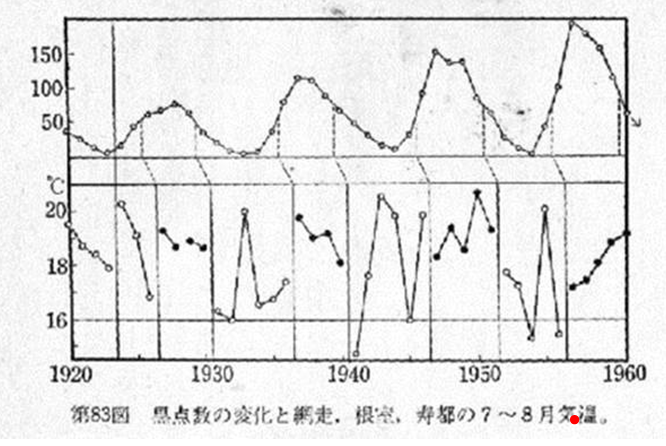
In 1962, Japanese meteorologist Hirohide Saito found the instability of summer temperature of Hokkaido (northern part of Japan) during the solar minimum as follows:
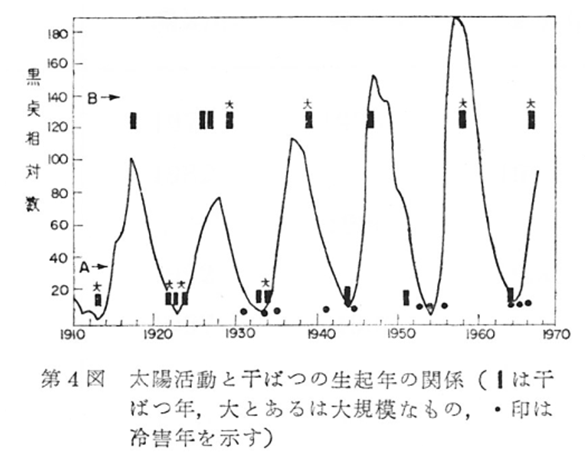
In 1967 Japanese meteorologist Junkichi Nemoto published the following graph, below, showing that drought in Japan occurs at the solar minimum as well as at the solar maximum. Further Nemoto showed the drought occurs with the crop failure due to the low temperature in the northern part of Japan at the solar minimum. This is coincident with Saito’s finding above showing the instability of summer temperature at the solar minimum in Hokkaido.
In 1988, based on the meteorological studies above, Japanese climatologist Kunihiko Kodera published the following graph showing the jet stream blocking frequency is higher at the sunspot minimum and the aa index minimum. The graph shows the highest frequency of the jet stream blocking during 1931-1936, which is coincident with the highest U.S. heat wave index and the highest burned forest area below.
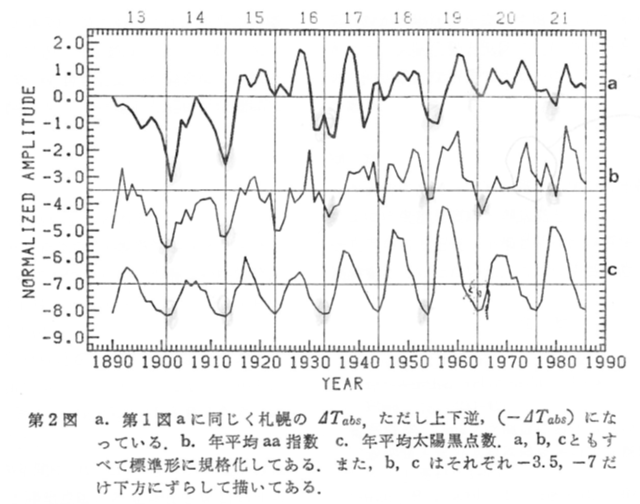
a is the inverse of proxy for blocking days frequency; b is geomagnetic aa index of solar activity; c is sunspot data.
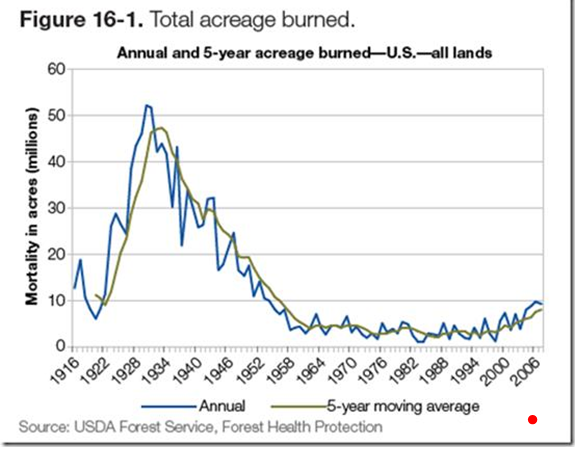
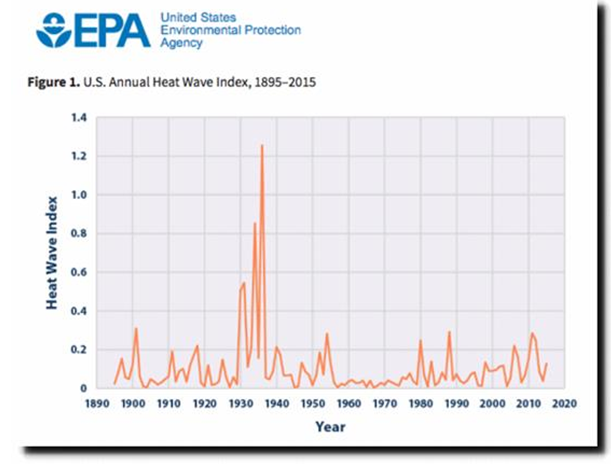
https://www.fs.fed.us/research/sustain/docs/national-reports/2010/2010-sustainability-report.pdf
(References)
Junkichi Nemoto, “Drought at the western area of Japan during summer to autumn in 1967 (in Japanese) “, Tenki (Weather in Japanese), Vol. 14, No.12, 1-7 (Dec.1967).
Kunihiko Kodera, “ Summer temperature at Sapporo area and solar activity (in Japanese) “, Tenki (Weather in Japanese), Vol. 35, No.5, 33-35 (May, 1988).
Donate – choose an amount
via NoTricksZone
May 18, 2024 at 11:11AM
 Iowa Climate Science Education